In this guide
- Why Movers Enforce a Mandatory Mattress Bag Hygiene Policy
- Mover Mattress Bag Fees vs. Self-Supplied Prep by Apartment Size
- Why 1.5-Mil Drop-Cloth Bags Rip on Walk-Up Stairs (Use 5-Mil to 6-Mil)
- Protecting Door Jambs, Box Springs, and Bed Frames on Move Day
- 5-Step Guide to Bagging and Moving an Apartment Mattress Without Damage
Why Movers Enforce a Mandatory Mattress Bag Hygiene Policy
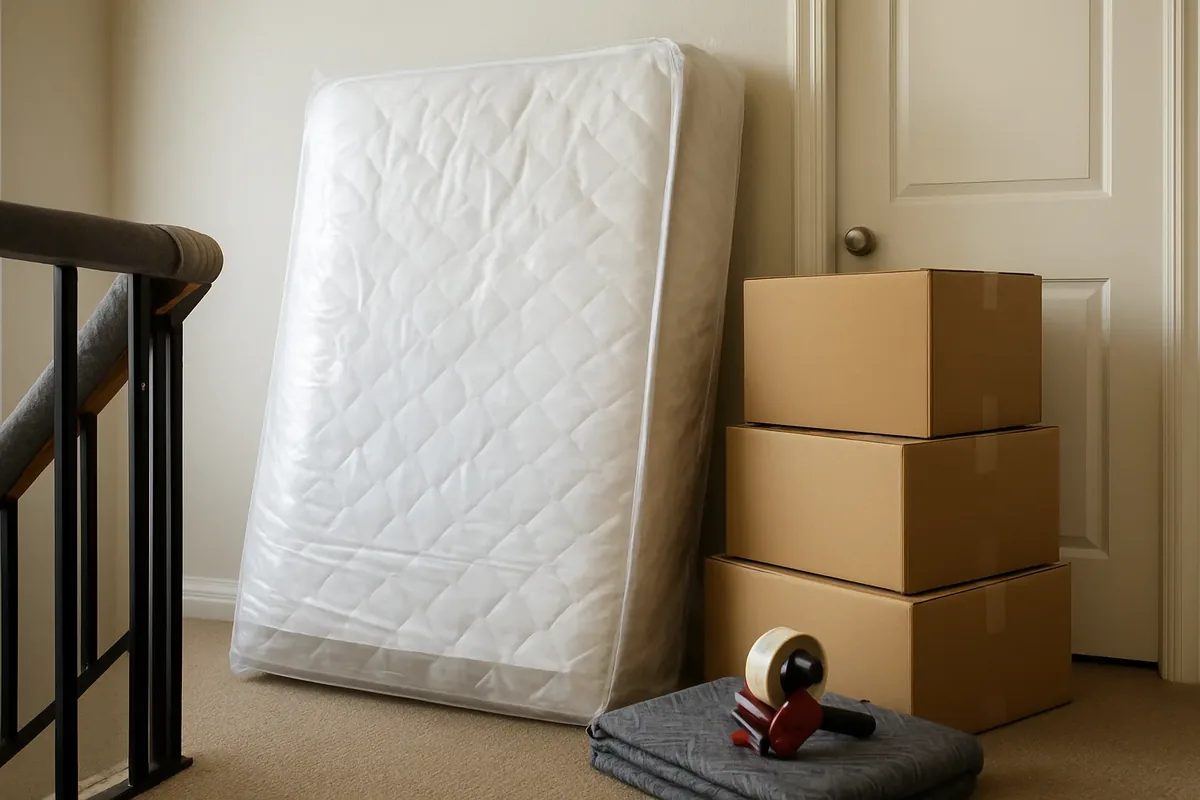
If you ask a local moving dispatcher why a $2,000 queen hybrid mattress cannot simply be wrapped in two quilted moving blankets like a wooden dresser, the answer comes down to sanitation liability and shared-truck cross-contamination. Commercial moving trucks haul household goods for two to four different apartment families every week—or consolidate multiple households onto a single 53-foot trailer on interstate routes (250 to 1,800+ miles). Unwrapped fabric ticking absorbs rainwater from curbs, truck-floor hydraulic grease, hallway pet dander, and worst of all, bed bug nymphs or carpet beetles transferred from recycled padding.
Because state health codes and carrier insurance tariffs restrict transporting bare bedding alongside another customer's upholstered furniture, most FMCSA-registered interstate van lines and reputable local movers put a mandatory mattress bag clause straight into their Bill of Lading. If your mattress is bare when the foreman walks through your apartment at 8:00 AM, the crew will either bring truck-stocked bags at $15 to $30 per piece (double for a split box spring plus mattress) or require you to sign a zero-liability soil waiver before touching the bed.
Mover Mattress Bag Fees vs. Self-Supplied Prep by Apartment Size
A single $20 truck-supplied bag seems trivial on a studio apartment, but multi-bedroom units with two queen beds, a king split foundation, or a guest daybed quickly multiply material charges—and trigger hourly waiting charges while movers fetch covers from the truck cab and tape seams on the bedroom floor. National apartment move kits show 1 mattress bag for studio and 1-bedroom moves, 2 bags for 2-bedrooms, 3 bags for 3-bedrooms, and 4 bags for 4-bedroom lofts.
| Apartment Size (Typical Mattress Bag Count) | Mover Labor + Transport Base (Local <15 Mi) | Mover Truck Mattress Bag Fee + Crew Time | Complete Mover-Packed Materials Tier | DIY Truck + Self-Supplied 32-ECT Kit |
|---|---|---|---|---|
| Studio (350–550 sq ft / 1 Bag) | $575 – $970 (2 Crew, $125–$165/hr + $75–$145 truck) | $15–$30 bag + $15–$25 bagging time | $180 – $320 | $32–$48 truck + $65–$110 DIY kit |
| 1-Bedroom (600–850 sq ft / 1 Bag + Optional Box Spring) | $725 – $1,370 (2 Crew, $130–$175/hr + $75–$145 truck) | $15–$60 bags + $20–$35 bagging time | $290 – $520 | $43–$58 truck + $95–$160 DIY kit |
| 2-Bedroom (900–1,250 sq ft / 2–3 Bags) | $1,125 – $2,140 (3 Crew, $175–$235/hr + $75–$145 truck) | $30–$90 bags + $35–$55 bagging time | $460 – $820 | $54–$74 truck + $145–$235 DIY kit |
| 3-Bedroom (1,300–1,800 sq ft / 3–4 Bags) | $1,725 – $3,245 (4 Crew, $220–$295/hr + $75–$145 truck) | $45–$120 bags + $50–$80 bagging time | $680 – $1,180 | $65–$90 truck + $205–$330 DIY kit |
| Interstate Long-Distance (250–1,800 mi / 3,200–7,800 lbs) | $2,120 – $9,990 ($0.42–$0.98/lb + transport) | $35–$65 van-line carton/bag + tariff handling | $290 – $1,180 | $380–$2,450 1-way truck + $95–$330 kit |
Amazon US Apartment Moving Supplies
Recommended Moving Boxes, Blankets & Bags for This Move
Apartment moving supplies matched to this guide (Amazon.com affiliate ID: apartmentmovingcost-20).
Door Jamb & Banister Padded Neoprene Protector Sleeves (3-Piece Walk-Up Set)
Clip-on padded door-frame guards protecting apartment entry molding from security-deposit dings
Uboxes Economy Studio & 1-Bedroom Apartment Moving Box Kit (20 Boxes + Tape)
Assorted small and medium 32-ECT corrugated moving boxes with acrylic packing tape and marker
Uboxes 3–4 Bedroom Master Apartment & Loft Moving Kit (75 Boxes + Supplies)
High-volume 75-box corrugated moving package with double-wall kitchen boxes and 3 wardrobe cartons
As an Amazon Associate I earn from qualifying purchases. Always verify live stock and pack sizing directly on Amazon.com.
Why 1.5-Mil Drop-Cloth Bags Rip on Walk-Up Stairs (Use 5-Mil to 6-Mil)
Many renters grab the cheapest single-pack plastic bed cover from a hardware aisle—only to watch a 1.5-mil or 2.0-mil bag shred open on the very first turn down a narrow 2nd-floor ($55–$95 walk-up surcharge) or 3rd-floor ($110–$190 surcharge) staircase. Heavy pillow-top and memory foam queen mattresses weigh 75 to 120 pounds, have sharp corner piping, and scrape directly against concrete steps, metal stair nosing, and painted wooden door latches.
- 1.5-Mil to 2.0-Mil Thin Poly Covers: Fine only for stationary dust coverage inside a spare bedroom closet; tears immediately if dragged across asphalt, truck liftgates, or concrete apartment landings.
- 4.0-Mil to 6.0-Mil Heavy-Duty LDPE Mattress Bags: Engineered to withstand friction across brick entryways and steel rental truck ramps without puncturing—and completely waterproof against move-day rain.
- Cardboard Mattress Cartons for Interstate Van Lines: On cross-country moves (1,000–2,500+ miles), carriers often use telescoping corrugated mattress boxes (plus inner poly bags) so heavy tiers of boxes cannot crush coil springs during 7-day transit.
- Woven Zippered Mattress Totes With Webbing Handles: Ideal for DIY rental trucks and repeat apartment moves because stitched nylon carry handles eliminate awkward pinching on narrow 4th- or 5th-floor walk-up stairs (+1.75–3.0 crew hours).
Protecting Door Jambs, Box Springs, and Bed Frames on Move Day
Bagging a queen or king mattress solves truck sanitation, yet narrow apartment bedroom doorways and tight foyer corners remain the biggest cause of ripped mattress plastic and scratched woodwork. Installing Door Jamb & Banister Padded Neoprene Protector Sleeves (3-Piece Walk-Up Set) over your bedroom and entry molding puts 54-inch tall spring-clamp cushions over sharp metal strike plates and door hinges—stopping hardware snags before they slice open your sealed mattress sleeve or gouge security-deposit trim.
You will also need reliable 2-inch acrylic packing tape to fold and seal the open end of a poly mattress bag airtight plus pack bedding, bed skirts, and pillows cleanly. For smaller households, the Uboxes Economy Studio & 1-Bedroom Apartment Moving Box Kit (20 Boxes + Tape) includes 32-ECT small and medium corrugated cartons alongside tape rolls so sheets, mattress toppers, and bed hardware stay organized in one labeled kit. For large multi-bedroom households relocating 3 to 4 beds plus full linen closets, the Uboxes 3–4 Bedroom Master Apartment & Loft Moving Kit (75 Boxes + Supplies) pairs 32–44 ECT kraft cartons, double-wall kitchen boxes, and wardrobe cartons so your bed disassembly bags, screws, and pillows never get buried under loose items.
5-Step Guide to Bagging and Moving an Apartment Mattress Without Damage
- Strip Bedding and Verify Exact Mattress Depth Before Buying Bags. Measure your mattress thickness—modern memory foam and pillow-top beds run 12 to 16 inches thick, so pick a deep-pocket 14"–16" gusseted bag rather than a tight 9" standard sleeve.
- Slide the Bag On With the Bed Standing Vertically Against a Wall. Never try wrestling a 100-lb queen mattress flat on the floor alone. Tip the mattress upright on its long edge, drop the bag down over the top half, tilt sideways to pull the bottom over, and fold the excess tail.
- Fold and H-Seal the Open Flap With Acrylic Packing Tape. Fold the open plastic flap flat against the base like wrapping a gift and secure three overlapping strips of 2-inch packing tape—and avoid duct tape, which leaves gummy adhesive residue if it touches fabric.
- Tag Hardware Baggies Directly to the Bed Headboard. Note that king beds and complex platform frames often trigger a $60–$130 disassembly surcharge if left assembled; dismantle rails the night before and tape bolts inside a labeled zip pouch directly onto a bed slat.
- Keep Coiled Hybrid and Innerspring Mattresses Flat or Upright—Never Folded. Unless your mattress is a pure all-foam bed, forcing a pocketed-coil hybrid mattress into a tight U-bend around a 3rd-floor landing permanently kinks border wires. Measure hallway turns early and protect corners with padded jamb sleeves.
Calculate exact full-service mover labor, bedding material allowances, and truck costs inside our Apartment Moving Cost Calculator or Movers vs. DIY Rental Truck Comparator.
Open Calculator →Frequently Asked Questions
Will moving companies refuse to move my mattress if it is not inside a bag?+
Many licensed full-service moving companies will refuse to load a bare mattress directly onto their truck for hygiene and bed-bug prevention reasons—or they will require you to buy their truck-stocked mattress bag for $15 to $30 each (plus hourly time to install it) before carrying the bed down the elevator.
How thick should a plastic mattress bag be for an apartment walk-up move?+
Look for at least 4.0-mil to 6.0-mil heavy-duty LDPE polyethylene plastic for any move involving stairs, brick doorways, or rental truck ramps. Ultra-thin 1.5-mil to 2.0-mil dust covers routinely snag and rip on stairwell banisters or latch plates, spilling dirt onto the mattress before it even reaches the moving van.
Do box springs also need their own mattress bags?+
Yes—if your apartment bed uses a traditional upholstered wood box spring (or two Twin XL split box springs under a King mattress), most movers require separate bags for each foundation piece as well as the top mattress, because bare cloth dust covers on the underside of box springs rip and catch truck dirt just as easily.
Can I wrap a memory foam mattress with shrink wrap instead of buying a mattress bag?+
While some local movers wrap foam mattresses in multiple overlapping layers of 18-inch stretch film when out of bags, wrapping an 80-inch-long queen bed takes a third to half of a $35–$55 jumbo stretch-wrap roll plus 10 minutes of hourly crew labor ($25–$40 total). Bringing your own pre-installed 5-mil bag is faster, cleaner, and far more puncture-resistant.
Are mattress bags covered under a mover's flat packing materials quote or billed separately?+
If you select a 'labor-only' or standard hourly local move ($125–$235/hr), mattress bags are almost always billed as an expendable add-on ($15–$30 per bag) rather than included in complimentary truck pads. Under full-pack service tiers ($180–$1,180), confirm in writing that mattress cartons or 5-mil bags are explicitly listed on your inventory sheet.
Interactive US Moving Tools
Compare Full-Service Movers vs. DIY Rental Truck in 30 seconds
Related Guides
apartment moving cost guides
Apartment Moving Cost Guides: Complete US Hourly Rates, Flat-Rate Quotes & Benchmarks
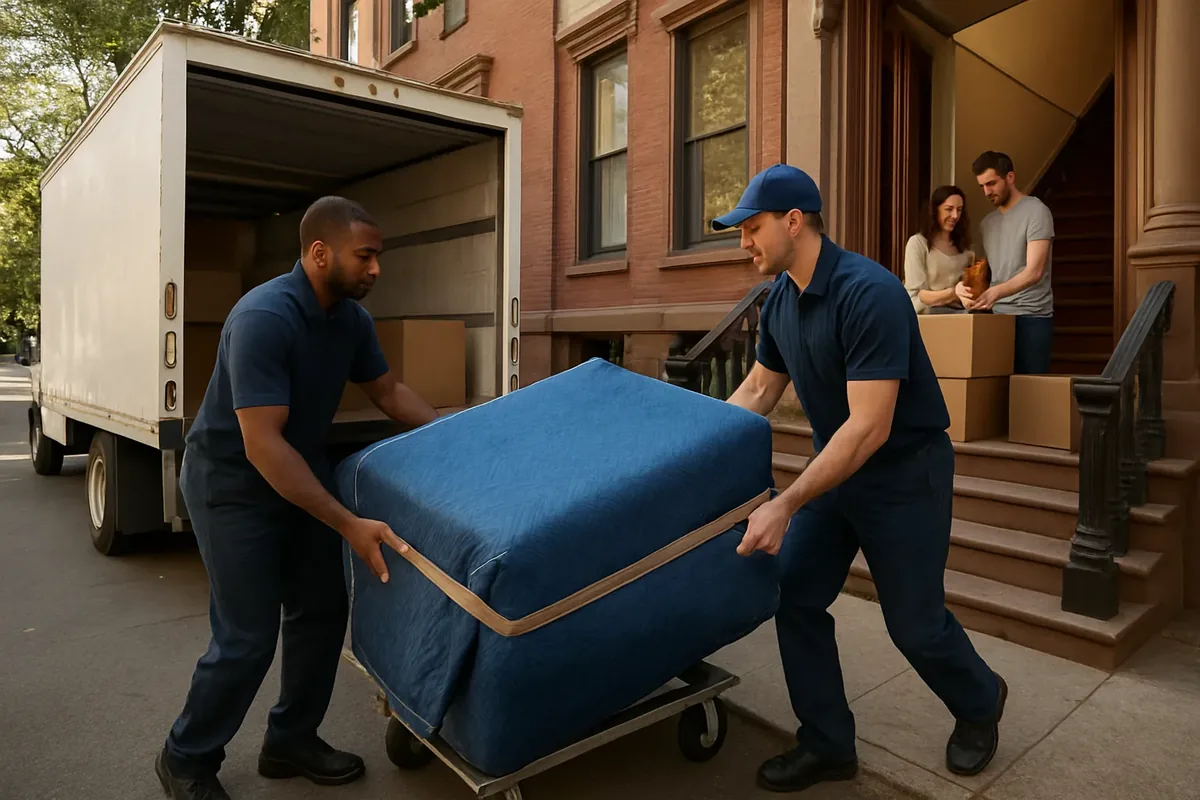
Local US apartment moves with licensed full-service crews average $640 to $1,530 for studios and 1-bedroom units and $1,270 to $3,572 for 2- and 3-bedroom apartments when self-packed, while DIY rental trucks run $155 to $507. This pillar guide decodes hourly crew math, travel fees, access surcharges, FMCSA estimate rules, and packing material ratios across every moving scenario.
apartment moving cost guides
Neoprene Runner & Door Jamb Guard Rules: Apartment Building Protection Requirements and Costs
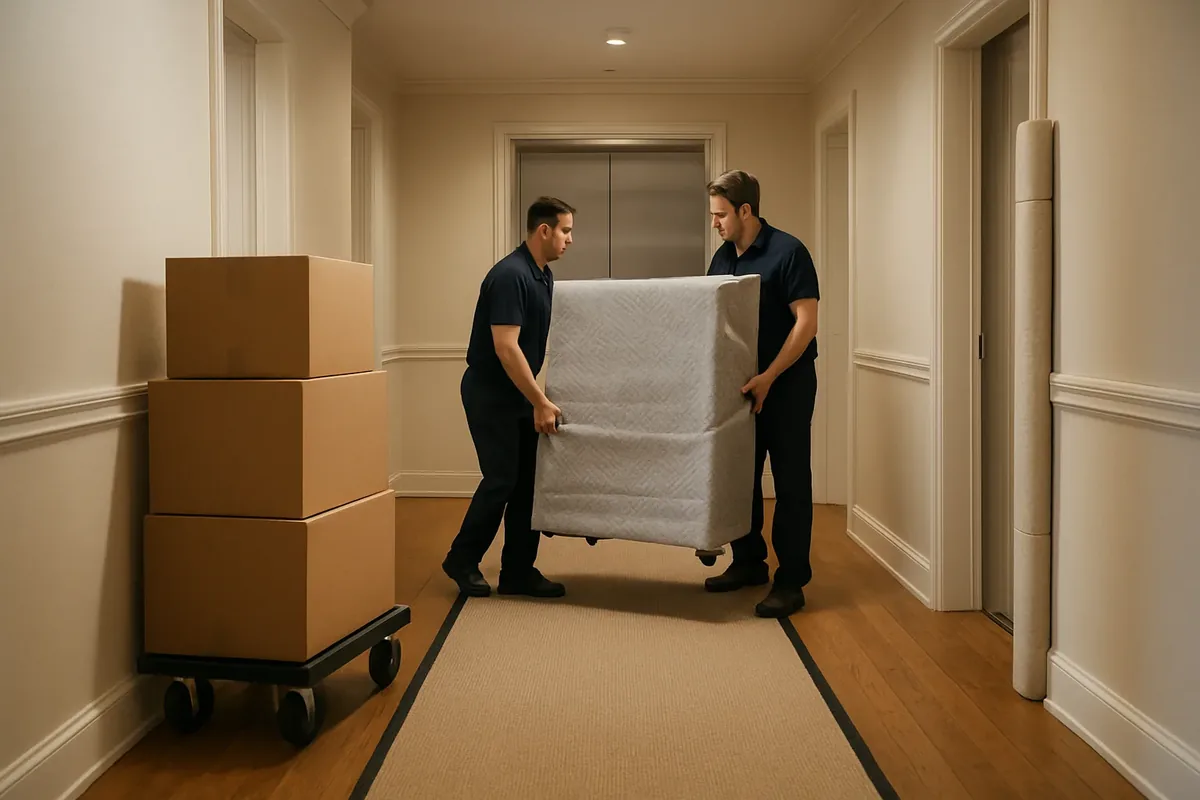
Property managers and condo boards routinely enforce strict floor runner and door-frame padding rules—billing $150 to $500 in move fees or deducting $250+ from your security deposit for a single chipped door casing. Compare mover protection charges against DIY runners and jamb guards.
apartment moving cost guides
Shared Elevator Cycle Delay Minutes: Calculating the Real Labor Cost of Unreserved Elevators
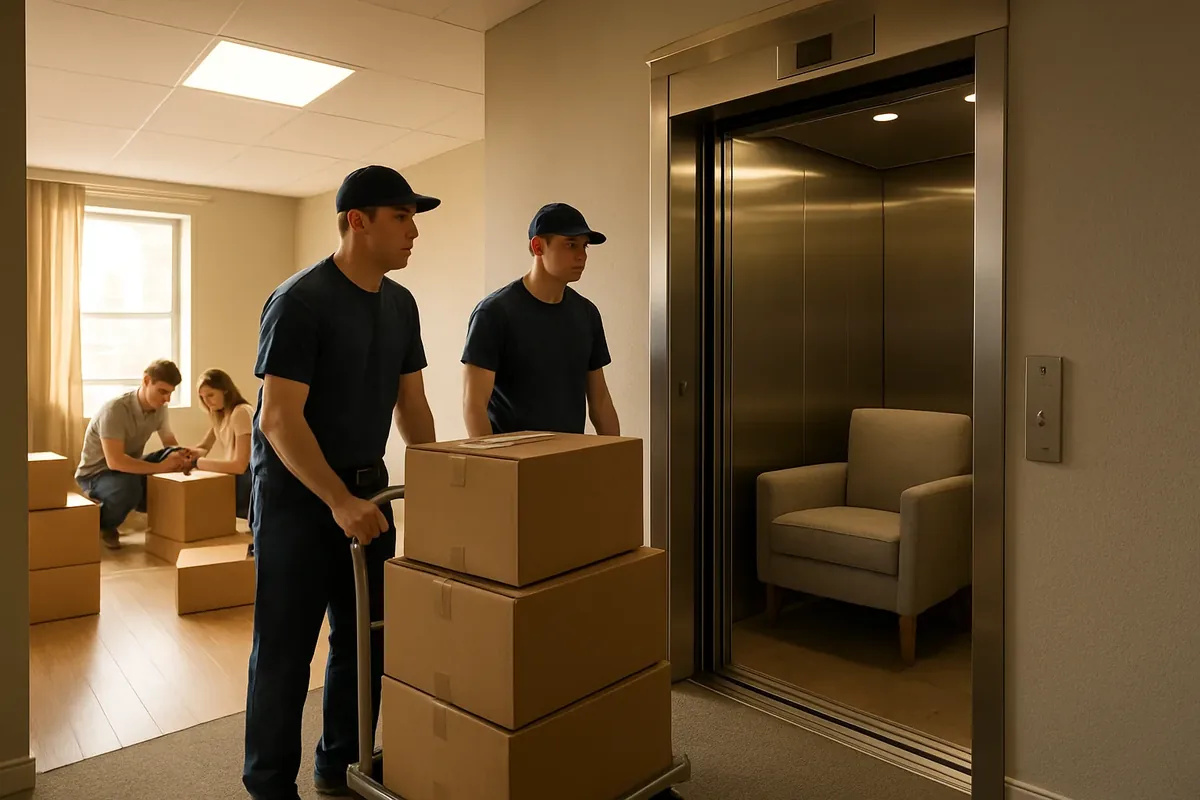
Moving out of a mid-rise or high-rise without a locked freight elevator forces movers to compete with commuting neighbors and delivery drivers on every trip. Learn how shared elevator cycle delay minutes translate into $130 to $411 in extra hourly crew labor—and how to slash cab wait time.
apartment moving cost guides
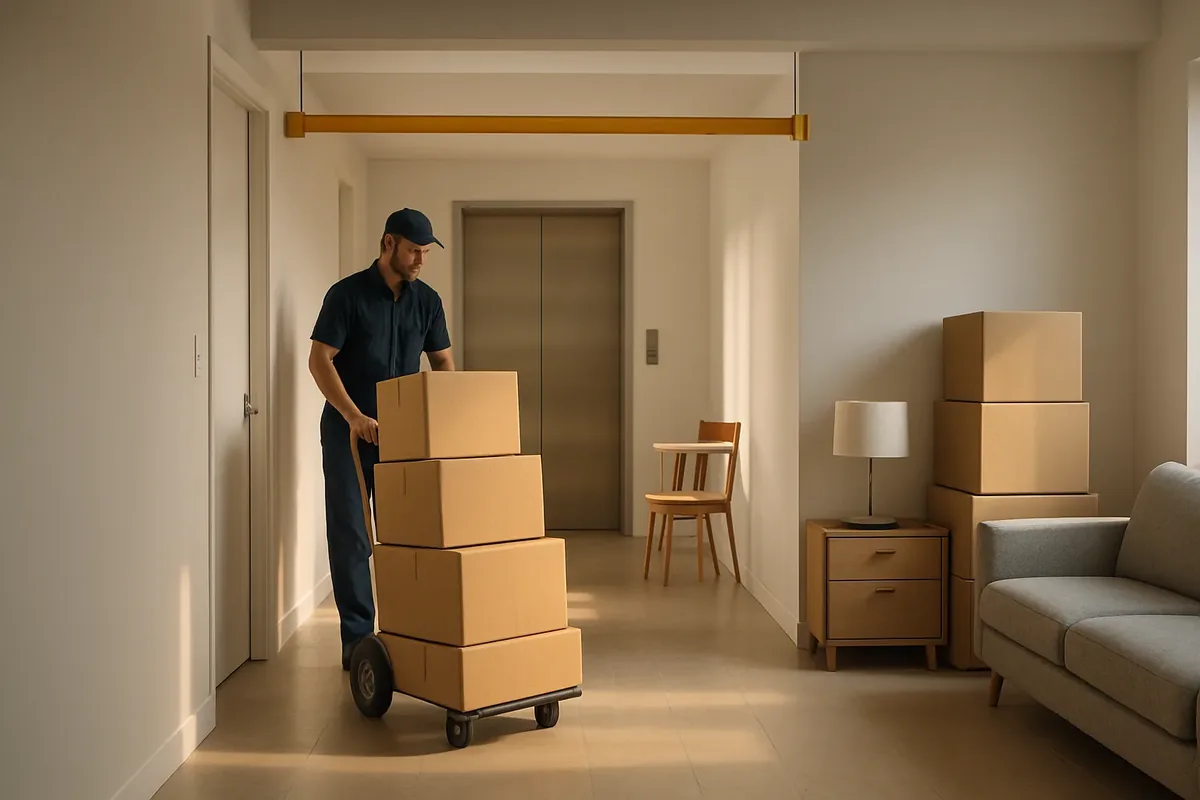
Low-Clearance Apartment Garages: Avoiding $5,000 Truck Roof Hits & Loading Dock Fines
Most residential underground parking garages are built with 6 ft 8 in to 7 ft 2 in vertical clearance bars, while even the smallest 10-foot rental box truck stands 8 ft 7 in to 9 ft 6 in tall. Here is how to avoid $3,500 to $8,500 in excluded overhead collision liability and budget for long-carry curb staging.