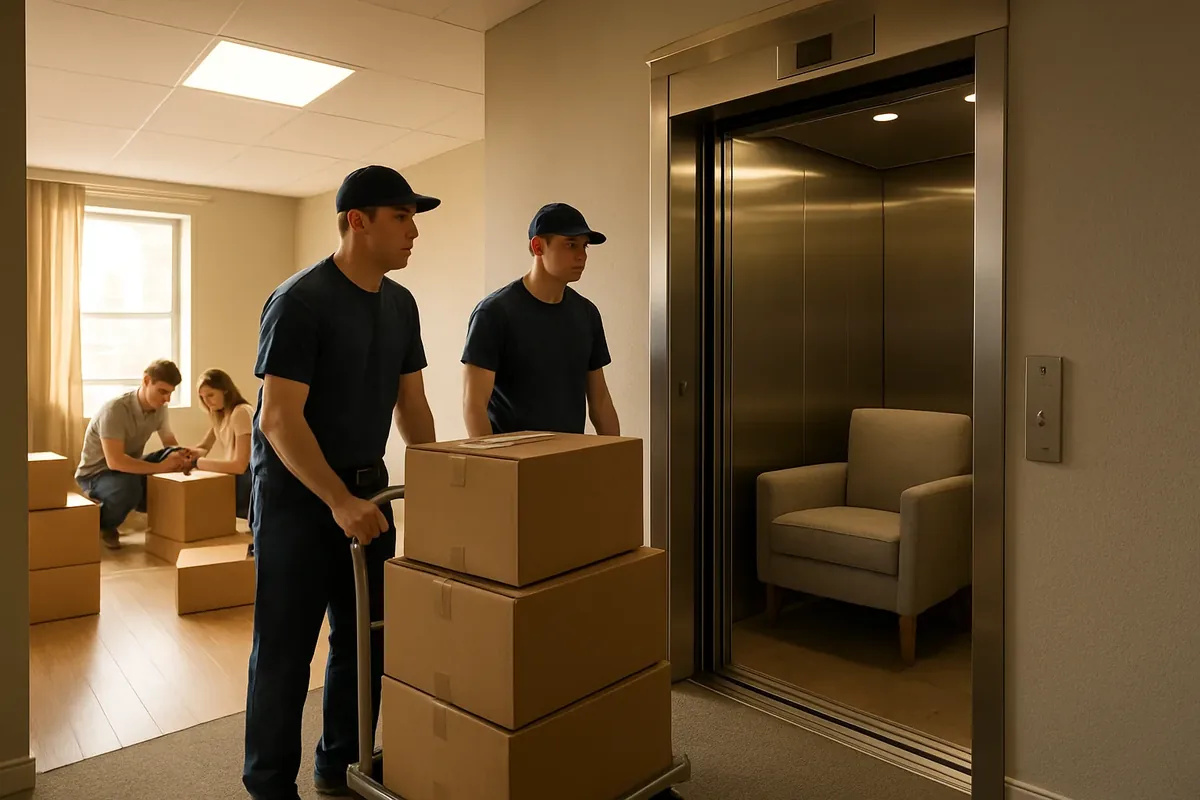
In this guide
- The Cycle-Time Math Behind Shared Elevator Delays
- Ground Floor vs. Freight Elevator vs. Shared Passenger Cab Costs by Apartment Size
- Four Hidden Bottle-Necks That Stretch Shared Elevator Moves Even Longer
- Packing & Pre-Staging Gear That Cuts Total Elevator Trips by 30%
- 5-Step Relay Strategy to Beat Unreserved Passenger Elevator Delays
The Cycle-Time Math Behind Shared Elevator Delays
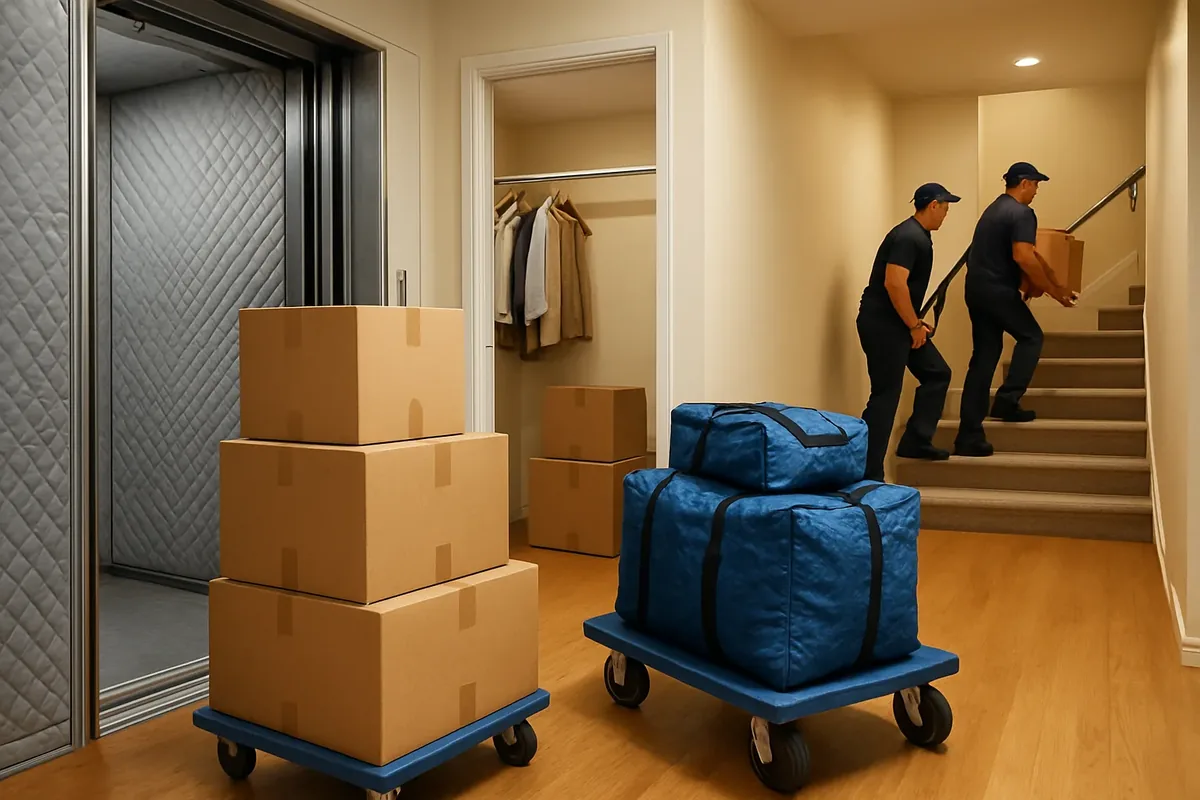
When moving estimators ask whether your origin and destination apartments have a 'reserved freight elevator' or a 'shared passenger elevator,' they are not asking out of curiosity—they are pricing cab cycle time. A commercial freight elevator locked onto independent service with an override key moves straight from your apartment floor to the loading dock without stopping, typically averaging 2.5 to 3.5 minutes per round-trip cycle and holding two full four-wheel platform dollies (12 to 16 medium boxes) or an entire 84-inch sofa plus an armchair.
By contrast, an unreserved passenger elevator (typically rated at 2,000–2,500 lbs with an 80-inch cab height and narrower 36-inch doorway) stops on multiple floors for commuters, dog walkers, strollers, and grocery deliveries. Instead of a crisp 3-minute round trip, each cycle stretches to 6 to 9 minutes—and smaller cab dimensions drop your load per trip by 35% to 45%. Multiplying 4 extra shared elevator cycle delay minutes across 16 to 28 trips adds 64 to 112 dead waiting minutes while your crew's hourly clock runs uninterrupted.
Ground Floor vs. Freight Elevator vs. Shared Passenger Cab Costs by Apartment Size
National apartment moving benchmarks isolate the exact labor penalty of elevator access across every unit size: a reserved freight elevator adds 0.5 to 1.0 hours (or $45–$95 access surcharge) due to dock security check-in and staging, whereas an unreserved shared passenger elevator adds 1.0 to 1.75 extra crew hours (or $85–$175 surcharge)—pushing total labor far above ground-floor rolling rates.
| Apartment Size (Crew & Volume) | Ground Floor Base (Labor + $75–$145 Truck + DIY Mat.) | Reserved Freight Elevator (+0.5–1.0 Hr / $45–$95) | Shared Passenger Elevator (+1.0–1.75 Hrs / $85–$175) | Extra Labor Cost of Unreserved Shared Cab vs. Ground |
|---|---|---|---|---|
| Studio (250 cu ft / 2 Crew @ $125–$165/hr) | $575 – $970 + $65–$110 DIY kit | $638 – $1,135 (4.5–6.0 total hrs incl. travel) | $700 – $1,259 (5.0–6.75 total hrs incl. travel) | +$125 – $289 in pure cab waiting labor |
| 1-Bedroom (420 cu ft / 2 Crew @ $130–$175/hr) | $725 – $1,370 + $95–$160 DIY kit | $790 – $1,545 (5.5–8.0 total hrs incl. travel) | $855 – $1,676 (6.0–8.75 total hrs incl. travel) | +$130 – $306 in pure cab waiting labor |
| 2-Bedroom (680 cu ft / 3 Crew @ $175–$235/hr) | $1,125 – $2,140 + $145–$235 DIY kit | $1,213 – $2,375 (6.5–9.5 total hrs incl. travel) | $1,300 – $2,551 (7.0–10.25 total hrs incl. travel) | +$175 – $411 in pure cab waiting labor |
| 3-Bedroom (980 cu ft / 4 Crew @ $220–$295/hr) | $1,725 – $3,245 + $205–$330 DIY kit | $1,835 – $3,540 (8.0–11.5 total hrs incl. travel) | $1,945 – $3,761 (8.5–12.25 total hrs incl. travel) | +$220 – $516 in pure cab waiting labor |
| DIY 15-ft Rental Truck (1BR + 2-Hr Helpers) | $43–$58 truck + $170–$290 loading help | Needs 1–1.5 extra helper hrs ($85–$195) | Risk of extra truck day + 2 extra helper hrs ($170–$290) | +$120 – $320 in helper overruns & parking tickets |
Amazon US Apartment Moving Supplies
Recommended Moving Boxes, Blankets & Bags for This Move
Apartment moving supplies matched to this guide (Amazon.com affiliate ID: apartmentmovingcost-20).
Easy Mask Self-Adhesive Carpet Protection Film Roll 24" x 200 ft
Reverse-wound 3-mil puncture-resistant adhesive film shielding apartment bedroom carpet from shoe traffic
Uboxes 2–3 Bedroom Deluxe Moving Box & Wardrobe Kit (54 Boxes + Tape Gun)
54-box master apartment kit including hanging wardrobe cartons, dish boxes, tape gun, and bubble roll
Cheap Cheap 1-Bedroom Apartment Basic Moving Box Assortment (25 Boxes + Kit)
Balanced mix of 10 small book boxes, 10 medium utility boxes, and 5 large linen cartons
As an Amazon Associate I earn from qualifying purchases. Always verify live stock and pack sizing directly on Amazon.com.
Four Hidden Bottle-Necks That Stretch Shared Elevator Moves Even Longer
Lost waiting minutes are only half the problem when riding an unreserved passenger cab during a peak morning or weekend turnover window. Building physics and crew size amplify small delays into multi-hour overruns.
- Cab Door Height & Sofa Length Mismatches: Many passenger elevators measure 78" to 82" tall inside the ceiling—meaning an 86-inch or 90-inch three-seat sofa literally cannot stand upright inside the cab, forcing movers to haul it down 4 to 8 flights of concrete fire stairs (+$110–$340 stair carry effort).
- Two-Mover Crew Bottleneck (No Relay Station): With only 2 movers on a shared elevator, both crew members frequently ride down together with a heavy dresser and stand idle waiting for the cab back up. A 3-person crew keeps 1 mover staging boxes at the apartment door, 1 riding the cab, and 1 stacking inside the truck—doubling cab throughput.
- Resident Hold-Door Conflicts & Prop Sensors: Modern passenger cabs sound a loud alarm and stall after 45 to 60 seconds with the door held open, forcing crews to pack smaller two-wheel hand-truck stacks rather than loading larger four-wheel carts.
- Origin + Destination Double-Cab Penalty: If BOTH your old apartment and new high-rise share unreserved passenger cabs on the same move day, total lost wait time doubles to 2.0 to 3.5 hours—turning a $950 local 1-bedroom quote into a $1,450+ invoice.
Packing & Pre-Staging Gear That Cuts Total Elevator Trips by 30%
Because shared passenger elevators limit both cab floor area and weight per trip, reducing your total trip count and eliminating apartment-to-elevator walking delays is the fastest way to reclaim billable labor. Pre-staging stacked boxes neatly in your entry foyer—or right inside your unit hallway—lets movers fill every single square inch of the elevator cab in 30 seconds before the door chime expires.
Before stacking dozens of heavy boxes near your doorway or dragging wheeled dollies through carpeted apartment foyers, shield carpet fibers using Easy Mask Self-Adhesive Carpet Protection Film Roll 24" x 200 ft—its reverse-wound 3.0-mil peel-clean roll covers 200 sq ft without shifting, keeping wet dolly tires from grinding hallway dirt into light carpet. To maximize vertical cab stacking height inside small passenger elevators, use crisp matching cartons rather than soft bags or sagging boxes: for a 1-bedroom move, the Cheap Cheap 1-Bedroom Apartment Basic Moving Box Assortment (25 Boxes + Kit) packs 10 small book boxes, 10 medium utility boxes, and 5 large 32-ECT kraft cartons that nest five-high cleanly on a single hand truck. For larger 2-to-3-bedroom elevator moves, the Uboxes 2–3 Bedroom Deluxe Moving Box & Wardrobe Kit (54 Boxes + Tape Gun) combines heavy-duty 32–44 ECT boxes, dish packs, and hanging wardrobes so movers load dense vertical towers inside every cab ride.
5-Step Relay Strategy to Beat Unreserved Passenger Elevator Delays
- Measure Cab Doorway Height, Diagonal, and Interior Depth Before Booking. Bring a tape measure into the passenger cab and record door width, door height, ceiling height, and interior depth. Compare those numbers against your sofa, king headboard, and tall bookcases before movers arrive.
- Target a Tuesday–Thursday 8:00 AM Dispatch (Avoid 5:00 PM & Weekends). Passenger elevators peak between 7:45–9:15 AM and 4:30–6:30 PM on weekdays, and all day Saturday during weekend move-ins and grocery runs. Booking a mid-week 9:30 AM or 10:00 AM load window after morning commuters clear out cuts cab stops dramatically.
- Create a 'Foyer Staging Wall' Before Movers Arrive. Move every sealed 32-ECT box from bedrooms and closets into stacked columns within 6 feet of your apartment front door. Cutting the 60-foot bedroom walk out of each cycle lets your crew hit every arriving elevator instantly.
- Run the '1-Up, 1-Cab, 1-Dock' Three-Person Relay. If you have a 3-person crew (or 2 movers plus yourself holding doors on DIY moves), keep one person waiting right at the elevator button with the next pre-loaded hand truck so the open door never times out while someone walks back to the apartment.
- Move Loose Plants, Lamps, and Small Totes in Your Personal Car Beforehand. Odd-shaped loose items eat entire elevator rides because they cannot be stacked under boxes. Clearing 10 to 15 loose items in your car trunk removes 3 to 4 full elevator trips ($35–$85 in crew labor).
Compare Reserved Freight Elevator vs. Shared Passenger Elevator and Walk-Up hourly totals in our Apartment Moving Cost Calculator or Movers vs. DIY Rental Truck Comparator.
Open Calculator →Frequently Asked Questions
How much extra does a shared unreserved elevator add to a 1-bedroom or 2-bedroom moving bill?+
Across national moving pricing benchmarks, an unreserved shared passenger elevator adds 1.0 to 1.75 extra billable crew hours (or a $85–$175 flat surcharge). At standard hourly rates of $130–$175/hr for a 1-bedroom (2 movers) and $175–$235/hr for a 2-bedroom (3 movers), that waiting drag adds $130 to $411 to your total bill.
Why do movers still add 0.5 to 1.0 hours for a reserved freight elevator?+
Even when a freight elevator is locked exclusively for your move, crews lose 30 to 60 total minutes checking in with dock security, presenting their Certificate of Insurance (COI), waiting for building engineers to unlock keypads and hang cab pads, and walking longer basement service corridors out to the loading dock.
Is it faster to hire 3 movers instead of 2 movers in an apartment with a slow shared elevator?+
Often yes—especially on a 1-bedroom or 2-bedroom move on floors 6 through 30. With 2 movers, both often ride the cab together or wait on opposite ends; with 3 movers ($175–$235/hr), one mover stages loads by the apartment door, one rides the elevator, and one packs the truck—cutting total job duration by 25% to 35% so total cost stays similar or drops.
What happens if my sofa does not fit inside the building's passenger elevator?+
If an 84-to-92-inch sofa exceeds the passenger cab's interior diagonal height, movers must carry it down the building's concrete emergency stairwell—which frequently triggers a per-flight walk-up carry surcharge ($55–$95 for 2nd floor, $110–$190 for 3rd, up to $185–$340+ on higher floors) or extra crew carry time.
Does elevator wait time affect interstate flat-rate moves or California Double Drive Time?+
On hourly local moves (including California moves subject to Double Drive Time on actual transit driving), elevator wait time is billed directly on the on-site clock. On FMCSA-regulated binding interstate moves, estimators assess elevator access upfront as an accessorial charge—or the driver may add an 'Excessive Elevator Delay' or stair carry addendum at delivery if a promised freight cab was not reserved.
Interactive US Moving Tools
Compare Full-Service Movers vs. DIY Rental Truck in 30 seconds
Related Guides
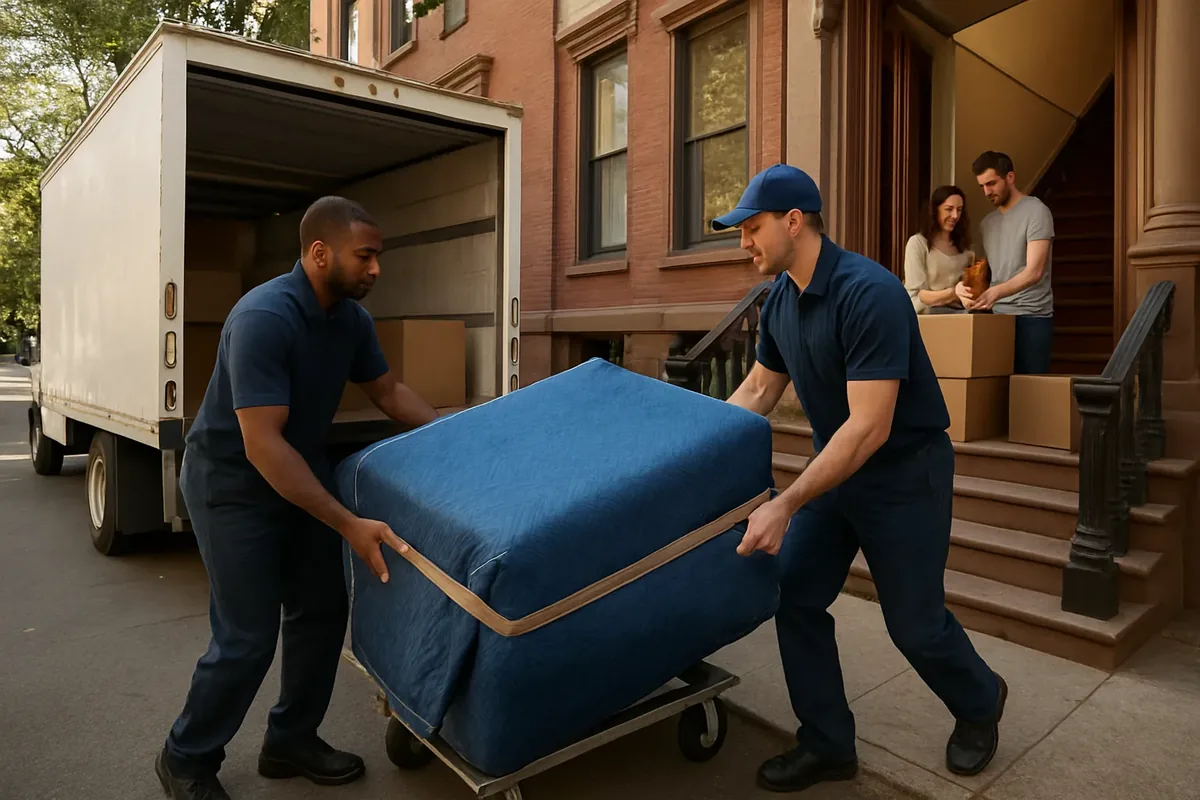
apartment moving cost guides
Apartment Moving Cost Guides: Complete US Hourly Rates, Flat-Rate Quotes & Benchmarks
Local US apartment moves with licensed full-service crews average $640 to $1,530 for studios and 1-bedroom units and $1,270 to $3,572 for 2- and 3-bedroom apartments when self-packed, while DIY rental trucks run $155 to $507. This pillar guide decodes hourly crew math, travel fees, access surcharges, FMCSA estimate rules, and packing material ratios across every moving scenario.
apartment moving cost guides
Low-Clearance Apartment Garages: Avoiding $5,000 Truck Roof Hits & Loading Dock Fines
Most residential underground parking garages are built with 6 ft 8 in to 7 ft 2 in vertical clearance bars, while even the smallest 10-foot rental box truck stands 8 ft 7 in to 9 ft 6 in tall. Here is how to avoid $3,500 to $8,500 in excluded overhead collision liability and budget for long-carry curb staging.
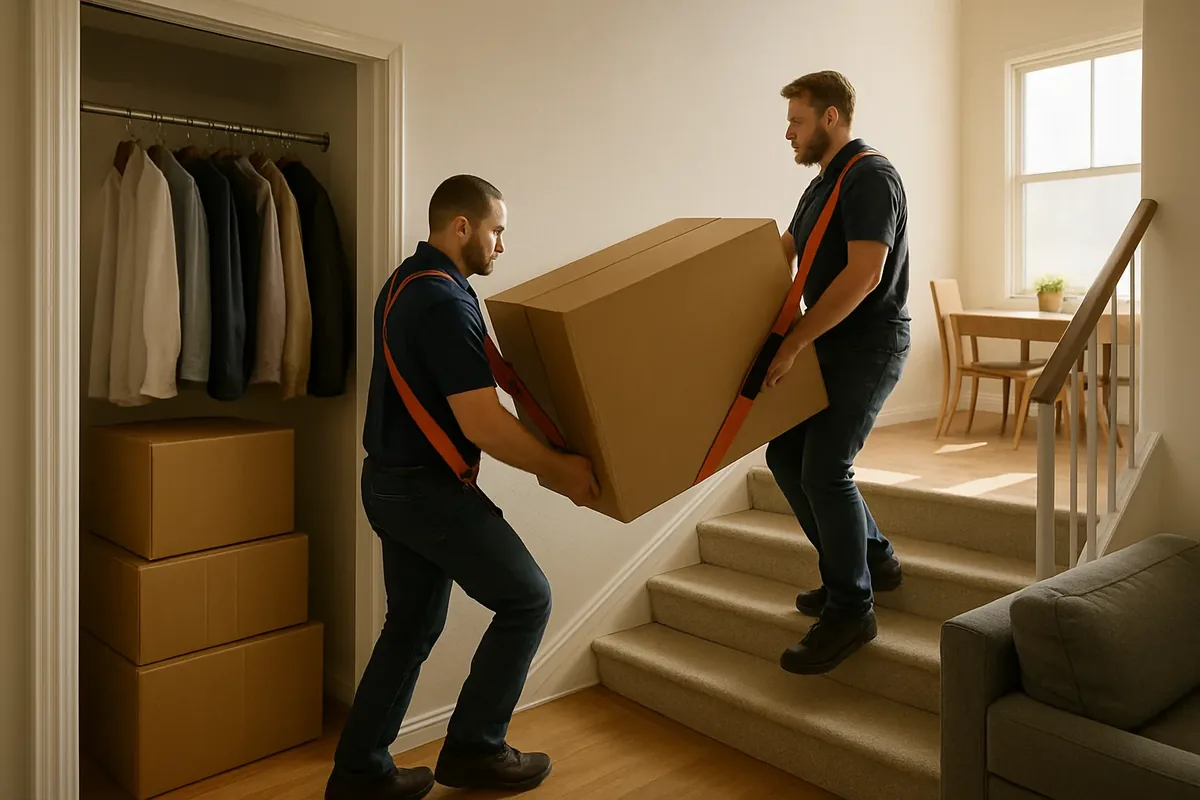
apartment moving cost guides
Moving Into a Furnished Sublet: Boxes-Only & Micro-Load Apartment Pricing
Relocating into a furnished sublet or corporate apartment cuts your shipment volume from 420 cubic feet down to 90–160 cubic feet of boxes, clothing, and a desk setup. Learn how mover minimum-hour rules work and when a cargo van or micro-load crew saves $250 to $450.
apartment moving cost guides
Apartment Building Move-In Fees ($150–$500) & Refundable Elevator Deposits
Moving out of one high-rise and into another can trigger $300 to $1,000 in combined non-refundable HOA administrative move fees plus $500 to $2,000 in temporary elevator damage deposits. Here is how to budget both buildings and avoid overtime slot penalties.