
In this guide
- Why 7-Foot Apartment Garage Clearances Destroy Moving Budgets
- Moving Vehicle Height Specs vs. Apartment Garage & Dock Limits
- The Hidden Cost of Low Garages: Long-Carry & Shuttle Fees
- How Box Standardizing Cuts Curb-to-Elevator Rolling Time
- Step-by-Step Protocol to Audit Garage & Dock Clearances Before Move Day
Why 7-Foot Apartment Garage Clearances Destroy Moving Budgets
Underground podium parking decks and mid-rise residential garages across the United States are engineered for passenger sedans and compact crossovers—not commercial moving equipment. Standard cast-in-place concrete apartment garages typically post maximum entry clearances between 6 ft 8 in (80 inches) and 7 ft 2 in (86 inches). Even when a lobby concrete ceiling looks high, dangling PVC drain pipes, pressurized fire suppression mains, exhaust ductwork, and motorized aluminum security gates reduce actual vertical clearance at the bottom of the ramp slope.
First-time DIY movers routinely assume that a compact 10-foot box truck or a high-roof Sprinter-style cargo van can pull into an apartment garage to reach the basement service elevator. In reality, a 10-foot box truck has an exterior box height of 8 ft 7 in to 9 ft 3 in, and a 15-to-20-foot truck stands 10 ft 6 in to 11 ft 6 in tall. Striking a 7-foot clearance beam peels back the aluminum roof skin and fiberglass cap—a collision known in the truck rental industry as a 'can-opener' strike.
Moving Vehicle Height Specs vs. Apartment Garage & Dock Limits
Before reserving a rental vehicle or signing an estimate with a full-service carrier, match the exact vertical height and dock bumper elevation of your origin and destination buildings against standard US fleet dimensions. Note that vehicle height sits 1.5 to 2.5 inches higher when the cargo box is empty due to uncompressed rear leaf springs, and the transition angle at the base of a steep garage ramp temporarily pitches the top front corner of a box truck upward by another 3 to 5 inches.
| Vehicle / Access Scenario | Exterior Height | Fits 7-Ft (84 in) Garage? | Fits 12-Ft Commercial Dock? | Base Rate / Financial Impact |
|---|---|---|---|---|
| Standard-Roof Cargo Van (200–250 cu ft) | 6 ft 6 in – 6 ft 10 in | Yes (verify ramp angle & pipes) | Yes (ground-level load) | $20–$30/day + $0.99–$1.39/mi local |
| High-Roof Extended Cargo Van | 8 ft 10 in – 9 ft 3 in | No — instant roof impact | Yes (ground-level load) | $3,000–$6,000 roof peel repair risk |
| 10-ft Box Truck (Studio / 250 cu ft) | 8 ft 7 in – 9 ft 4 in | No — exceeds bar by 19–28 in | Yes (deck sits below 48-in dock) | $20–$30/day + $0.99–$1.39/mi local |
| 12–15 ft Moving Truck (1BR / 420 cu ft) | 9 ft 6 in – 10 ft 6 in | No — requires curb staging | Yes (requires dock plate bridge) | $30–$40/day + $1.09–$1.49/mi local |
| 15–20 ft Moving Truck (2BR / 680 cu ft) | 10 ft 6 in – 11 ft 6 in | No — requires curb or alley dock | Yes (standard 36–44 in bed height) | $40–$55/day + $1.19–$1.59/mi local |
| 26-ft Commercial Straight Truck (3–4BR) | 12 ft 0 in – 13 ft 6 in | No — street or full 14-ft dock only | Only if dock bay clears 13 ft 6 in | $60–$85/day DIY or $220–$315/hr crew |
Amazon US Apartment Moving Supplies
Recommended Moving Boxes, Blankets & Bags for This Move
Apartment moving supplies matched to this guide (Amazon.com affiliate ID: apartmentmovingcost-20).
Uboxes Economy Studio & 1-Bedroom Apartment Moving Box Kit (20 Boxes + Tape)
Assorted small and medium 32-ECT corrugated moving boxes with acrylic packing tape and marker
Uboxes 3–4 Bedroom Master Apartment & Loft Moving Kit (75 Boxes + Supplies)
High-volume 75-box corrugated moving package with double-wall kitchen boxes and 3 wardrobe cartons
Cheap Cheap 2-Bedroom Deluxe Apartment Moving Kit with Dish & Glass Pack (42 Boxes)
42-box apartment kit featuring partitioned stemware and plate inserts for fragile kitchen cabinets
As an Amazon Associate I earn from qualifying purchases. Always verify live stock and pack sizing directly on Amazon.com.
The Hidden Cost of Low Garages: Long-Carry & Shuttle Fees
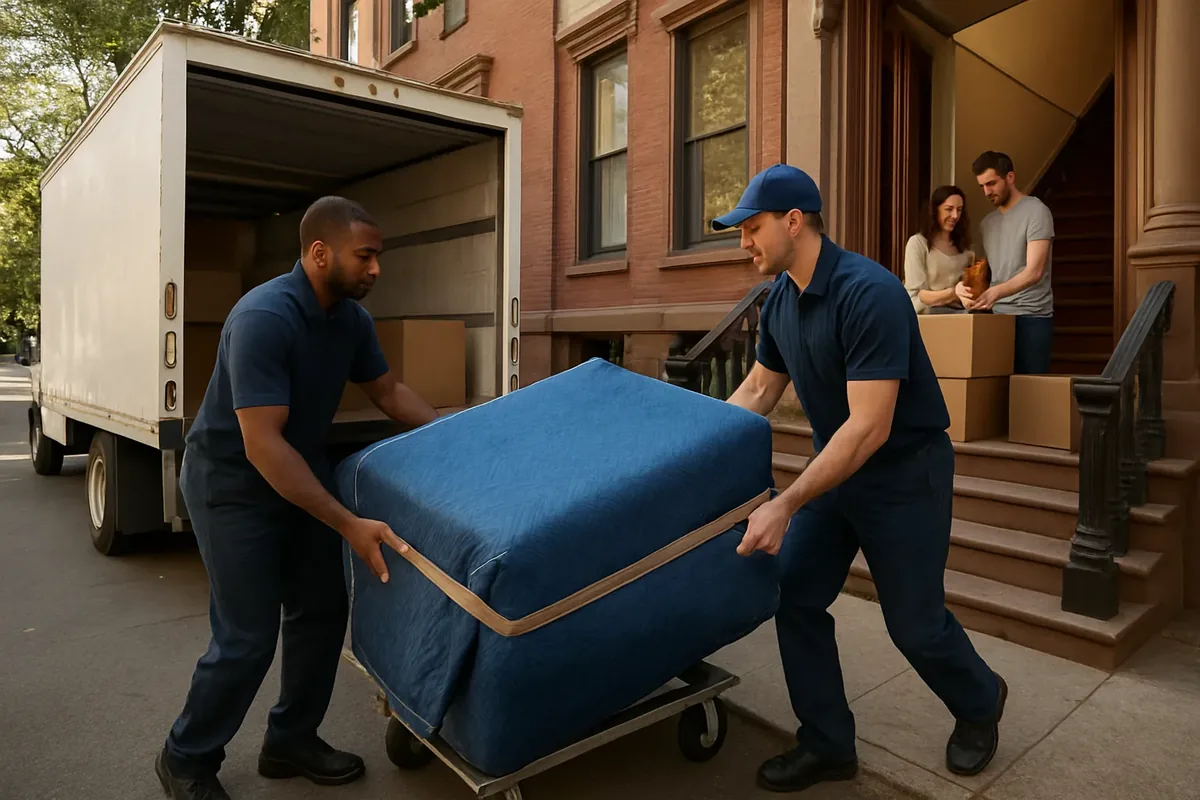
When a moving truck cannot enter an apartment building's basement garage or pull under a low porte-cochere canopy, the truck must stage at the nearest legal street curb or outer surface lot. In sprawling garden-style complexes or dense urban high-rises with subterranean service corridors, curb staging often stretches the walking distance between the truck ramp and the freight elevator from 30 feet out to 150 or 300 feet.
In the US moving industry, any push distance exceeding 75 feet from the truck tailgate to the building entrance or elevator threshold triggers a Long Carry surcharge. On local hourly moves, a 150-to-250-foot garage bypass walk adds a flat $65 to $135 long-carry fee or extends total crew time by 0.75 to 1.5 hours. For a 1-bedroom move billed at $130 to $175 per hour (2-person crew) or a 2-bedroom move billed at $175 to $235 per hour (3-person crew), that extra rolling time adds $100 to $350 to your final labor invoice—still less than 5% of the cost of a single roof collision.
- Building Property Damage Liability ($1,200–$4,500+): Hitting an aluminum height-restriction bar, infrared gate sensor, or overhead wet fire sprinkler pipe inside a residential garage results in immediate HOA or property management repair invoices deducted from your move-in deposit and billed directly to the leaseholder.
- Loading Dock Bed-Height Mismatch (30 in vs. 48 in): Commercial high-rise loading docks are built 46 to 52 inches off the ground for semi-trailers. A 10-foot or 15-foot rental truck has a deck height of only 28 to 36 inches, meaning the building's steel dock leveler plate cannot drop low enough without bottoming out.
- Long-Distance Tractor-Trailer Shuttle Fees ($350–$850): If you are moving interstate (250–2,500+ miles) and your belongings arrive on a 53-foot semi-trailer (13 ft 6 in tall) that cannot fit into your street or alley dock, the van line charges a mandatory auxiliary shuttle fee to transfer your shipment into a smaller 16-to-20-foot straight truck.
- Unpermitted Street Curb Fines ($115–$250 per ticket): Staging a box truck in an active bike lane or meter zone outside a low-clearance garage without municipal temporary 'No Parking' tow-away permits exposes DIY drivers and moving crews to multiple parking citations during a 4-to-7-hour move.
How Box Standardizing Cuts Curb-to-Elevator Rolling Time
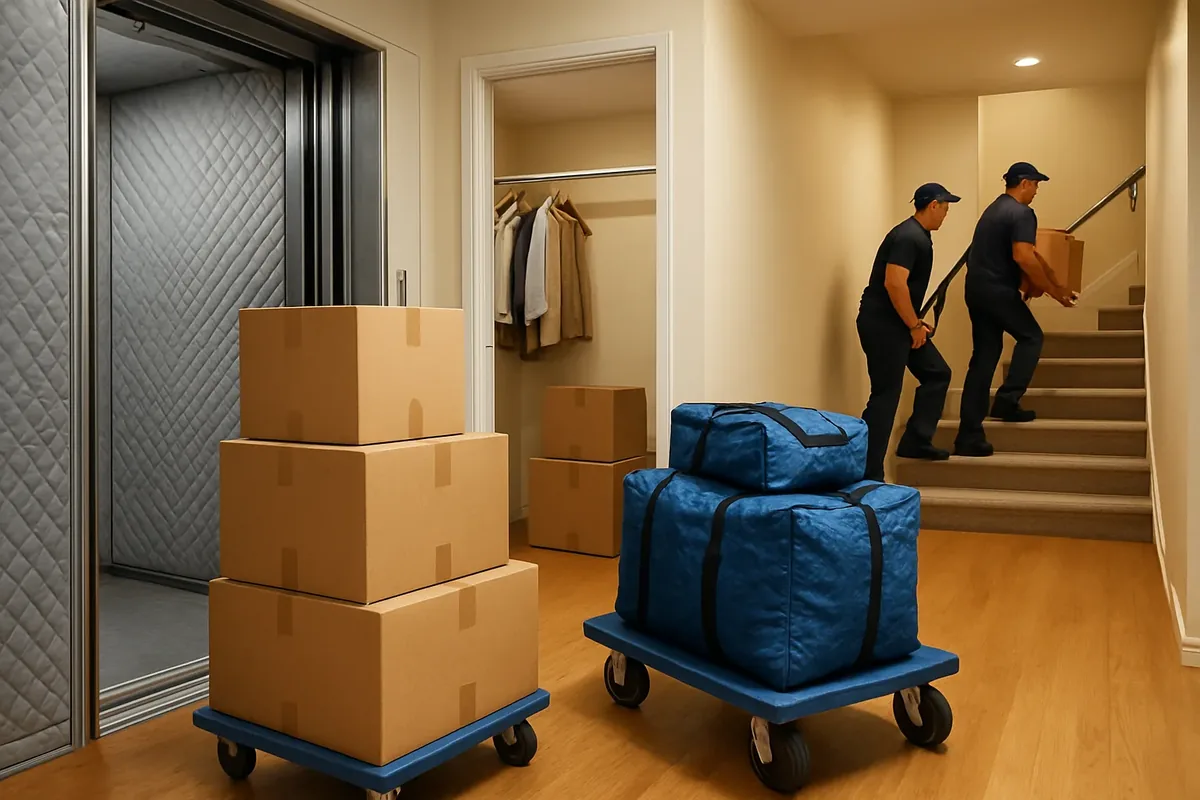
When your truck is forced to park at the street curb outside a 7-foot garage ramp, the single most effective way to neutralize extra hourly labor charges is maximizing four-wheel dolly stack density. Professional movers can roll four to five uniform 32-ECT corrugated cartons on a single hand truck or twelve boxes on a flat four-wheel panel cart—provided every carton shares an identical footprint and structural wall rating.
For compact studio or 1-bedroom moves staging from a curb or standard-roof cargo van, the Uboxes Economy Studio & 1-Bedroom Apartment Moving Box Kit (20 Boxes + Tape) provides matched 32-ECT corrugated small and medium cartons that lock cleanly onto a dolly noseplate. Renters handling a 2-bedroom layout with fragile kitchenware can utilize the Cheap Cheap 2-Bedroom Deluxe Apartment Moving Kit with Dish & Glass Pack (42 Boxes), which pairs 32-ECT outer cartons with partitioned cell dividers so dish boxes can sit safely inside high-speed dolly stacks. For larger 3-to-4-bedroom residences or multi-story lofts requiring 150-foot garage hallway pushes, the Uboxes 3–4 Bedroom Master Apartment & Loft Moving Kit (75 Boxes + Supplies) upgrades high-load kitchen boxes to 32–44 ECT pro-grade board alongside 3 upright wardrobe cartons.
Step-by-Step Protocol to Audit Garage & Dock Clearances Before Move Day
- Request the Exact Dock Spec Sheet From Property Management. Ask the leasing office or concierge for three specific numbers in writing: maximum vertical entry clearance (in feet and inches), maximum truck length allowed in the loading bay, and dock platform height from the pavement.
- Inspect the Ramp Transition and Overhead Pipes in Person. Walk the truck path from the street apron down the ramp to the freight elevator doorway. Look for low-hanging cast-iron drain traps, sprinkler valves, or security gate motors that sit 2 to 4 inches lower than the painted yellow clearance bar at the entrance.
- Match Your Truck Reservation to the Lowest Pinch Point. Never drive any vehicle taller than 6 ft 6 in into a 7-foot residential parking garage. If your move requires a 12-to-20-foot box truck (9 ft 6 in to 11 ft 6 in tall), plan for street-level curb staging or an open-air surface loading zone from day one.
- Measure the Push Path for the 75-Foot Long-Carry Rule. Count your paces from the legal street curb parking spot to the freight elevator cab (roughly 2.5 feet per stride). If the distance exceeds 75 feet (30 strides), disclose it to your moving estimator upfront so they dispatch two extra four-wheel flat dollies and include any $65–$135 long-carry fee in your binding quote.
- Stage Uniform 32-ECT Box Stacks by the Front Door. Pre-stack sealed small and medium 32-ECT boxes in 4-foot-tall columns sorted by footprint. Having uniform stacks ready allows a 2- or 3-person crew to load speed carts continuously, cutting curb-to-elevator transit time by 35 to 50 minutes.
Compare curb-staged full-service movers against a DIY box truck or cargo van rental for your exact floor level and walking distance in our Apartment Moving Cost Calculator.
Open Calculator →Frequently Asked Questions
Will a 10-foot U-Haul or Penske box truck fit inside a 7-foot apartment parking garage?+
No. Even the smallest 10-foot rental box truck stands between 8 ft 7 in and 9 ft 4 in tall—nearly two full feet taller than a 7-foot (84-inch) residential parking garage clearance bar. Attempting to enter a 7-foot garage in a 10-foot box truck will crush the overhead fiberglass roof cap and tear open the upper aluminum box rails.
Does rental truck collision insurance cover roof damage from a low-clearance garage or awning?+
Almost never under basic or standard damage waivers. Commercial truck rental contracts specifically exclude overhead strikes caused by driving under bridges, parking garage beams, drive-thru canopies, or apartment porte-cocheres. Unless you purchase a specialized high-tier commercial waiver that explicitly includes overhead coverage, the renter is 100% personally liable for $3,500 to $8,500 in roof assembly replacement costs.
What happens if my moving truck is too short to reach an elevated 48-inch high-rise loading dock?+
Commercial high-rise docks are built 48 inches high for semi-trailers, whereas 10-to-15-foot residential box trucks have bed heights of 28 to 36 inches. If the building's hydraulic dock plate cannot angle down far enough to meet the truck bed, the crew must park slightly forward of the dock bumper, pull out the truck's slide-out aluminum walk ramp to the asphalt floor of the bay, and roll dollies up the dock stairs or side access ramp.
How much do movers charge when a low garage forces a long walk from the street curb?+
For local moves billed hourly ($130–$175/hr for 2 movers or $175–$235/hr for 3 movers), most licensed carriers either charge a flat Long Carry fee of $65 to $135 for every 75 feet beyond the initial 75-foot threshold, or simply bill the additional 45 to 90 minutes of rolling time required to push four-wheel carts from the street curb through the garage to the freight elevator.
Does a building Certificate of Insurance (COI) cover garage door or sprinkler damage caused by my movers?+
Yes, provided you hire a licensed, insured moving company that issues a building-specific COI naming the property management company and condo association as Additional Insureds (typically requiring $1,000,000 to $2,000,000 in General Liability and Auto Liability). If you rent a DIY truck and hit the building's garage gate or sprinkler pipe yourself, you have no commercial COI protection and must pay the building's contractor invoice directly.
Interactive US Moving Tools
Compare Full-Service Movers vs. DIY Rental Truck in 30 seconds
Related Guides
apartment moving cost guides
Apartment Moving Cost Guides: Complete US Hourly Rates, Flat-Rate Quotes & Benchmarks
Local US apartment moves with licensed full-service crews average $640 to $1,530 for studios and 1-bedroom units and $1,270 to $3,572 for 2- and 3-bedroom apartments when self-packed, while DIY rental trucks run $155 to $507. This pillar guide decodes hourly crew math, travel fees, access surcharges, FMCSA estimate rules, and packing material ratios across every moving scenario.
apartment moving cost guides
Moving Into a Furnished Sublet: Boxes-Only & Micro-Load Apartment Pricing
Relocating into a furnished sublet or corporate apartment cuts your shipment volume from 420 cubic feet down to 90–160 cubic feet of boxes, clothing, and a desk setup. Learn how mover minimum-hour rules work and when a cargo van or micro-load crew saves $250 to $450.
apartment moving cost guides
Apartment Building Move-In Fees ($150–$500) & Refundable Elevator Deposits
Moving out of one high-rise and into another can trigger $300 to $1,000 in combined non-refundable HOA administrative move fees plus $500 to $2,000 in temporary elevator damage deposits. Here is how to budget both buildings and avoid overtime slot penalties.

apartment moving cost guides
Union High-Rise Freight Elevator Operator, Dock Marshal & Security Guard Fees
In large urban high-rise towers staffed by building service unions or commercial dock marshals, tenants are often billed $45 to $110 per hour for a dedicated freight elevator operator or loading dock security guard. Here is how to calculate these mandatory surcharges and prevent 1.5x overtime rates.