In this guide
- Pure DIY vs. Hybrid Loading Helpers vs. Full-Service Movers
- 5 Building Rules That Make or Break a DIY Freight Elevator Move
- DIY Gear Checklist: Lifting Straps, Tie-Downs, and Folding Carts
- Step-by-Step Hybrid Playbook to Finish Inside a 2-Hour Window
- When Paying Full-Service Movers Beats DIY on a Freight Elevator
Pure DIY vs. Hybrid Loading Helpers vs. Full-Service Movers
A reserved freight service elevator looks like an easy DIY move on paper: no three-story walk-up staircases, wide steel doors, and a direct path to a loading dock. Yet high-rise logistics introduce three distinct choices for apartment renters: driving and hauling everything yourself, renting a truck plus hiring 2-hour loading helpers ($170–$290) strictly for sofas and dressers, or booking a full-service moving company ($125–$235/hr plus $45–$95 freight fee).
The dollar gap between those paths is substantial. A local 1-bedroom DIY rental (12–15 ft truck at $30–$40/day base, 12 miles at $1.09–$1.49/mi, $4–$5 fuel at $3.55/gal and 10 MPG, plus $95–$160 in DIY boxes) totals just $142 to $223. Bringing in 2-hour loading helpers ($170–$290) brings the hybrid 1-bedroom budget to $312 to $513—still roughly $520 to $1,125 below full-service local movers ($835–$1,640 before boxes, or $930–$1,800 with DIY boxes). On a 600-mile interstate move (3 DIY rental days, $0.88–$1.28/mi, 60 gallons of fuel = $213), a 1-bedroom hybrid DIY truck + helpers runs $1,096 to $1,551 versus $2,234 to $3,668+ for an interstate full-service carrier (3,200 lbs at $0.42–$0.64/lb plus $780–$1,350 transport and $110–$270 freight access).
| Apartment Size & Distance | Pure DIY Truck + Fuel + Boxes | Hybrid DIY + 2-Hr Helpers ($170–$290) | Full-Service Movers (1 Freight End + DIY Boxes) | Max Hybrid Savings vs. Pro |
|---|---|---|---|---|
| Studio (<15 mi Local, 10-ft Van) | $101 – $161 | $271 – $451 | $748 – $1,340 | Save $477 – $889 |
| 1-Bedroom (<15 mi Local, 12–15 ft Truck) | $142 – $223 | $312 – $513 | $930 – $1,800 | Save $618 – $1,287 |
| 1-Bedroom (35 mi Metro, 12–15 ft Truck) | $176 – $265 | $346 – $555 | $995 – $1,915 | Save $649 – $1,360 |
| 2-Bedroom (<15 mi Local, 15–20 ft Truck) | $203 – $314 | $373 – $604 | $1,403 – $2,708 | Save $1,030 – $2,104 |
| 1-Bedroom (600 mi Interstate, 3 DIY Days) | $926 – $1,261 | $1,096 – $1,551 | $2,329 – $3,828 | Save $1,233 – $2,277 |
5 Building Rules That Make or Break a DIY Freight Elevator Move
Commercial movers carry their own Masonite sheets, freight elevator blankets, and dock permits; DIY renters have to verify building rules at least two weeks in advance so a missed technicality does not strand a $40-a-day rental truck at the curb:
- Loading Dock Vertical Clearance (10–13 ft): A 15-ft rental truck typically needs 10 feet of clearance and a 20-ft truck needs 12 feet. Underground podium docks built at 8 feet 2 inches block standard box trucks, forcing you to roll loads up a steep garage ramp or park curbside (>75 ft carry).
- Refundable Damage Deposit ($150–$500): While commercial crews provide a COI, most high-rises require DIY residents to place a refundable check or card hold with management before unlocking the service cab.
- Zero-Overlap 2-to-4-Hour Booking Windows: Without a dedicated crew of 2 or 3 professionals, solo renters often underestimate elevator cycle time; pre-staging every sealed box inside your apartment entry before the clock starts is non-negotiable.
- Weekend and Holiday Blackouts: Many downtown HOA boards and Class-A apartments restrict freight elevator reservations to Monday–Friday 9:00 AM–4:30 PM, meaning DIY moves may require taking a workday off—or checking building rules before renting a weekend truck.
- Equipment Rental Add-Ons: Rental counters charge extra for 4-wheel furniture dollies, appliance carts, and pads, so bringing your own folding hand truck, lifting straps, and tie-down ratchets avoids empty-handed dock delays.
Amazon US Apartment Moving Supplies
Recommended Moving Boxes, Blankets & Bags for This Move
Apartment moving supplies matched to this guide (Amazon.com affiliate ID: apartmentmovingcost-20).
Rhino USA Retractable Ratchet Tie-Down Straps 1" x 10 ft with Padded S-Hooks (4-Pack)
Self-retracting push-button ratchet straps keeping appliances and box tiers from shifting during highway braking
Heavy-Duty Ratchet Straps & Soft Loop Tie-Down Kit 15 ft (4-Pack + Storage Bag)
Rubberized ergonomic ratchet handles with coated S-hooks and 4 soft loops for rental truck tie-down rings
Magna Cart Personal 150-Lb Lightweight Folding Aluminum Hand Truck
7-pound rust-proof aluminum hand truck with 10-inch no-flat rubber wheels for quick box stacks
As an Amazon Associate I earn from qualifying purchases. Always verify live stock and pack sizing directly on Amazon.com.
DIY Gear Checklist: Lifting Straps, Tie-Downs, and Folding Carts
In a DIY or hybrid freight elevator move, the biggest risks are dropping a dresser at a threshold transition or having stacked cartons collapse inside your rental box truck during braking. Pairing two-person forearm lifting straps (for narrow unit doorways and short dock steps) with a folding hand truck and cargo-rail ratchet straps protects both your furniture and your building security deposit.
| Equipment Model | Capacity / Size | Material & Break Rating | Pack Configuration | Best Use in Freight Elevator Moves |
|---|---|---|---|---|
| Rhino USA Retractable Ratchet Tie-Down Straps | 1 in x 10 ft | 1,209 lb break strength; padded S-hooks | 4 Retractable Straps | Quickly locks appliances, stacked boxes, and bed frames flush to 10–15 ft box truck rub rails |
| AUGO Heavy-Duty Ratchet Straps & Soft Loop Tie-Down Kit | 1.5 in x 15 ft | 2,200 lb break strength; rubberized handles | 4 Straps + 4 Soft Loops | Secures heavy dressers and tall wardrobes across 15–20 ft trucks on metro or interstate routes |
| Magna Cart Personal Folding Aluminum Hand Truck | 150 lb capacity | 7 lb aircraft aluminum; 10" no-flat wheels | 1 Fold-Flat Cart | Hauls 3–4 stacked boxes down long high-rise hallways and folds flat beside furniture inside the cab |
Keep a pair of forearm webbing straps on hand if your reserved freight dock ends at a 4-step stairwell or tight apartment entryway where a hand truck cannot pivot. Webbing straps shift 60% of a sofa's or washer's weight onto your shoulders and core while keeping both hands free to guide around padded elevator door frames. Once rolled onto the rental truck deck, click Rhino USA self-retracting straps or AUGO 15-ft soft-loop tie-downs over each wall tier every 4 feet of cargo depth.
Step-by-Step Hybrid Playbook to Finish Inside a 2-Hour Window
- Reserve the Freight Slot and Measure Truck Bay Clearance First. Confirm exact dock height (minimum 10–12 ft for 15–20 ft box trucks) and verify whether paid helpers must supply a COI before locking your truck pickup.
- Self-Move 80% of Boxes Before Your 2-Hour Helpers Arrive. Use your folding Magna Cart the evening before or during the first 45 minutes of your window (or passenger-allowed off-hours if permitted) to stage small cartons in a foyer or vehicle, saving paid helper minutes strictly for mattresses, sofas, and dressers.
- Load Heavy Tiers Against the Cab Front and Ratchet Every Section. Have your 2-hour helpers stack dressers, nightstands, and appliances tightly against the front bulkhead, wrap wood edges in quilted pads, and cinch AUGO or Rhino USA straps before filling remaining space with 32-ECT boxes.
- Inspect Cab Pads and Re-Lock the Freight Elevator on Time. Snap timestamped photos of clean hallway walls and intact cab blankets at sign-off so building management refunds your damage deposit in full.
When Paying Full-Service Movers Beats DIY on a Freight Elevator
DIY rental trucks lose their appeal in four specific freight-elevator scenarios: (1) strict management rules that ban uninsured helpers and require a commercial $2M COI for every dock user; (2) double-freight moves where both origin and destination windows sit 35+ miles apart on tight weekday cutoffs; (3) heavy 2-bedroom or 3-bedroom inventories (680–980 cu ft) containing marble tables, king beds, and oversized sectionals that take 2 amateurs 9+ hours; and (4) tight urban garages where only a licensed crew can pull a commercial loading-zone permit.
Not sure whether saving $600–$1,800 with a hybrid rental truck beats full-service convenience for your building rules? Run both options side-by-side in our Movers vs. DIY Rental Truck Comparator or customize floor and mileage fees in our Apartment Moving Cost Calculator.
Open Calculator →Frequently Asked Questions
Can I hire 2-hour loading helpers for a DIY truck in a building that requires a freight elevator COI?+
Only if the labor provider issues an official Certificate of Insurance naming your building's management LLC for $1M–$2M general liability and workers' compensation—or if your building lets you check in as a self-move resident with a refundable damage deposit. Many low-cost gig platforms do not supply custom building COIs, so verify with leasing staff before booking.
How much does a DIY truck plus 2-hour helpers save compared to full-service movers on a 1-bedroom freight elevator move?+
On a local <15-mile 1-bedroom move (420 cu ft, 3,200 lbs) with one freight elevator end, pure DIY costs $142–$223 and hybrid DIY + 2-hour helpers ($170–$290) runs $312–$513, versus $930–$1,800 for full-service local movers including DIY boxes—a savings of $618 to $1,287.
What size rental truck fits in most apartment freight loading bays?+
A 10-ft cargo van or 12–15 ft box truck (needing 8 to 10 feet of overhead clearance) clears most modern mid-rise loading bays, whereas a 20-ft or 26-ft straight truck requires 12 to 13.5 feet of clearance and often gets blocked by low concrete podium overhangs.
Does California Double Drive Time (DDT) apply to DIY rental trucks or loading helpers?+
No—California's BHGS Double Drive Time (DDT) regulation only governs licensed full-service household goods carriers billing hourly rates. When you rent a DIY truck ($30–$55/day + mileage + $3.55/gal fuel) and hire stationary 2-hour loading helpers ($170–$290), you pay zero doubled drive minutes.
Do I still need furniture blankets and mattress bags on a padded freight elevator?+
Yes—freight elevator pads only protect the cab interior, not your apartment door frames, lobby marble corners, or the rough wooden walls inside a DIY rental truck. Budget $95 to $160 on a 1-bedroom (12 quilted blankets, 1 mattress bag, and boxes) to prevent both transit rubs and $150–$450 apartment damage deductions.
Interactive US Moving Tools
Compare Full-Service Movers vs. DIY Rental Truck in 30 seconds
Related Guides
walk up stairs and elevator moving costs
Walk-Up Stairs & Elevator Moving Costs: Complete US Benchmarks & Guides
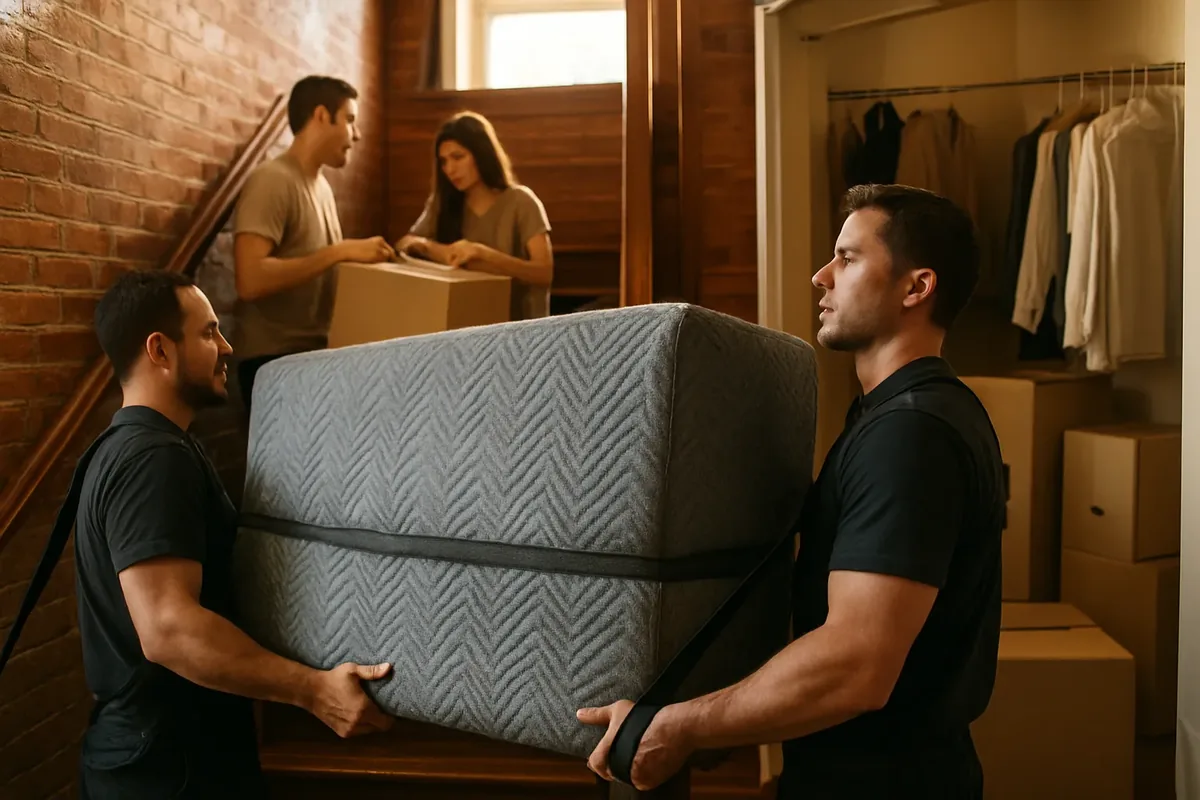
Walk-up staircases, shared passenger elevators, and long-carry podium corridors routinely add $110 to $1,045 to a US apartment moving invoice through combined extra crew hours and flat tariff surcharges. This hub breaks down exact 2nd-to-5th-floor carry penalties, freight elevator booking rules, shuttle truck triggers, and the strapping gear that saves hours on moving day.
walk up stairs and elevator moving costs
Reserved Freight Service Elevator: Clearance Measuring & Wall Protection Guide
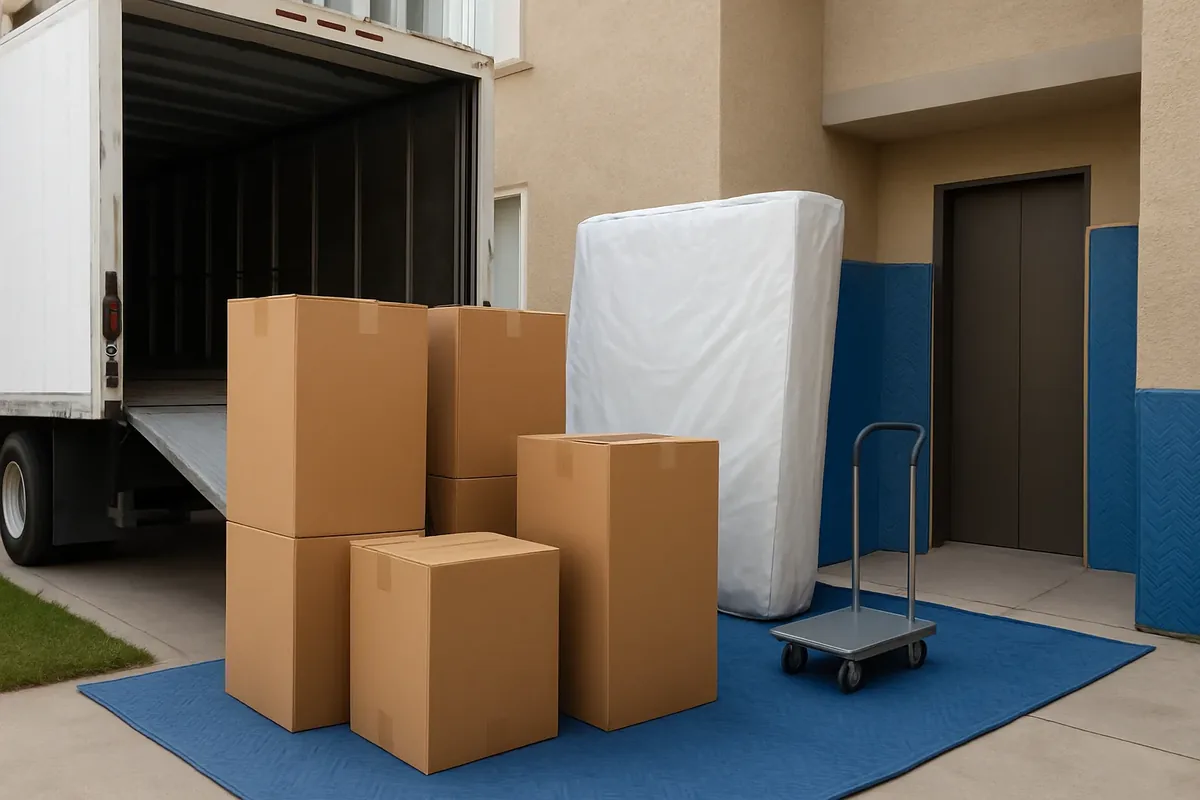
Building-installed cab blankets only shield the inside of the freight elevator—leaving your unit's entry door jamb, hallway corner drywall, and bare mattress fabrics completely exposed during tight pivots. Follow this doorway clearance audit and protection checklist to avoid $150 to $500 security deposit penalties.

walk up stairs and elevator moving costs
Shared Passenger Elevator (No Booking) Moving Cost & Surcharge Breakdown
Moving through an unreserved, shared passenger elevator costs nearly as much as climbing a 3rd-floor walk-up—adding $85 to $175 in flat surcharges plus 1.0 to 1.75 extra crew hours per affected address. Learn how US movers price shared cabs versus flat $50–$90 per-flight stair tariffs and how folding platform carts reduce cycle drag.
walk up stairs and elevator moving costs
1-Bedroom & Studio Moving Time and Cost With an Unreserved Shared Passenger Elevator
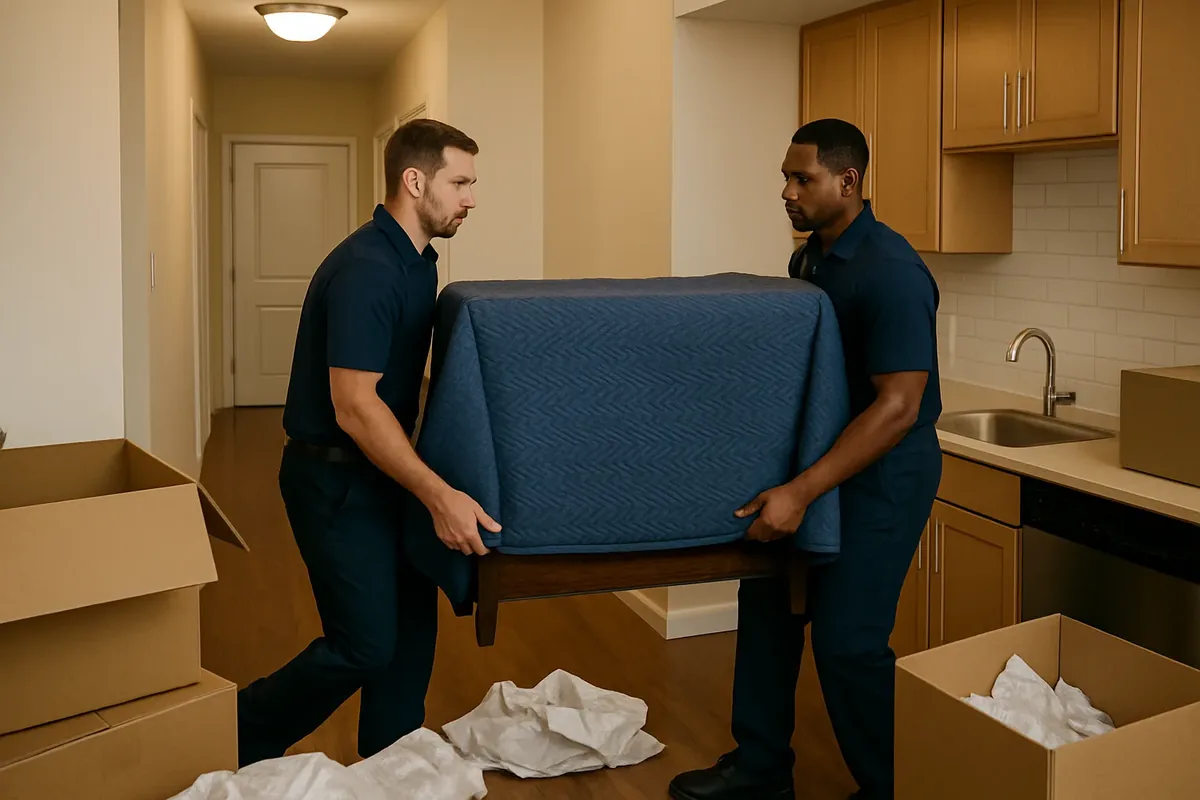
Moving a studio or 1-bedroom apartment without an elevator booking adds 60 to 105 minutes of idle cab wait time and $210 to $481 per building to your moving invoice. See exact local and metro dollar totals, furniture density impacts, and the box and mattress kits that trim extra elevator cycles.