
In this guide
- Why an Unreserved Shared Passenger Elevator Costs as Much as a 3rd-Floor Walk-Up
- Hourly Labor Billing vs. Flat Access Surcharges Across Apartment Sizes
- How Flat-Rate Stair Fees vs. Shared Cab Delays Interact With Travel & DDT Rules
- Gear That Eliminates Idle Trips in Small Shared Passenger Elevators
- 5 Tactics to Cut Shared Passenger Elevator Costs by $150 to $300
Why an Unreserved Shared Passenger Elevator Costs as Much as a 3rd-Floor Walk-Up
Renters moving into older mid-rise apartments or 1970s condo conversions without a dedicated service shaft frequently assume that any elevator guarantees low moving fees. In reality, US moving companies classify an unreserved, resident-shared passenger elevator as a major productivity bottleneck—adding 1.0 to 1.75 extra hours on the hourly clock plus an $85 to $175 flat access surcharge.
Three mechanical and traffic constraints explain that pricing gap. First, standard residential passenger cabs measure just 36 to 48 inches deep with 36-inch center-opening doors, forcing movers to tilt 84-inch sofas diagonally, stand box springs upright, or disassemble bed frames just to cross the threshold. Second, building rules rarely allow locking the door open when no reservation is available, so safety sensors retract doors mid-load and trigger elevator buzzers. Third, every time commuters, dog walkers, postal carriers, or food deliveries summon the car between floors 2 and 12, your paid 2- or 3-mover crew stands idle beside a full dolly while the hourly meter keeps running.
Hourly Labor Billing vs. Flat Access Surcharges Across Apartment Sizes
Moving tariffs price shared passenger elevators in one of two ways: either an explicit $85 to $175 flat access surcharge printed alongside regular hourly labor, or an expanded hourly estimate (adding 60 to 105 minutes on top of ground-floor base hours). When both origin and destination buildings lack freight elevator reservations, both buildings contribute independently to your total move duration and invoice.
| Apartment Size | Crew Rate & Base Local Total (Ground Floor) | Extra Labor Time (1.0–1.75 hrs) | Flat Elevator Surcharge | Total Shared Cab Impact (1 End) | Double-Shared Total (Both Ends, Before Boxes) |
|---|---|---|---|---|---|
| Studio (250 cu ft, 2,000 lbs) | 2 movers @ $125–$165/hr ($575–$970) | +$125 – $289 | +$85 – $175 | +$210 – $464 | $995 – $1,898 |
| 1-Bedroom (420 cu ft, 3,200 lbs) | 2 movers @ $130–$175/hr ($725–$1,370) | +$130 – $306 | +$85 – $175 | +$215 – $481 | $1,155 – $2,332 |
| 2-Bedroom (680 cu ft, 5,400 lbs) | 3 movers @ $175–$235/hr ($1,125–$2,143) | +$175 – $411 | +$85 – $175 | +$260 – $586 | $1,645 – $3,315 |
| 3-Bedroom (980 cu ft, 7,800 lbs) | 4 movers @ $220–$295/hr ($1,725–$3,243) | +$220 – $516 | +$85 – $175 | +$305 – $691 | $2,335 – $4,625 |
Compare those numbers against walk-up stair billing and reserved service bays. A 2nd-floor walk-up (1 flight of 12–16 steps) carries a $55 to $95 flat stair fee and 0.5 to 1.0 extra hour ($120–$270 total on a 1BR), while a 3rd-floor walk-up adds $110 to $190 flat and 1.0 to 1.75 extra hours ($240–$496 total on a 1BR). Only at the 4th- to 5th-floor walk-up tier ($185–$340 flat plus 1.75–3.0 hours = $413–$865 on a 1BR) does climbing stairs consistently outprice riding a shared passenger cab.
Amazon US Apartment Moving Supplies
Recommended Moving Boxes, Blankets & Bags for This Move
Apartment moving supplies matched to this guide (Amazon.com affiliate ID: apartmentmovingcost-20).
Single-Person Box & Mattress Carry Handle Webbing Strap with Comfort Grip
Adjustable single-person carry sling wrapping around bulky medium/large boxes or rolled rugs
Magna Cart Flatform 300-Lb 4-Wheel Folding Platform Push Cart
Telescoping-handle flatbed platform dolly carrying 6–8 stacked moving boxes at once down long apartment hallways
UpCart Original All-Terrain 6-Wheel Stair-Climbing Folding Hand Truck (100-Lb)
Patented tri-wheel rotating clusters roll smoothly up and down apartment steps and street curbs with 50% less force
As an Amazon Associate I earn from qualifying purchases. Always verify live stock and pack sizing directly on Amazon.com.
How Flat-Rate Stair Fees vs. Shared Cab Delays Interact With Travel & DDT Rules
Under standard local billing, every US move already includes a 1.0-hour travel fee ($125–$295 depending on crew size) plus a $75 to $145 local <15-mile transport charge ($140–$260 for 15–50 miles). On an interstate move—such as 600 miles at $0.42–$0.64/lb plus $780–$1,350 transport—van lines replace hourly cab wait time with flat 'elevator accessorial' charges ($85–$175 per end) or re-bill waiting labor if the building holds up the driver past two hours.
- California Double Drive Time (DDT): State BHGS rules double actual driving minutes between old and new apartments on the hourly bill, so 60–105 minutes lost waiting on a shared passenger cab stack straight on top of doubled transit hours.
- Mezzanine or Split-Level Lobby Steps: Many older elevator buildings put 6 to 10 marble steps between the front street entrance and the interior elevator vestibule, letting movers stack a 2nd-floor stair minimum ($55–$95) onto shared elevator delays.
- Resident Commuter Rush Peaks: Booking an 8:00 AM–9:30 AM or 5:00 PM–6:30 PM arrival in a dense mid-rise doubles wait times compared to a 10:00 AM–2:00 PM midday lull when most neighbors are at work.
- DIY Rental Truck Alternative: Renting a 12–15 ft truck ($30–$40/day + $1.09–$1.49/mi + $3.55/gal at 10 MPG) keeps a 1-bedroom pure DIY move at $142–$223 with boxes, avoiding $130–$295/hr idle cab wait charges entirely.
Gear That Eliminates Idle Trips in Small Shared Passenger Elevators
When every elevator capture requires yielding space to neighbors, rigid steel warehouse dollies become a liability—they take up half the cab floor and cannot fold flat when residents step inside. Compact folding flatbed carts, single-person webbing carry slings, and tri-wheel stair trucks solve the exact spatial bottlenecks of unreserved passenger buildings.
| Gear Item | Capacity & Folded Profile | Design Spec | Best Shared-Cab Application |
|---|---|---|---|
| Magna Cart Flatform 4-Wheel Folding Platform Push Cart | 300 lb deck; folds 3.5" thin | 4-wheel telescoping push flatbed | Hauls 6–8 stacked 32-ECT boxes per single elevator trip, then folds 3.5" thin against the cab rail if neighbors board |
| Forearm Forklift Single-Person Box & Mattress Carry Handle Strap | 200 lb single-user; 6 ft adjustable | Comfort-grip webbing carry sling | Lets one person sling rolled rugs, awkward lamps, or wide mattresses diagonally through tight 36" cab doors |
| UpCart Original All-Terrain 6-Wheel Folding Hand Truck | 100 lb stair load; folds 4.5" flat | Patented 6-wheel tri-star clusters | Bypasses slow elevators for 2nd–3rd floor box runs or rolls cleanly up lobby stoop steps before reaching the elevator |
Using a Magna Cart Flatform to move 6 to 8 uniform 32-ECT cartons in one elevator ride slashes total cab round-trips from 20 down to 5—cutting wait time by over 40 minutes on a 1-bedroom or 2-bedroom move. And if a shared cab breaks down or stalls behind furniture deliveries, an UpCart tri-wheel hand truck lets you haul boxes down two flights of stairwell steps without straining your back.
5 Tactics to Cut Shared Passenger Elevator Costs by $150 to $300
- Target a 10:00 AM–2:00 PM Midday Moving Window. Avoid 7:30–9:30 AM commuter departures and 4:30–6:30 PM returns when elevator demand peaks across multi-story buildings.
- Pre-Stage All Boxes in the Foyer or Ground Lobby (If Security Allows). In DIY or hybrid moves, shuttle packed boxes down in an evening off-peak session so paid crews spend zero hourly minutes riding up and down with light cartons.
- Measure Cab Depth Before Leaving Sofas Assembled. Unscrew sofa feet, unbolt bed frames, and pull dining table legs in advance ($60–$130 mover add-on if left to the crew) so every piece glides straight into a 36"–48" cab.
- Enforce Strict Uniform Box Sizes & Sealed Taping. Pack books in small 32-ECT cartons and clothes in zippered totes so 6–8 items stack securely onto one 300-lb folding flatbed cart without toppling.
- Verify Curbside Proximity Under 75 Feet. Holding a close street space avoids stacking a $65–$135 long-carry fee on top of your $85–$175 shared passenger elevator surcharge.
Check how an unreserved shared passenger elevator stacks up against walk-up stairs or a DIY rental truck for your exact move: enter both addresses in our Apartment Moving Cost Calculator or run a full comparison in our Movers vs. DIY Rental Truck Comparator.
Open Calculator →Frequently Asked Questions
Why do movers charge $85–$175 extra for a shared passenger elevator when there are no stairs?+
Small 36"–48" passenger cabs cannot fit large sofas horizontally without tilting or disassembly, doors cannot be locked open without reservations, and neighbor traffic forces paid crews to stand idle between floors—adding 1.0 to 1.75 extra crew hours ($215–$481 total on a 1BR) plus the $85–$175 access surcharge.
Is an unreserved shared passenger elevator cheaper or costlier than a 2nd-floor walk-up?+
A 2nd-floor walk-up (1 flight) is usually cheaper: it adds 0.5–1.0 hour plus $55–$95 flat ($120–$270 total on a 1BR), whereas an unreserved shared passenger elevator adds 1.0–1.75 hours plus $85–$175 flat ($215–$481 total on a 1BR). Only 4th–5th floor walk-ups ($413–$865 on a 1BR) consistently cost more than a shared elevator.
Can I use a reserved freight elevator's COI process to lock off a shared passenger elevator?+
Occasionally, older mid-rise associations let you reserve one of two passenger cars for a 2-hour midday slot if you submit a $1M–$2M Certificate of Insurance (COI) and pay a refundable pad deposit—turning a $215–$481 shared-cab penalty down to a $110–$270 reserved-elevator impact.
Should movers use the stairs for boxes while riding a shared passenger elevator only for furniture?+
If your apartment sits on the 2nd or 3rd floor and the lobby cab has a 4-minute wait cycle, having one mover carry lightweight boxes down the stairs while two movers wait for the elevator with heavy dressers can save 30 to 45 minutes—especially if you pre-stage uniform 32-ECT cartons by the apartment door.
How do 85-lb quilted blankets and 5-mil mattress bags protect a shared passenger cab without wall pads?+
Because unreserved passenger cabs lack management-installed hanging quilts, wrapping every dresser in 65–85 lb per dozen quilted blankets and sealing mattresses in 5-mil poly bags or tarp carriers keeps steel corners and rough fabric from scratching stainless elevator walls—saving you $150–$450 in building repair fines.
Interactive US Moving Tools
Compare Full-Service Movers vs. DIY Rental Truck in 30 seconds
Related Guides
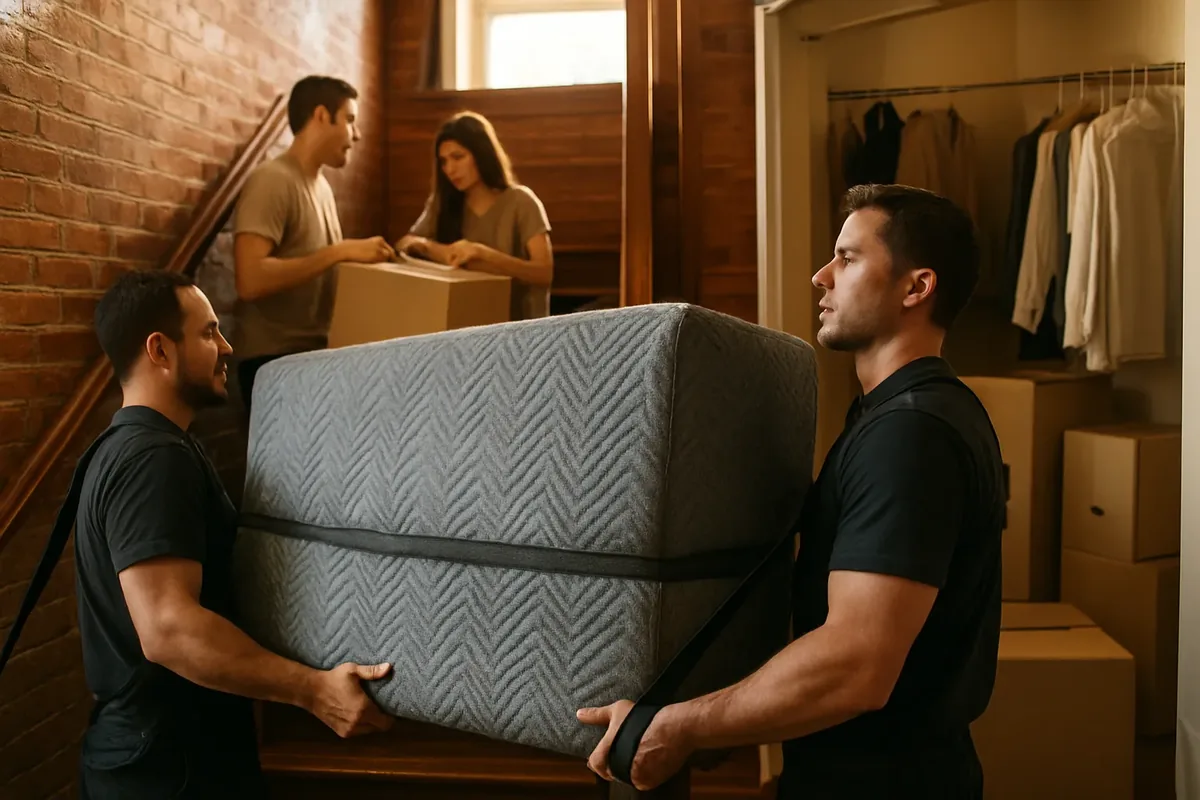
walk up stairs and elevator moving costs
Walk-Up Stairs & Elevator Moving Costs: Complete US Benchmarks & Guides
Walk-up staircases, shared passenger elevators, and long-carry podium corridors routinely add $110 to $1,045 to a US apartment moving invoice through combined extra crew hours and flat tariff surcharges. This hub breaks down exact 2nd-to-5th-floor carry penalties, freight elevator booking rules, shuttle truck triggers, and the strapping gear that saves hours on moving day.
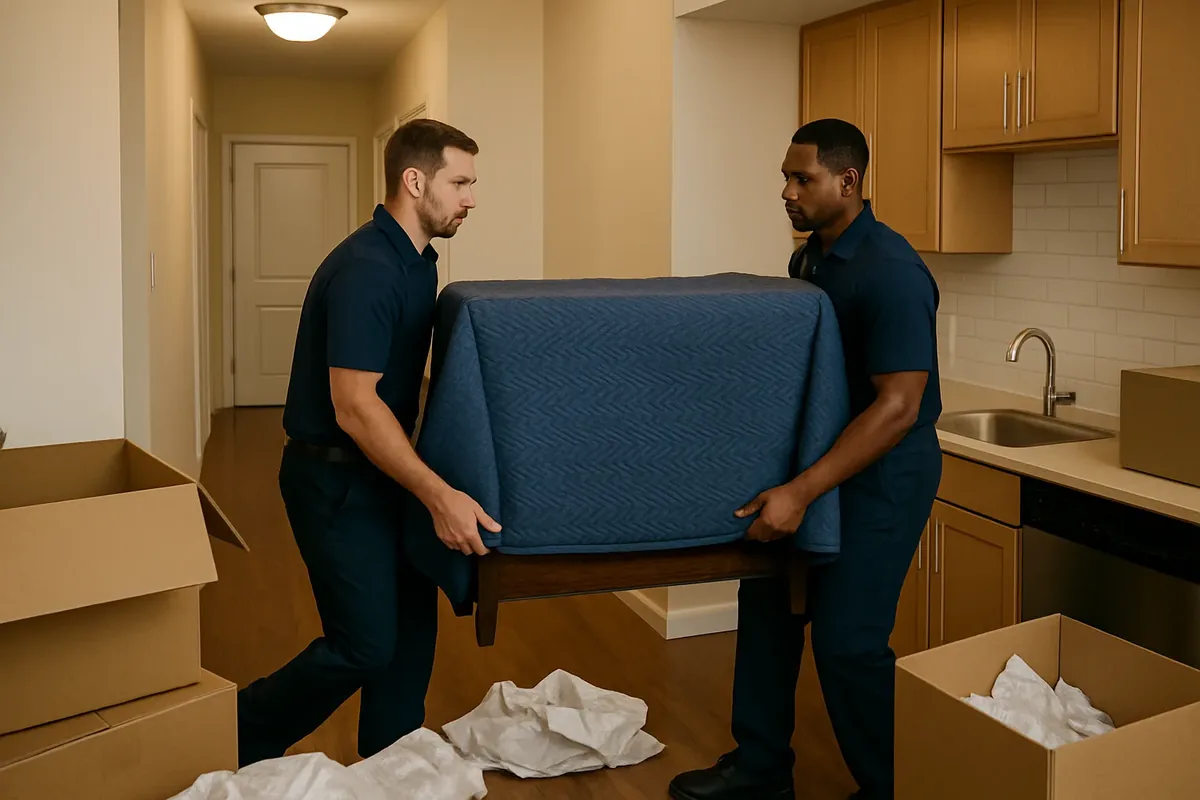
walk up stairs and elevator moving costs
1-Bedroom & Studio Moving Time and Cost With an Unreserved Shared Passenger Elevator
Moving a studio or 1-bedroom apartment without an elevator booking adds 60 to 105 minutes of idle cab wait time and $210 to $481 per building to your moving invoice. See exact local and metro dollar totals, furniture density impacts, and the box and mattress kits that trim extra elevator cycles.
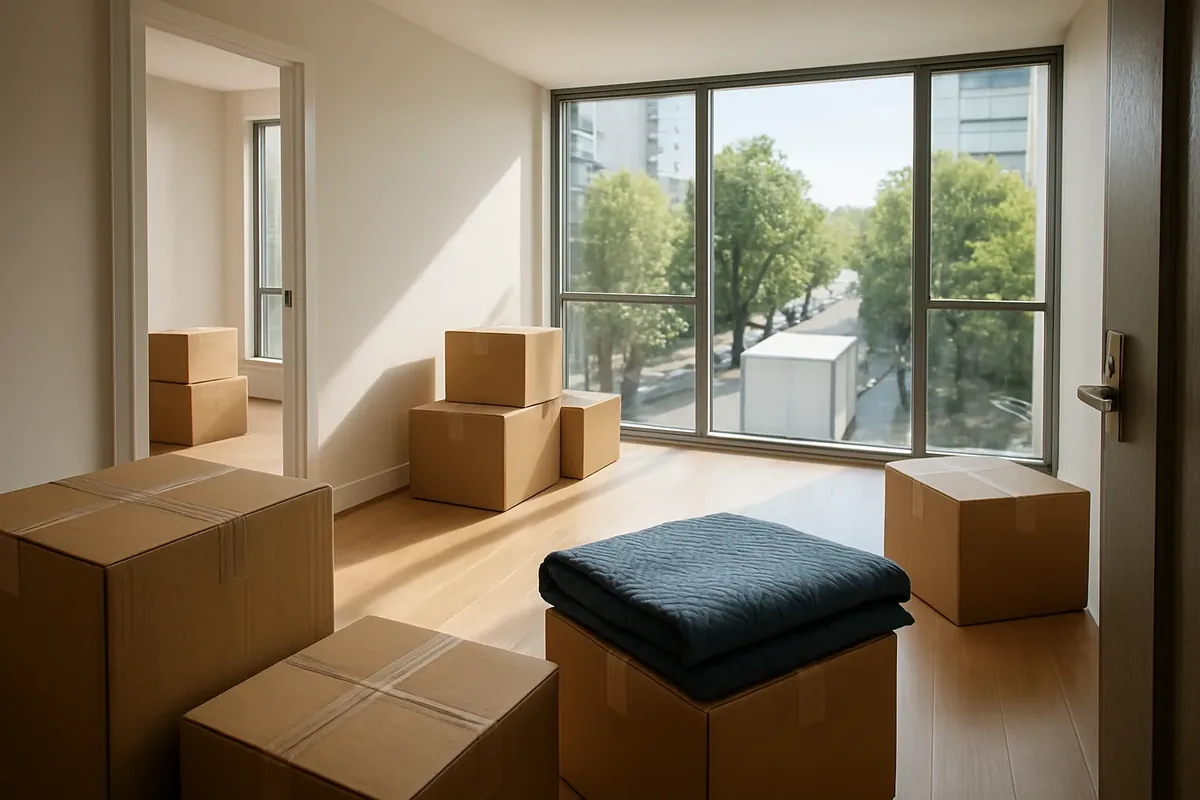
walk up stairs and elevator moving costs
2-Bedroom & 3-Bedroom Crew Size for Unreserved Shared Passenger Elevators
Moving a 2-bedroom or 3-bedroom apartment out of an unreserved shared passenger elevator traps undersized crews in costly vertical wait cycles alongside everyday resident traffic. Upgrading from 2 movers to a 3-person or 4-person relay team eliminates cab bottlenecks, trims 2.5 to 3.5 billable hours off the clock, and prevents afternoon curfew blowouts.
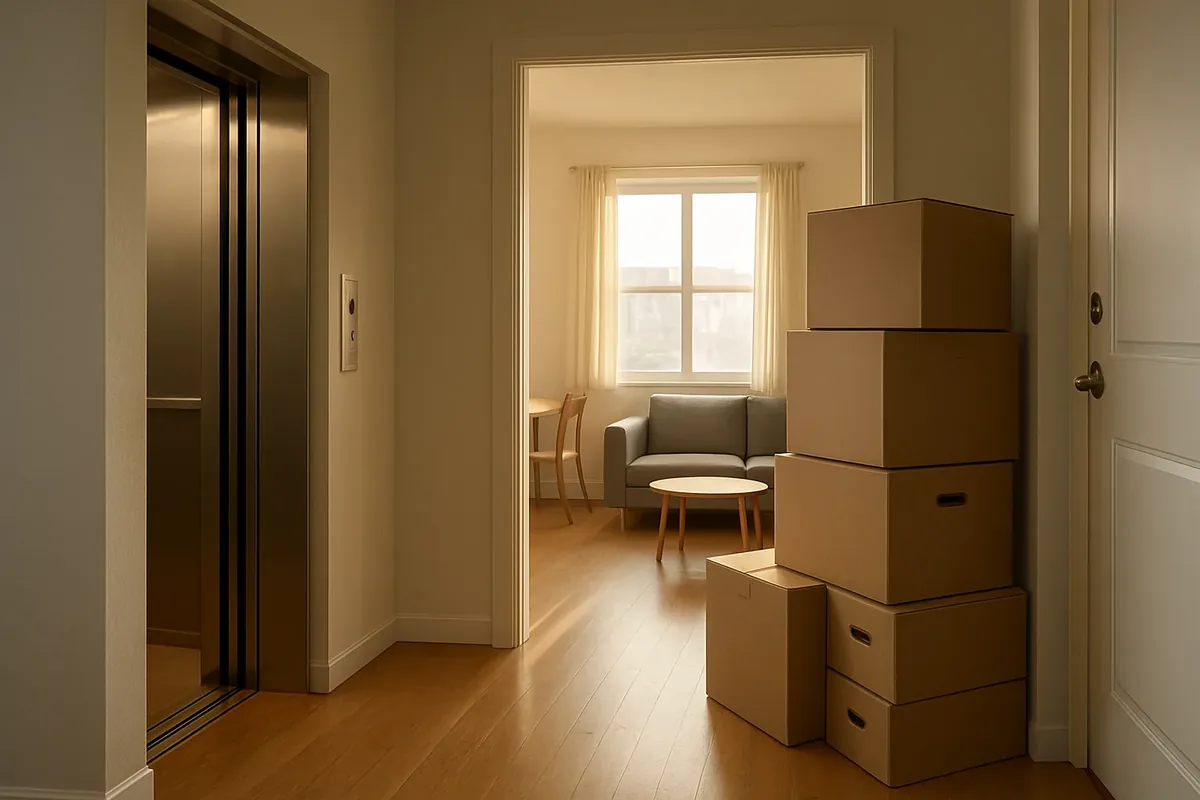
walk up stairs and elevator moving costs
DIY vs. Hiring Movers on an Unreserved Shared Passenger Elevator
Moving out of a building with an unreserved shared passenger elevator invites rushed trips through closing sensor doors, pinched fingers, and back strain from awkwardly tilting sofas in tight lobbies. Compare full-service crews, a hybrid rental truck with 2-hour helpers, and pure DIY with folding platform carts to balance budget against self-carry injury risk.