In this guide
- Why Freight Cab Padding Does Not Protect Your Security Deposit
- Doorway, Diagonal Sofa, and Freight Cab Clearance Measuring Checklist
- Mattress Tarp Bags with Handles vs. 5-Mil Polyethylene Bags & Jamb Guards
- Quilted Blankets, Floor Runners, and Corner Guards: How Many You Need
- 6-Step Staging Routine Before Your Reserved Elevator Window Opens
Why Freight Cab Padding Does Not Protect Your Security Deposit
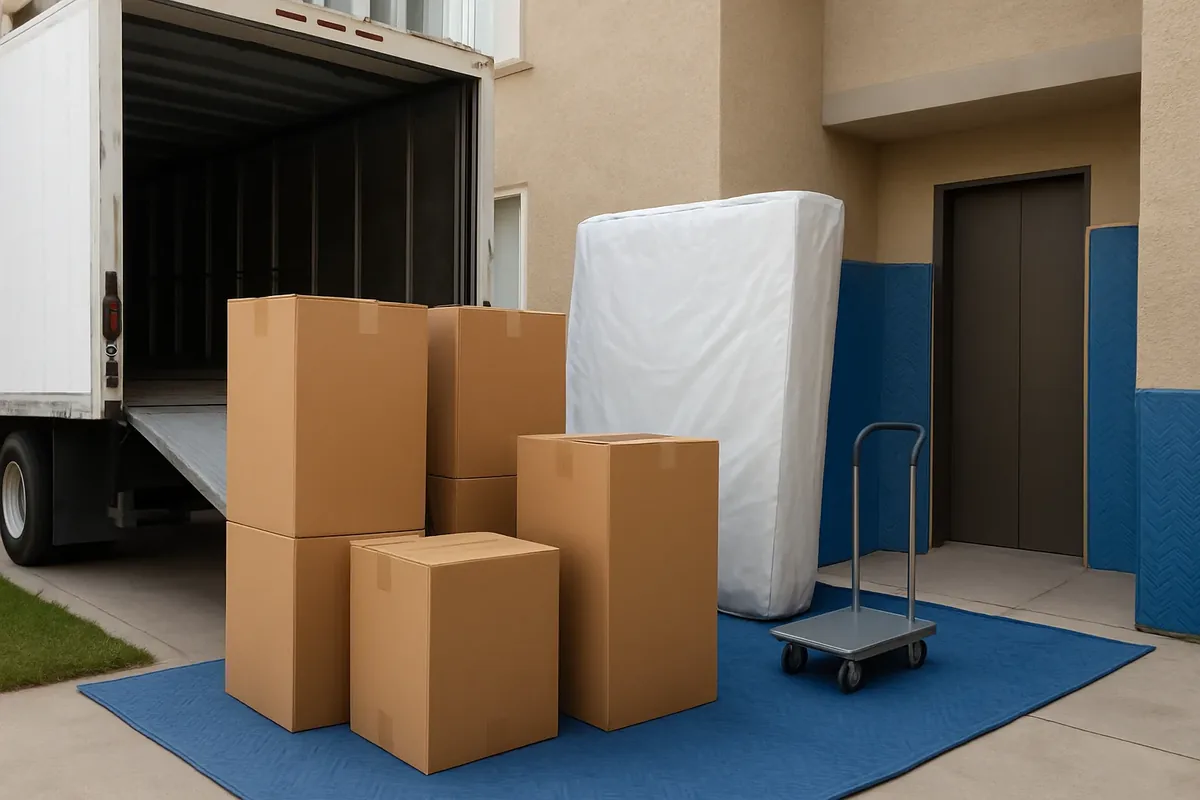
Property management crews hang thick hanging quilts inside the service elevator cab before your reserved slot, which lures many renters into skipping door-jamb and furniture prep. Yet over 75% of move-out damage fines happen in the 25 feet outside the cab—where an 84-inch sofa frame clips painted apartment casing, a steel dolly wheel gouges hallway vinyl base molding, or a bare queen mattress scrapes greasy dock steel and concrete garage dust.
Single-panel hallway drywall repairs, repainted trim, and scuffed lobby corner beads routinely trigger $150 to $500 in security deposit withholdings or forfeited elevator reservation holds. Even when hiring a full-service moving crew ($130–$235/hr plus $45–$95 freight fee), standard estimates only include quilted blankets inside the truck unless you confirm lobby floor runners, door-jamb sleeves, and sealed mattress bags ahead of time. Prepping high-contact edges yourself keeps material costs inside standard DIY kit benchmarks ($65–$110 studio, $95–$160 1BR, $145–$235 2BR) rather than $290 to $820 in mover-supplied materials.
Doorway, Diagonal Sofa, and Freight Cab Clearance Measuring Checklist
Before moving day, measure four choke points with a tape measure—not guesswork. A reserved freight elevator door typically opens 36 to 48 inches wide by 80 to 84 inches tall, while the interior cab runs 60 to 84 inches deep with a 96- to 108-inch ceiling height (or a drop-down escape hatch for tall armoires). However, your apartment entry door is often only 30 to 36 inches wide with an interior hallway turn of 36 to 42 inches.
| Checkpoint | Typical US Apartment Spec | Minimum Safe Clearance Needed | If Too Tight (Fix Before Crew Arrives) |
|---|---|---|---|
| Apartment Entry Door Width | 30" – 36" wide x 80" tall | Door width > furniture shortest depth + 1" pad | Pop hinge pins (+1.5"–2") and remove sofa screw-on legs (+3"–5") |
| Interior Vestibule L-Turn | 36" – 44" hallway width | Diagonal sofa length < ceiling height (96") to stand upright | Pivot vertically before hallway turn or unbolt sectional brackets |
| Freight Elevator Door Frame | 36" – 48" W x 80" – 84" H | Item tilted height <= 82" with padded door edge | Never wedge bare wood frames; clamp padded jamb sleeves on metal latch side |
| Freight Cab Interior Depth & Diagonal | 60" – 84" deep x 96" – 108" H | 92" – 104" diagonal corner-to-corner cab clearance | Keep padded blankets flat on cab walls (subtract 2" from raw steel specs) |
| Queen / King Mattress & Box Spring | 60"x80" (Queen) / 76"x80" (King) | Memory foam flexes; rigid coil & box springs need 82" vertical | Use 8-handle tarp bag to bend queen coil slightly or swap rigid king box for split foundations |
Amazon US Apartment Moving Supplies
Recommended Moving Boxes, Blankets & Bags for This Move
Apartment moving supplies matched to this guide (Amazon.com affiliate ID: apartmentmovingcost-20).
Door Jamb & Banister Padded Neoprene Protector Sleeves (3-Piece Walk-Up Set)
Clip-on padded door-frame guards protecting apartment entry molding from security-deposit dings
Heavy-Duty Reusable Tarp Mattress Moving Bag with 8 Reinforced Handles & Zipper (Queen)
Waterproof 180-GSM woven polyethylene tarp mattress carrier with 3-sided heavy zipper and 8 stair-lifting handles
5-Mil Extra-Thick Clear Polyethylene King & Cal-King Mattress Moving Bags (2-Pack)
Oversized 104"x82"x16" 5-mil clear plastic bags with extra flap length for double-taping shut
As an Amazon Associate I earn from qualifying purchases. Always verify live stock and pack sizing directly on Amazon.com.
Mattress Tarp Bags with Handles vs. 5-Mil Polyethylene Bags & Jamb Guards
Dragging a queen or king mattress by its thin side fabric handles rips seams and leaves grease streaks across elevator doors. On a reserved freight elevator move, protective gear splits into three dedicated layers: padded door-jamb protectors at pinch points, reinforced tarp or 5-mil poly bags on mattresses, and 65–85 lb per dozen quilted moving blankets on wood furniture.
| Protection Product | Dimensions / Coverage | Material Thickness / Grade | Pack Quantity | Deposit & Damage Risk Eliminated |
|---|---|---|---|---|
| Pro Mover Door Jamb & Banister Padded Neoprene Protector Sleeves | 54" tall spring-clamp sleeves | Padded neoprene over flexible clamp core | 3 Door Jamb Guards | Snaps onto apartment entry and bedroom door trim in 10 seconds to prevent gouged paint and wood |
| Nordrana Heavy-Duty Reusable Tarp Mattress Moving Bag | Queen (82" x 63" x 15") | 180-GSM waterproof woven poly tarp + 3-sided zipper | 1 Carrier with 8 Reinforced Handles | Gives 2 carriers ergonomic grip points to tilt and pivot a heavy queen mattress cleanly into freight cabs |
| Cosy Family 5-Mil Extra-Thick Clear Polyethylene Mattress Bags | King / Cal-King (104" x 82" x 16") | 5.0-mil heavy-duty puncture-resistant poly | 2-Pack (Mattress + Split Box) | Seals both mattress and foundation against wet loading docks, garage dust, and bedbug transfer |
Why do 5.0-mil poly bags and 180-GSM tarp carriers outperform thin 1.5-mil hardware-store mattress covers? Thin plastic tears the instant a metal elevator sill snags a bottom corner, turning an open sheet into a trip hazard inside the cab. A Nordrana 180-GSM woven tarp bag adds 8 stitched webbing carry handles around the perimeter so two people can hold a queen mattress upright at chest height past tight door trim, while 5-mil Cosy Family bags wrap oversized king mattresses and foundations with extra flap length to double-tape with heavy acrylic or hot-melt packing tape.
Quilted Blankets, Floor Runners, and Corner Guards: How Many You Need
Under standard apartment kit specs, moving blankets scale directly with apartment size: 6 blankets for a studio ($65–$110 DIY kit), 12 blankets for a 1-bedroom ($95–$160 DIY kit), 18 blankets for a 2-bedroom ($145–$235 DIY kit), and 24 blankets for a 3-bedroom ($205–$330 DIY kit). Avoid flimsy non-woven felt dust covers for heavy freight moves; choose 65-lb to 85-lb per dozen quilted cotton-poly pads secured with oversized rubber moving bands or stretch wrap (applied strictly over blankets—never directly onto finished wood or leather where summer heat fuses plastic).
- Door Frames and Corner Beads: Clamp Pro Mover 54-inch neoprene sleeves onto both sides of your apartment front door and the sharpest interior hallway turn before rolling the first dolly.
- Lobby Flooring and Thresholds: Tape rosin paper or interlocking Masonite panels across marble lobby tiles and elevator door tracks so grit trapped under hard rubber dolly wheels cannot scratch stone.
- Upholstered Sofas and Headboards: Cover fabric sofas with quilted blankets or heavy-duty sofa bags prior to wheeling through dusty loading docks and damp freight vestibules.
- Glass Tabletops and Framed Art: Sandwich tempered glass inside telescoping picture boxes lined with edge foam rather than leaning bare panes against padded cab walls.
6-Step Staging Routine Before Your Reserved Elevator Window Opens
- Remove Door-Frame Obstacles and Pop Hinge Pins. Unscrew sofa feet, take doors off tight coat-closet hinges, and set aside hallway console tables the night before.
- Install Neoprene Door-Jamb Guards and Tape Corner Protectors. Snap padded jamb sleeves onto your entry casing and apply temporary foam or cardboard bumpers onto tight drywall corners.
- Seal Every Mattress and Box Spring Inside Tarp or 5-Mil Bags. Zip queen mattresses inside an 8-handle 180-GSM tarp carrier or double-tape king sets inside 5-mil polyethylene covers before upright stacking.
- Wrap Wood Furniture in 65–85 lb Quilted Blankets + Bands. Pad dressers, nightstands, and dining tabletops, securing blankets with rubber bands or stretch wrap over the pad rather than directly on lacquer.
- Lay Lobby Floor Runners Immediately After Security Check-In. Coordinate with the building engineer to protect lobby tile and verify cab wall pads are latched securely before rolling heavy 4-wheel dollies.
- Do a Post-Load Walkthrough With Management Before Leaving. Remove tape and sleeves cleanly without peeling drywall paint and capture clean post-move photos to guarantee your full deposit refund.
Factoring boxes, blankets, and mattress bags into your total apartment moving budget? Build an exact material and labor forecast in our Apartment Moving Cost Calculator or compare DIY prep against full-service mover packing in our Movers vs. DIY Rental Truck Comparator.
Open Calculator →Frequently Asked Questions
Do I still need to wrap furniture in blankets if my building pads the freight elevator walls?+
Yes. Freight elevator pads only cover the interior cab panels, leaving your apartment entry door jamb, narrow drywall corners, metal elevator door frames, and truck interior walls completely unprotected. Budget 6 moving blankets for a studio, 12 for a 1-bedroom, or 18 for a 2-bedroom to avoid scratches and $150–$500 deposit deductions.
Is a woven tarp mattress bag with handles better than a 5-mil plastic bag for freight elevators?+
An 8-handle 180-GSM woven tarp bag excels for tight apartment doorway turns and upright lifting into a freight cab because two carriers get solid grip points and tear-proof corners. A 5-mil clear polyethylene bag is ideal for long-distance transit, storage dust sealing, or wrapping oversized king mattresses and foundations.
How do I measure whether a long sofa will fit in a reserved freight elevator?+
Measure the cab door opening height (typically 80–84 inches), interior cab ceiling height (96–108 inches), and interior diagonal height from a bottom front corner to the opposite top rear corner. If your sofa frame length is shorter than the cab diagonal minus 2 inches for wall pads, you can stand it angled inside the cab; otherwise, unbolt legs or disassemble sectional connectors.
Will movers supply door-jamb guards and Masonite floor runners automatically?+
Reputable full-service movers bring lobby floor runners, door-jamb pads, and quilted blankets when you disclose 'reserved freight elevator' on your estimate—though heavy building protection often factors into the $45–$95 freight access fee and 0.5–1.0 extra staging hour. Confirm COI and Masonite coverage in writing before moving day.
Should I use stretch wrap directly on wood dressers during a freight elevator move?+
No—never wrap clear plastic stretch film directly onto finished wood, veneer, or leather, as friction and summer dock heat can trap moisture and cloud lacquer. Always wrap the piece first in a 65–85 lb/dozen quilted pad, then secure the pad externally with moving bands or stretch wrap.
Interactive US Moving Tools
Compare Full-Service Movers vs. DIY Rental Truck in 30 seconds
Related Guides
walk up stairs and elevator moving costs
Walk-Up Stairs & Elevator Moving Costs: Complete US Benchmarks & Guides
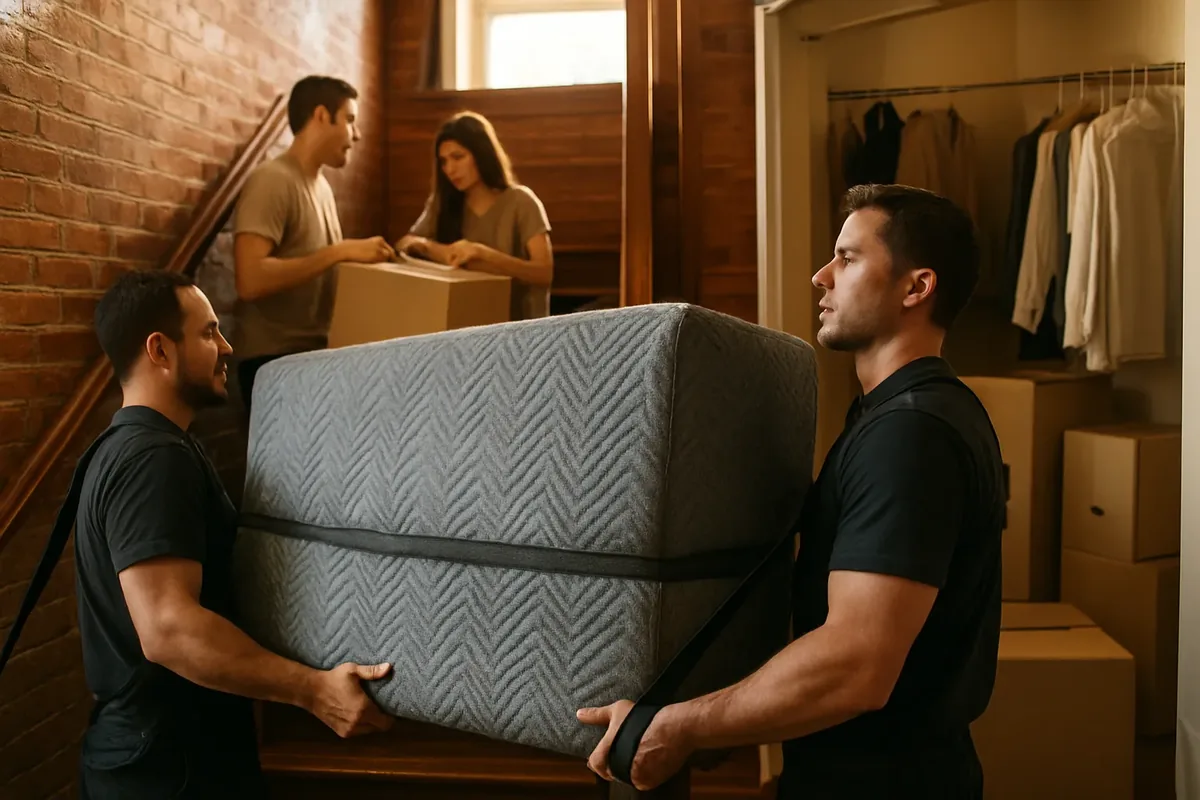
Walk-up staircases, shared passenger elevators, and long-carry podium corridors routinely add $110 to $1,045 to a US apartment moving invoice through combined extra crew hours and flat tariff surcharges. This hub breaks down exact 2nd-to-5th-floor carry penalties, freight elevator booking rules, shuttle truck triggers, and the strapping gear that saves hours on moving day.

walk up stairs and elevator moving costs
Shared Passenger Elevator (No Booking) Moving Cost & Surcharge Breakdown
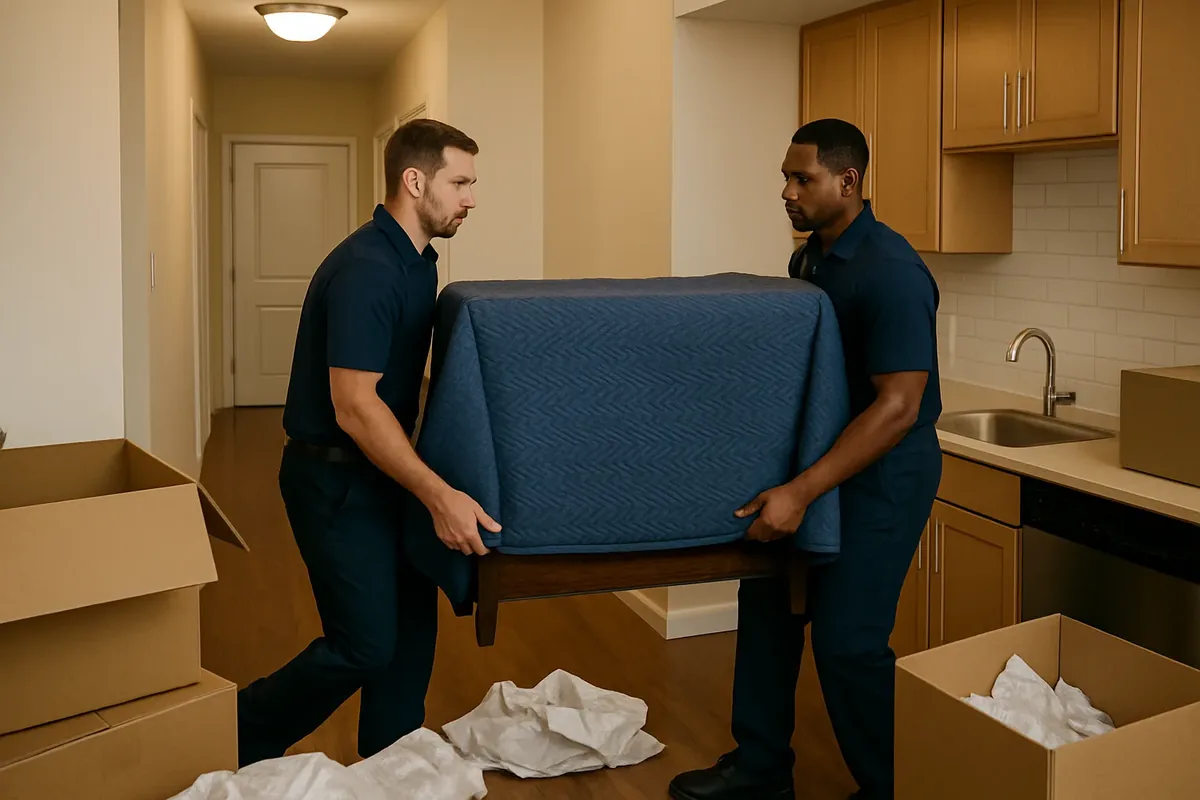
Moving through an unreserved, shared passenger elevator costs nearly as much as climbing a 3rd-floor walk-up—adding $85 to $175 in flat surcharges plus 1.0 to 1.75 extra crew hours per affected address. Learn how US movers price shared cabs versus flat $50–$90 per-flight stair tariffs and how folding platform carts reduce cycle drag.
walk up stairs and elevator moving costs
1-Bedroom & Studio Moving Time and Cost With an Unreserved Shared Passenger Elevator
Moving a studio or 1-bedroom apartment without an elevator booking adds 60 to 105 minutes of idle cab wait time and $210 to $481 per building to your moving invoice. See exact local and metro dollar totals, furniture density impacts, and the box and mattress kits that trim extra elevator cycles.
walk up stairs and elevator moving costs
2-Bedroom & 3-Bedroom Crew Size for Unreserved Shared Passenger Elevators
Moving a 2-bedroom or 3-bedroom apartment out of an unreserved shared passenger elevator traps undersized crews in costly vertical wait cycles alongside everyday resident traffic. Upgrading from 2 movers to a 3-person or 4-person relay team eliminates cab bottlenecks, trims 2.5 to 3.5 billable hours off the clock, and prevents afternoon curfew blowouts.