In this guide
- Why a Reserved Freight Service Elevator Still Adds 30 to 60 Minutes
- Studio vs. 1-Bedroom Labor, Truck, and Materials Cost Breakdown
- Minute-by-Minute Breakdown Inside a 2- to 4-Hour Elevator Window
- Box Kits and Zippered Totes That Shave 25 Minutes Off Freight Trips
- Hidden Elevator Rules, COI Deadlines, and Long-Carry Triggers
Why a Reserved Freight Service Elevator Still Adds 30 to 60 Minutes
Many apartment renters assume that booking a dedicated service elevator makes loading as fast as backing a truck up to a first-floor patio door. In practice, a reserved freight elevator still adds 0.5 to 1.0 hour (30 to 60 minutes) of crew clock time plus a $45 to $95 flat staging surcharge per address under standard US apartment moving benchmarks. Even though your crew holds the override key and never stops for commuters, every trip requires vertical ride time, corridor pushes from the unit door to the service vestibule, and mandatory building check-in protocols.
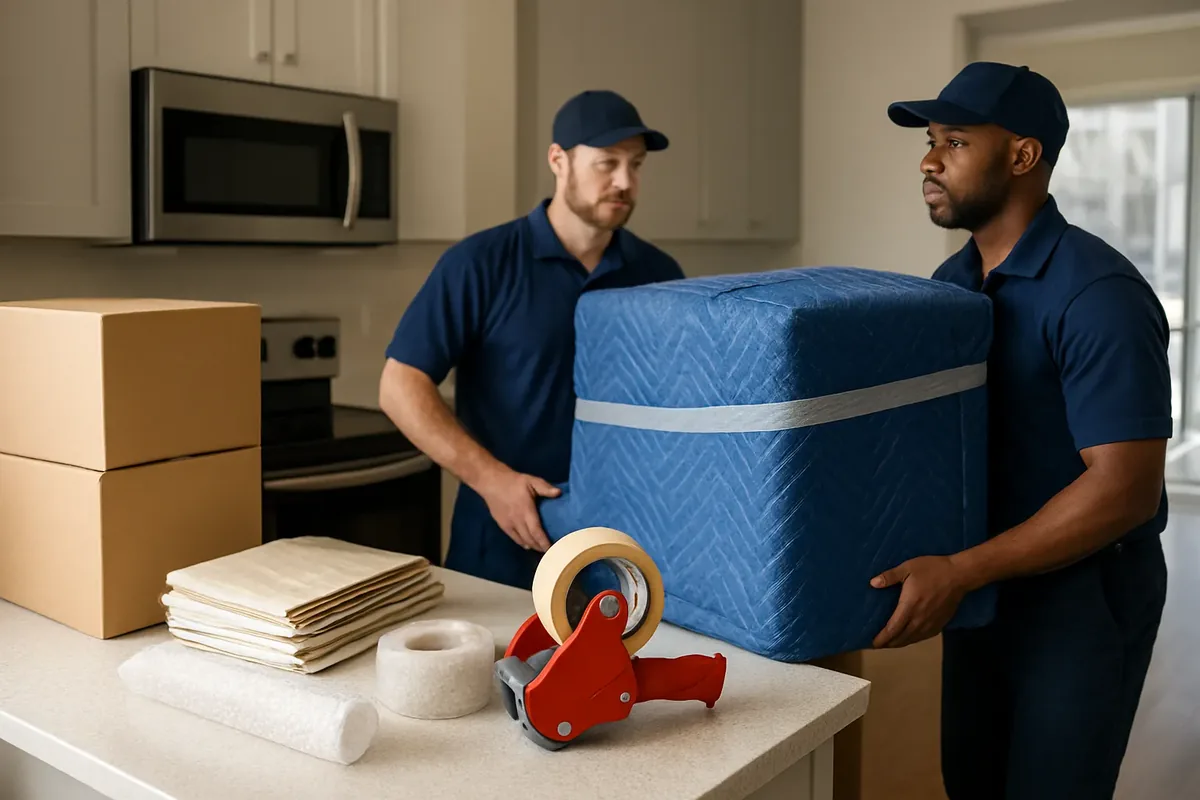
Before the first box leaves your living room, the foreman checks in with the concierge or dock marshal, hands over the Certificate of Insurance (COI), inspects existing hallway paint, lays Masonite panels or heavy canvas runners across tile lobbies, and verifies that building staff have hung wall pads inside the cab. Breakdown and cleanup at the end of your 2-to-4-hour slot take another 10 to 15 minutes. That administrative and staging overhead is why a studio carry duration with a reserved freight service elevator expands from 3.0–4.0 ground-floor working hours to 3.5–5.0 working hours (plus the standard 1.0-hour depot travel fee), while a 1-bedroom expands from 4.0–6.0 working hours to 4.5–7.0 working hours.
Studio vs. 1-Bedroom Labor, Truck, and Materials Cost Breakdown
On a local move under 15 miles (12-mile average dispatch), a studio apartment averages 250 cubic feet and 2,000 lbs with a 2-mover crew billing $125 to $165 per hour, plus a $75 to $145 local carrier transport fee. A 1-bedroom apartment jumps to 420 cubic feet and 3,200 lbs with a 2-mover crew billing $130 to $175 per hour. When both your origin and destination high-rises require reserved freight elevators, the 0.5 to 1.0 extra hour and $45 to $95 surcharge apply at both ends—adding 60 to 120 minutes and $215 to $520 for a studio, or $220 to $540 for a 1-bedroom.
| Cost Component | Studio (1 Freight End) | Studio (Both Freight Ends) | 1-Bedroom (1 Freight End) | 1-Bedroom (Both Freight Ends) |
|---|---|---|---|---|
| Base Crew Labor + 1-Hr Travel Fee | $500 – $825 (4.0–5.0 hrs) | $500 – $825 (4.0–5.0 hrs) | $650 – $1,225 (5.0–7.0 hrs) | $650 – $1,225 (5.0–7.0 hrs) |
| Freight Elevator Extra Labor (0.5–1.0 hr/end) | +$63 – $165 (30–60 min) | +$125 – $330 (60–120 min) | +$65 – $175 (30–60 min) | +$130 – $350 (60–120 min) |
| Flat Elevator Staging Surcharge | +$45 – $95 | +$90 – $190 | +$45 – $95 | +$90 – $190 |
| Local Carrier Transportation (<15 mi) | $75 – $145 | $75 – $145 | $75 – $145 | $75 – $145 |
| Total Movers (Before Packing Boxes) | $683 – $1,230 | $790 – $1,490 | $835 – $1,640 | $945 – $1,910 |
| DIY Packing Kit vs. Mover-Packed Boxes | +$65–$110 DIY / +$180–$320 Pro | +$65–$110 DIY / +$180–$320 Pro | +$95–$160 DIY / +$290–$520 Pro | +$95–$160 DIY / +$290–$520 Pro |
Distance and furniture density shift these baselines quickly. Extending to a 35-mile metro move raises the carrier transportation line item from $75–$145 to $140–$260. Meanwhile, a minimalist studio or 1-bedroom (bed, compact desk, small loveseat, 15 to 25 boxes) carries a 0.85x labor multiplier that trims roughly 30 to 45 minutes off on-site loading, whereas heavy solid-wood dressers, a sleeper sectional, and bookcases apply a 1.22x multiplier that adds 45 to 80 minutes inside the elevator cycle.
Amazon US Apartment Moving Supplies
Recommended Moving Boxes, Blankets & Bags for This Move
Apartment moving supplies matched to this guide (Amazon.com affiliate ID: apartmentmovingcost-20).
Uboxes 2–3 Bedroom Deluxe Moving Box & Wardrobe Kit (54 Boxes + Tape Gun)
54-box master apartment kit including hanging wardrobe cartons, dish boxes, tape gun, and bubble roll
Cheap Cheap 1-Bedroom Apartment Basic Moving Box Assortment (25 Boxes + Kit)
Balanced mix of 10 small book boxes, 10 medium utility boxes, and 5 large linen cartons
VENO Heavy-Duty Zippered Moving Bags with Backpack Straps (10-Pack Blue)
Water-resistant woven polypropylene oversized moving totes replacing cardboard for clothes and bedding
As an Amazon Associate I earn from qualifying purchases. Always verify live stock and pack sizing directly on Amazon.com.
Minute-by-Minute Breakdown Inside a 2- to 4-Hour Elevator Window
Property managers enforce strict freight elevator reservations—commonly 9:00 AM–12:00 PM or 1:00 PM–4:00 PM—so building maintenance, trash compactors, and other residents can regain access on schedule. Missing your cutoff by 20 minutes can trigger a $150 to $300 building overtime fine or force your crew to leave remaining items overnight and bill a second 1-hour travel fee the next morning.
- Minutes 0–15: Dock Check-In, COI Verification, and Path Protection. The crew parks the 12–15 ft box truck at the loading bay, submits the COI at security, unrolls lobby floor protection, and locks the freight cab into independent service mode.
- Minutes 15–45: Staging Uniform Box Stacks Inside the Apartment Foyer. While one mover pads wooden dressers with 85-lb per dozen quilted blankets and wraps mattresses in 5-mil poly bags, the second mover stacks sealed 32-ECT cartons onto four-wheel dollies.
- Minutes 45–135: High-Density Freight Cab Cycles (6–10 Trips). A typical 1-bedroom generates 35 boxes plus 2 wardrobe cartons and 8–10 major furniture pieces—completing in 6 to 10 continuous elevator round-trips when boxes are uniform and pre-taped.
- Minutes 135–165: Pad Removal, Walkthrough Inspection, and Bill of Lading Sign-Off. Movers sweep debris from the loading bay, pull up floor runners, secure the final tier with ratchet straps inside the truck, and record the exact load-out end time.
Box Kits and Zippered Totes That Shave 25 Minutes Off Freight Trips
Loose plastic grocery bags, open laundry baskets, and mismatched liquor boxes destroy freight elevator efficiency because movers cannot stack them four-high on a platform dolly. Buying standardized corrugated cartons ($65–$110 for a studio kit or $95–$160 for a 1-bedroom kit, compared to $180–$520 for mover-packed boxes) lets crews wheel 8 to 12 cartons per elevator ride instead of 3.
| Packing Kit / Carrier | Capacity & Count | Strength / Material Spec | Ideal Apartment Fit | Elevator Cycle Advantage |
|---|---|---|---|---|
| Cheap Cheap 1-Bedroom Apartment Basic Moving Box Assortment | 25 Boxes (10 small, 10 medium, 5 large + kit) | 32 ECT Kraft corrugated | 1-Bedroom & large studio | Uniform carton footprints stack 4-high on dollies without crushing lower tiers |
| Uboxes 2–3 Bedroom Deluxe Moving Box & Wardrobe Kit | 54 Boxes + wardrobe cartons, dish boxes, tape gun & bubble roll | 32–44 ECT corrugated mix | Heavy 1BR or 2–3BR move | Hanging wardrobe cartons wheel straight out of closets into the service cab |
| VENO Heavy-Duty Zippered Moving Bags with Backpack Straps | 10-Pack (24 gal per tote) | 50 lb rated woven polypropylene | Studio & 1BR clothes/linens | Hands-free backpack carry clears doorway thresholds while movers haul heavy furniture |
Look closely at edge crush test (ECT) ratings when stacking boxes inside a tall freight elevator cab. Standard 32-ECT single-wall kraft boxes safely support everyday linens, cookware, and folded clothes up to 65 lbs, whereas 44-ECT or double-wall dish packs handle dense stoneware, cast-iron pans, and hardcover books without buckling on the bottom row of a 4-wheel dolly. Pair standardized Cheap Cheap 32-ECT cartons for kitchen and living-room gear with VENO 50-lb woven polypropylene zippered bags for coats and pillows—you can carry three VENO totes to your car or down the freight lobby yourself while the crew focuses strictly on heavy furniture.
Hidden Elevator Rules, COI Deadlines, and Long-Carry Triggers
Even with a confirmed freight elevator slot, three secondary building traps can still inflate your 1-bedroom or studio invoice by $130 to $400 if left unchecked:
- Long-Carry Distance Past 75 Feet: Most movers include up to 75 feet from the truck tailgate to the freight cab or apartment door. If your building forces trucks to park on a perimeter street while crews roll through a 200-foot basement garage, expect a $65 to $135 long-carry fee per affected building.
- Missing Certificate of Insurance (COI) Wording: High-rise offices require $1M–$2M general liability and workers' compensation certificates naming the exact property LLC and building street address 5 to 10 business days ahead. Showing up without an approved COI stops the clock while security rejects dock entry.
- Add-On Disassembly and Appliances: Unbolting a king bed frame or sectional sofa adds $60 to $130, and disconnecting or hoisting a stacked washer/dryer or Peloton adds $75 to $160—plus extra elevator cycle time inside a tight 2-hour reservation.
- DIY Rental Truck Alternative: If your building allows self-moves in the freight elevator with a refundable security deposit, renting a 10-ft cargo van ($20–$30/day + $0.99–$1.39/mi) for a studio or a 12–15 ft truck ($30–$40/day + $1.09–$1.49/mi) for a 1-bedroom plus $4–$5 in local fuel ($3.55/gal at 10 MPG) keeps pure DIY costs to $101–$223 with boxes, or $271–$513 when adding 2-hour loading helpers ($170–$290).
Want exact numbers for your own studio or 1-bedroom floor plan? Enter your origin and destination elevator access, travel distance, and box count in our Apartment Moving Cost Calculator or compare full crews against a rental truck in our Movers vs. DIY Rental Truck Comparator.
Open Calculator →Frequently Asked Questions
How many extra minutes does a reserved freight service elevator add to a studio or 1-bedroom move?+
Across US moving benchmarks, a reserved freight service elevator adds 30 to 60 minutes (0.5 to 1.0 hour) of labor per building compared to a direct ground-floor unit. That extra time covers dock check-in, COI verification, laying lobby floor protection, cab wait cycles, and hallway rolling, adding $108 to $260 for a studio or $110 to $270 for a 1-bedroom.
Why do movers still charge a $45–$95 surcharge when the freight elevator is reserved and padded?+
Most local carriers apply a $45 to $95 elevator access fee—or absorb it into slightly higher hour minimums—to cover extra staging equipment (Masonite runners, corner guards, cab blankets), building security sign-in delays, and strict booking-window coordination. Even with that surcharge, reserving a freight elevator still saves $105 to $211 over using an unreserved shared passenger elevator.
How do the 1-hour travel fee and California Double Drive Time (DDT) affect elevator delays?+
Nearly all local US movers add a standard 1.0-hour travel fee covering dispatch to your origin and return from your destination on top of your freight elevator loading time. In California, BHGS Double Drive Time (DDT) rules double actual driving minutes between apartments on the hourly clock, so trimming 30 to 45 minutes in the freight cab by pre-staging boxes matters even more for staying under budget.
What happens if my 1-bedroom move runs past the building's 2-hour freight elevator window?+
If a crew is still loading when the building's reservation ends, management typically revokes the override key immediately—forcing movers to either pay $150 to $300 in building overtime fees, carry remaining boxes down a shared passenger elevator (+$215–$481 impact), or hold items overnight and charge a second dispatch fee.
Do I need a Binding or Non-Binding FMCSA estimate for a freight-elevator interstate move?+
On an interstate move (such as 600 miles at $0.42–$0.64/lb plus $780–$1,350 transport), request a written Binding Not-to-Exceed estimate under FMCSA rules and explicitly list 'reserved freight elevator' and exact carry distance on the Order for Service. Leaving elevator access or long carries (>75 ft) off a non-binding estimate allows the driver to add accessorial surcharges at delivery.
Interactive US Moving Tools
Compare Full-Service Movers vs. DIY Rental Truck in 30 seconds
Related Guides
walk up stairs and elevator moving costs
Walk-Up Stairs & Elevator Moving Costs: Complete US Benchmarks & Guides
Walk-up staircases, shared passenger elevators, and long-carry podium corridors routinely add $110 to $1,045 to a US apartment moving invoice through combined extra crew hours and flat tariff surcharges. This hub breaks down exact 2nd-to-5th-floor carry penalties, freight elevator booking rules, shuttle truck triggers, and the strapping gear that saves hours on moving day.

walk up stairs and elevator moving costs
2-Bedroom & 3-Bedroom Relay Crew Guide for a Reserved Freight Elevator
Booking only two movers for a 2-bedroom or 3-bedroom apartment with a reserved freight service elevator frequently blows past a 3-hour building window and raises your final bill. Here is why a 3- or 4-mover relay crew reduces total billable hours while keeping heavy furniture safely padded.
walk up stairs and elevator moving costs
Reserved Freight Service Elevator: DIY Rental Truck + Helpers vs. Hiring Movers
Moving yourself with a rental truck and 2-hour loading helpers cuts 65% to 75% off a local full-service moving bill in a reserved freight elevator building—provided you pass building COI rules and dock height limits. Compare exact DIY, hybrid helper, and pro mover totals alongside the ratchet straps and hand trucks needed to load fast.
walk up stairs and elevator moving costs
Reserved Freight Service Elevator: Clearance Measuring & Wall Protection Guide
Building-installed cab blankets only shield the inside of the freight elevator—leaving your unit's entry door jamb, hallway corner drywall, and bare mattress fabrics completely exposed during tight pivots. Follow this doorway clearance audit and protection checklist to avoid $150 to $500 security deposit penalties.