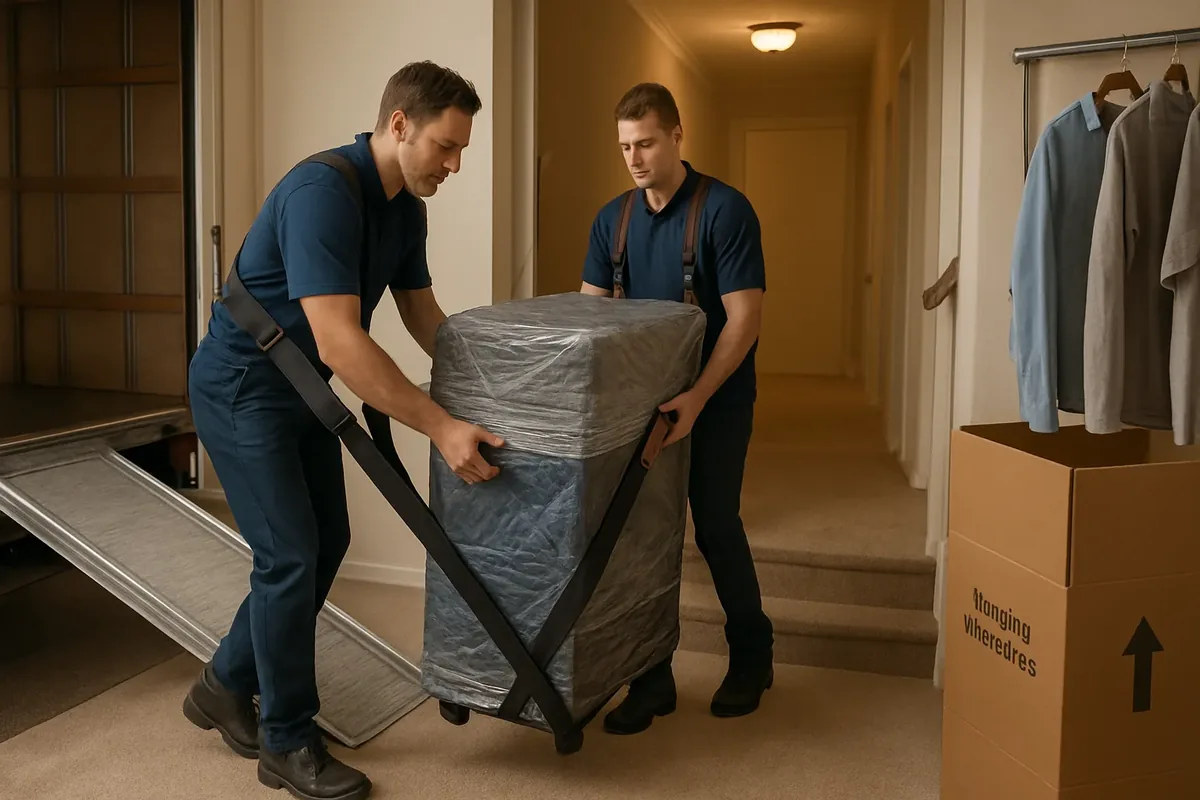
In this guide
The Three Wrapping Mistakes That Destroy Gaming PCs and Studio Monitors
Wrapping high-end computer and audio hardware is fundamentally different from wrapping wooden apartment furniture. Three common DIY shortcuts cause the vast majority of move-day electronics casualties: winding standard clear 80-gauge stretch wrap directly against exposed glass or matte monitor coatings, stuffing regular static-generating packing peanuts inside an open PC chassis, and failing to shield soft-dome tweeters on studio reference monitors.
Clear stretch film generates thousands of volts of electrostatic discharge (ESD) as it unwinds off the roll—fine around the outside of a corrugated carton or quilted blanket, but risky near unshielded PC circuit boards, exposed ports, or anti-glare OLED/IPS screen coatings where tight plastic tension can also create permanent pressure marks on the LCD diffuser. Similarly, a single bumped corner against an uncovered studio monitor tweeter dome or woofer cone ruins acoustic calibration permanently.
Exact Wrapping Materials & Cost Comparison Table
Whether you are moving out of a 450-sq-ft studio or a 1,100-sq-ft 2-bedroom apartment, use this item-by-item material spec to ensure every fragile surface gets the right cushioning tier without overspending on mover-marked-up cartons.
| Equipment Item | Required Inner Protection | Outer Carton / Pad Spec | DIY vs. Mover Packing Cost (USD) |
|---|---|---|---|
| Custom Tempered-Glass PC Tower | Anti-static bag for removed GPU + cardboard glass-face shield | Original case box + molded foam OR 48-ECT double-wall box + 3" foam on all 6 sides | $18–$35 DIY carton/foam vs. $65–$110 mover-packed |
| Dual 27"–34" Gaming Displays | Clean microfiber/foam sleeve + flat cardboard face shield over screen | Original monitor box OR telescoping 48-ECT TV/picture carton + corner foam | $20–$40 DIY cartons vs. $75–$140 mover TV boxes |
| Active Studio Reference Monitors (Pair) | Rigid cardboard baffle plate taped over tweeter/woofer + 2 layers 3/16" bubble wrap | 48-ECT medium heavy-duty box (or 72"x80" pad + giant rubber bands for local car move) | $15–$25 DIY materials vs. $50–$90 mover-packed |
| Standing Desk & Studio Subwoofer | 2–3 non-woven textile pads (72"x80", 35 lb/dz) or quilted pads + 3–4 wraps 80-gauge film | Held tight with 26"–42" ribbed rubber moving bands (no tape on wood/laminate) | Included in $65–$160 DIY kit vs. $45–$85 mover wrap |
| Hallway & Doorway Floor Protection | Rubber-backed canvas floor runner (27" x 24 ft) across entry & hardwood | Reusable slip-resistant runner for wet dolly wheels & heavy gear staging | Reusable DIY protection vs. $150–$350 deposit floor scratch risk |
| Total Apartment Packing Kit (Studio / 1-BR) | All boxes, tape, blankets, mattress bag & specialty electronics padding | Full-service mover packing includes materials + crew labor | $65–$160 DIY kit vs. $180–$520 mover-packed |
Amazon US Apartment Moving Supplies
Recommended Moving Boxes, Blankets & Bags for This Move
Apartment moving supplies matched to this guide (Amazon.com affiliate ID: apartmentmovingcost-20).
Economy Non-Woven Textile Moving & Storage Pads 72" x 80" (12-Pack, 35 lb/dz)
Lightweight breathable storage blankets for wrapping items inside PODS containers or mini-storage units
Large Giant Rubber Moving Bands for Securing Furniture Blankets (12-Pack Assorted)
Ribbed industrial rubber bands (26", 30", and 42" stretches) holding moving blankets tight around dressers without tape
Trimaco Stay-Put Canvas Plus Slip-Resistant Hallway Floor Runner 27" x 24 ft
Rubber-backed absorbent canvas floor runner protecting hardwood and lobby carpet from wet dolly tracks
As an Amazon Associate I earn from qualifying purchases. Always verify live stock and pack sizing directly on Amazon.com.
Choosing Blankets, Rubber Moving Bands, and Floor Runners
Not every piece of your setup needs an 85-lb/dz heavy quilted blanket. Matching blanket density and fasteners to each job keeps your boxes slim, breathable, and easy to grip through narrow apartment corridors.
- Lightweight Breathable Pads for Storage & Dust Control (Economy Non-Woven Textile Moving & Storage Pads, 72" x 80", 35 lb/dz, 12-Pack): Ideal for lining the inside of PODS containers, shielding desk legs, or draping over boxed monitors and studio acoustic panels during short-term storage without trapping moisture.
- Ribbed Giant Rubber Moving Bands (26", 30", and 42" Assorted 12-Pack): Sliding two wide natural rubber bands over a blanket-wrapped PC desk pedestal, studio subwoofer, or rack case locks the pad tight in 5 seconds—eliminating sticky tape residue and cutting 80-gauge stretch wrap waste by half.
- Slip-Resistant Hallway Runner (Trimaco Stay-Put Canvas Plus Floor Runner, 27" x 24 ft): With an absorbent canvas top and non-slip rubber backing, this runner bridges your apartment doorway to the bedroom office so wet dolly casters or cardboard box staples never scuff engineered hardwood on rainy move days.
- Where 80-Gauge Stretch Wrap Belongs: Reserve 3 to 4 layers of 80-gauge stretch wrap strictly for locking moving blankets around your solid wood desk top, binding multiple flattened boxes together, or sealing the outside of already-boxed speaker cartons against rain during truck loading.
Step-by-Step Wrapping Guide for Glass Towers, Displays & Speakers
Execute these five packing steps in sequence once your GPU, VESA arms, and desk legs are unbolted.
- Shield the tempered-glass side panel and pack the GPU separately. Slip the removed graphics card into a metallized ESD shielding bag, wrap it in 2 inches of pink anti-static bubble wrap, and place it inside its original box or a rigid small 48-ECT carton. Cut a flat piece of corrugated cardboard matching the exact outline of the PC's glass side panel, lay it flat against the exterior glass, and wrap the entire tower in two layers of large-bubble wrap before lowering it into a snug 48-ECT carton with at least 2 inches of foam padding on all six sides.
- Protect OLED/IPS monitor screens with rigid cardboard before foaming. Slip a clean, grit-free foam monitor sleeve (or soft cotton sheet) over the bare screen first so bubble wrap dimples cannot rub anti-glare coatings. Cut a double-wall cardboard face shield 1 inch larger than the bezel and place it across the front face, then slide the monitor upright into its original foam-lined box or a telescoping 48-ECT flat-screen TV box.
- Armor studio monitor tweeters and woofers against punctures. Active studio monitors almost never include metal grilles. Cut two rigid cardboard faceplates slightly wider than each speaker cabinet, cushion the edges with folded kraft paper so the cardboard bridges across the outer cabinet rim without touching the woofer surround or tweeter dome, and secure the baffle shield with painter's tape. Wrap each speaker in 3/16-inch bubble wrap and pack upright in a 48-ECT carton.
- Pad-wrap the studio subwoofer and standing desk slab with rubber bands. Drape a 72" x 80" textile or quilted moving pad smoothly over the subwoofer and desk top, pull the corners tight, and snap two 30-inch or 42-inch ribbed rubber moving bands horizontally around the bundle. For long-distance truck moves, add 3 passes of 80-gauge stretch wrap over the blanket for dust and moisture sealing.
- Label every box with orientation arrows and 'Top Load Only' callouts. Mark all four sides and the top flap of your PC tower, monitor, and speaker boxes with bold 'FRAGILE ELECTRONICS — THIS SIDE UP — DO NOT STACK' markings. In a moving truck, monitors must always ride vertically on edge like books in a shelf—never laid flat screen-up or screen-down where heavy boxes might land on the panel.
Storing or Moving Electronics in Extreme Heat or Humidity
If your apartment lease gap forces your gaming PC and studio gear into a portable storage container or unconditioned truck overnight, moisture and thermal expansion become silent threats. Avoid sealing electronics in airtight plastic bags when moving from a cold air-conditioned apartment into humid 90-degree summer air; instead, use breathable corrugated cartons and non-woven 35 lb/dz textile pads, and toss two silica gel desiccant packets inside the PC and speaker cartons. When moving in winter below 40 degrees Fahrenheit, let your cold PC tower and studio amplifiers sit unplugged in your heated new apartment for 3 to 4 hours so internal condensation evaporates completely before you press power.
Compare the cost of packing your apartment yourself versus hiring full-service movers with specialty cartons using our Apartment Moving Cost Calculator or Movers vs. DIY Rental Truck Comparator.
Open Calculator →Frequently Asked Questions
Should I wrap a gaming monitor in a moving blanket without a box for a local apartment move?+
Only if you are placing the monitor upright in the padded back seat of your personal car with a rigid cardboard face shield taped across the screen underneath the moving blanket. Never load an unboxed monitor wrapped solely in a blanket onto a moving truck—any shifting chair leg or box corner can press through fabric and crack the LCD glass.
How many 72x80 moving blankets do I need for a full gaming desk and studio setup?+
Plan on 4 to 5 standard 72" x 80" pads for a complete workstation: two pads for a 60-to-72-inch standing desk slab and steel leg frame, one pad for the studio subwoofer or rack unit, and one to two pads for your ergonomic desk chair and spare floor/corner buffering inside the truck.
Is 32-ECT cardboard strong enough for a custom PC tower box if I threw away the original carton?+
No. A custom tempered-glass PC tower weighs 35 to 55 pounds with concentrated sharp metal feet. Use a 48-ECT double-wall carton (such as a heavy-duty dish pack or double-wall electronics box) rated for roughly 65 to 80 pounds, and reinforce the bottom seam with three strips of 2.6-mil acrylic packing tape.
Do moving companies charge extra for telescoping TV and monitor boxes?+
Yes. Movers typically charge $25–$45 per telescoping flat-screen box plus crew packing labor ($130–$175/hr for two movers), which easily adds $100–$160 for a dual-monitor gaming setup. Buying your own 48-ECT cartons or saving original manufacturer boxes with molded Styrofoam inserts cuts that cost dramatically.
Can I use regular moving blankets instead of a floor runner to protect apartment hallways?+
Laying loose moving blankets on hardwood or lobby tile is a serious slip hazard—blankets slide effortlessly underfoot when carrying a 50-pound PC box or 120-pound desk. Always use a rubber-backed slip-resistant canvas hallway runner or peel-clean carpet protection film so neither you nor your movers lose footing.
Interactive US Moving Tools
Compare Full-Service Movers vs. DIY Rental Truck in 30 seconds
Related Guides
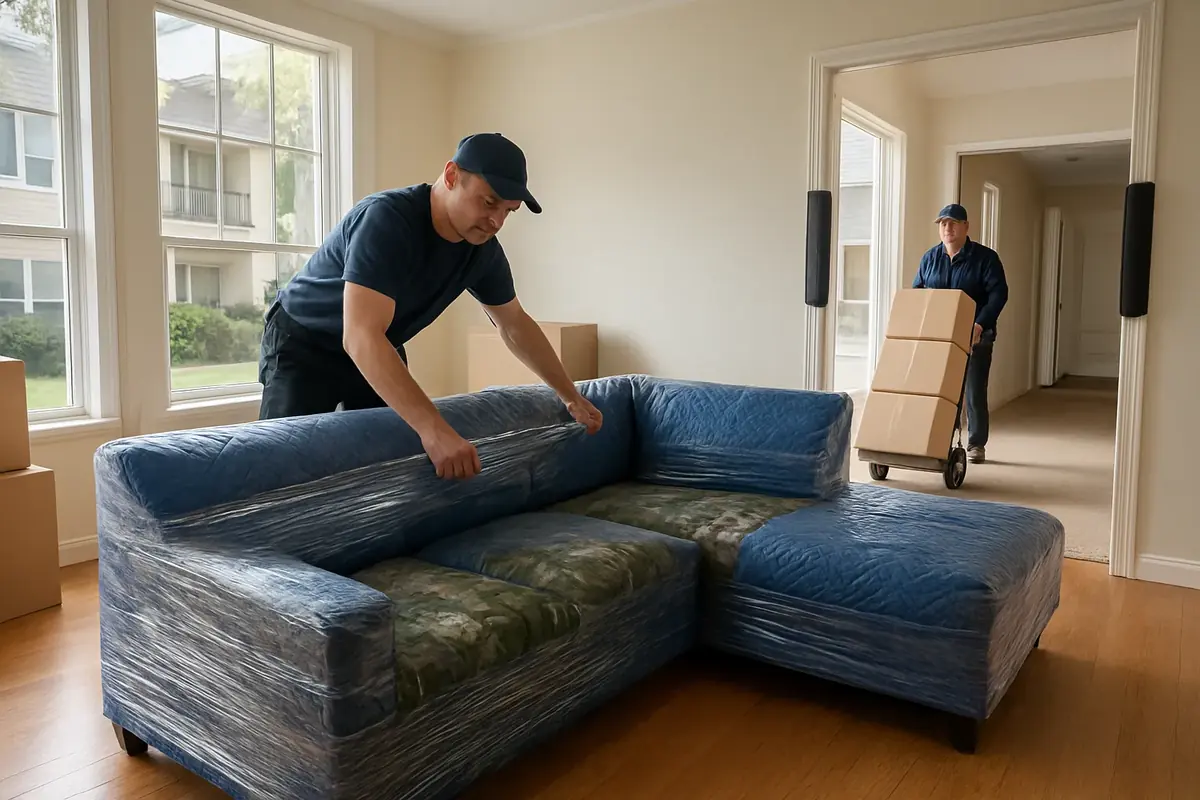
furniture and appliance moving costs
Furniture & Specialty Item Moving Costs: Complete US Benchmarks & Guides
Moving oversized apartment furniture and heavy appliances—from L-shaped sectionals and King adjustable beds to Peloton bikes, glass dining tables, OLED TVs, and stacked washer-dryers—adds $60 to $340+ in specialized disassembly, stair-carry labor, and protective crating fees. This pillar guide benchmarks US mover hourly rates, flat bulky-item add-ons, doorway clearance tactics, and DIY truck padding specs.
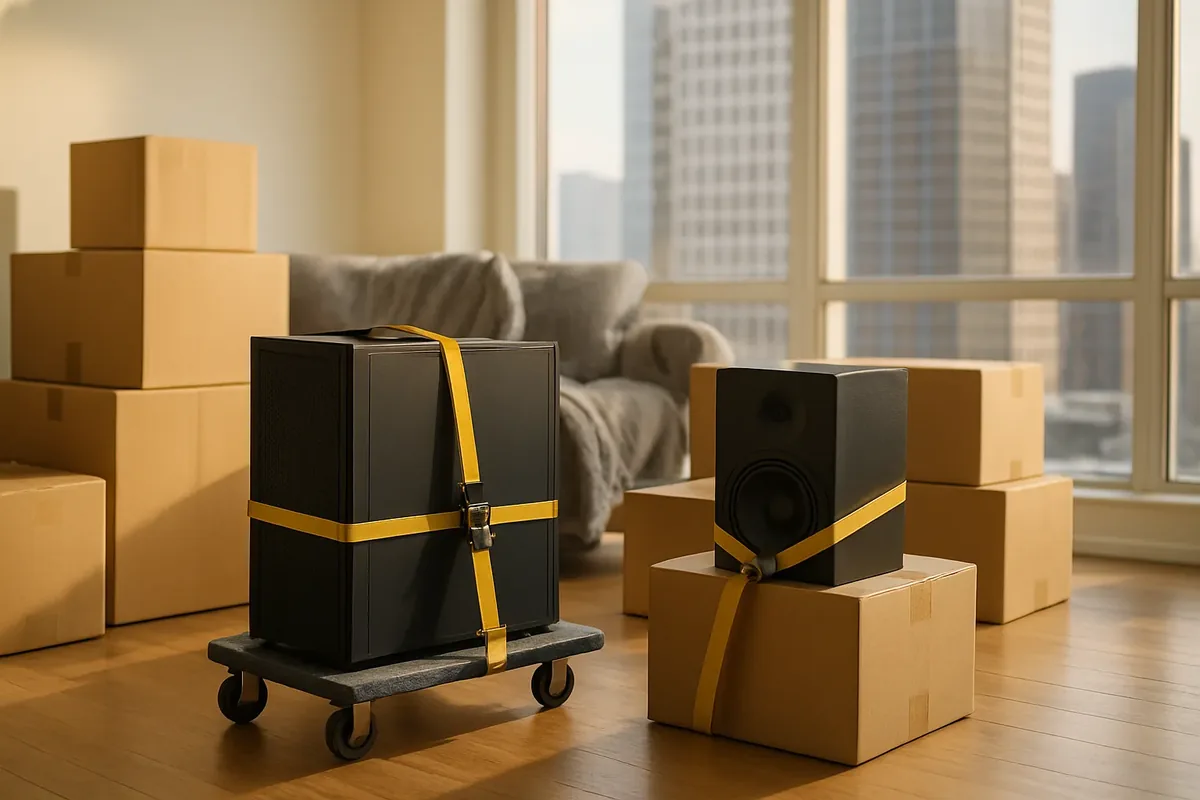
furniture and appliance moving costs
How to Load & Anchor a Custom Glass-Panel Gaming PC, Desk & Studio Monitors in a Rental Truck
Master the two-person loading, dolly transport, and cam-buckle truck tie-down technique for moving a tempered-glass gaming PC, ultrawide monitors, studio speakers, and heavy standing desk in a DIY rental truck. Compare DIY rental budgets against hiring apartment movers.
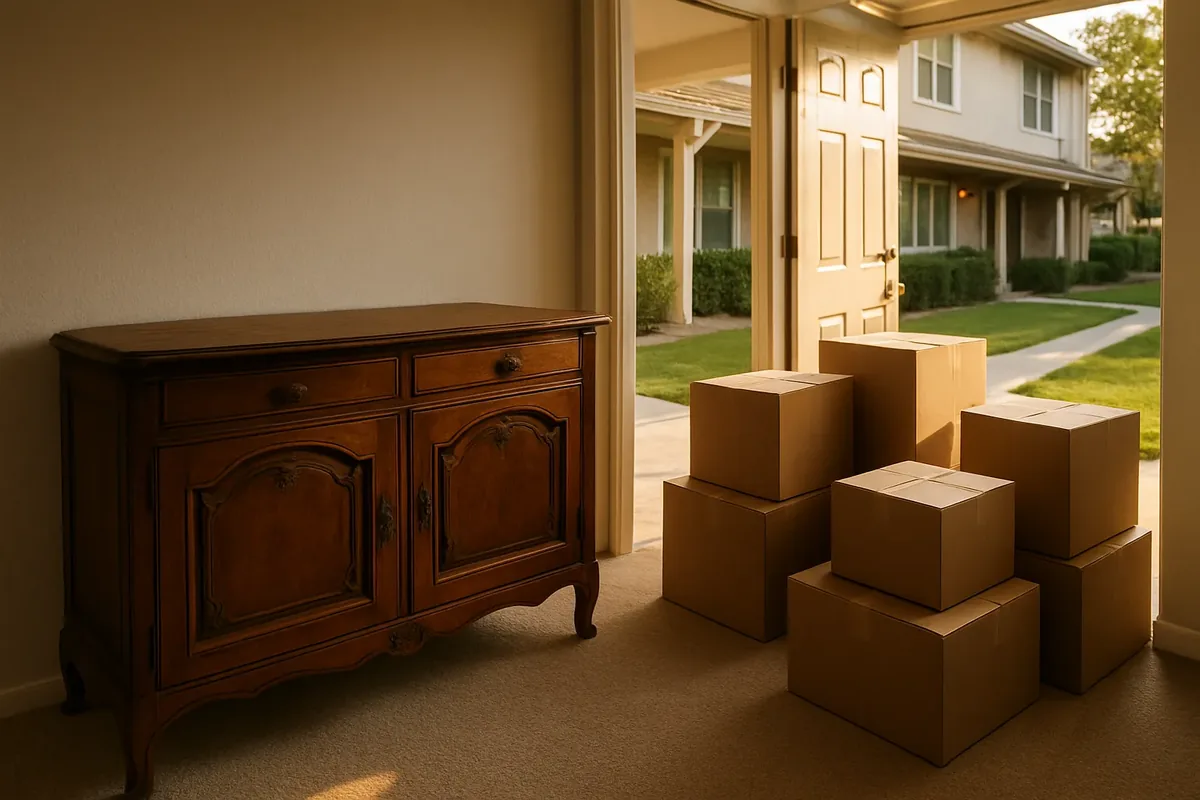
furniture and appliance moving costs
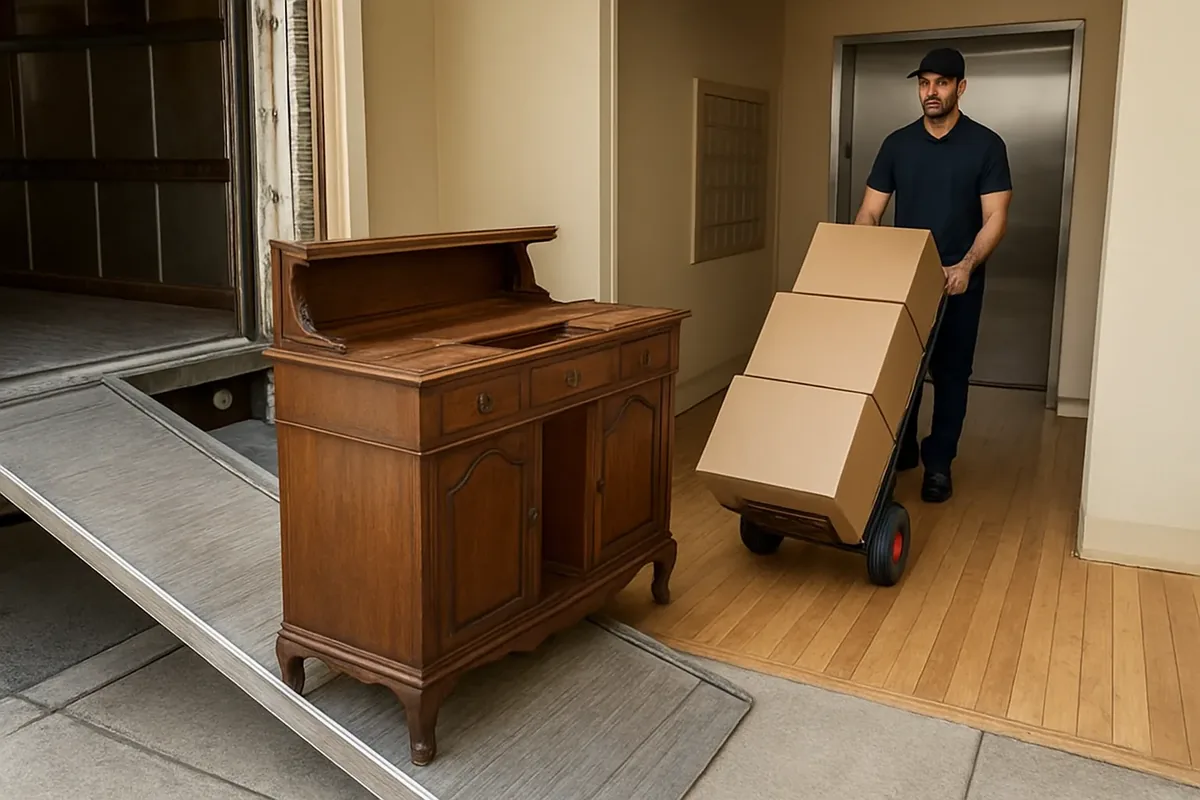
What an Antique Heirloom Wood Buffet, Sideboard & Hutch Adds to Your Moving Quote
See the exact billable crew minutes, bulky-item fees, and single-item delivery rates an antique veneer sideboard and heirloom hutch add to a US apartment move. Compare full-service white-glove quotes against DIY rental truck budgets before booking.
furniture and appliance moving costs
When to Disassemble an Antique Heirloom Wood Buffet & Sideboard Before Movers Arrive
Master diagonal doorway math, elevator cab clearance checks, and safe antique disassembly rules before moving day. Knowing which hutch brackets, mirrors, and legs to unbolt prevents crushed veneers and saves 30–60 minutes of hourly crew labor.