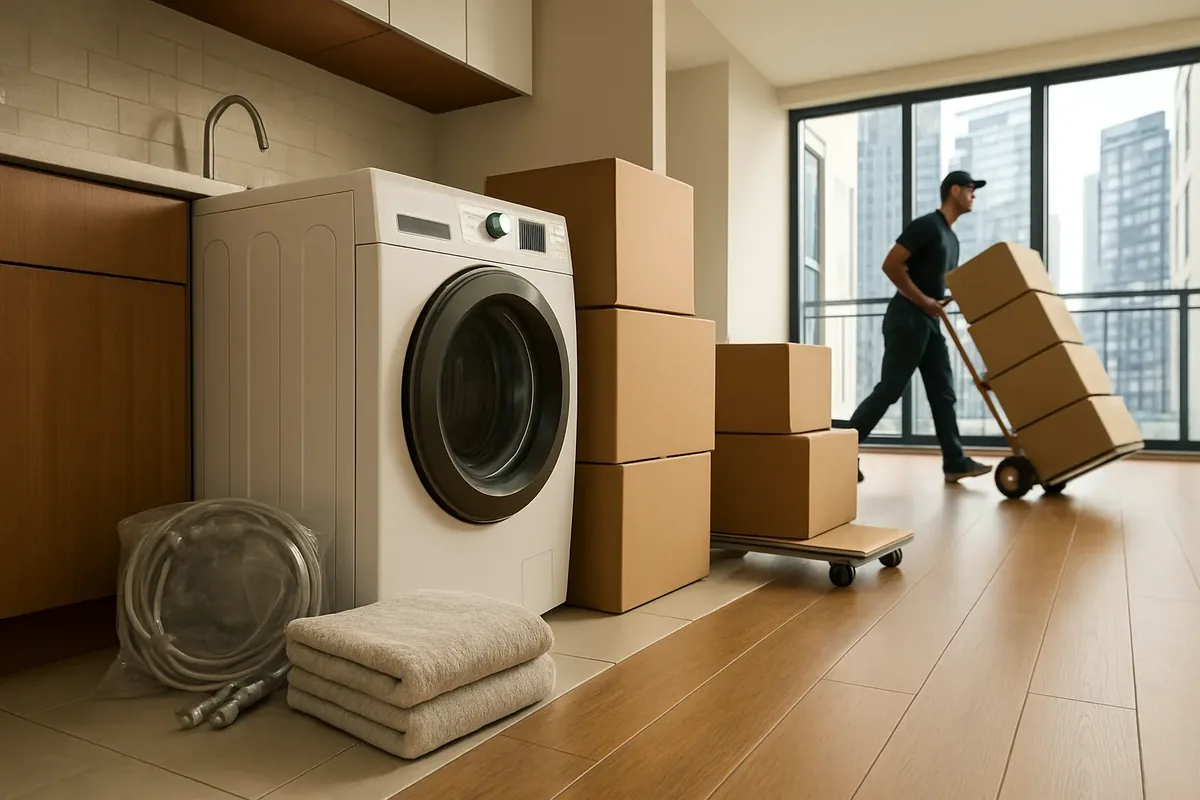
In this guide
- The Real Cost of Moving Wet Refrigerators & Undrained Washing Machines
- Step-by-Step 24-Hour Fridge & Freezer Defrost Protocol
- Draining Apartment Washers & Securing Loose Hoses Properly
- Heavy-Duty & Quiet Tapes for Kitchen Boxes, Hoses & Late-Night Prep
- Budgeting Heavy Appliance Moves: Full-Service vs. DIY Rental Truck
The Real Cost of Moving Wet Refrigerators & Undrained Washing Machines
Even in apartments where major kitchen units stay behind for the next tenant, thousands of US renters own apartment-sized chest freezers, countertop ice makers, portable apartment washers, full-size in-unit laundry sets, or personal refrigerators (standard in Los Angeles, many NYC condos, and townhome rentals). Waiting until moving morning to yank the plug creates immediate financial damage on three fronts.
First, every frost-free refrigerator holds trapped ice behind internal evaporator coils plus water in its drip pan, and every front-load or portable washer traps 1.5 to 3 quarts of greywater inside its lower coin-trap drain pump and ribbed drain hose. The moment a crew tilts that appliance 45 degrees onto an appliance hand truck, dirty water floods across engineered hardwood hallway floors—triggering $150 to $650 in lease security-deposit floor deductions—or seeps inside the moving truck onto your upholstered sofa and bottom-tier cardboard boxes ($300–$1,200 in water damage).
Second, professional crews charge a standard $75 to $160 heavy-appliance handling add-on—and routinely refuse to load dripping refrigerators or live-plumbed washers onto a wooden truck floor. Leaving movers waiting 30 minutes while you hunt for pliers, shut off quarter-turn wall valves, and mop puddles adds $65 to $145 in wasted crew clock time ($130–$175/hr for 2 movers; $175–$295/hr for 3–4 movers).
| Prep Window & Task | DIY Prep Time & Materials Needed | Mover Delay / Refusal Fee Avoided | Building / Hardware Damage Avoided | Total Risk Offset vs. Skipping Prep |
|---|---|---|---|---|
| T-48 hrs: Empty freezer ice maker & disconnect fridge water line | 20 min; shutoff valve check + towel + taped brass cap | Avoids $65–$145 crew waiting while you locate valve wrench | Prevents $150–$650 apartment hardwood & downstairs ceiling leak claims | $215 – $795 protected on local or regional move |
| T-24 hrs: Unplug fridge/freezer & prop doors open to defrost | 24 hrs passive thaw; 2 bath towels + baking soda wipe | Passes carrier dry-box check (mandatory for $780–$2,480 interstate loads) | Prevents $300–$1,200 waterlogged sofa/carton damage + mold odors | $300 – $1,200+ cargo & upholstery protection |
| T-12 hrs: Drain washer pump filter, spin-drain & coil hoses | 25 min; shallow baking pan + pliers + clear bag & tape | Keeps heavy-appliance handling inside $75–$160 add-on tier | Stops 2 quarts of greywater flooding common elevator cabs ($250 fine) | $325 – $410 elevator & floor protection |
| T-2 hrs: Reinstall front-load shipping bolts & tape doors/cords | 15 min; 4 transit drum bolts + foam pad + packing tape | Shaves 15 min off crew prep ($35–$75 local labor saved) | Prevents $250–$450 torn washer drum suspension springs & tub cracks | $285 – $525 mechanical & labor savings |
| Post-Move: Rest upright fridge 4–24 hrs before plugging in | Zero cost; plug in only after compressor oil settles | No extra move fee (plan cooler bag for first-night groceries) | Prevents $300–$800 locked compressor & cooling-line burnout | $300 – $800 appliance replacement saved |
Step-by-Step 24-Hour Fridge & Freezer Defrost Protocol
Unplugging a frost-free apartment refrigerator or chest freezer only two hours before the truck arrives fails because frozen ice crystals trapped behind the rear freezer fan panel take 14 to 20 hours to melt completely and run down into the lower drip tray. Follow this timed sequence so zero meltwater escapes on move day:
- Eat Down Perishables & Turn Off the Ice Maker at T-48 Hours. Lift the wire shutoff arm inside the freezer ice bin 48 hours ahead, empty existing cubes, and pack shelf-stable condiments, jars, and pantry cans into small 32-ECT boxes.
- Shut Off Water Supply & Unplug at T-24 Hours. Turn the quarter-turn copper supply valve behind the fridge clockwise until seated, loosen the compression nut over a shallow pan, unplug the power cord, and remove all glass shelves and crisper bins into a padded kitchen box.
- Prop Doors Open Over Folded Towels Overnight. Fold two thick bath towels along the front threshold beneath the fridge doors and wedge a rolled towel or wooden spoon in both door hinges so moisture evaporates completely rather than creating mildew.
- Empty the Rear Drip Pan & Wipe Seals at T-2 Hours. Pull or sponge out the plastic evaporation pan underneath the front grille or rear compressor bay, wipe door gaskets dry with a pinch of baking soda, and tape the power cord neatly to the back frame.
- Keep Doors Latched With Stretch Wrap Over Blankets—Not Bare Tape. Never stick packing tape directly onto stainless steel or painted fridge doors (adhesive pulls off finish); wrap a quilted moving pad around the fridge and pull stretch wrap around the outside so doors stay shut.
Amazon US Apartment Moving Supplies
Recommended Moving Boxes, Blankets & Bags for This Move
Apartment moving supplies matched to this guide (Amazon.com affiliate ID: apartmentmovingcost-20).
Scotch Heavy Duty Shipping & Moving Packaging Tape 1.88" x 54.6 yd (6-Roll Pack)
3.0-mil solvent-free hot-melt adhesive tape engineered to lock 80-lb double-wall boxes with a single strip
Duck Max Strength Heavy-Duty Clear Packing Tape 1.88" x 54.6 yd (6-Pack)
3.1-mil thick tear-resistant BOPP film tape meeting US Postal and UPS commercial parcel strength standards
Duck EZ Start Frustration-Free Quiet Packaging Tape (6-Roll Pack)
Smooth whisper-quiet unrolling adhesive tape ideal for late-night apartment packing without loud screeching
As an Amazon Associate I earn from qualifying purchases. Always verify live stock and pack sizing directly on Amazon.com.
Draining Apartment Washers & Securing Loose Hoses Properly
Whether you are moving a full-size stacked laundry pair or a 1.6-cu-ft portable apartment washer that hooks up to your kitchen faucet, draining the pump trap takes 15 minutes and prevents embarrassing hallway puddles. First, run an empty Drain/Spin cycle, then shut off both hot and cold wall valves completely (if a valve drips slowly after closing, screw on a $3 brass hose cap before movers leave!).
Second, place a shallow rimmed baking sheet underneath the small square access flap on the front bottom corner of a front-load washer, slowly unscrew the black coin-trap filter cap, and let the final 1 to 2 quarts drain cleanly out of the mini rubber emergency tube. Third, unscrew both braided supply hoses and lift the corrugated gray drain hose into a bucket for 60 seconds until empty—then bundle both hoses inside a sealed bag tucked inside the dry drum along with the manual and detergent cups.
Heavy-Duty & Quiet Tapes for Kitchen Boxes, Hoses & Late-Night Prep
Prepping appliances at T-24 hours means boxing heavy glass pantry jars, spice bottles, laundry detergents, glass fridge shelves, and sealed hose bags late on moving eve—often right around standard 10 PM apartment quiet hours. Choosing the right tape per task speeds sealing without triggering neighbor noise complaints or dropped pantry bottoms.
To seal heavy kitchen cartons carrying canned food, glass condiment bottles, and tempered-glass fridge shelves up to 80 lbs, use Scotch Heavy Duty Shipping & Moving Packaging Tape 1.88" x 54.6 yd (6-Roll Pack), engineered with 3.0-mil solvent-free hot-melt adhesive that locks double-wall box seams in one pass. For long-distance moves across damp weather or sealing plastic hose/hardware bags wrapped inside bubble cushioning for the washer drum, Duck Max Strength Heavy-Duty Clear Packing Tape 1.88" x 54.6 yd (6-Pack) brings 3.1-mil tear-resistant BOPP film meeting US Postal and UPS commercial parcel strength standards. And when you finish wiping down the kitchen and taping pantry and laundry cartons after 9:30 PM in a thin-walled walk-up building, Duck EZ Start Frustration-Free Quiet Packaging Tape (6-Roll Pack) provides 2.6-mil smooth, whisper-quiet unrolling that avoids loud screeching echoes down quiet apartment hallways.
Budgeting Heavy Appliance Moves: Full-Service vs. DIY Rental Truck
- Expect a $75–$160 Heavy-Appliance Surcharge: Most local apartment movers bill $75 to $160 extra per large washer/dryer or full-size refrigerator on top of hourly labor ($130–$295/hr) to cover specialized appliance hand trucks and extra stair strain.
- Rent an Appliance Dolly With Restraint Straps for DIY Trucks: If you rent a 12-to-20-foot DIY moving truck ($30–$55 daily base + $1.09–$1.59/mi), add an appliance hand truck with rubberized belt straps ($10–$18 rental) rather than balancing a 180-lb washer on a standard box dolly.
- Measure Laundry Closet & Stair Clearances Ahead of Time: Standard full-size washers measure 27 inches wide by 30 to 34 inches deep—ensure your laundry closet doorway and hallway turns clear at least 29 inches before unbolting hoses.
Factor heavy-appliance handling fees, hourly mover rates, and DIY rental truck savings into your move budget with our Apartment Moving Cost Calculator or Movers vs. DIY Rental Truck Comparator.
Open Calculator →Frequently Asked Questions
How many hours before moving should I unplug and defrost my refrigerator or freezer?+
Unplug refrigerators and chest freezers at least 24 hours before movers arrive—and shut off automatic ice makers 48 hours ahead. Frost trapped behind rear evaporator panels requires 14 to 20 hours to thaw completely and evaporate so meltwater does not leak across apartment floors or truck beds.
How long do I have to wait before plugging a refrigerator back in after moving?+
If the refrigerator stayed upright the entire move, wait 2 to 4 hours before plugging it in. If movers had to tilt the unit 45 degrees or lay it on its side on stairs or ramps, keep it standing upright for a full 12 to 24 hours so displaced compressor oil drains back down into the motor before startup.
Can I move liquid laundry detergent or open bottles inside the washing machine drum?+
Never pack liquid detergent pods, bleach bottles, or open cleaning liquids inside a washer drum or sealed moving truck cartons. Moving trucks lack climate control and vibration pops screw caps, destroying laundry machines and adjacent furniture; carry liquids upright in a plastic tote inside your car trunk.
What should I do if the apartment wall shutoff valve drips after disconnecting my washer?+
Place a bucket underneath immediately, notify building maintenance if the building valve is faulty, and screw a $3 threaded brass garden-hose end cap (3/4-inch FHT with rubber washer) onto the leaking faucet spout so your move-out inspection passes cleanly.
Do movers hook up my washing machine and refrigerator water line at the new apartment?+
Generally no. Due to plumbing liability and building COI insurance restrictions, moving crews roll appliances into your laundry alcove and kitchen opening, while renters or licensed building maintenance technicians tighten braided water hoses and check for leaks.
Interactive US Moving Tools
Compare Full-Service Movers vs. DIY Rental Truck in 30 seconds
Related Guides
apartment moving cost guides
Apartment Moving Cost Guides: Complete US Hourly Rates, Flat-Rate Quotes & Benchmarks
Local US apartment moves with licensed full-service crews average $640 to $1,530 for studios and 1-bedroom units and $1,270 to $3,572 for 2- and 3-bedroom apartments when self-packed, while DIY rental trucks run $155 to $507. This pillar guide decodes hourly crew math, travel fees, access surcharges, FMCSA estimate rules, and packing material ratios across every moving scenario.
apartment moving cost guides
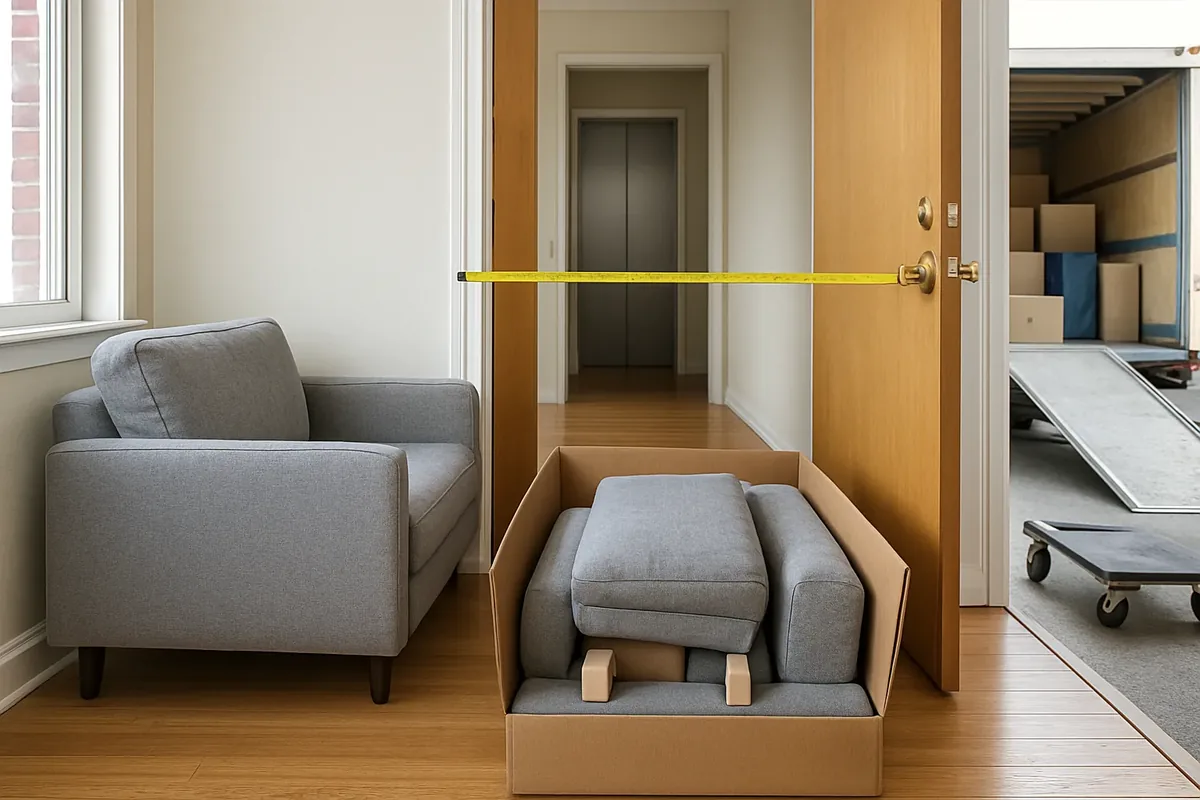
Measuring Doorway Diagonal Sofa Clearance, Hallways & Elevator Cabs Before Moving Day
A 10-minute tape-measure audit of doorway clear openings, sofa diagonal depth, 90-degree hallway turns, and elevator cab diagonals prevents $150 to $450 emergency hoist fees, failed move-ins, and $130 to $295/hr crew standby delays. Use the exact clearance formulas and disassembly prep checklist before booking your movers or rental truck.
apartment moving cost guides
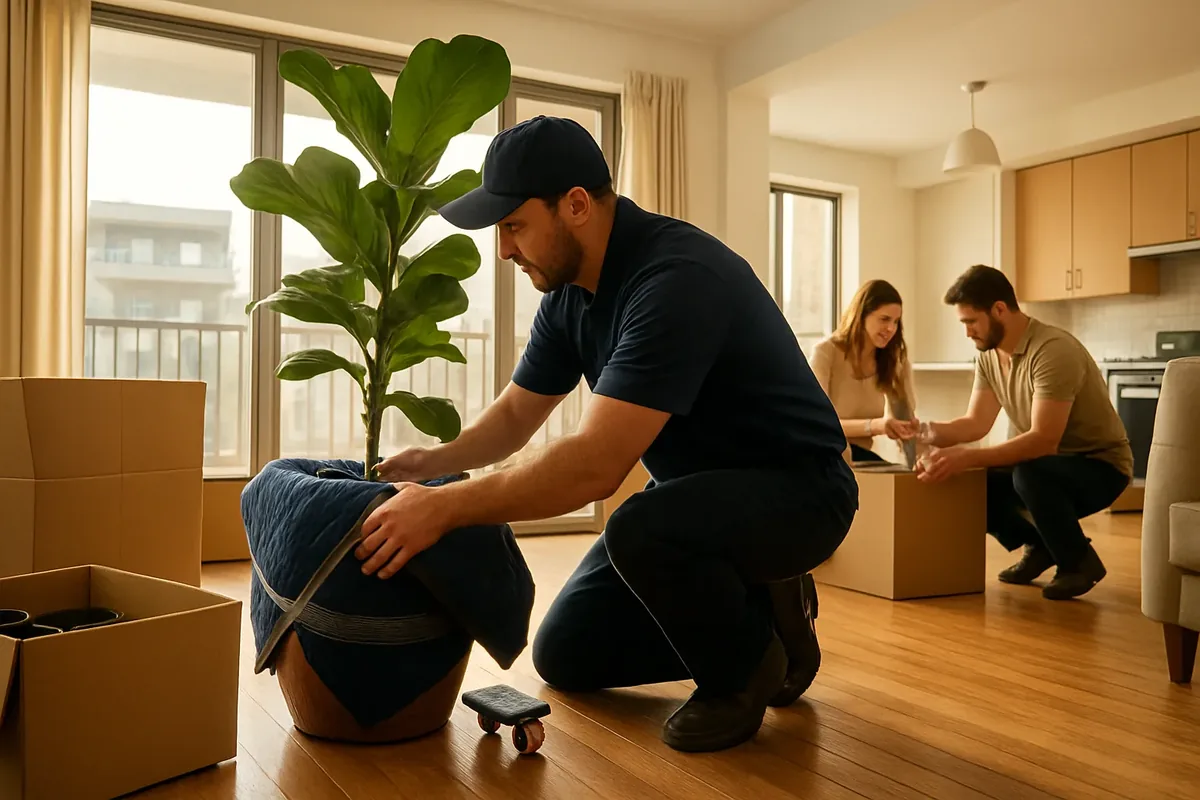
Why Interstate Movers Refuse Live Plants (and How to Move Them Locally)
Most interstate moving carriers refuse live plants traveling beyond 150 miles due to USDA pest quarantines and suffocating box-truck cargo temperatures. Here is what local movers charge to transport heavy balcony planters and ceramic pots—and how to move foliage safely yourself.
apartment moving cost guides
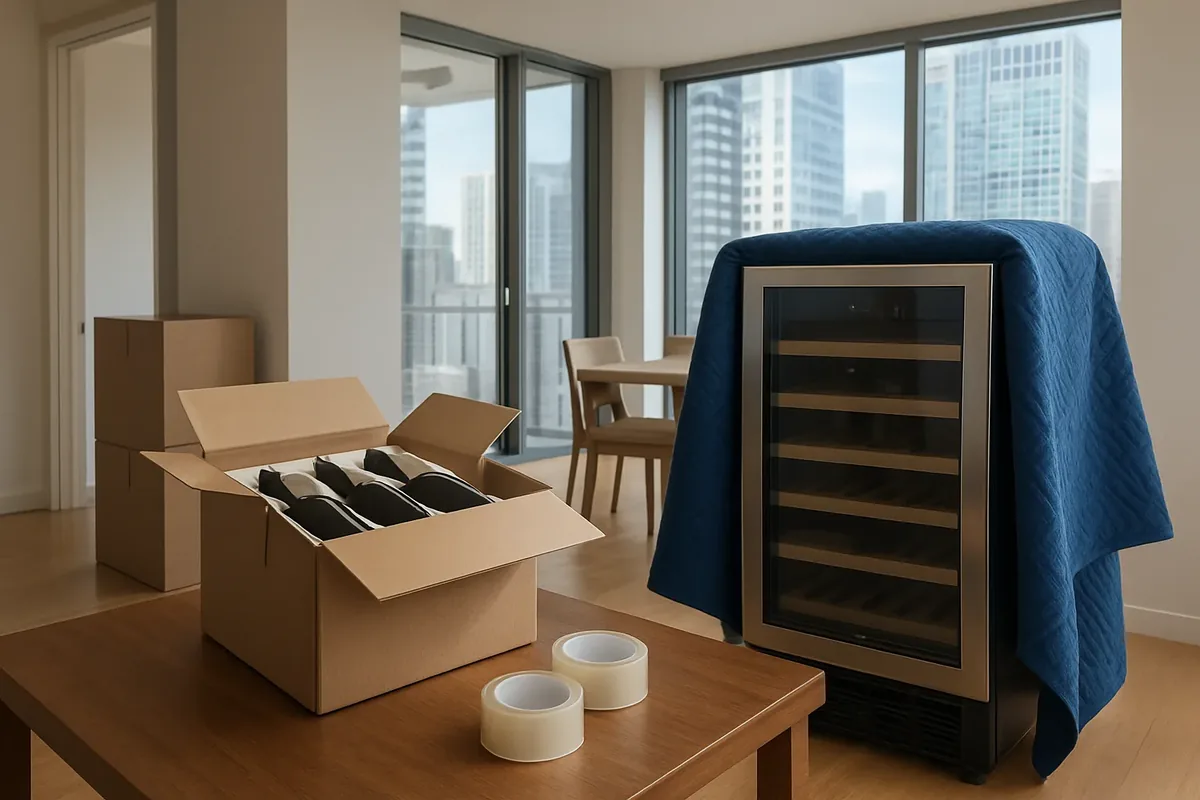
Cost & Temperature Rules for Moving a 50–200 Bottle Wine Collection
Moving 50 to 200 bottles of fine wine or top-shelf spirits requires navigating state alcohol import limits, 55°F temperature ceilings, and 40-pound case weights. Discover what molded EPS wine shippers, local movers, and refrigerated carriers charge to relocate an apartment cellar.