In this guide
- The 150-Mile & 24-Hour Rule: Why Interstate Carriers Refuse Live Plants
- Local Apartment Mover Costs for Houseplants & Heavy Balcony Planters
- The Wet-Soil Weight Trap: Ceramic, Terracotta & Concrete Planters
- Materials Spec Guide: Blankets & Tape That Survive Humid Plant Boxes
- Handling Building Rules, Freight Elevators & Pest Clauses
The 150-Mile & 24-Hour Rule: Why Interstate Carriers Refuse Live Plants
Apartment renters planning an out-of-state relocation frequently discover during their visual inventory survey that national van lines and interstate carriers classify live indoor houseplants alongside hazardous materials and perishables. Under Federal Motor Carrier Safety Administration (FMCSA) household goods tariff guidelines and state Department of Agriculture quarantine laws, most commercial carriers enforce a strict refusal policy for any live foliage traveling more than 150 miles or remaining inside a trailer for more than 24 hours.
Two operational realities drive this restriction. First, the cargo hold of a 26-foot straight truck or a 53-foot interstate semi-trailer has zero airflow and no climate regulation. During summer interstate runs, internal trailer temperatures routinely climb to 115°F to 135°F, while winter mountain passes drop cargo bays below 20°F—conditions that kill tropical monsteras, orchids, and ficus trees within six hours while voiding carrier valuation coverage. Second, state agricultural checkpoints in California, Florida, Arizona, and Texas enforce strict soil and nursery pest inspections against hitchhiking threats such as the spotted lanternfly, fire ants, and citrus psyllids. If an agricultural inspector flags uncertified potting soil inside an interstate moving van, the entire trailer affecting three to cinco apartment households can be Impounded for days.
Local Apartment Mover Costs for Houseplants & Heavy Balcony Planters
Within a local metro radius (<15 miles to 50 miles), independent apartment movers will gladly transport indoor houseplants and balcony containers, provided you sign a perishable release waiver acknowledging that broken stems or tipped soil are excluded from standard $0.60-per-pound valuation coverage. However, plant collections significantly inflate local hourly labor bills because plants cannot be stacked.
In a standard 1-bedroom apartment move (420 cu ft, 3,200 lbs, 2-person crew at $130 to $175 per hour), movers build tight, floor-to-ceiling vertical tiers of 32-ECT boxes inside the truck. Live plants in glazed ceramic pots require dedicated floor footprint at the very rear of the truck near the roll-up door, plus individual hand-carries down walk-up stairs or shared passenger elevators. A collection of 15 indoor plants and four saturated outdoor balcony trough planters easily adds 250 to 450 pounds of dead weight and consumes 45 to 90 minutes of extra crew handling time.
| Plant Collection Size | Extra Weight & Truck Floor Space | Full-Service Local Labor & Materials | DIY Rental Truck / Car Transport Cost | Interstate Commercial Option |
|---|---|---|---|---|
| Small Indoor Window Kit (5–8 pots, 6–10 in diameter) | 45–80 lbs / 6 sq ft floor space | $75–$135 (0.5 hr crew labor + 2 tall dish cartons) | $20–$45 (Boxes, paper packing, back-seat car carry) | Refused on van line; carry in personal car cabin ($0 freight surcharge) |
| Dense Urban Jungle (15–25 plants + 2 floor trees) | 180–310 lbs / 18 sq ft floor space | $160–$285 (1.0–1.5 hrs crew labor + 5 dish barrels) | $85–$165 (10-ft–12-ft local rental truck base + padding) | Repot into lightweight nursery liners; transport in climate-controlled SUV |
| Terrace & Balcony Garden (6–10 large ceramic/concrete troughs) | 380–750 lbs / 28 sq ft floor space | $260–$495 (1.5–2.25 hrs 3-person crew + dolly & blanket wrap) | $145–$260 (15-ft truck rental + appliance dolly + 85-lb/dz pads) | $320–$680 (Empty soil first; ship empty glazed pots as household freight) |
| 3rd-Floor Walk-Up Surcharge (Wet soil + heavy ceramic pots) | +20%–30% stair carry time | +$110–$190 (2 flights stair fee + extra shuttle trips) | +$55–$90 (2-man shoulder lifting strap + heavy carton kit) | Empty all soil before move day to cut carry weight by 65% |
Amazon US Apartment Moving Supplies
Recommended Moving Boxes, Blankets & Bags for This Move
Apartment moving supplies matched to this guide (Amazon.com affiliate ID: apartmentmovingcost-20).
Scotch Box Lock Extreme Grip Moving & Shipping Tape (6-Roll Pack)
Advanced instant-stick adhesive formulated for 100% recycled kraft and textured double-wall boxes
BOMEI PACK Commercial 2.7-Mil Clear Acrylic Moving Tape 65 yd (12-Roll Case + Gun)
780 total yards of anti-splitting acrylic box-sealing tape bundled with a 2-inch handheld dispenser
Sure-Max 12 Pro Moving & Packing Blankets 80" x 72" (85 lb/dz Heavy-Duty Quilted)
Professional zig-zag double-stitched padded polyester/cotton blankets protecting dressers and door frames
As an Amazon Associate I earn from qualifying purchases. Always verify live stock and pack sizing directly on Amazon.com.
The Wet-Soil Weight Trap: Ceramic, Terracotta & Concrete Planters
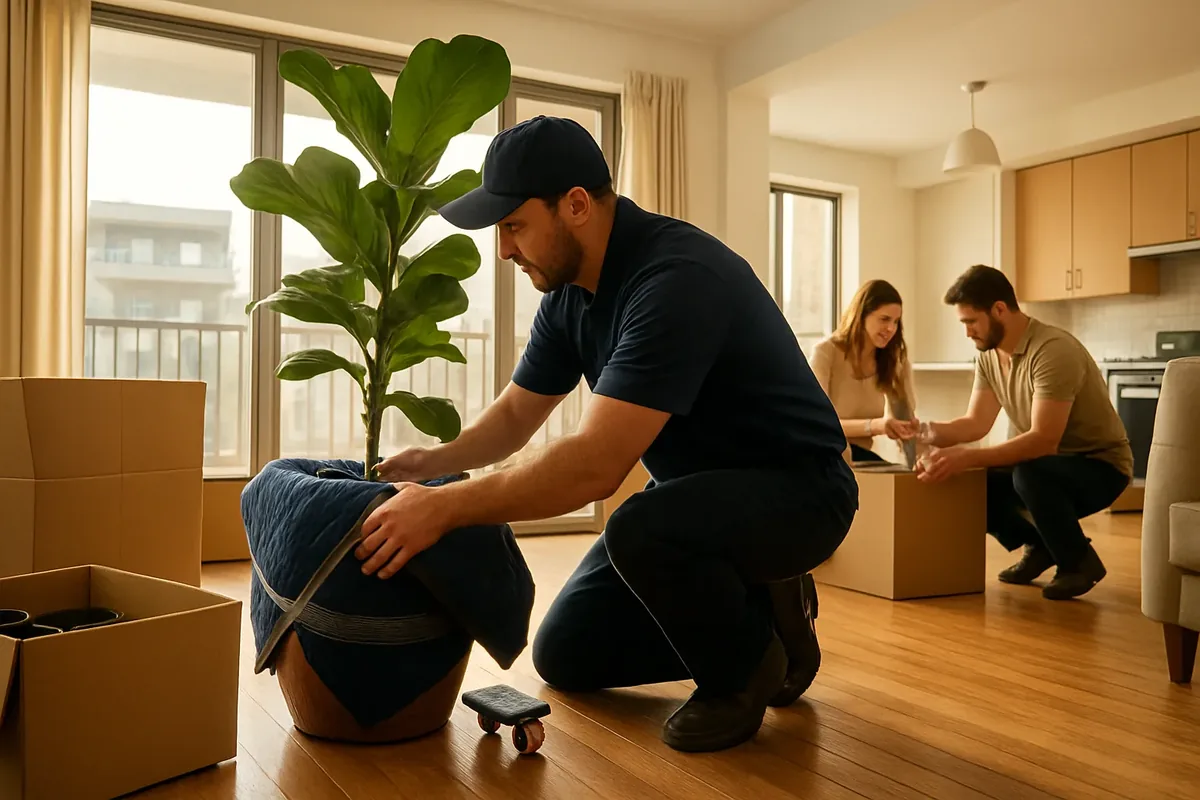
The single most expensive mistake apartment gardeners make before moving day is watering their balcony planters and indoor floor pots 24 hours prior to crew arrival. Dry peat-and-perlite potting mix weighs roughly 15 to 22 pounds per cubic foot, whereas saturated wet potting soil weighs 55 to 75 pounds per cubic foot. When combined with a thick-walled 18-inch glazed ceramic or cast fiber-concrete planter weighing 45 pounds empty, a single watered balcony pot reaches 110 to 135 pounds.
At that weight threshold, one mover cannot safely carry the container down a 2nd-floor or 3rd-floor walk-up staircase ($55 to $190 stair surcharge zone) without risking a cracked ceramic rim or lower-back strain. The crew must switch to a two-person appliance dolly carry or wrap the pot in heavy 85-lb-per-dozen quilted moving blankets secured with multiple passes of high-tack acrylic packing tape. Even worse, wet soil sloshes muddy drainage water across hardwood hallway floors and stains adjacent fabric sofas if a drain saucer shifts inside the truck.
- Stop Watering 4 to 5 Days Before Move Day. Allow potting soil to reach a dry, cohesive root-ball state so each container loses 40% to 60% of its water weight and prevents toxic mud drainage inside cartons or elevator cabs.
- Transfer Plants from Ceramic Pots to Plastic Nursery Liners. Slide high-value indoor plants out of breakable glazed stoneware and place the root balls into flexible 1-gallon or 3-gallon black plastic nursery pots 48 hours before moving. Pack the empty ceramic pots like fragile kitchen bowls.
- Anchor Soil Surfaces with Cardboard Discs & Tape. Cut a circular cardboard collar with a center slit for the main plant stem, press it flush over the top of the dry soil, and cross-brace the rim with 3.1-mil box-sealing tape so soil cannot spill if the pot tilts 30 degrees on a hand truck.
- Sleeve Tall Foliage in Breathable Kraft Paper Cones. Wrap delicate fronds on Boston ferns, palms, and rubber trees upward into a loose cylinder using breathable brown kraft paper rather than airtight plastic stretch wrap, preventing leaf snapping in narrow apartment door frames.
- Pack Nursery Pots Upright Inside 48-ECT Dish Barrels. Stand 3 to 4 nursery pots inside a heavy-duty double-wall 18 x 18 x 28-inch dish barrel carton, stuff crumpled packing paper tightly into the voids between bases so pots cannot collide, and punch 2-inch ventilation holes along the upper box sides.
Materials Spec Guide: Blankets & Tape That Survive Humid Plant Boxes
Standard single-wall bargain moving boxes and thin 1.6-mil acrylic tape fail rapidly when exposed to residual terracotta moisture and heavy bottom-loaded ceramic pots. When a single glazed planter exerts 35 to 60 pounds of concentrated downward pressure on a small bottom footprint, cheap tape splits along the bottom center seam as soon as a mover lifts the carton off the dolly.
- Double-Wall Corrugated Base Reinforcement: Use 1.88-inch x 54.6-yard extreme-grip 3.1-mil synthetic rubber packing tape such as the Scotch Box Lock 6-Roll Pack to seal the bottom H-seams of recycled corrugated plant cartons; its high-tack adhesive bonds immediately to fibrous kraft liners even in humid apartment hallways.
- Bulk Seam Strapping & Collar Taping: For apartments moving 20+ plant cartons alongside a 2-bedroom or 3-bedroom box load (680 to 980 cu ft), a BOMEI PACK Commercial 2.7-Mil Clear Acrylic Moving Tape 12-Roll Case (65 yards per roll with a 2-inch handheld dispenser) provides 780 total yards to double-strap box bottoms and anchor cardboard soil discs over nursery pots.
- Ceramic & Terracotta Impact Padding: Never stack empty glazed planters bare inside a box or truck bed. Wrap each large ceramic or fiber-clay balcony pot in a Sure-Max 80 x 72-inch Pro Moving Blanket rated at 85 lbs per dozen with zig-zag double-stitched polyester/cotton padding, then cinch the exterior with tape to absorb road vibration and prevent hairline glaze fractures.
Handling Building Rules, Freight Elevators & Pest Clauses
Luxury high-rise apartment buildings requiring a Certificate of Insurance (COI) and a reserved service or freight elevator ($45 to $95 access surcharge plus 0.5 to 1.0 extra crew hour) frequently enforce strict property management rules regarding balcony planters. Many urban buildings prohibit transporting loose soil or unboxed outdoor trees through carpeted interior corridors unless the entire root pot is bagged inside a heavy-duty contractor trash liner and loaded onto a rubber-wheeled gondola bin.
If your balcony planters are longer than 48 inches—such as galvanized steel or cedar privacy troughs—confirm the internal cab depth of your reserved freight elevator at both origin and destination before move day. A standard passenger elevator cab (add $85 to $175 and 1.0 to 1.75 extra hours when unreserved) often cannot accommodate a 60-inch rectangular planter horizontally without tipping it at a 45-degree angle, which will dump any remaining soil and snap woody stems unless the trough is completely emptied prior to loading.
Moving heavy balcony planters or a dense indoor plant collection? Run your apartment size, walk-up stairs, and extra labor time through our Apartment Moving Cost Calculator and Movers vs. DIY Rental Truck Comparator to estimate your exact local or regional payout.
Open Calculator →Frequently Asked Questions
Will local apartment movers pack my indoor plants into boxes for me?+
Most local full-service moving companies will move plants that you have already boxed in open-top or ventilated cartons, or they will blanket-wrap heavy floor pots at their standard hourly crew rate ($125 to $235/hr depending on 2-person or 3-person crew size). However, professional packers rarely pack delicate foliage inside closed cartons because leaves bruise easily and live plants are excluded from standard cargo damage valuation.
Can I hide boxed houseplants inside a PODS container or interstate moving van?+
Never load live houseplants into a portable storage container or an interstate moving trailer undisclosed. Beyond the near-certainty that multi-day darkness and 115°F+ interior heat will kill the plants, decomposing foliage and moisture inside sealed cartons attract pests, breed mold on adjacent upholstered furniture, and void your carrier insurance contract for violating perishable tariff exclusions.
How do I prevent tall indoor trees like a 7-foot fiddle-leaf fig from snapping in a 15-foot rental truck?+
First, drain and dry the soil for 4 days, then wrap a polyethylene trash bag around the nursery pot and tie it snugly at the base of the trunk so zero soil can escape. Wrap the ceramic outer pot separately in an 85-lb/dozen quilted moving blanket. Load the tree last against the rear wall of the truck or recline it gently at a 30-degree angle across padded mattress bags only if the root ball is tightly bagged, securing the pot base to the truck E-track rails so it cannot slide on turns.
What is the best way to transport plant cuttings across state lines when flying or hiring van lines?+
When moving 600 to 1,800+ miles cross-country where driving a car is impractical, take 6-inch healthy stem cuttings of your favorite pothos, philodendrons, and monsteras. Wrap the cut nodes in damp paper towels sealed inside zip-top bags, pack them inside hard-sided carry-on luggage with rigid cardboard inserts, and gift or sell your heavy full-grown soil pots locally before move day to save $150 to $400 in excess shipment weight.
Do movers charge extra heavy-item fees for oversized concrete balcony planters?+
Yes. If an individual cast-concrete or thick terracotta balcony planter exceeds 150 to 200 pounds while filled with soil, local movers typically classify it under their heavy-appliance or specialty-item surcharge ($75 to $160 flat fee per item) or require a 3-person crew ($175 to $235/hr). Emptying the soil beforehand drops the empty planter weight enough to avoid specialty lift surcharges.
Interactive US Moving Tools
Compare Full-Service Movers vs. DIY Rental Truck in 30 seconds
Related Guides
apartment moving cost guides
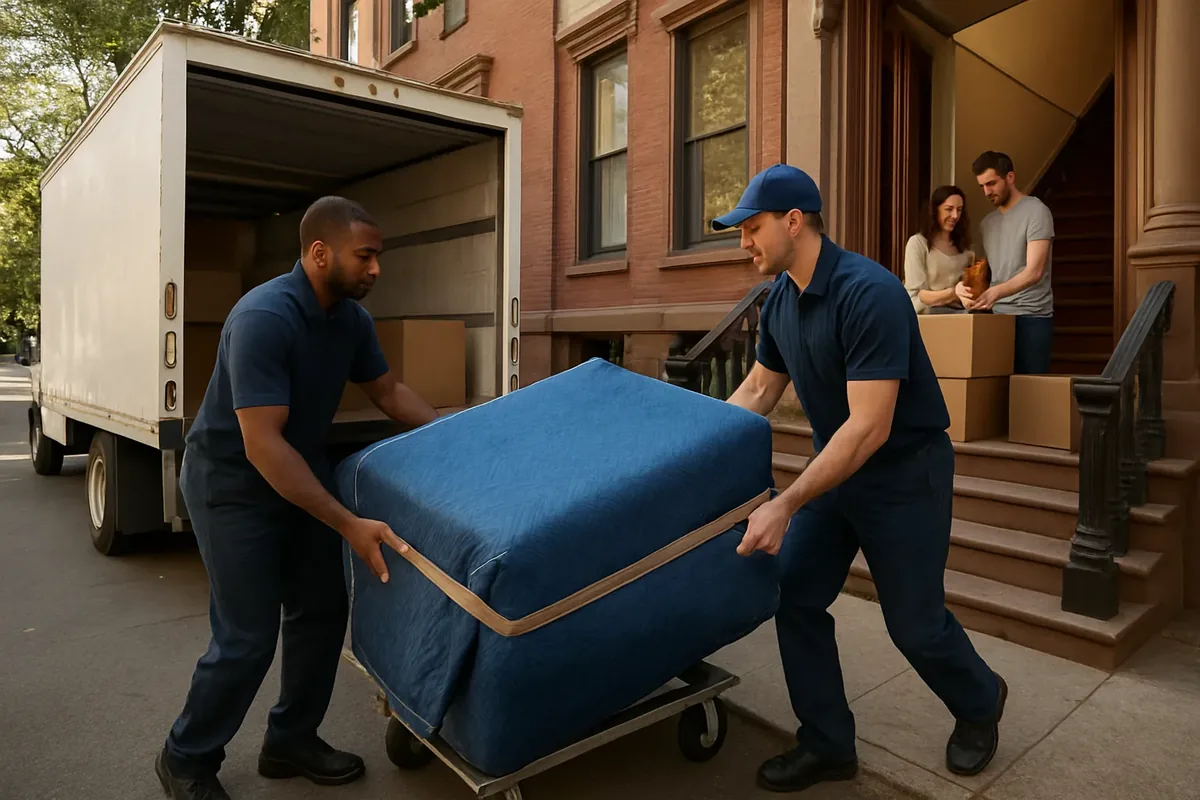
Apartment Moving Cost Guides: Complete US Hourly Rates, Flat-Rate Quotes & Benchmarks
Local US apartment moves with licensed full-service crews average $640 to $1,530 for studios and 1-bedroom units and $1,270 to $3,572 for 2- and 3-bedroom apartments when self-packed, while DIY rental trucks run $155 to $507. This pillar guide decodes hourly crew math, travel fees, access surcharges, FMCSA estimate rules, and packing material ratios across every moving scenario.
apartment moving cost guides
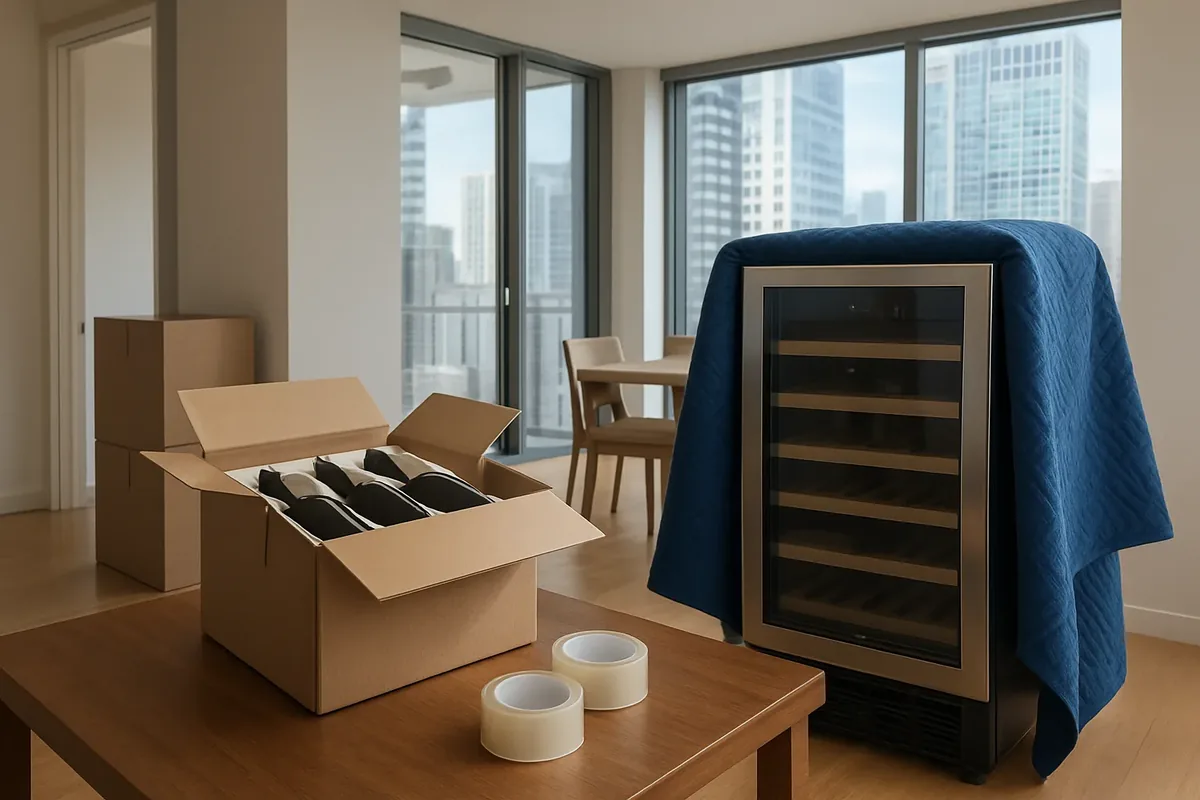
Cost & Temperature Rules for Moving a 50–200 Bottle Wine Collection
Moving 50 to 200 bottles of fine wine or top-shelf spirits requires navigating state alcohol import limits, 55°F temperature ceilings, and 40-pound case weights. Discover what molded EPS wine shippers, local movers, and refrigerated carriers charge to relocate an apartment cellar.
apartment moving cost guides
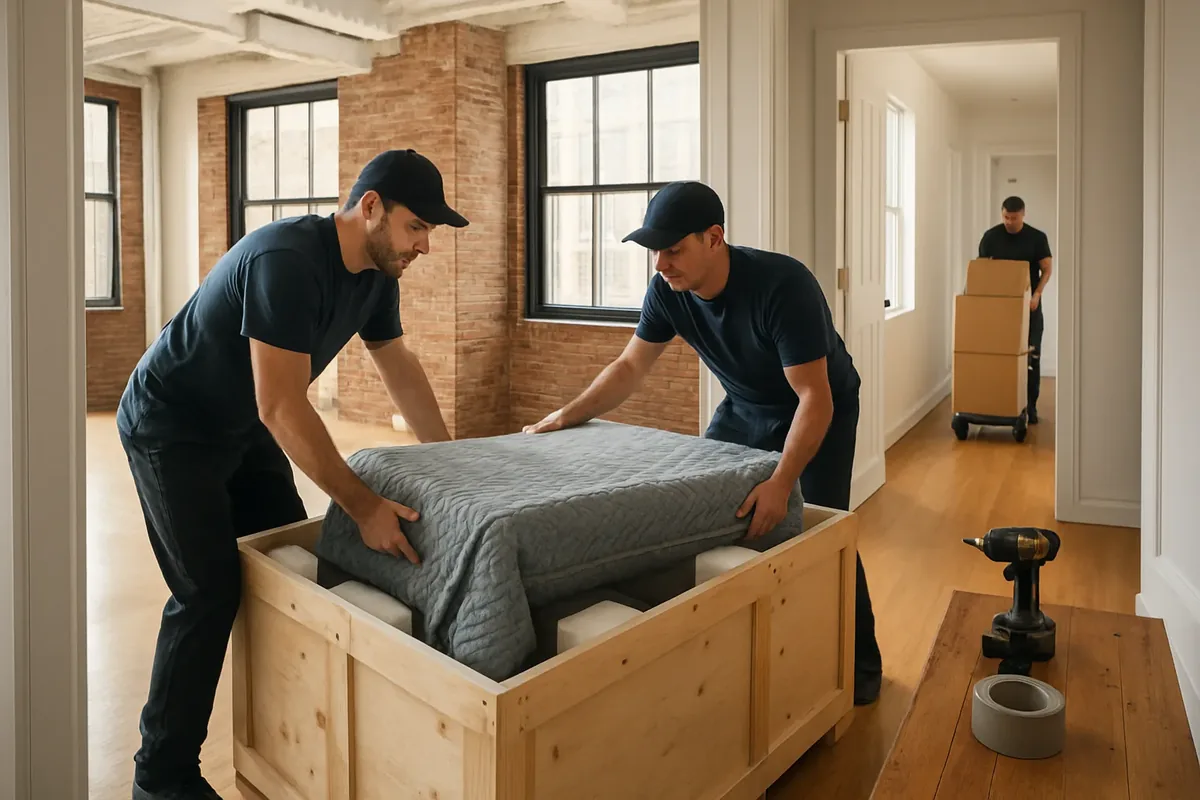
Custom Wood Crating Costs for Marble Tops, Chandeliers & Art
Marble dining slabs, crystal chandeliers, and framed canvas paintings rarely survive long-distance apartment moves in cardboard alone. Learn the exact cost per cubic foot for third-party custom wood crating, climate-controlled air-ride trucks, and DIY soft-crating alternatives.
apartment moving cost guides
Independent Local Apartment Movers vs. National Van Line Franchises
Choosing between an independent local moving company and a national van line agent can shift your apartment moving invoice by $350 to $1,800. Learn the exact mileage and cubic-foot crossover points where each carrier model wins on price, delivery speed, and building compliance.