In this guide
- Why Unmeasured Sofas & Box Springs Cost $150 to $450 on Moving Day
- The Exact Math for Measuring Doorway Diagonal Sofa Clearance
- How to Measure Elevator Cabs & Narrow Walk-Up Landings
- Hardware Disassembly & Strip-Down Gear That Unlocks Tight Corners
- Step-by-Step Pre-Move Measurement Audit (Do This 14 Days Out)
Why Unmeasured Sofas & Box Springs Cost $150 to $450 on Moving Day
Almost every apartment moving emergency starts with the same assumption: "It fit into my old apartment, so it will fit into the new one." Older pre-war brownstones, converted loft corridors, and boutique mid-rise elevators feature wildly inconsistent dimensions. Your old 1-bedroom might have offered a 36-inch wide front door and a 48-inch wide straight hallway, while your new unit features a 30-inch entry door opening onto a tight 34-inch 90-degree turn—or a residential passenger elevator only 82 inches tall inside.
When an 88-inch three-seat sofa or a rigid one-piece queen box spring wedges tight at a stairwell landing with two movers holding it mid-air at $130 to $235/hr, you burn 30 to 45 minutes testing angles ($65–$175 in billable labor) before realizing it physically cannot pass. Your remaining choices are ugly: paying $150 to $450 for a third-party furniture doctor to saw and re-bolt the sofa frame or rig a second-floor balcony hoist (which many apartment buildings prohibit outright), leaving the sofa on the curb and buying a replacement, or buying a $120 to $220 split queen box spring last minute.
| Apartment Chokepoint | Typical US Apartment Dimension Range | Critical Furniture Limit Without Disassembly | DIY Fix Before Move Day ($0–$25) | Unplanned Moving-Day Cost If Ignored |
|---|---|---|---|---|
| Entry & Bedroom Doorway Width | 28"–32" (Pre-war/Bedroom) vs. 34"–36" (Modern Entry) | Sofa diagonal depth must be 1" less than inside doorstop | Unscrew sofa feet (saves 3"–5") & pop hinge pins (gains 1.5"–2") | $65–$145 crew test delay + $50–$120 scuffed jamb repair |
| 90° Apartment Hallway Turn | 34"–42" Hallway width; 92"–96" ceiling height | Sofas >84" cannot pivot flat around 36" turn unless stood upright | Verify sofa length < ceiling height minus 2" for vertical pivot | $150–$450 furniture disassembly doctor or balcony hoist |
| Passenger vs. Freight Elevator Cab | Passenger: 32"–36" door × 82"–92" cab; Freight: 42"–48" × 96"–120" | Sofa length > cab floor-to-top diagonal forces stairwell carry | Reserve freight elevator (COI) or split sectional modules early | $85–$175 shared-elevator loss + $110–$340 stair carry fee |
| Walk-Up Stairwell Soffit / Ceiling | 32"–38" stair width; 76"–84" low landing head clearance | Rigid one-piece Queen box spring (60" × 80") wedges on tight landings | Measure diagonal landing; swap to split box spring or slats ($120–$220) | $100–$250 abandoned box spring + $65–$130 wasted carry time |
The Exact Math for Measuring Doorway Diagonal Sofa Clearance
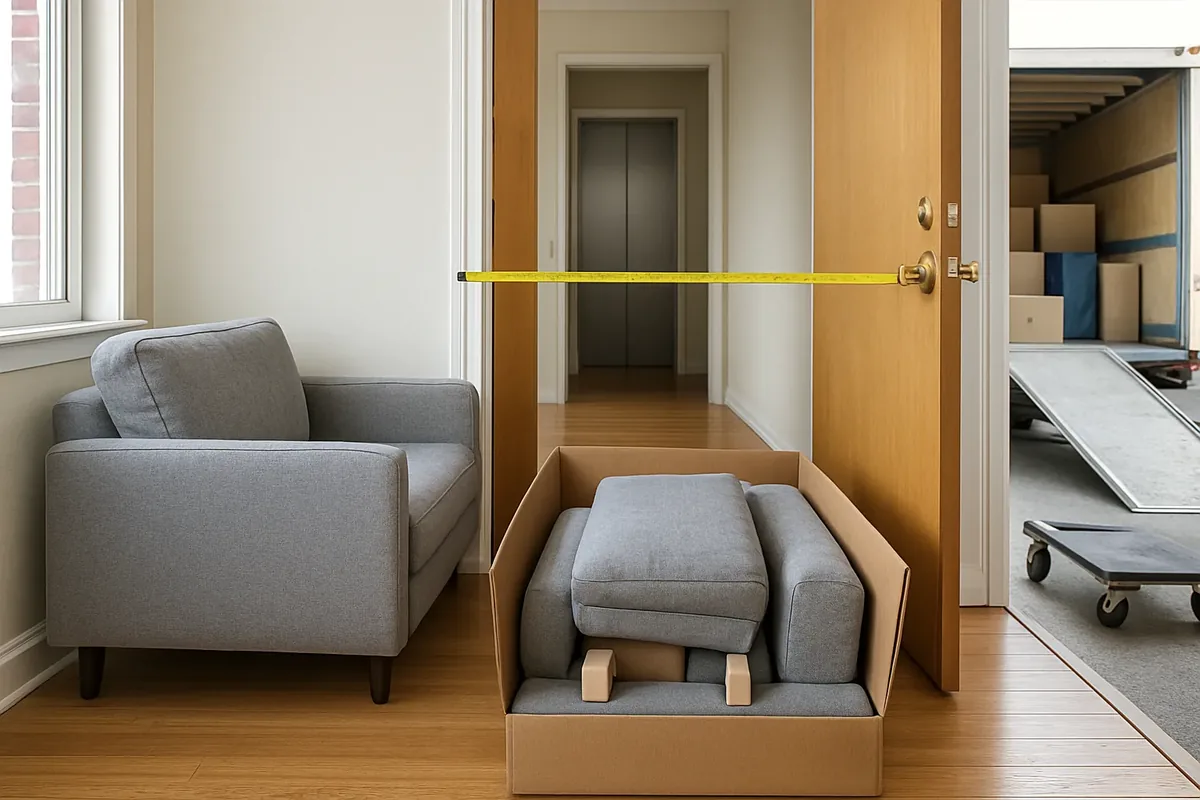
Most renters make a critical measurement error: they compare their sofa's horizontal depth (say, 36 inches front-to-back) against a 31-inch doorway and panic, or measure from outer wooden door trim rather than the actual clear opening. Movers angle a sofa diagonally—sliding the front seat cushion lip or bottom frame corner through first.
Use this exact two-step measurement formula on every sofa, armchair, and dresser:
- Measure True Clear Doorway Width (Not Trim-to-Trim): Open the door to 90 degrees and measure from the inner face of the latch-side doorstop molding to the front face of the open door slab itself (not the hinge jamb!). A standard "32-inch door" frequently offers only 29.5 to 30 inches of clear pass-through until you tap out the hinge pins to swing the door slab completely off (gaining 1.5 to 2 inches).
- Measure Sofa Diagonal Depth Without Feet: Stretch your tape diagonally from the top edge of the rigid rear sofa frame down to the bottom front corner of the seat deck (ignoring removable back cushions and unscrewed wooden legs). If your sofa stands 31 inches high (legs off) and 35 inches deep, its rigid diagonal cross-section is typically only 27 to 29 inches—meaning it slides cleanly sideways through a 30-inch doorway.
- Check the Vertical Stand-Up Rule for 90-Degree Hallways: If your sofa is 86 inches long and must pivot 90 degrees out of a 35-inch foyer, movers cannot turn it horizontally. They stand the sofa vertically on one armrest and pivot it around the corner. That trick works ONLY if your sofa's total length is at least 2 inches shorter than the hallway ceiling height (for example, an 88-inch sofa fails under an 88-inch soffit ceiling, whereas an 84-inch sofa clears a standard 96-inch ceiling!).
Amazon US Apartment Moving Supplies
Recommended Moving Boxes, Blankets & Bags for This Move
Apartment moving supplies matched to this guide (Amazon.com affiliate ID: apartmentmovingcost-20).
Scotch Heavy Duty Packaging Tape with Individual Red Dispensers (6-Pack)
Six 22.2-yard rolls each pre-loaded on a handheld fall-back-tab dispenser for multi-person packing
Gorilla Tough & Wide 2.83-Inch Heavy-Duty Moving & Packing Tape (2-Pack)
Extra-wide 2.83-inch crystal-clear 3.4-mil packing tape sealing entire box seams in one pass
Brown Kraft Paper Gummed & Acrylic Moving Box Seam Tape (6-Roll Bundle)
Easy-tear brown kraft flatback paper moving tape that lets you write room labels directly on the seam
As an Amazon Associate I earn from qualifying purchases. Always verify live stock and pack sizing directly on Amazon.com.
How to Measure Elevator Cabs & Narrow Walk-Up Landings
Never ask a leasing agent just "Does an 88-inch sofa fit in the elevator?" Leasing offices routinely guess wrong. Request—or measure during your tour—four exact numbers inside the elevator cab: Door Clear Width, Door Clear Height, Interior Cab Depth (door to back wall), and Interior Cab Height (floor to ceiling panel, NOT the drop-down light diffuser unless removable).
To find the maximum sofa length that rides diagonally standing inside the cab, apply the Pythagorean diagonal across cab depth and interior ceiling height: for example, a typical residential passenger elevator measuring 54 inches deep inside by 90 inches tall yields an interior diagonal of roughly 105 inches—minus ~8 inches for doorway tilt clearance, capping safe vertical sofa rides around 90 to 94 inches (provided the cab door opens at least 84 inches high!). If your elevator only has a 48-inch deep cab with an 84-inch ceiling, an 88-inch sofa may have to ride the stairs—triggering $110 to $340 in walk-up surcharges.
Hardware Disassembly & Strip-Down Gear That Unlocks Tight Corners
Finding a 30-inch doorway bottleneck two weeks early lets you strip protruding hardware, feet, bed rails, and cushions cleanly ahead of time—avoiding the $60 to $130 sectional/king-bed disassembly fee charged by movers while keeping zero loose wooden legs or Allen bolts lost in transit.
When two people tackle bedroom bed-frame teardowns, closet shelf stripping, and sofa-foot bagging simultaneously across your apartment, Scotch Heavy Duty Packaging Tape with Individual Red Dispensers (6-Pack) equips each person with a personal 1.88 in × 22.2 yd dispenser roll of 3.0-mil adhesive to seal hardware bags and cushion boxes cleanly without hunting for one shared tape gun. To reinforce oversized custom cardboard corners on detached glass tabletops, headboard frames, and wide sectional brackets in one pass, apply Gorilla Tough & Wide 2.83-Inch Heavy-Duty Moving & Packing Tape (2-Pack), which delivers extra-wide 2.83-inch × 30 yd 3.4-mil strength across long box seams. Finally, seal your disassembled bolt cartons, leg boxes, and cushion bags using Brown Kraft Paper Gummed & Acrylic Moving Box Seam Tape (6-Roll Bundle); this 2.0-inch high-tack kraft flatback paper tape lets you write bold black marker instructions like "SOFA LEGS + 4 BOLTS — LIVING ROOM" directly across the sealed seam so reassembly takes five minutes.
Step-by-Step Pre-Move Measurement Audit (Do This 14 Days Out)
- Measure Your Top Four Oversized Pieces First. Record length, width, height, and diagonal depth (with legs detached) for your sofa/sectional sections, queen/king mattress and box spring, dining table, and tallest bookcase or dresser.
- Audit Origin and Destination Doorstops & Hallway Turns. Measure clear inner doorstop width (subtracting 2 inches for doors that hit walls before 90 degrees), hallway widths, and ceiling heights right outside both apartment thresholds.
- Verify Elevator Cab Dimensions & Freight Slot Windows. Confirm door width/height, cab depth, cab ceiling height, and loading dock clearance with your destination building manager, and lock in a 2-to-3-hour freight elevator reservation.
- Pre-Strip Legs, Door Pins, and Cushion Bulk the Night Prior. Unscrew wooden sofa feet, pull throw cushions into oversized bags, and unbolt king bed headboards and sectional alligator clips—taping every labeled hardware kit directly onto the matching furniture frame or inside a labeled kraft-taped box.
- Solve One-Piece Queen Box Spring Traps Before Move Day. If a rigid 60×80-inch queen box spring fails a tight walk-up stairwell turn, replace it ahead of move day with a $120–$220 split queen box spring or folding metal platform frame rather than abandoning it in the lobby.
Estimate how walk-up stairs, elevator access, and disassembly add-ons affect your final move bill in our Apartment Moving Cost Calculator, or compare full-service vs. DIY truck budgets in our Movers vs. DIY Rental Truck Comparator.
Open Calculator →Frequently Asked Questions
How do I know if my sofa will fit through a 30-inch apartment door?+
Measure your sofa's diagonal depth (from the top rear frame edge to the bottom front deck edge, with cushions removed and legs unscrewed). As long as that diagonal measurement is 29 inches or less and your hallway ceiling is at least 2 inches taller than the sofa's total length for vertical pivoting, experienced movers can angle it cleanly through a 30-inch door.
Can movers bend a queen box spring to get it up narrow apartment stairs?+
No—conventional wood-framed queen box springs snap permanently if forced around tight corners, and movers refuse to bend them under liability waivers. If your staircase turns are tight, buy a two-piece split queen box spring or collapsible platform bed frame before moving day.
How much extra do movers charge if furniture doesn't fit in the elevator and must take the stairs?+
Switching oversized items from a small passenger elevator to stairs typically adds walk-up stair charges ($55–$95 for 2nd floor, $110–$190 for 3rd floor, $185–$340 for 4th–5th floor) plus 0.5 to 1.5 hours of extra crew labor ($65–$295/hr depending on crew size).
Will a standard 26-inch tall apartment fridge or washer fit through a 28-inch interior door?+
Yes—removing apartment door hinge pins brings a 28-inch frame close to 29 inches clear, and removing refrigerator door handles or doors (adding 15 minutes of wrench prep) drops a 33-inch-deep fridge body down to 28–29 inches so it glides through cleanly.
How wide does a moving truck parking spot or loading dock need to be?+
A 12-to-26-foot moving truck needs roughly 35 to 45 feet of curb length to drop a walk-board ramp cleanly without blocking neighboring driveways, and at least 12 feet 6 inches of vertical overhead clearance if pulling into a covered apartment loading bay.
Interactive US Moving Tools
Compare Full-Service Movers vs. DIY Rental Truck in 30 seconds
Related Guides
apartment moving cost guides
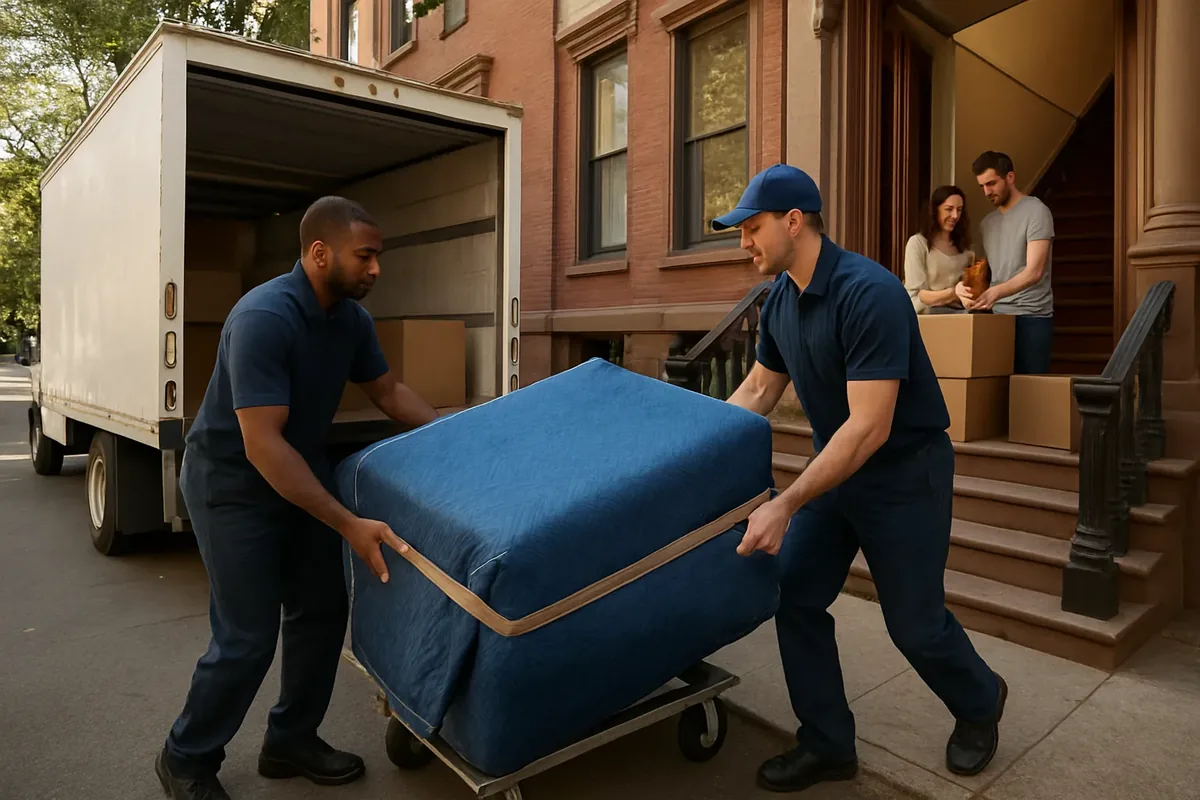
Apartment Moving Cost Guides: Complete US Hourly Rates, Flat-Rate Quotes & Benchmarks
Local US apartment moves with licensed full-service crews average $640 to $1,530 for studios and 1-bedroom units and $1,270 to $3,572 for 2- and 3-bedroom apartments when self-packed, while DIY rental trucks run $155 to $507. This pillar guide decodes hourly crew math, travel fees, access surcharges, FMCSA estimate rules, and packing material ratios across every moving scenario.
apartment moving cost guides
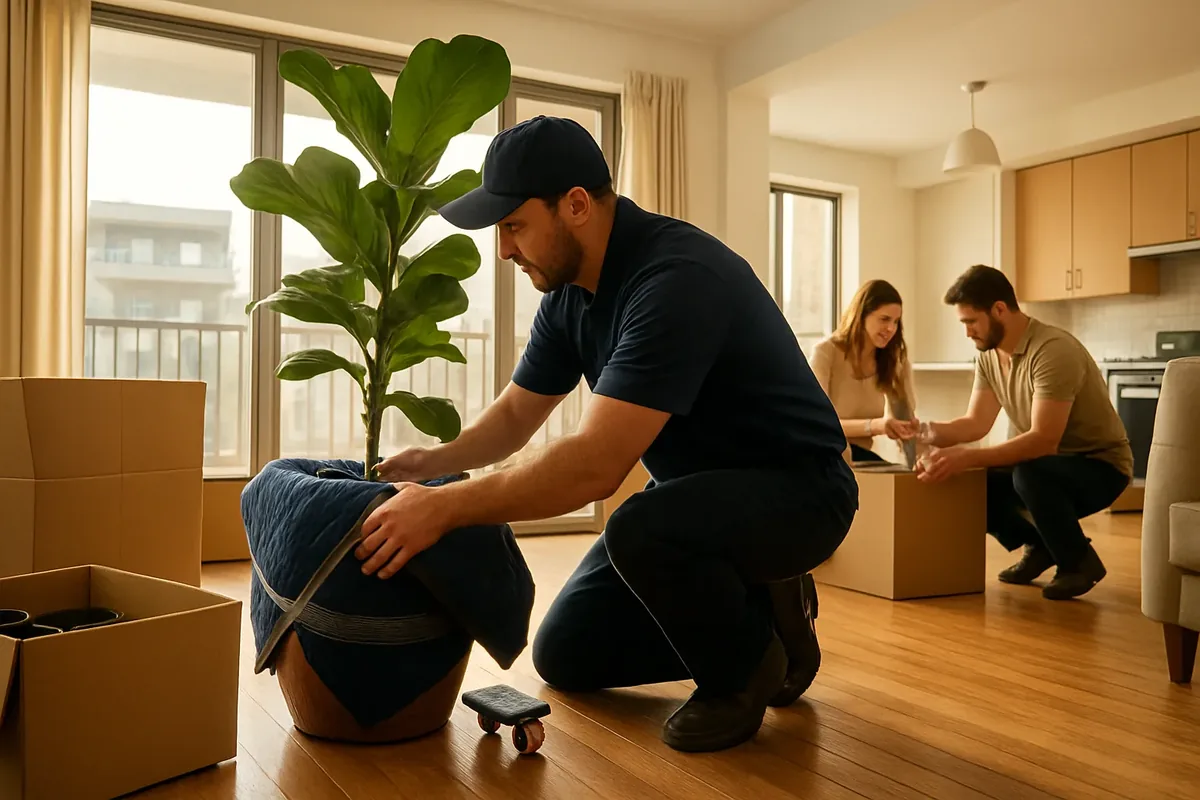
Why Interstate Movers Refuse Live Plants (and How to Move Them Locally)
Most interstate moving carriers refuse live plants traveling beyond 150 miles due to USDA pest quarantines and suffocating box-truck cargo temperatures. Here is what local movers charge to transport heavy balcony planters and ceramic pots—and how to move foliage safely yourself.
apartment moving cost guides
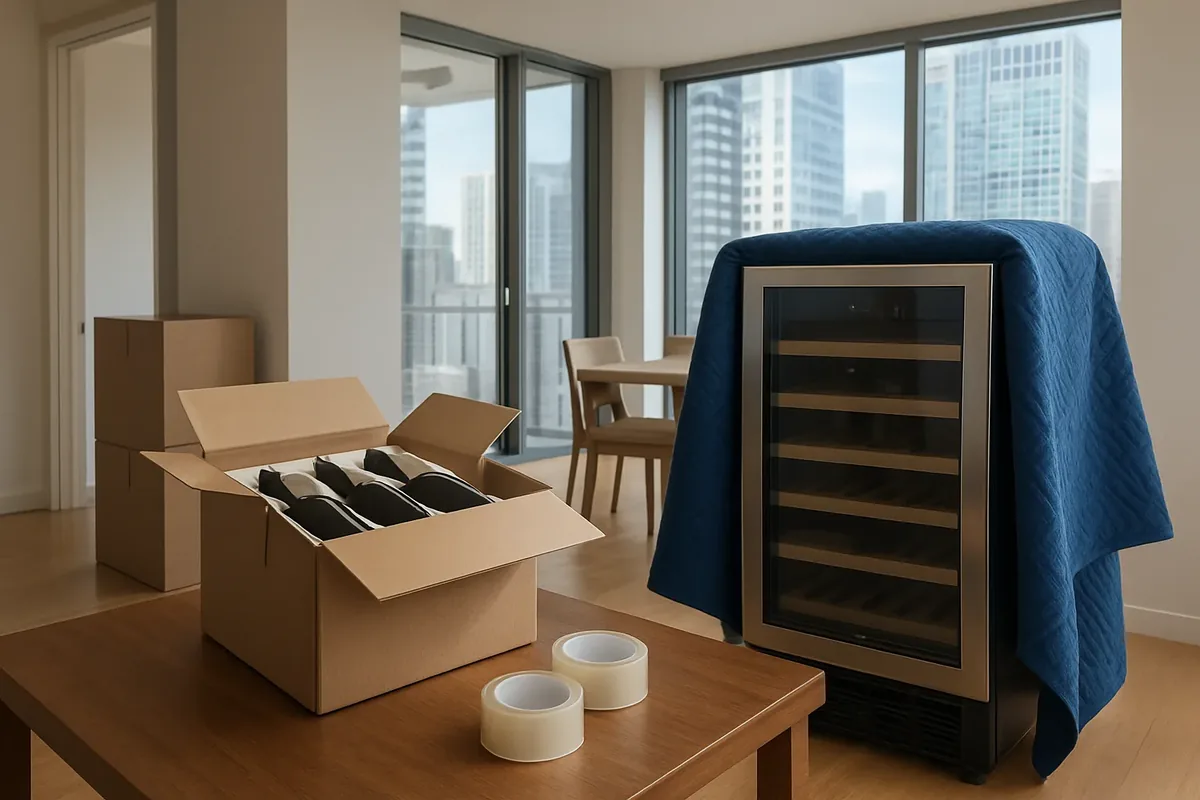
Cost & Temperature Rules for Moving a 50–200 Bottle Wine Collection
Moving 50 to 200 bottles of fine wine or top-shelf spirits requires navigating state alcohol import limits, 55°F temperature ceilings, and 40-pound case weights. Discover what molded EPS wine shippers, local movers, and refrigerated carriers charge to relocate an apartment cellar.
apartment moving cost guides
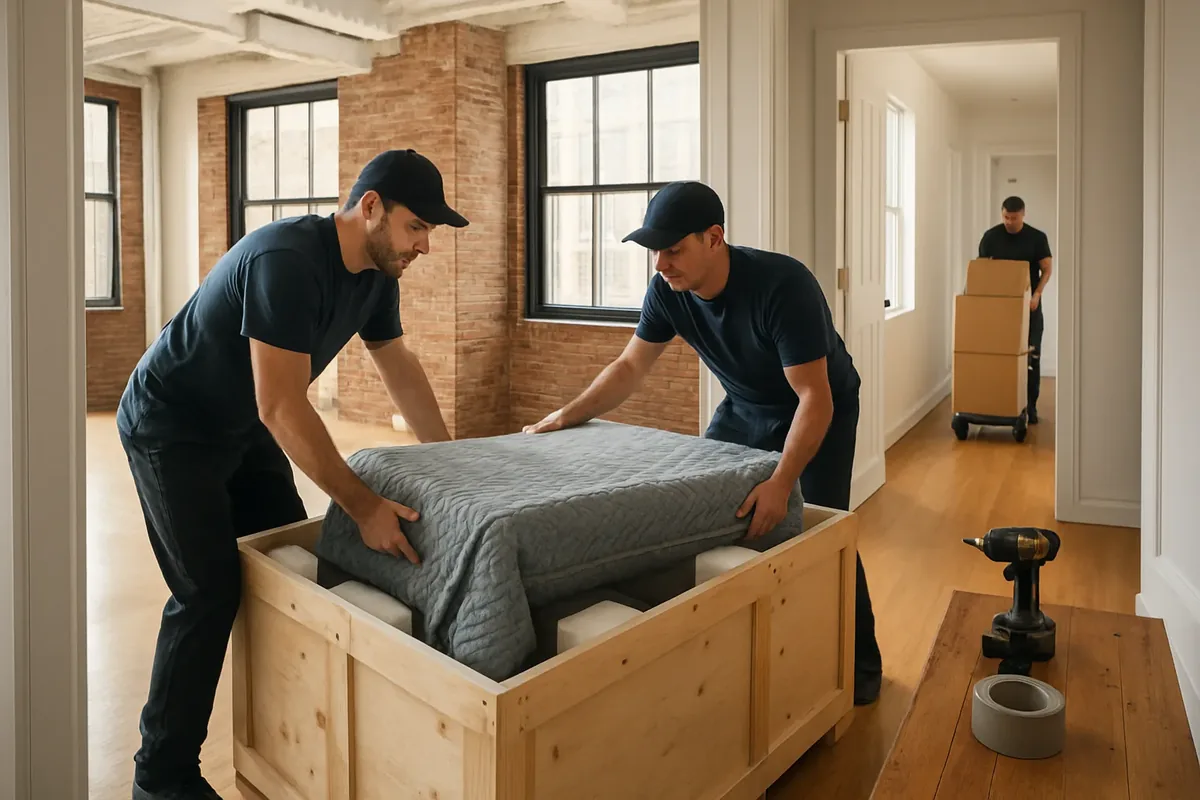
Custom Wood Crating Costs for Marble Tops, Chandeliers & Art
Marble dining slabs, crystal chandeliers, and framed canvas paintings rarely survive long-distance apartment moves in cardboard alone. Learn the exact cost per cubic foot for third-party custom wood crating, climate-controlled air-ride trucks, and DIY soft-crating alternatives.