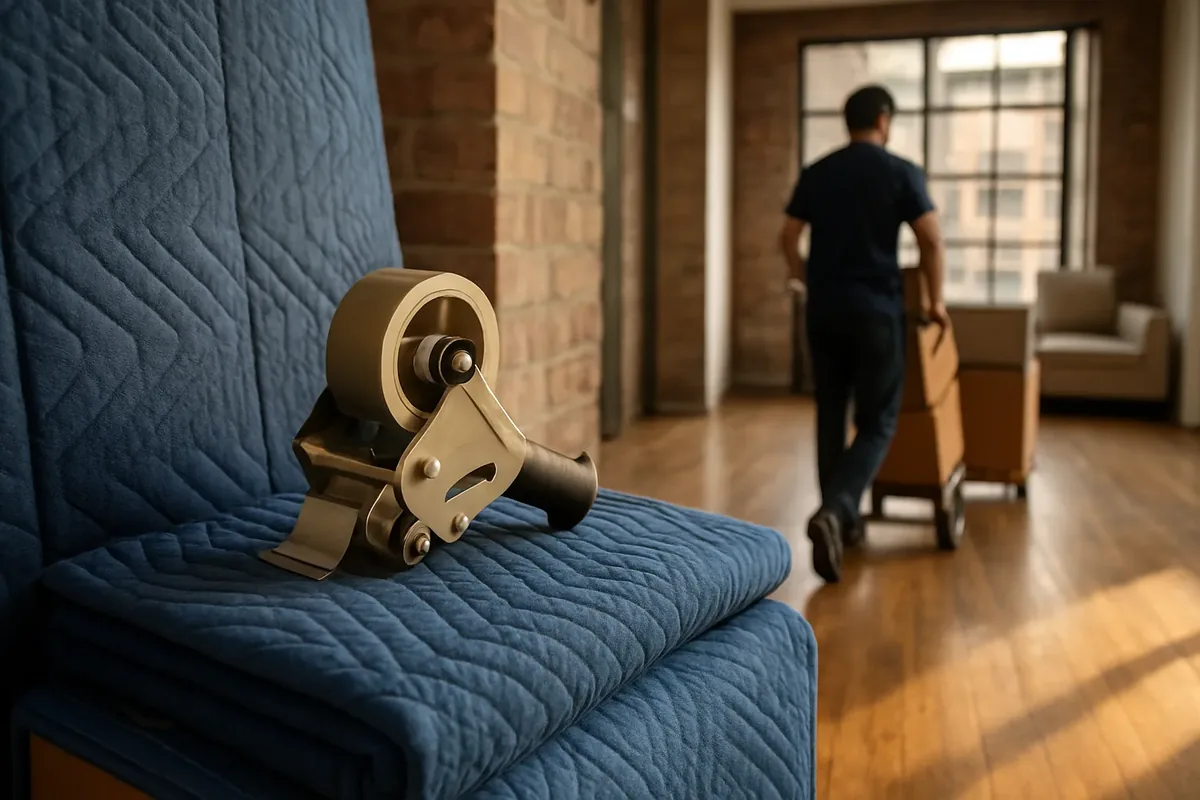
In this guide
- The Dual Scuff Trap: Brass Birdcage Cabs vs. Tight Side Stairwells
- Protection Material Specs: Matching Film, Bags & Blankets to Pre-War Obstacles
- Step-by-Step Doorway Measuring, Cab Shielding & Stair Sofa Sequence
- Protecting Plaster Arches, Wainscoting & Hardwood Thresholds
- How Pre-Wrapping Cuts Billable Pre-War Mover Hours
The Dual Scuff Trap: Brass Birdcage Cabs vs. Tight Side Stairwells
Pre-war residential buildings combine two architectural features that punish bare furniture edges: compact 36-to-44-inch elevator cabs finished in lacquered wood veneer, brass grilles, or painted steel, and steep 30-to-36-inch side stairwells reserved for oversized pieces that cannot fit inside the cab. Because landlords and co-op boards inspect both zones immediately after move-out, a single metal caster gouge on the cab threshold or a dark grease streak from a stairwell handrail routinely triggers $200 to $650 in repair withholdings.
Equally expensive is leaving furniture unwrapped until the moving crew arrives. When a 2-mover crew ($130–$175/hr) or 3-mover crew ($175–$235/hr) spends 30 to 45 minutes disassembling bed frames, stretching wrap over upholstery, and taping cab pads on the clock, you pay $65 to $175 in avoidable hourly labor before the first carton leaves your foyer. Budgeting $95–$160 for a 1-bedroom DIY protection kit (12 moving blankets, 1 mattress bag, 5 tape rolls, and stretch wrap) or $145–$235 for a 2-bedroom kit pays for itself in both saved minutes and preserved security deposits.
Protection Material Specs: Matching Film, Bags & Blankets to Pre-War Obstacles
Standard painter's plastic and single-wall moving boxes collapse quickly when bumped against brick stairwell landings or vintage elevator sills. Match each material grade to the exact surface it defends:
| Protection Gear & Physical Spec | Key Thickness / Grade Benchmark | Where to Deploy (Cab vs. Stairs) | Typical Damage & Claim Avoided |
|---|---|---|---|
| Heavy-Duty Clear 4-Mil Sofa & Couch Moving Protection Bag | 144" x 46" | 4.0-mil virgin poly (fits up to 96" sofa) | Sofa & loveseat descending dusty/damp side stairs | Torn fabric, stair-rail grease & rain dirt ($250–$600) |
| 80-Gauge Industrial Stretch Wrap Film (15" x 1000 ft, 2-Pack) | 80-gauge cast self-clinging film (2,000 total ft + rollers) | Locking blankets on dressers & pre-wrapping cab doors | Loose pads snagging on elevator gates & scratched veneer ($150–$400) |
| 90-Gauge Black Opaque Heavy-Duty Stretch Wrap (15" x 1000 ft, 2-Pack) | 90-gauge black privacy wrap (2,000 total ft) | Concealing TVs, desktop PCs & high-value gear in shared lobbies | Sidewalk visibility & shared-hallway scuff tears ($150–$350) |
| Heavy Quilted Moving Blankets & 5-Mil Mattress Bags | 65–85 lb/doz quilted pads + 5-mil vented mattress bag | Elevator wall padding, stair newel posts & queen/king beds | Dented cab wood paneling & stained ticking ($200–$650) |
| Carton Burst Strength (Boxes Entering Small Cabs) | 32-ECT single-wall (clothes) vs. 44–48-ECT double-wall (dishes/books) | Stacked 3-high inside tight 40-in elevator corners | Crushed lower boxes & spilled glassware on cab floor ($100+) |
Layering matters on a stair sofa carry: slip the couch inside the Heavy-Duty Clear 4-Mil Sofa & Couch Moving Protection Bag (144" x 46" virgin poly) first, cinch the excess plastic tightly with 80-Gauge Industrial Stretch Wrap Moving Film (15" x 1000 ft with rolling handles), and then drape heavy 85 lb/doz quilted pads over the end caps. If you are moving an OLED television, monitor stack, or studio rack through a shared pre-war vestibule where neighbors walk past stacked items, wrap those cartons in 90-Gauge Black Opaque Heavy-Duty Stretch Wrap so electronics stay both weather-sealed and out of sight.
Amazon US Apartment Moving Supplies
Recommended Moving Boxes, Blankets & Bags for This Move
Apartment moving supplies matched to this guide (Amazon.com affiliate ID: apartmentmovingcost-20).
Heavy-Duty Clear 4-Mil Sofa & Couch Moving Protection Bag (Fits up to 96" Couch)
144"x46" slip-on clear 4-mil poly cover keeping upholstered fabric sofas clean inside rental trucks
80-Gauge Industrial Stretch Wrap Moving Film 15" x 1000 ft with Rolling Handles (2-Pack)
2,000 total feet of puncture-resistant 80-gauge self-clinging wrap with spinning ergonomic hand rollers
90-Gauge Black Opaque Heavy-Duty Stretch Wrap Film 15" x 1000 ft (2-Pack)
Opaque black 90-gauge stretch film concealing electronics and valuables during shared-elevator or storage moves
As an Amazon Associate I earn from qualifying purchases. Always verify live stock and pack sizing directly on Amazon.com.
Step-by-Step Doorway Measuring, Cab Shielding & Stair Sofa Sequence
Complete this six-step preparation workflow the evening before your moving crew or rental truck arrives:
- Measure elevator gate opening, cab diagonal, and stair landing width. Measure your birdcage elevator gate at its narrowest clear width (often 27–31 inches when the accordion gate folds) and the cab depth (40–52 inches). Mark any sofa, dresser, or mattress exceeding those dimensions with blue painter's tape for the stair crew.
- Pop interior door hinge pins and unscrew sofa legs. Removing your apartment entry door gains 1.5 to 2 inches of threshold width, while unthreading 4-inch sofa legs drops overall couch depth below 31 inches—often the exact margin needed to pivot smoothly on a pre-war stair landing.
- Hang quilted elevator cab pads without adhesive tape on wood. Verify whether building management provides hanging cab blankets; if not, hook 65–85 lb/doz pads over the cab rail or secure flattened 32-ECT cardboard shields using low-tack painter's tape rather than aggressive carton tape that strips shellac.
- Seal upholstered couches in a 4-mil bag plus 80-gauge film. Slide the 144" x 46" 4-mil sofa bag over your couch, fold slack evenly along the back frame, and lock it snug with two passes of 80-gauge stretch film so no loose plastic flaps snag stair balusters.
- Bag mattresses in 5-mil poly or handled tarp carriers. Because queen and king mattresses must climb or descend the narrow pre-war stairs, seal them in a 5-mil poly bag or a 180-GSM woven tarp carrier with sewn grab handles—never pinch thin 1.5-mil plastic directly with bare fingers.
- Stage small cab loads separately from stair-only furniture. Stack 32-ECT and 48-ECT cartons near the elevator hall door in tidy two-deep rows (keeping fire corridors clear), while standing padded stair-bound items near the stairwell exit so neither crew crosses paths.
Protecting Plaster Arches, Wainscoting & Hardwood Thresholds
Four physical habits prevent the costliest pre-war wall and floor claims during tight turns:
- Guard plaster corner beads at 90-degree hallway bends: Fold flattened double-wall 48-ECT carton flaps around bullnose plaster corners at waist-to-shoulder height (36–58 inches off the floor) and hold them with blue painter's tape.
- Empty every dresser drawer before tilting items upright: Standing a dresser vertically to fit a 42-inch pre-war cab causes loaded drawers to slam open against the elevator gate; wrap empty dressers in 80-gauge stretch film over blankets.
- Avoid dragging metal bed rails across herringbone parquet: Carry angled steel bed frames horizontally in pairs or wrap both ends in folded blanket scraps taped securely with stretch wrap.
- Protect the cab floor sill gap: Lay a heavy folded moving pad or thin rubber-backed runner across the 1-inch gap between the marble hallway and vintage elevator floor so small 4-inch dolly casters never drop and jolt tall box stacks.
How Pre-Wrapping Cuts Billable Pre-War Mover Hours
On a 1-bedroom apartment move (420 cu ft / 3,200 lbs) paying $130–$175/hr for 2 movers, or a 2-bedroom move (680 cu ft / 5,400 lbs) paying $175–$235/hr for 3 movers, having movers wrap your sofa, bag your mattress, and tape dressers on site adds 0.5 to 0.75 hours ($65–$175) plus mover-supplied material markups ($290–$520 for 1BR vs. $95–$160 DIY). Spending 60 minutes pre-bagging and stretch-wrapping the night before keeps your crew moving continuously from door to truck.
Estimate your complete supplies kit and pre-war elevator labor savings in the Apartment Moving Cost Calculator or compare DIY gear vs. movers in our Movers vs. DIY Rental Truck Comparator.
Open Calculator →Frequently Asked Questions
What thickness stretch wrap and sofa bag should I buy for a narrow pre-war stair carry?+
Use a 4.0-mil virgin polyethylene sofa bag paired with 80-gauge (20-micron) cast stretch film over upholstered surfaces, and step up to 90-gauge opaque black film when concealing electronics or wrapping heavy wooden dressers.
Can I tape moving blankets directly onto pre-war wood elevator walls or apartment doors?+
Never apply acrylic or hot-melt packing tape directly to finished wood paneling, brass trim, or painted drywall—it tears varnish and paint off on removal. Wrap furniture blankets tightly with 80-gauge stretch wrap or ribbed rubber bands, and use low-tack painter's tape only on temporary cardboard corner shields.
How many moving blankets are needed for a 1-bedroom or 2-bedroom pre-war move?+
Our apartment materials benchmark budgets 6 blankets for a studio ($65–$110 total DIY kit), 12 blankets for a 1-bedroom ($95–$160 kit), and 18 blankets for a 2-bedroom ($145–$235 kit), including extra pads to drape over elevator rails and stairwell newel posts.
Do movers still charge a stair fee if only my sofa and mattress use the stairs?+
Yes, in many cases. While small cartons ride the birdcage elevator (billing hourly wait time or a shared-elevator fee), carriers often assess a partial stair surcharge ($55–$95 per flight or $50–$90 per heavy piece) when oversized sofas and box springs must walk down multiple flights.
Why should I wrap a sofa in plastic BEFORE putting moving blankets on it for stair carries?+
Sealing upholstery inside a 4-mil sofa bag and 80-gauge stretch film prevents damp stairwell dust, handrail oil, and lint from staining fabric if a moving blanket shifts mid-turn, while also keeping loose cushions pinned tightly inside the frame.
Interactive US Moving Tools
Compare Full-Service Movers vs. DIY Rental Truck in 30 seconds
Related Guides
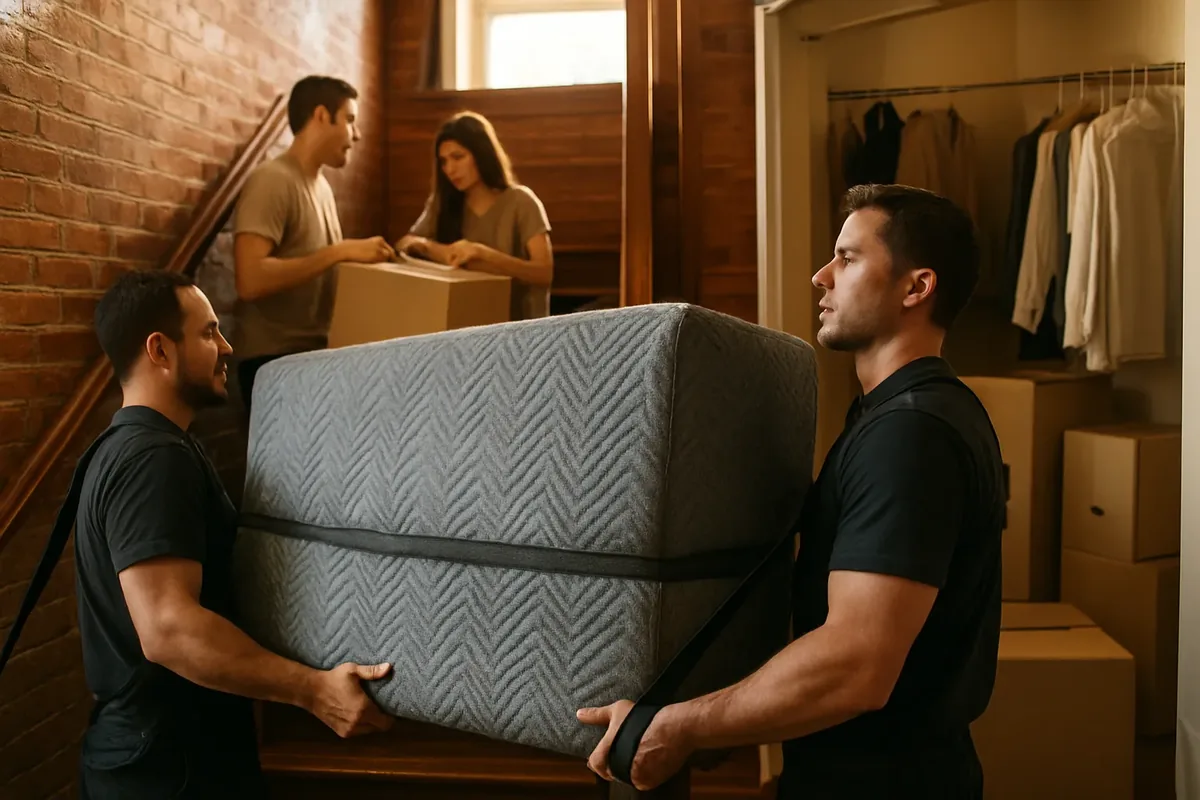
walk up stairs and elevator moving costs
Walk-Up Stairs & Elevator Moving Costs: Complete US Benchmarks & Guides
Walk-up staircases, shared passenger elevators, and long-carry podium corridors routinely add $110 to $1,045 to a US apartment moving invoice through combined extra crew hours and flat tariff surcharges. This hub breaks down exact 2nd-to-5th-floor carry penalties, freight elevator booking rules, shuttle truck triggers, and the strapping gear that saves hours on moving day.
walk up stairs and elevator moving costs
How Much Do Movers Charge for Subterranean Garage Dual-Elevator Transfer?
Modern 5-over-1 podium apartments frequently force movers out of subterranean parking bays or street curbs through two separate elevator banks connected by a long transfer corridor. Learn how US moving companies price dual-elevator transfers compared to flat $50–$90 per-flight stair surcharges.
walk up stairs and elevator moving costs
Extra Crew Hours & Fatigue Math: Subterranean Garage Dual-Elevator Transfer (1BR)
Moving a studio or 1-bedroom apartment out of a podium building with a subterranean garage dual-elevator transfer corridor adds 45 to 105 minutes of extra crew time compared to ground-floor loading. Break down the exact minute-by-minute elevator cycle math and cut $130 to $260 from your final bill.
walk up stairs and elevator moving costs
Why You Need 3 or 4 Movers for a 2BR With Subterranean Garage Dual-Elevator Transfer
Booking just 2 movers to save $45/hr on a 2-bedroom podium apartment backfires when a subterranean garage dual-elevator transfer stretches every round-trip past 6 minutes. Learn why a 3-mover relay ($175–$235/hr) or 4-mover squad ($220–$295/hr) eliminates idle elevator waits, hits 4-hour building curfews, and keeps total cost nearly identical.