
In this guide
- Why Podium Garage Dual-Elevator Transfers Rival Walk-Up Stair Costs
- Full Cost Breakdown: Ground Floor vs. Podium Dual-Elevator Transfer (<15 Miles)
- How Movers Classify Dual-Elevator Corridors vs. Flat Stair Tariffs
- Cart & Mattress Hardware Built for 150-Foot Podium Transfer Corridors
- Five Steps to Slash Podium Dual-Elevator Transfer Fees
Why Podium Garage Dual-Elevator Transfers Rival Walk-Up Stair Costs
Across modern US 5-over-1 podium developments and urban high-rises, residents rarely roll dollies straight from their apartment elevator onto a curb ramp. Because commercial 15-to-26-foot moving trucks (standing 10'6" to 12'6" tall) exceed the 6'8"-to-8'2" ceiling clearances of subterranean P1 and P2 garages, trucks must park on the street or in a ground-level loading bay—or use a low-roof shuttle van inside the garage—forcing crews through a two-stage vertical and horizontal bottleneck.
Every dolly load must ride the residential elevator down to the podium deck, roll 75 to 200+ feet through a key-fobbed transfer corridor past fire airlocks, wait for a second garage or freight shuttle elevator to the loading bay, and finally cross to the truck ramp. Even without stairs, that double-cab choreography adds 1.0 to 1.75 hours at $125–$295/hr, an elevator staging surcharge ($45–$95 reserved or $85–$175 shared), and frequently a long-carry fee ($65–$135 for distances past 75 feet)—often matching or exceeding a traditional $50–$90 per-flight walk-up tariff.
Full Cost Breakdown: Ground Floor vs. Podium Dual-Elevator Transfer (<15 Miles)
The table below compares our national ground-floor baseline against a local move (<15 miles, 12-mile average) facing a subterranean garage dual-elevator transfer corridor. Labor includes the standard 1.0-hour depot travel fee, transportation reflects the $75–$145 local carrier truck fee, and packing supplies use DIY box kit benchmarks (full mover-supplied packing adds $115–$850+ depending on bedroom count).
| Apartment Size & Volume | Crew & Hourly Rate | Ground Floor Hours & Total | Transfer Access Time & Flat Fees | Labor + Truck + DIY Materials | Podium Transfer Total Range |
|---|---|---|---|---|---|
| Studio (250 cu ft / 2,000 lbs) | 2 Movers ($125–$165/hr) | 4.0–5.0 hrs | $640–$1,080 | +0.75–1.5 hrs + $110–$260 fees* | $594–$1,073 Labor + $75–$145 Truck + $65–$110 Kit | $844 – $1,588 (+$204–$508) |
| 1-Bedroom (420 cu ft / 3,200 lbs) | 2 Movers ($130–$175/hr) | 5.0–7.0 hrs | $820–$1,530 | +1.0–1.75 hrs + $110–$310 fees* | $780–$1,531 Labor + $75–$145 Truck + $95–$160 Kit | $1,060 – $2,146 (+$240–$616) |
| 2-Bedroom (680 cu ft / 5,400 lbs) | 3 Movers ($175–$235/hr) | 6.0–8.5 hrs | $1,270–$2,378 | +1.0–1.75 hrs + $110–$310 fees* | $1,225–$2,409 Labor + $75–$145 Truck + $145–$235 Kit | $1,555 – $3,099 (+$285–$721) |
| 3-Bedroom (980 cu ft / 7,800 lbs) | 4 Movers ($220–$295/hr) | 7.5–10.5 hrs | $1,930–$3,573 | +1.25–2.0 hrs + $110–$310 fees* | $1,925–$3,688 Labor + $75–$145 Truck + $205–$330 Kit | $2,315 – $4,473 (+$385–$900) |
*Access fees above combine the elevator surcharge ($45–$95 reserved freight cab or $85–$175 shared passenger cab) plus a $65–$135 long-carry fee when the garage transfer corridor and truck approach measure over 75 feet. Extending your move distance to 15–50 metro miles raises carrier truck transport from $75–$145 to $140–$260, while adding full mover packing pushes material charges from $95–$160 up to $290–$520 on a 1-bedroom.
Amazon US Apartment Moving Supplies
Recommended Moving Boxes, Blankets & Bags for This Move
Apartment moving supplies matched to this guide (Amazon.com affiliate ID: apartmentmovingcost-20).
Harper Trucks 700-Lb Glass-Filled Nylon Convertible Hand Truck & Platform Cart
Chemical- and rust-proof nylon frame lighter than steel with built-in stair glides for step transitions
Interlocking 4-Wheel Plastic Furniture Dollies 500-Lb Capacity (4-Pack)
Four modular 16"x11" rolling plant/box dollies that snap together without tools to form custom platform sizes
Heavy-Duty Reusable Tarp Mattress Moving Bag with 8 Reinforced Handles & Zipper (Queen)
Waterproof 180-GSM woven polyethylene tarp mattress carrier with 3-sided heavy zipper and 8 stair-lifting handles
As an Amazon Associate I earn from qualifying purchases. Always verify live stock and pack sizing directly on Amazon.com.
How Movers Classify Dual-Elevator Corridors vs. Flat Stair Tariffs
Because state and interstate tariffs originally predate modern podium-garage architecture, carriers translate dual-elevator transfer corridors into four distinct billing models:
| Carrier Tariff Classification | Flat Access Surcharge Billed | Hourly Time Penalty | Total 1BR Impact | What Triggers This Rate |
|---|---|---|---|---|
| Reserved Dual Freight Cabs (Hourly) | $45–$95 elevator staging fee | +0.75–1.25 hrs @ $130–$175/hr | $143 – $314 | Keyed-off elevators with <75 ft loading bay path |
| Shared Elevator + Long-Carry Corridor | $85–$175 elevator + $65–$135 long carry | +1.0–1.75 hrs @ $130–$175/hr | $280 – $616 | Unreserved resident cabs + 100–200 ft corridor run |
| Flat Stair-Equivalent Transfer Fee | $50–$90 per transfer/level (2x = $100–$180) | Baked into FMCSA binding quote | $100 – $180+ | Interstate weight-based moves ($0.22–$0.98/lb) |
| Garage Low-Clearance Shuttle Truck Fee | $150–$350 shuttle van surcharge | +1.0–1.5 hrs double-handling | $280 – $613 | Curbside ban forces cargo transfer to low P1 shuttle van |
Cart & Mattress Hardware Built for 150-Foot Podium Transfer Corridors
Unlike walk-up stairs where vertical lifting straps dominate, podium transfer corridors reward high-capacity rolling decks and multi-handle mattress carriers that move faster through two sets of elevator doors and fire airlocks:
- Convertible hand-to-platform dolly: The Harper Trucks 700-Lb Glass-Filled Nylon Convertible Hand Truck & Platform Cart shifts seamlessly between a 600-lb upright stacker inside narrow elevator corners and a 700-lb 4-wheel platform cart along 150-foot transfer hallways, with 8-inch solid rubber wheels and built-in stair glides for garage curb drops.
- Modular interlocking panel dollies: Interlocking 4-Wheel Plastic Furniture Dollies (500-Lb Capacity, 4-Pack of 16" x 11" panels) snap together without tools to match wide sectionals or potted planters when clearing double lobby doors.
- Handled tarp mattress carrier: A Heavy-Duty Reusable Tarp Mattress Moving Bag with 8 Reinforced Handles & Zipper (Queen 82" x 63" x 15" in waterproof 180-GSM woven tarp) prevents greasy garage exhaust smudges while giving two carriers eight balanced handles when maneuvering around tight elevator lobby bollards.
Five Steps to Slash Podium Dual-Elevator Transfer Fees
Applying these five logistics fixes before move day keeps your transfer clock tight and avoids stacked surcharges:
- Reserve BOTH the residential tower cab and the garage shuttle elevator. Many renters reserve only their residential tower freight elevator, leaving crews stuck waiting behind commuting residents at the subterranean garage shuttle shaft.
- Measure loading bay clearance and reserve a street zone if over 8 feet. If your building's loading bay fits a 20-ft box truck directly at ground level, verify dock height (typically 12–14 ft) so movers bypass the subterranean garage cab altogether.
- Arrange key-fob door wedges or concierge hold-open pins. Transfer corridors typically feature two to four heavy self-closing fire doors between elevator banks; securing management permission for rubber door stops saves 15–25 minutes of lost cycle time.
- Pre-stage 32-ECT and 48-ECT cartons near your unit door. Keep heavy books in 1.5 cu ft 32-ECT or double-wall 48-ECT boxes stacked neatly by your entry so the crew fills 4-wheel rolling platforms continuously inside the 4-hour elevator slot.
- Disclose exact corridor distance for FMCSA binding protection. On interstate moves, include exact walking footage between both elevator doors in your inventory survey so long-carry ($65–$135) and elevator fees stay locked inside your binding estimate.
Compare podium transfer access surcharges, hourly crew time, and DIY rental savings for your exact floor plan in the Apartment Moving Cost Calculator or Movers vs. DIY Rental Truck Comparator.
Open Calculator →Frequently Asked Questions
Do movers charge a stair fee for a subterranean garage dual-elevator transfer?+
Movers normally bill elevator access ($45–$175) and long-carry fees ($65–$135 past 75 feet) rather than a walk-up stair fee, unless a short 5-to-10-step garage landing stair connects the loading bay to the transfer corridor—in which case a $50–$90 stair surcharge can also appear.
Why can't a moving truck simply drive down into my apartment's underground garage?+
Subterranean residential garages typically have 6'8" to 8'2" overhead clearance due to concrete beams, HVAC ducts, and sprinkler pipes, whereas commercial 15-to-26-ft moving trucks stand 10'6" to 12'6" tall. Trying to enter scrapes the roof and voids standard rental insurance.
How does a 1-hour depot travel fee interact with podium elevator waiting time?+
Local moving companies add a flat 1.0-hour depot travel fee (billed at $125–$295/hr depending on crew size) separate from on-site hours. Every minute spent waiting on two unreserved elevators inside your building still ticks continuously on the hourly clock.
How do California Double Drive Time (DDT) rules apply to podium apartment moves?+
Under California Public Utilities / Bureau of Household Goods regulations, intrastate movers double the point-to-point road driving time between origin and destination instead of charging a flat depot travel fee on qualifying local moves, while dual-elevator corridor loading time remains hourly.
What is the best mattress protection for greasy subterranean garage transfer corridors?+
Skip thin 1.5-mil plastic sleeves and choose either a 5-mil poly mattress bag or a reusable 180-GSM woven tarp carrier with 8 reinforced handles and a 3-sided zipper, which blocks garage dust and oil smudges during multi-door transfers.
Interactive US Moving Tools
Compare Full-Service Movers vs. DIY Rental Truck in 30 seconds
Related Guides
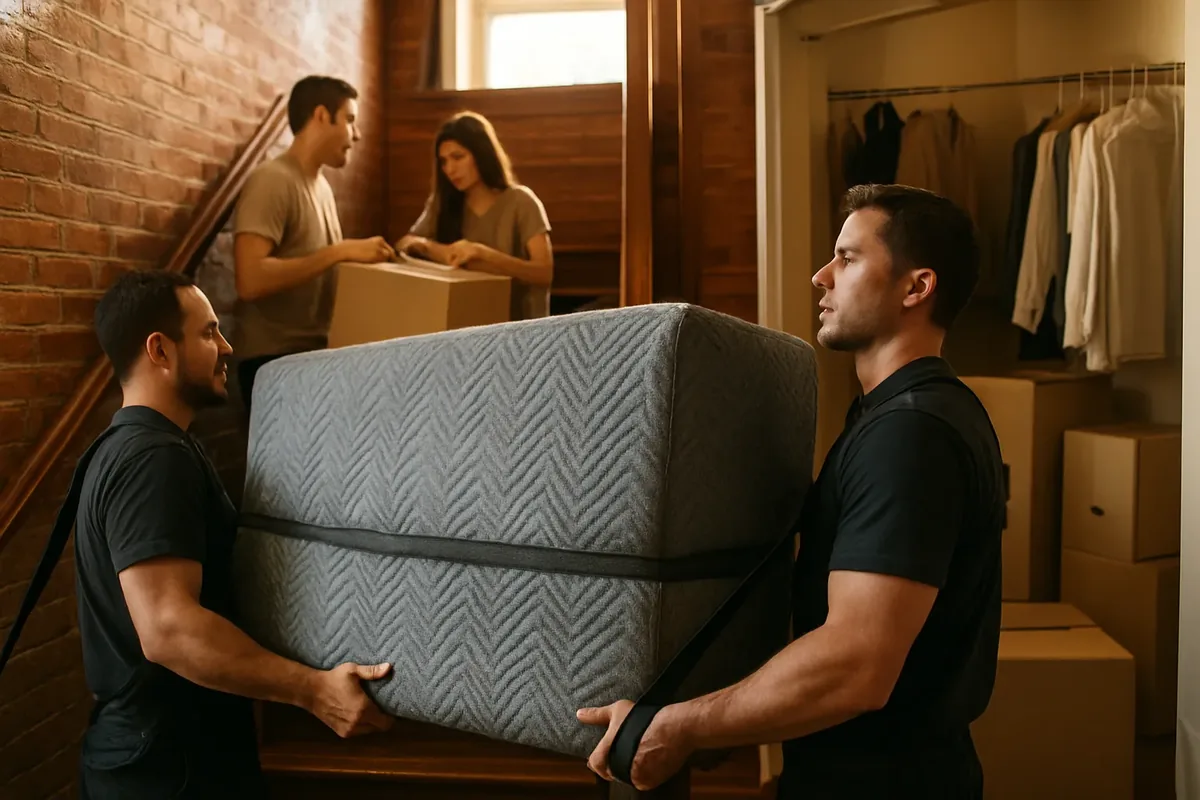
walk up stairs and elevator moving costs
Walk-Up Stairs & Elevator Moving Costs: Complete US Benchmarks & Guides
Walk-up staircases, shared passenger elevators, and long-carry podium corridors routinely add $110 to $1,045 to a US apartment moving invoice through combined extra crew hours and flat tariff surcharges. This hub breaks down exact 2nd-to-5th-floor carry penalties, freight elevator booking rules, shuttle truck triggers, and the strapping gear that saves hours on moving day.
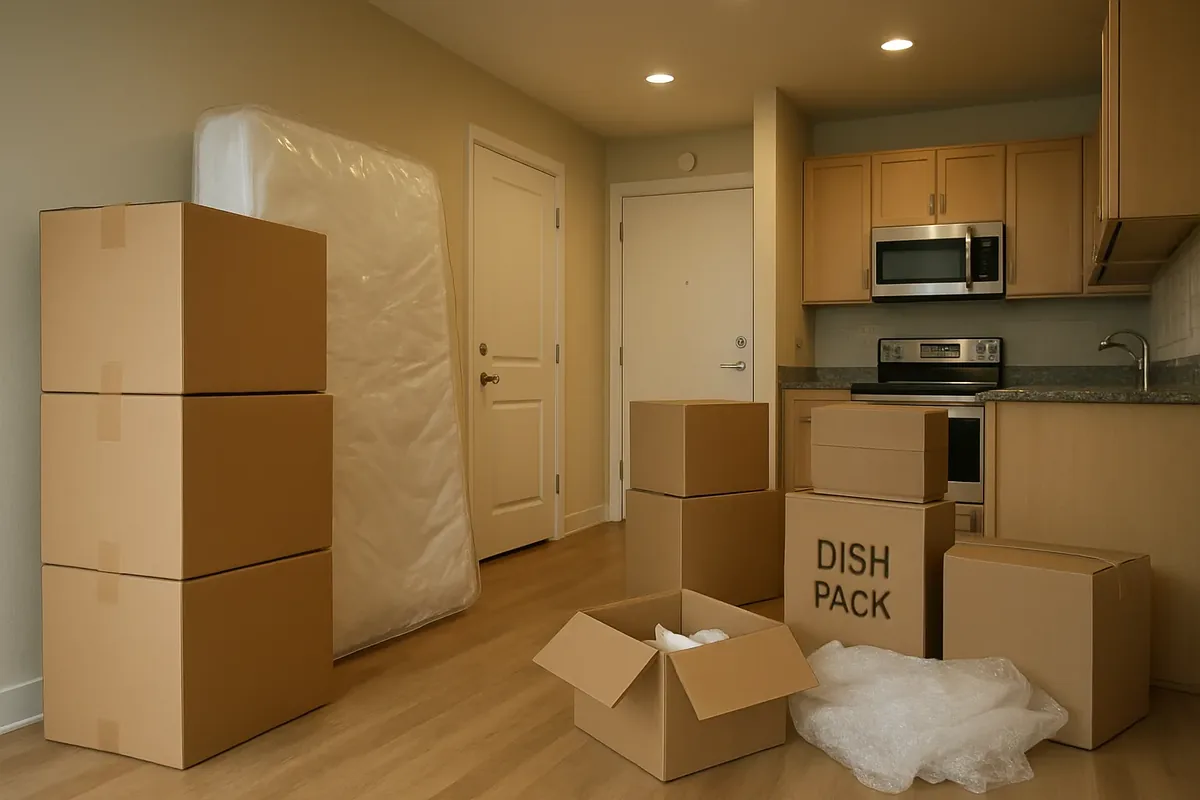
walk up stairs and elevator moving costs
Extra Crew Hours & Fatigue Math: Subterranean Garage Dual-Elevator Transfer (1BR)
Moving a studio or 1-bedroom apartment out of a podium building with a subterranean garage dual-elevator transfer corridor adds 45 to 105 minutes of extra crew time compared to ground-floor loading. Break down the exact minute-by-minute elevator cycle math and cut $130 to $260 from your final bill.
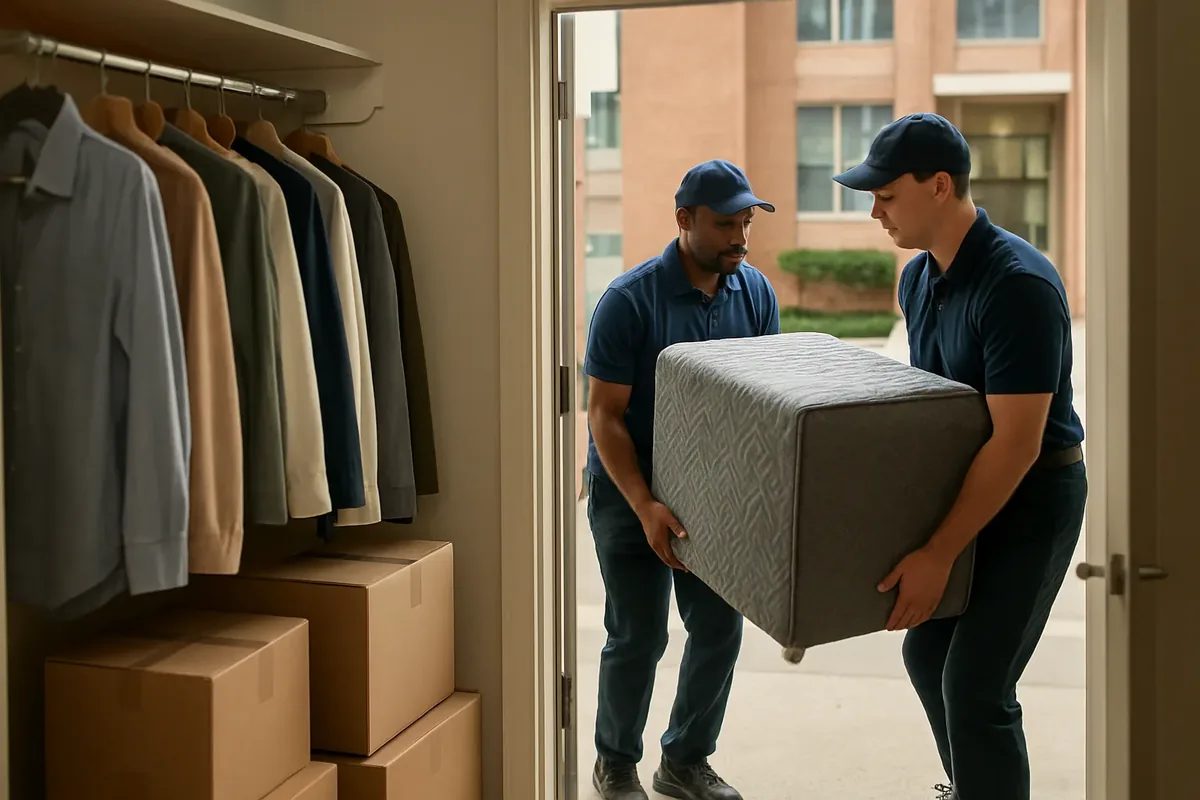
walk up stairs and elevator moving costs
Why You Need 3 or 4 Movers for a 2BR With Subterranean Garage Dual-Elevator Transfer
Booking just 2 movers to save $45/hr on a 2-bedroom podium apartment backfires when a subterranean garage dual-elevator transfer stretches every round-trip past 6 minutes. Learn why a 3-mover relay ($175–$235/hr) or 4-mover squad ($220–$295/hr) eliminates idle elevator waits, hits 4-hour building curfews, and keeps total cost nearly identical.
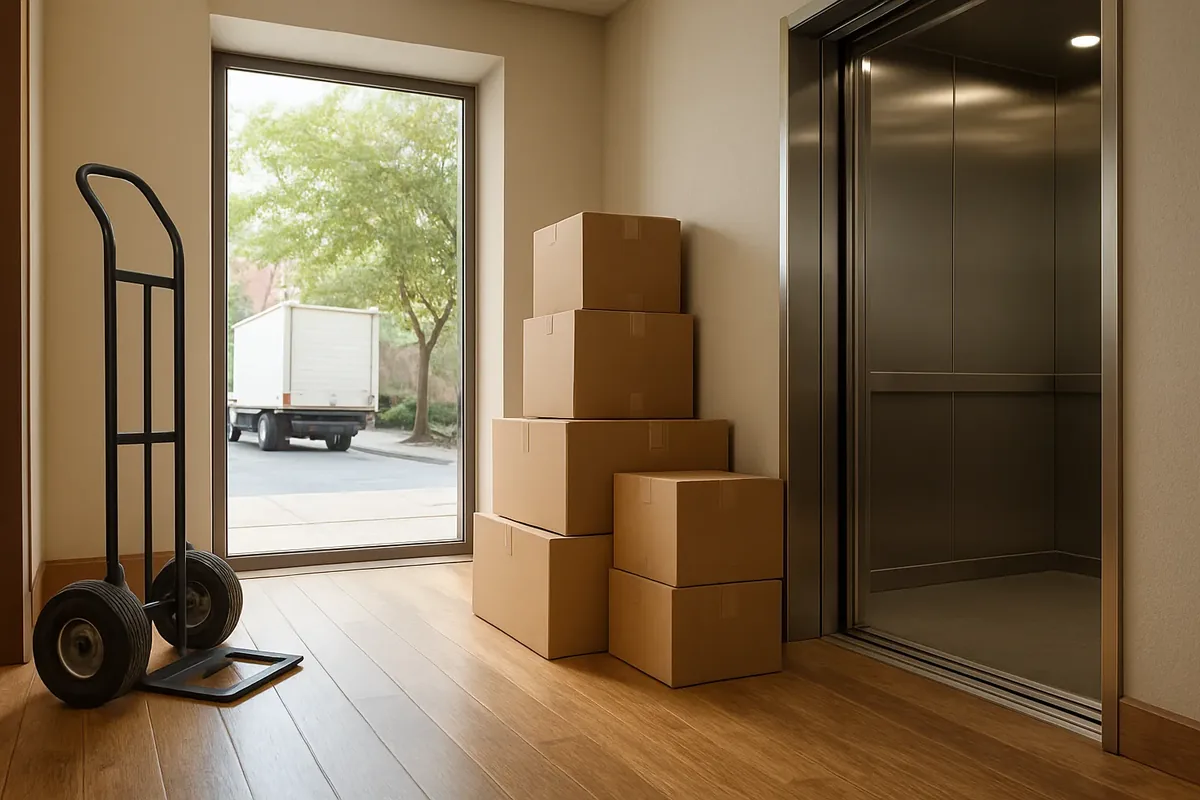
walk up stairs and elevator moving costs
Is DIY Moving Worth It on Subterranean Garage Dual-Elevator Transfer? (Cost & Injury Risk)
Renting a DIY moving truck for a podium apartment with a subterranean garage dual-elevator transfer can save $650 to $2,400 over full-service movers, yet tight 7-foot garage clearances, building COI mandates, and 200-foot corridor relays trip up unprepared renters. Weigh exact costs, helper options, and physical risks before booking.