In this guide
- Why a Strict 2-Hour Loading Dock Cutoff Changes the DIY vs. Movers Math
- Cost Breakdown: Pure DIY vs. Hybrid 2-Hr Helpers vs. Full-Service Movers (12-Mile Move)
- Dock Geometry, Lift Height & Injury Risks That Slow Down DIY Crews
- Wheeled Hardware Specs That Cut High-Rise Dock Load Times in Half
- How to Beat a Strict 2-Hour Cutoff Without Exceeding Your Budget
Why a Strict 2-Hour Loading Dock Cutoff Changes the DIY vs. Movers Math
In a walk-up building, running 45 minutes behind schedule only means finishing tired after sunset. In a managed urban high-rise with a strict 2-hour loading dock cutoff, falling behind by even 15 minutes can end your dock reservation on the spot. Property engineers routinely lock the freight elevator key switch at minute 120 so the next resident's reserved slot can begin, assess $150 to $500 overtime or dock-overstay fines, or order your vehicle out onto the street curb where double-parking tickets run $115 to $250.
That hard 120-minute ceiling alters how you should price labor. Full-service local movers bill $125–$165/hr for a 2-person crew (studio), $130–$175/hr for a 1-bedroom crew, and $175–$235/hr for a 3-person crew (2-bedroom), plus a mandatory 1.0-hour depot travel fee, a $75–$145 local transport fee, and a $45–$95 freight-elevator surcharge covering 0.5–1.0 hours of COI check-in and elevator staging. Even with those fees, trained crews load 250 to 420 cubic feet (cu ft) at roughly 220 to 300 cu ft per hour—allowing them to clear a 2-hour dock window cleanly when boxes are sealed and pre-staged.
Cost Breakdown: Pure DIY vs. Hybrid 2-Hr Helpers vs. Full-Service Movers (12-Mile Move)
The matrix below uses standard US apartment volume benchmarks on a 12-mile local move (assuming ~24 total round-trip truck miles at $3.55/gallon gasoline and 10 mpg, or ~$9 fuel), comparing pure DIY, hybrid DIY + 2-hour loading help ($170–$290), and full-service movers with reserved freight-elevator access:
| Apartment Volume & Truck Size | Pure DIY (Truck + Mileage + Fuel + DIY Boxes) | Hybrid: DIY + 2-Hr Helpers ($170–$290) | Full-Service Movers (DIY-Packed Boxes) | Full-Service Movers (Mover-Packed) | 2-Hour Dock Load Feasibility |
|---|---|---|---|---|---|
| Studio (250 cu ft / 2,000 lbs | 10-ft Truck) | $118 – $227 ($20–$30 base + $24–$33 mi + ~$9 fuel + $65–$110 kit + opt. $0–$45 waiver/pads) | $288 – $517 | $748 – $1,340 (2 movers, 4.5–6.0 hrs) | $863 – $1,550 | Pure DIY: Possible if pre-boxed; Hybrid/Pros: 60–85 min |
| 1-Bedroom (420 cu ft / 3,200 lbs | 12–15 ft Truck) | $160 – $290 ($30–$40 base + $26–$36 mi + ~$9 fuel + $95–$160 kit + opt. $0–$45 waiver/pads) | $330 – $580 | $930 – $1,800 (2 movers, 5.5–8.0 hrs) | $1,125 – $2,160 | Pure DIY: High overtime risk; Hybrid: Tight without 3rd helper |
| 2-Bedroom (680 cu ft / 5,400 lbs | 15–20 ft Truck) | $223 – $387 ($40–$55 base + $29–$38 mi + ~$9 fuel + $145–$235 kit + opt. $0–$50 waiver/pads) | $393 – $677 (add $85–$145 for 3rd hr/helper) | $1,403 – $2,708 (3 movers, 6.5–9.5 hrs) | $1,718 – $3,293 | Pure DIY: Almost impossible in 120 min; Pros: Use 3–4 movers |
When your destination is an extended 35-mile metro move (70 total truck miles), DIY mileage and fuel add roughly $25–$55 plus ~$16 in extra gasoline, while full-service carriers increase their transport line item from $75–$145 to $140–$260. However, the real budget trap on a strict 2-hour dock move isn't mileage—it is paying a $150–$500 dock overage penalty, hiring an emergency $65–$135 long-carry shuttle from the street curb after losing your bay, or absorbing an extra 1.0–1.75 billed hours ($130–$410) if you get demoted to a slow shared passenger elevator.
Amazon US Apartment Moving Supplies
Recommended Moving Boxes, Blankets & Bags for This Move
Apartment moving supplies matched to this guide (Amazon.com affiliate ID: apartmentmovingcost-20).
UpCart Original All-Terrain 6-Wheel Stair-Climbing Folding Hand Truck (100-Lb)
Patented tri-wheel rotating clusters roll smoothly up and down apartment steps and street curbs with 50% less force
Heavy-Duty Solid Deck 4-Wheel Carpeted Piano & Appliance Dolly 18" x 30" (1,200-Lb)
Flush-deck carpeted platform dolly keeping crate stacks and heavy safes rolling smoothly into freight elevators
Foldable 330-Lb Steel Push Platform Cart with 360-Degree Swivel Wheels
Textured non-slip steel deck flatbed cart holding 330 lbs of books and kitchen boxes per elevator trip
As an Amazon Associate I earn from qualifying purchases. Always verify live stock and pack sizing directly on Amazon.com.
Dock Geometry, Lift Height & Injury Risks That Slow Down DIY Crews
Many DIY renters assume a commercial loading dock makes loading effortless because there are no walk-up stairs. In practice, three physical bottlenecks routinely ambush two-person amateur teams and create acute lower-back or knee injuries:
- Commercial dock-to-truck height mismatches: High-rise receiving docks typically sit 44 to 48 inches off the pavement for commercial 26-foot air-ride trucks. A 10-ft to 15-ft consumer rental truck bed sits only 28 to 36 inches high, creating a steep 12-to-18-inch vertical step where overloaded dollies tip or slam into wrists.
- Long horizontal corridor runs: High-rise units rarely open directly onto the loading dock. A single round trip from a 19th-floor hallway across a 120-foot service corridor, down a shared freight cab, and across the dock bay takes 4 to 7 minutes—meaning hand-carrying 45 loose boxes one by one burns 3+ hours by itself.
- Rushed overhead lifting under countdown stress: When the dock attendant warns you have 20 minutes left, fatigued renters start muscling unstrapped dressers and 75-lb book cartons directly off the floor instead of rolling wheeled platforms, spiking lumbar strain and dropped-appliance damage.
Wheeled Hardware Specs That Cut High-Rise Dock Load Times in Half
To beat a 120-minute cutoff safely—whether you run a pure DIY move for a studio or hire 2-hour COI-backed loading helpers for a 1-bedroom—you must move cargo in 300-to-1,000-pound rolling batches rather than individual hand trips. Matching the right cart to each bottleneck eliminates physical strain:
| Equipment Model | Key Physical Specs | Primary High-Rise Dock Role |
|---|---|---|
| WELLMAX Foldable 330-Lb Steel Push Platform Cart | 330 lb capacity | 29 x 19 in non-slip steel deck | 360-degree swivel wheels | fold-down handle | Shuttling 5–8 stacked kitchen and book cartons per freight elevator run across long building corridors |
| Sure-Max Heavy-Duty Solid Deck 4-Wheel Carpeted Dolly | 1,200 lb capacity | 18" x 30" solid flush carpeted deck | 4" non-marking swivel casters | Rolling solid-wood dressers, stacked tote columns, and washer/dryer units cleanly across marble lobby tiles and dock plates |
| UpCart Original All-Terrain 6-Wheel Stair-Climbing Hand Truck | 100 lb stair load | 6-wheel tri-star rotating clusters | folds flat to 4.5" | Stepping carton stacks smoothly over raised dock expansion joints, 12-inch truck-to-dock drops, and street curbs if parked curbside |
How to Beat a Strict 2-Hour Cutoff Without Exceeding Your Budget
If you want hybrid savings ($330–$677 total for 1- and 2-bedroom moves) instead of paying $930–$2,708 for a full-service crew, your entire 120-minute window must be dedicated strictly to rolling already-prepped cargo—never packing tape or screwdriver work:
- Reserve the dock and confirm truck-bed clearance 14 days ahead. Ask management for exact bay vertical clearance (many podium garages cap at 9 ft 6 in to 11 ft 6 in—too low for a 26-ft truck's 12 ft 6 in roof) and whether dock-leveler plates accommodate a 15-ft rental truck.
- Finish 100% of packing, bed disassembly, and blanket wrapping the night before. Every minute spent dismantling bed bolts or taping dish boxes inside a 2-hour window costs valuable freight-elevator cycles; stage everything against your apartment foyer wall.
- Run a two-zone relay during the 120-minute dock slot. Assign one person inside the apartment loading wheeled platform carts and carpeted dollies onto the freight elevator, and two helpers (or crew members) down at the dock rotating empties and stacking tight wall tiers inside the truck.
- Clear the dock bay at minute 110 for strap check and sweep. Pull out of the bay with 10 minutes to spare so you can latch the roll-up door, return freight keys to the concierge, and complete the management dock inspection without triggering overtime fines.
Test your exact apartment volume, local mileage, freight elevator surcharge, and 2-hour helper hours inside the Movers vs. DIY Rental Truck Comparator or Apartment Moving Cost Calculator before locking in your loading dock reservation.
Open Calculator →Frequently Asked Questions
Can two people realistically load a 1-bedroom apartment in a strict 2-hour dock window?+
Two trained professional movers can load a pre-packed, disassembled 420 cu ft (3,200 lb) 1-bedroom in roughly 1.5 to 2.0 hours if the freight elevator runs smoothly. Two amateurs doing pure DIY rarely finish under 2.5 to 3.5 hours unless every box is pre-staged on wheeled push carts and large sofas are wrapped ahead of time—making a 3-person crew or hybrid 2-hour helper team far safer for beating minute 120.
Does a full-service moving quote include the 1-hour travel fee and COI paperwork inside the 2-hour dock slot?+
No. Local full-service movers typically charge a separate 1.0-hour depot travel fee (covering drive time to your origin and back from your destination) plus a $45–$95 freight-elevator surcharge on top of loading and unloading hours. The 2-hour dock cutoff applies only to physical bay occupancy; confirm your mover emails the $1M/$2M building COI 3 to 5 business days beforehand so security check-in does not eat into your 120 minutes.
How do California Double Drive Time (DDT) and FMCSA binding estimates affect high-rise dock delays?+
In California, intrastate movers regulated under state household-goods rules apply Double Drive Time (DDT), charging double the driving duration between origin and destination instead of flat mileage—so any street detour caused by a missed dock bay compounds your final invoice. On interstate moves, FMCSA non-binding estimates allow movers to charge actual on-site delay hours if a building locks your dock at minute 120 and forces a street-curb long carry ($65–$135); always request a binding or binding not-to-exceed estimate.
What happens if my DIY rental truck gets kicked out of the loading dock at the 2-hour mark?+
Building staff will instruct you to exit the dock immediately, forcing you to finish moving remaining furniture via the street curb and shared passenger elevator (adding 1.0–1.75 hours of drag time) or rebook an afternoon slot that may trigger a $150–$500 overstay penalty. Keep a foldable 6-wheel stair-climbing hand truck in the cab so remaining boxes can still roll cleanly over street curbs if you are moved outside.
What if the freight elevator breaks down mid-move and forces a walk-up stair carry?+
If a mechanical failure forces movers into the fire stairwell, local carriers convert the billing from a $45–$95 freight-elevator surcharge to per-flight walk-up stair surcharges—typically $55–$95 for a 2nd floor, $110–$190 for a 3rd floor, and $185–$340+ on 4th-to-5th floors—plus 0.5 to 3.0 additional labor hours ($125–$235/hr). Ask property management before move day about their backup freight car policy.
Interactive US Moving Tools
Compare Full-Service Movers vs. DIY Rental Truck in 30 seconds
Related Guides
walk up stairs and elevator moving costs
Walk-Up Stairs & Elevator Moving Costs: Complete US Benchmarks & Guides
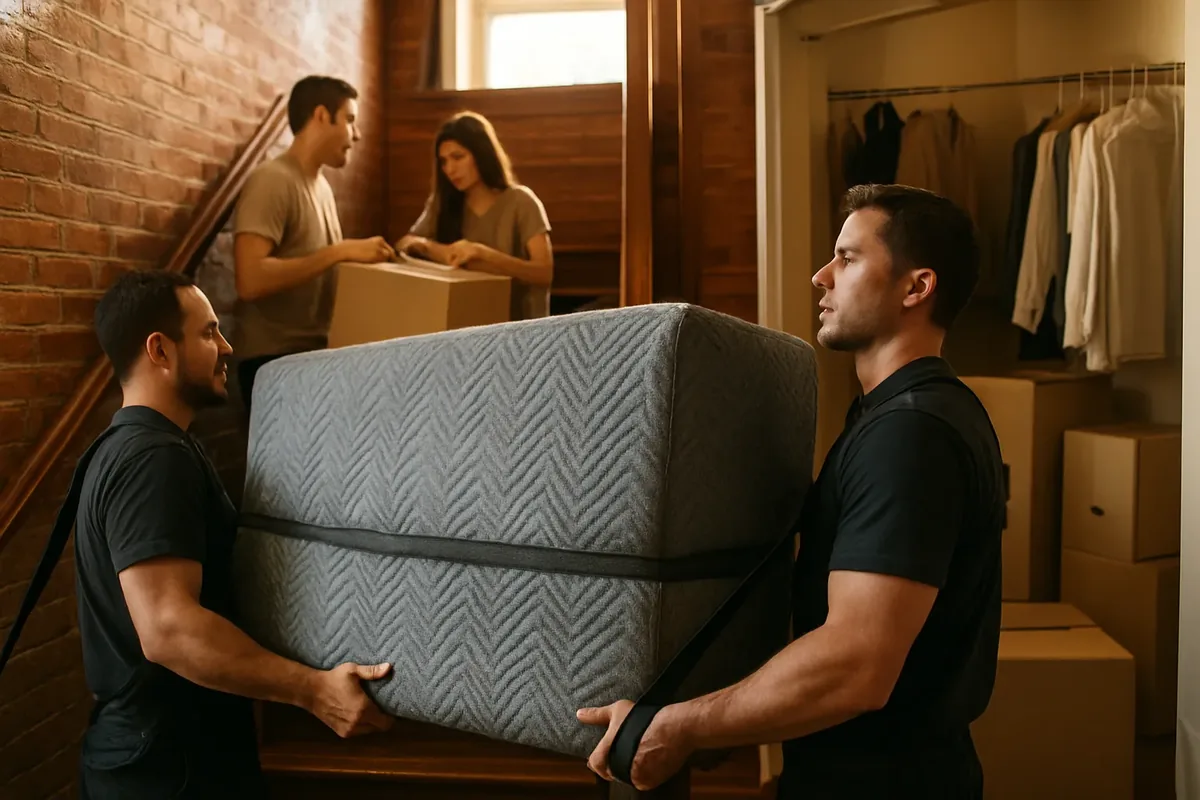
Walk-up staircases, shared passenger elevators, and long-carry podium corridors routinely add $110 to $1,045 to a US apartment moving invoice through combined extra crew hours and flat tariff surcharges. This hub breaks down exact 2nd-to-5th-floor carry penalties, freight elevator booking rules, shuttle truck triggers, and the strapping gear that saves hours on moving day.
walk up stairs and elevator moving costs
How to Avoid Security-Deposit Damage on High-Rise Loading Dock with 2-Hour Cutoff
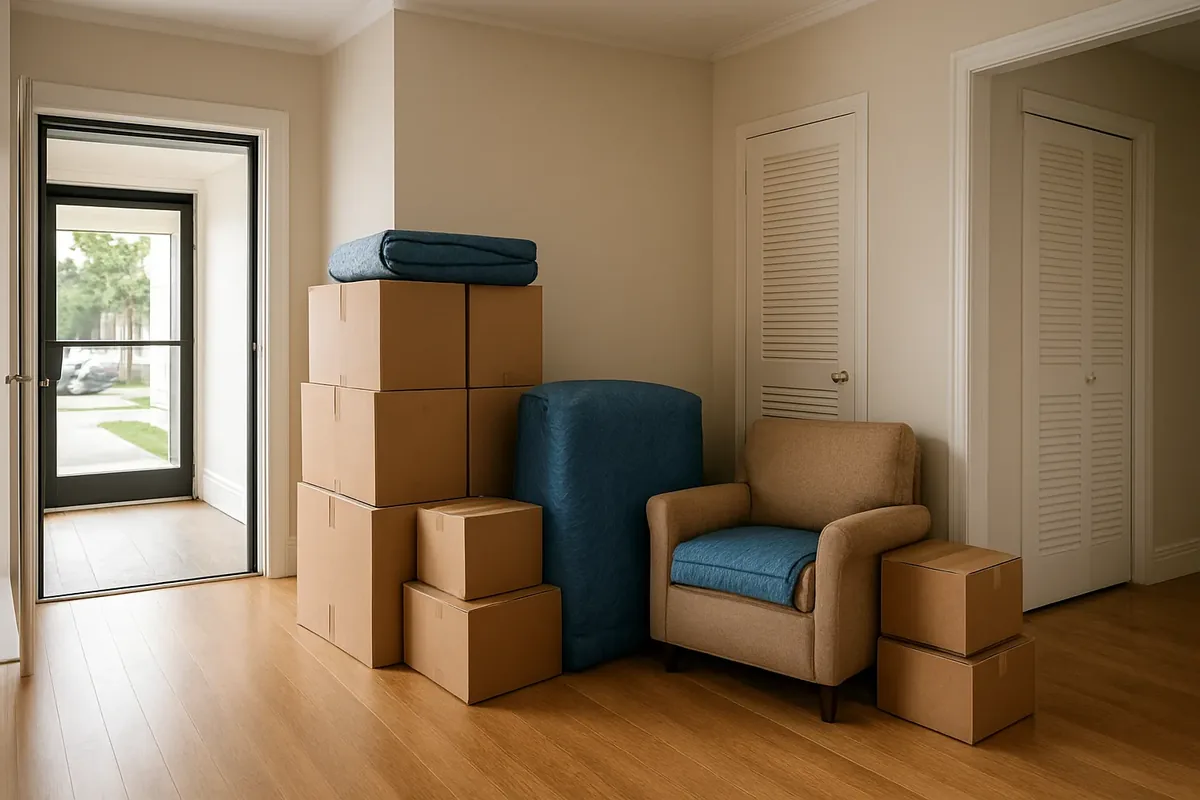
When a high-rise loading dock gives you only 120 minutes to clear out, rushed cart turns clip drywall corner beads, shred thin sofa covers, and leave greasy tire marks on elevator thresholds. Pre-wrapping furniture inside your apartment before the clock starts saves 30–50 minutes of dock time and prevents $150–$650 in security-deposit deductions.
walk up stairs and elevator moving costs
2nd-Floor Walk-Up (1 Flight of Stairs) Moving Cost: Per-Flight & Hourly Surcharges
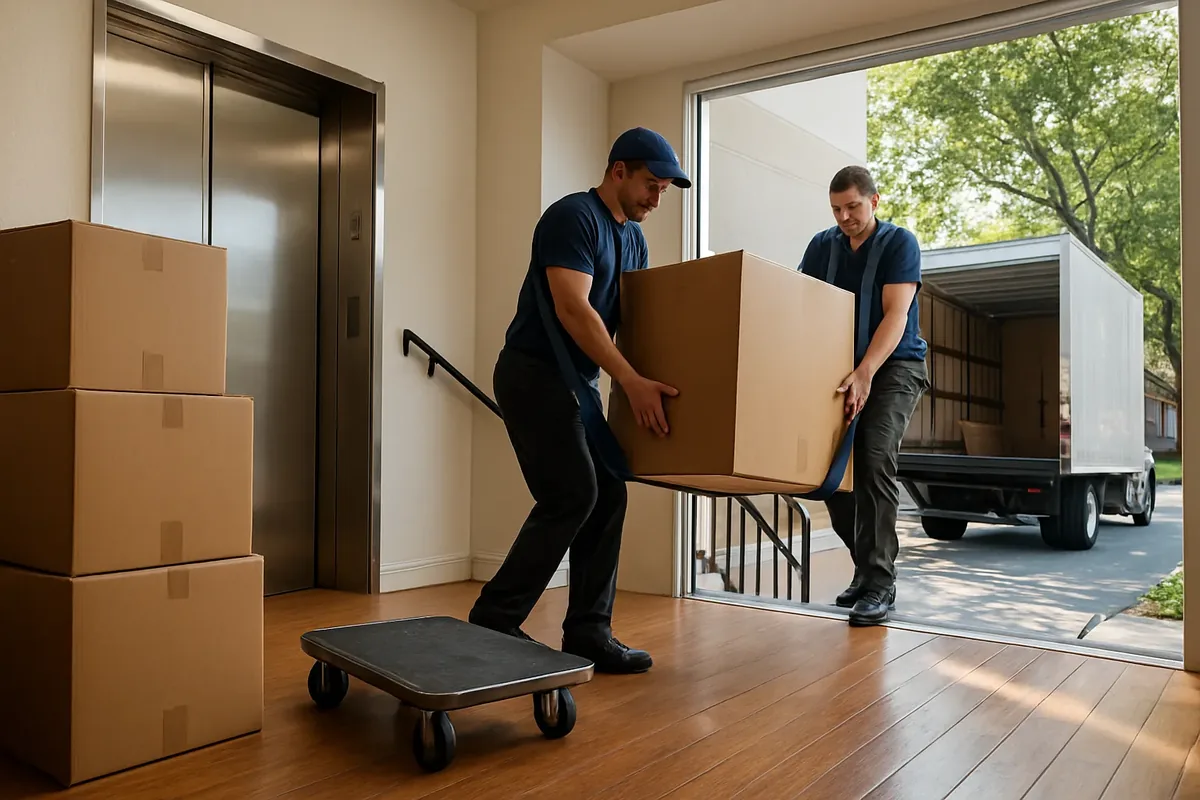
A single 12-to-16-step flight on a 2nd-floor walk-up apartment adds $118 to $390 to a local full-service move depending on crew size and tariff structure. Learn how US movers split flat per-flight stair fees ($55–$95) from extra hourly carry labor.
walk up stairs and elevator moving costs
Studio & 1-Bedroom Time Added by 2nd-Floor Walk-Up (1 Flight of Stairs)
A single 12-to-16-step staircase adds 30 to 45 extra minutes on a studio apartment and 35 to 60 minutes on a 1-bedroom apartment—translating to $118 to $270 in added stair labor and flat flight fees. See exact trip-by-trip timing breakdowns and how to trim a full hour off your crew bill.