
In this guide
The 6 Mandatory Tariff Questions to Ask Before Paying a Summer Deposit
During the May 15–September 15 peak window, verbal assurances from a moving coordinator carry zero legal weight once the driver hands you the Bill of Lading. Send these six audit questions by email so every answer becomes part of your written paper trail before you authorize a credit card deposit:
- 1. 'Is this estimate calculated directly from your May 15–Sept 15 Peak Tariff Table?'. Confirm that summer base rates are already built into the quote and ask for the specific tariff name, effective date, and bottom-line discount percentage (typically 48%–55% during peak vs. 60%–65% off-peak).
- 2. 'Is this a Binding Not-to-Exceed quote, and when does the rate lock expire?'. Ensure the quote's validity window extends past your scheduled summer pickup date so a 30-day expiration clause cannot void your binding price.
- 3. 'What happens to my rate if my pickup shifts by 2 to 5 days?'. Ask specifically whether shifting into a red-letter end-of-month or holiday week (Memorial Day, July 4th, Labor Day) drops your tariff discount or triggers a separate peak surcharge.
- 4. 'Are you the registered motor carrier (USDOT) hauling my load, or a broker?'. Verify the exact USDOT number in FMCSA SAFER and confirm whether an owned van-line tractor or an outside partner carrier will perform pickup and delivery.
- 5. 'What is my guaranteed First Available Delivery Date (FADD) and latest delivery day?'. Lock down the maximum transit spread in writing and ask what daily per-diem delay claim (commonly $75–$150/day for lodging/meals) applies if the carrier misses the final window.
- 6. 'Are all building accessorials—stairs, elevators, long carries, shuttles, and COI—included?'. Confirm exact line-item caps for your origin and destination floors so move-day crews cannot add surprise charges.
Pre-Signing Summer Quote Verification Matrix
Use this benchmark table to verify that your summer quote aligns with real US apartment moving costs—whether you are booking a local hourly crew or a 600-mile interstate van line—and check how much you save by shifting to a DIY rental truck.
| Verification Item | Local Apartment Move (<15 mi) | Interstate Move (600 mi Regional) | Written Clause to Request |
|---|---|---|---|
| Studio (250 cu ft / 2,000 lb) | 2 crew, 3–4 hrs + 1 hr travel ($150–$200/hr summer) | $2,125–$3,775 full-service vs. $920–$1,360 DIY (10-ft) | Explicit 2,000-lb floor or 1,000-lb container rate |
| 1-Bedroom (420 cu ft / 3,200 lb) | 2 crew, 4–6 hrs + 1 hr travel ($155–$215/hr summer) | $2,850–$5,015 full-service vs. $1,060–$1,555 DIY (12–15 ft) | Binding Not-to-Exceed weight estimate |
| 2-Bedroom (680 cu ft / 5,400 lb) | 3 crew, 5–7.5 hrs + 1 hr travel ($210–$285/hr summer) | $4,140–$7,200 full-service vs. $1,225–$1,810 DIY (15–20 ft) | Written 3-mover dispatch & 8:00 AM first-slot lock |
| Access Fees (Stairs / Elevator) | $55–$340 stairs; $45–$175 elevator; $65–$135 >75-ft carry | Same access tiers + $350–$750 if semi shuttle required | Pre-checked satellite truck clearance at both doors |
| Packing Materials | $65–$235 DIY boxes vs. $180–$820 mover-packed | Same materials tier; PBO cartons must be sealed | No mandatory mover repack if 32–44 ECT boxes taped |
Amazon US Apartment Moving Supplies
Recommended Moving Boxes, Blankets & Bags for This Move
Apartment moving supplies matched to this guide (Amazon.com affiliate ID: apartmentmovingcost-20).
Brown Kraft Paper Gummed & Acrylic Moving Box Seam Tape (6-Roll Bundle)
Easy-tear brown kraft flatback paper moving tape that lets you write room labels directly on the seam
Uboxes 2–3 Bedroom Deluxe Moving Box & Wardrobe Kit (54 Boxes + Tape Gun)
54-box master apartment kit including hanging wardrobe cartons, dish boxes, tape gun, and bubble roll
Cheap Cheap 1-Bedroom Apartment Basic Moving Box Assortment (25 Boxes + Kit)
Balanced mix of 10 small book boxes, 10 medium utility boxes, and 5 large linen cartons
As an Amazon Associate I earn from qualifying purchases. Always verify live stock and pack sizing directly on Amazon.com.
Timeline Checklist: 45 Days Out to Pickup Morning
Peak-season moves fail mostly due to missed administrative deadlines rather than bad luck. Follow this compressed summer readiness timeline to keep both landlords and dispatchers aligned:
- 45–30 days out: Collect three visual-survey Binding Not-to-Exceed quotes (including peak tariff confirmation), check each USDOT number in FMCSA SAFER, and book an 8:00 AM first-slot pickup to avoid afternoon heat and cascading delays.
- 21–14 days out: Submit both apartment buildings' Certificate of Insurance (COI) templates to your mover's insurance desk, reserve your freight elevators (4-hour block for 1BR, 5–6 hours for 2BR), and confirm municipal street-parking permits if no loading dock exists.
- 10–7 days out: Confirm your finalized inventory count (box totals and any added furniture) so the Binding estimate can be amended cleanly in advance—never on pickup morning. Verify receipt of both landlord-approved COI PDFs.
- 3–1 days out: Confirm the driver's cell number and exact arrival window, break down simple bed frames if avoiding a $60–$130 disassembly fee, and keep $20–$40 per mover in cash if you plan to tip for solid walk-up work.
Self-Packing Audit: Choosing Box Specs That Pass Peak-Season Inspection
With mover-supplied packing crews running $290–$520 for a 1-bedroom and $460–$820 for a 2-bedroom—and booking out weeks early in summer—self-packing is the fastest way to claw back your peak-season tariff premium. To keep summer crews moving fast and prevent 'crushed box' repacking add-ons, match your box kit to your floor plan:
For a 1-bedroom apartment, a structured 25-box 32-ECT kraft assortment (10 small book cartons, 10 medium utility cartons, and 5 large linen cartons) matches the typical 420-cubic-foot load cleanly without wasted volume. For a 2- to 3-bedroom apartment (680–980 cu ft), step up to a 54-box 32- to 44-ECT deluxe bundle that includes hanging wardrobe cartons, double-wall dish protection, and a tape gun. Finish every carton seam with high-tack 2.0-inch brown kraft paper seam tape so you can label room names, box numbers, and 'Fragile' warnings directly on the flatback paper without ink smearing in summer humidity.
Final Pre-Deposit Check: Run Your Numbers Side-by-Side
Never sign a summer moving contract solely because a sales rep claims 'this is our last truck for July.' Spend five minutes verifying your exact weight, stair access, and distance against neutral US benchmarks—and compare what a one-way rental truck plus 2-hour local loading helpers ($170–$290) would cost on the same dates. Having a verified DIY fallback number gives you real leverage to negotiate better peak-season terms.
Verify your summer quote before paying a deposit—plug your apartment size, mileage, stair flights, and packing plan into our Apartment Moving Cost Calculator or Movers vs. DIY Rental Truck Comparator.
Open Calculator →Frequently Asked Questions
What exact paperwork must an interstate mover send me before I pay a summer deposit?+
You should receive a written Binding or Binding Not-to-Exceed estimate listing the exact pickup date, applicable peak-season tariff table and discount percentage, itemized inventory table of measurements, valuation coverage election ($0.60/lb Released Value vs. Full Value Protection), FMCSA's 'Your Rights and Responsibilities When You Move' booklet, and the carrier's written cancellation policy.
How early should I request building COI certificates for a June, July, or August move?+
Request your origin and destination landlords' COI requirements at least 21 days before move day and require your mover to deliver finalized PDFs at least 72 hours before pickup. Insurance brokers experience heavy summer backlogs, and a missing COI on move morning can block freight-elevator access and trigger hourly standby fees.
Can I negotiate a peak-season tariff rate between May 15 and September 15?+
Yes—especially if you book 4 to 8 weeks early and accept a mid-month Tuesday or Wednesday pickup date between the 6th and 22nd. Getting three written Binding Not-to-Exceed quotes from competing asset-based carriers lets you ask your top choice to match a 2%–5% higher tariff discount or waive a $65–$135 long-carry fee.
Is a 32-ECT box strong enough for a summer interstate move, or do I need 48-ECT boxes?+
Standard 32-ECT single-wall kraft boxes are engineered for everyday apartment items—clothes, linens, pantry goods, and small book cartons under 40 pounds—and handle normal stacking well when packed full. Reserve heavy-duty 44-ECT to 48-ECT double-wall cartons for fragile dish packs, stemware, small kitchen appliances, and heavy electronics.
What should I do if a mover refuses to confirm in writing whether peak tariff rates are included?+
Treat that refusal as an automatic disqualification and move to your next verified carrier. Any legitimate household goods carrier can state the exact tariff name, effective season, and binding cap in writing within minutes; evasiveness almost always signals a planned move-day price hike.
Interactive US Moving Tools
Compare Full-Service Movers vs. DIY Rental Truck in 30 seconds
Related Guides
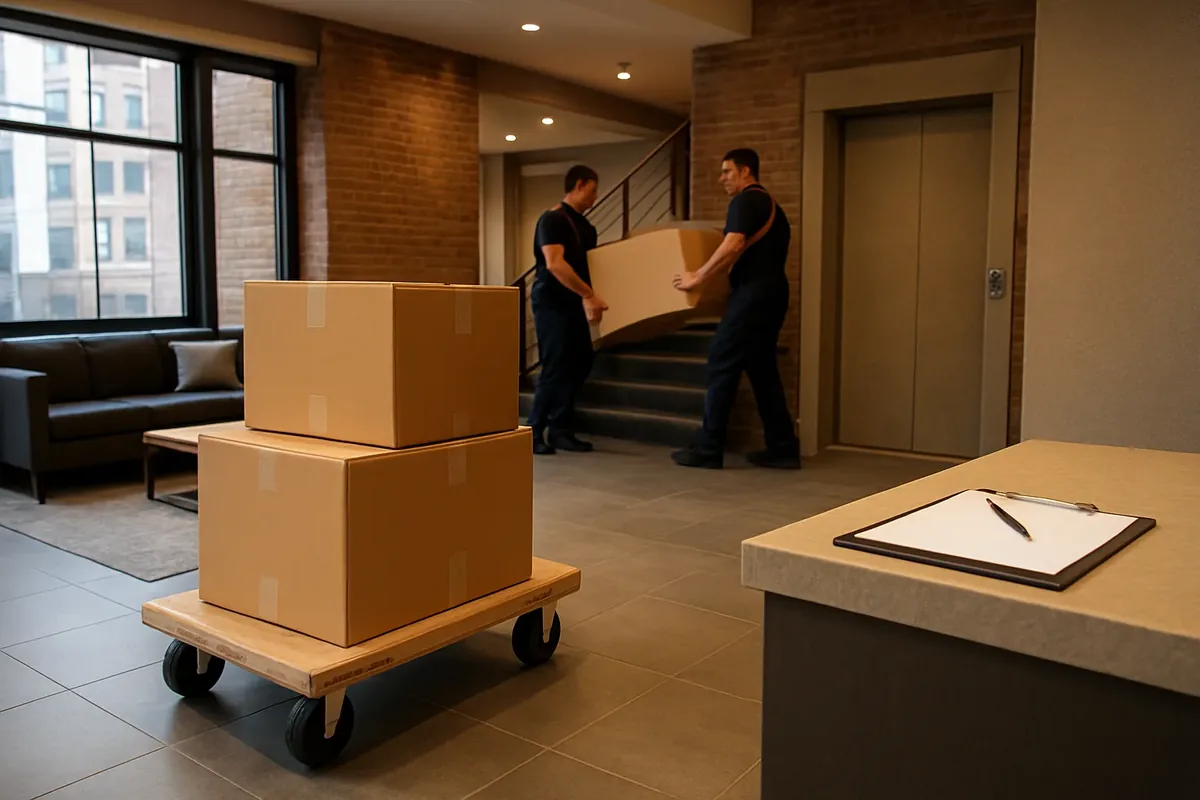
moving quotes insurance and hidden fees
Moving Quotes, Building COI & Hidden Fees: Complete US Benchmarks & Guides
Lowball apartment moving quotes routinely balloon by 35% to 90% on moving day once walk-up stair charges, long-carry penalties, travel-time minimums, building Certificate of Insurance (COI) delays, and valuation upgrades hit the Bill of Lading. This pillar guide decodes binding vs. non-binding contracts, FMCSA $0.60/lb vs. Full Value coverage, landlord COI rules, and exact hidden fee benchmarks.
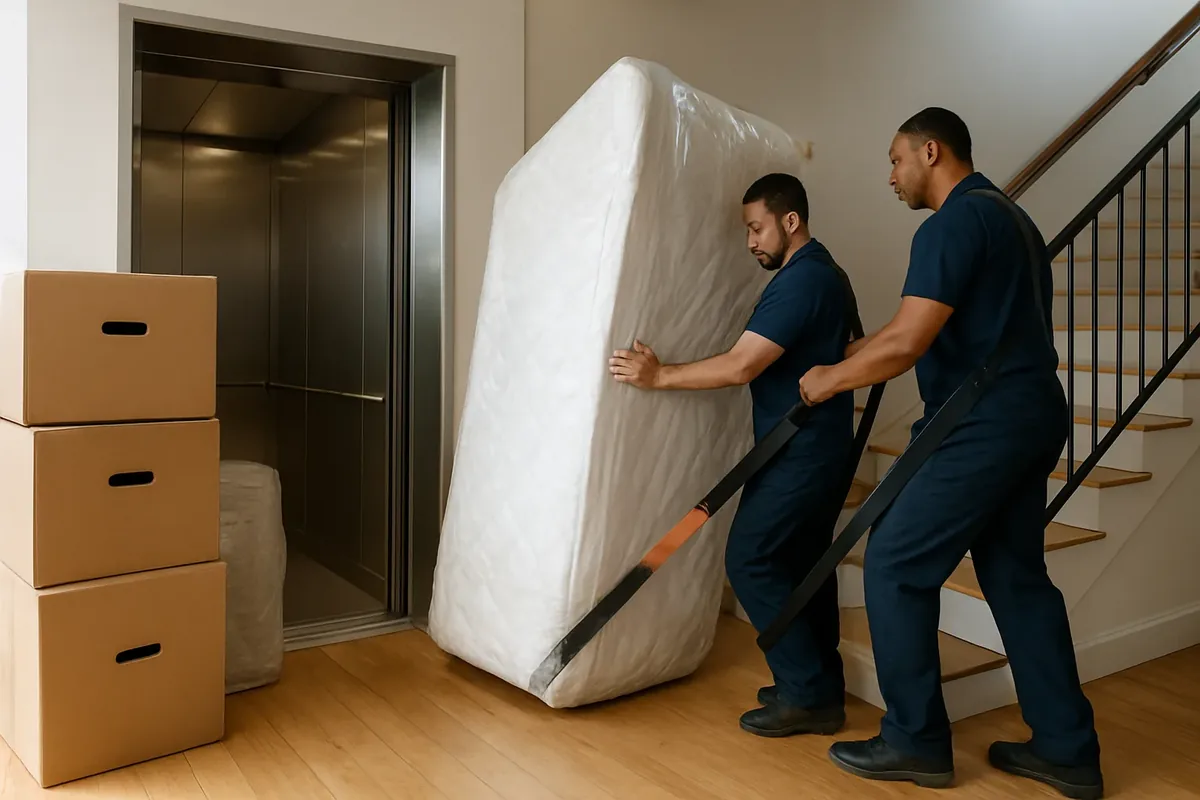
moving quotes insurance and hidden fees
FMCSA Mandatory Arbitration vs. Small Claims Court for Moving Disputes
Learn when federal law requires an interstate mover to enter binding FMCSA arbitration versus when local apartment renters hold stronger leverage in state small claims court. Compare filing fees, claim caps, valuation limits, and the real cost of resolving a damaged or overcharged move.
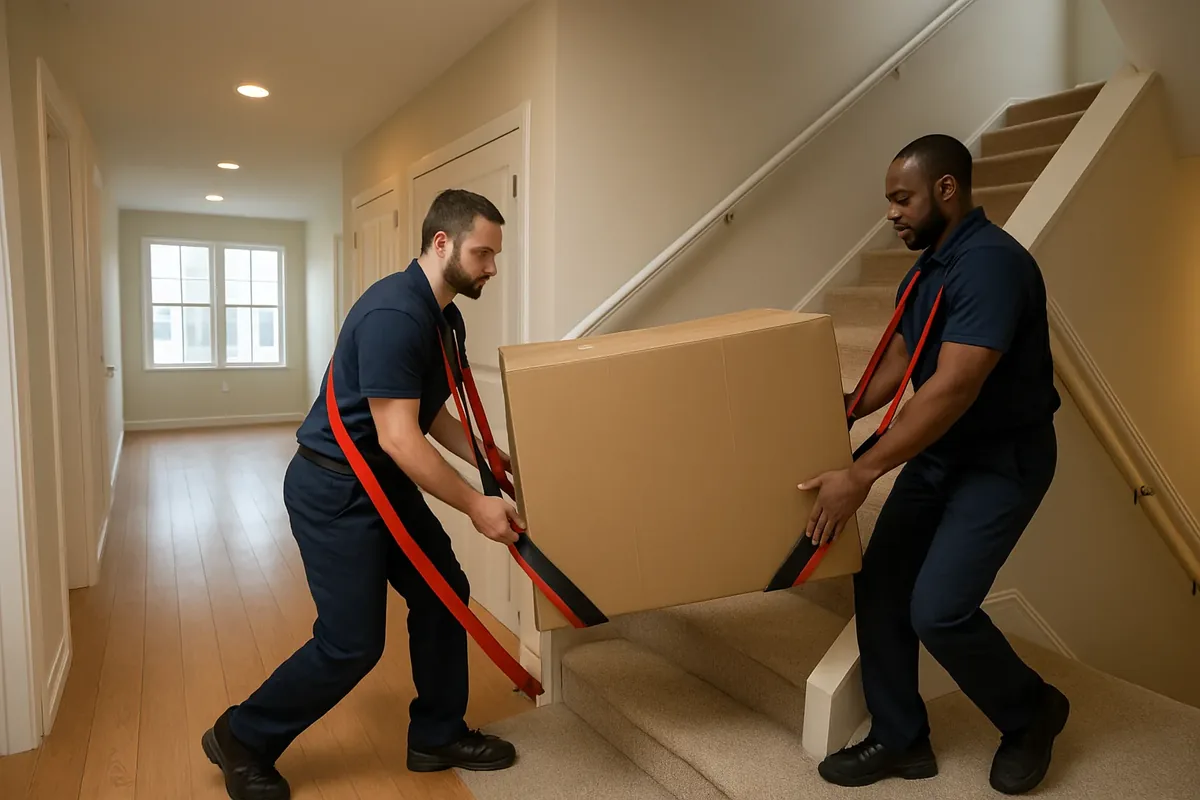
moving quotes insurance and hidden fees
Loopholes & Surprise Fees to Watch in FMCSA Arbitration & Moving Court Disputes
Uncover the fine-print contract traps, valuation waivers, and invoice-padding loopholes that sink legitimate renter claims in FMCSA arbitration and small claims court. Learn how to spot broker exclusions, PBO denials, and pre-existing damage marks before moving day.

moving quotes insurance and hidden fees
Pre-Move Audit Scorecard for FMCSA Arbitration & Moving Dispute Protection
Use this 12-point pre-move verification scorecard before paying a moving deposit to verify FMCSA arbitration enrollment, carrier authority, COI readiness, and written fee caps. Audit every binding estimate against national apartment cost benchmarks before moving day.