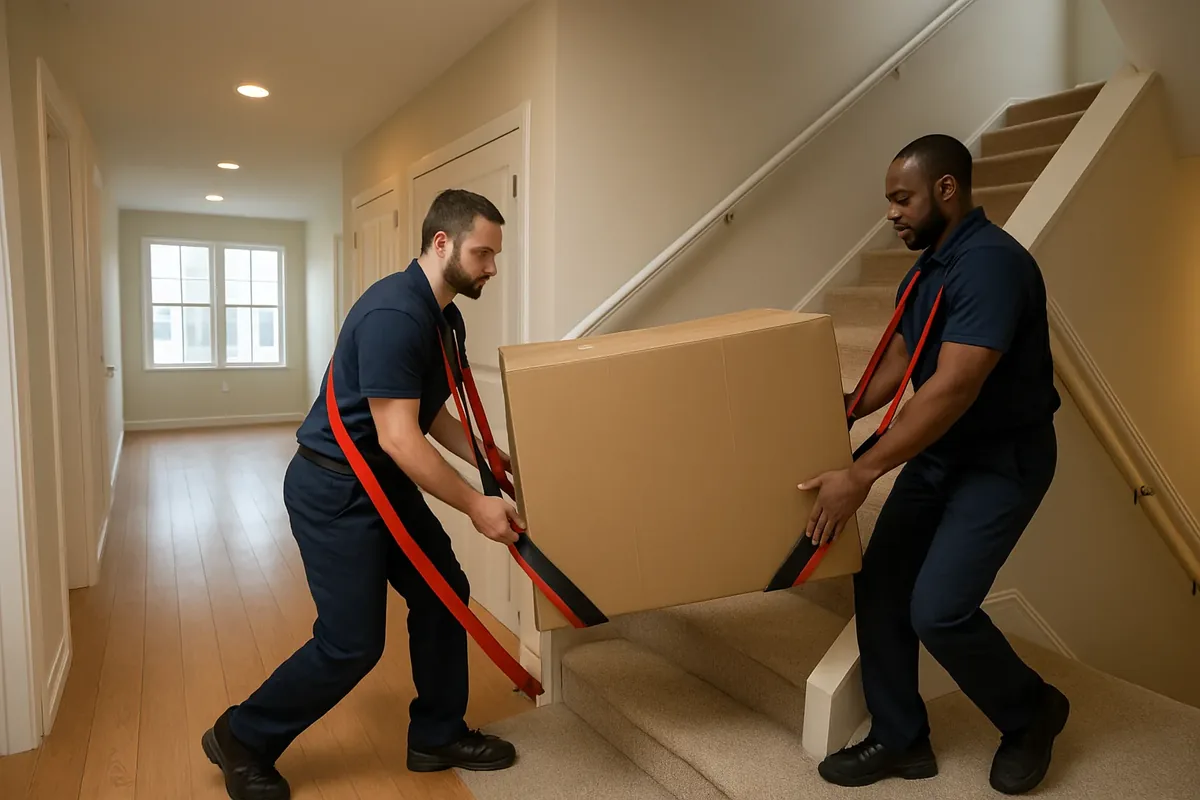
In this guide
- The $0.60-Per-Pound Valuation Waiver Trap Hidden on Page One
- Seven Contract Loopholes That Defeat Renter Claims in Arbitration and Court
- Invoice-Padding Tactics That Inflate Apartment Bills Beyond Benchmarks
- How Improper Furniture Wrapping Triggers Claim Denials—and How to Prevent It
- Red Flags Inside a Mover's Arbitration Brochure and Dispute Terms
- Stress-Test Your Quote Against Transparent Apartment Benchmarks
The $0.60-Per-Pound Valuation Waiver Trap Hidden on Page One
Renters who enter an FMCSA arbitration program dispute expecting full replacement value for a shattered television or gouged solid-wood dresser frequently hit an immediate legal wall: they unknowingly signed the Released Value Protection line on the Bill of Lading. Under 49 CFR § 375.201, interstate movers must default to Full Value Protection unless the shipper explicitly writes '60 cents per pound' or signs a separate waiver box—yet rushed crews routinely point to three signature lines during a hectic 7:30 a.m. freight-elevator loading window.
Once that waiver is signed, even the most sympathetic FMCSA arbitrator or small claims judge is legally bound by the $0.60-per-pound ceiling. A 2-bedroom apartment carries roughly 5,400 lbs of household goods across 680 cu ft, meaning the entire apartment's maximum payout under Released Value would be $3,240 if the truck burned to the ground—and a 40-pound dining chair broken in a 3rd-floor walk-up yields exactly $24.
Seven Contract Loopholes That Defeat Renter Claims in Arbitration and Court
Even when a renter carries Full Value Protection or files a state small claims suit over an overpriced local move, seven recurring contract traps let carriers and brokers dodge payout or inflate your final bill by $400 to $1,800.
| Contract Trap / Loophole | How Movers Use It in Disputes | Typical Renter Loss (USD) | How to Block It Before Signing |
|---|---|---|---|
| Broker vs. Carrier Liability Clause | Broker claims 49 U.S.C. § 14706 applies only to the subcontracted motor carrier, who has lapsed insurance | $500–$4,500 uncollected | Verify active USDOT Common/Contract Carrier authority (not Broker-only MC) on FMCSA SAFER |
| Blanket 'MCU / Scratched' Inventory Codes | Driver marks every furniture item 'MCU' (marred, chipped, used) on the origin sheet to claim pre-existing damage | $300–$2,200 denied | Cross out inaccurate condition codes before signing and record a continuous 4K walkthrough video |
| Packed by Owner (PBO) Exception | Carrier denies interior breakage claims on renter-packed boxes lacking visible outer carton puncture | $250–$1,400 denied | Use 32-ECT/48-ECT cartons, photograph interior cushioning, or have movers pack high-value glass |
| Undisclosed Access & Bulky Item Riders | Crew adds unquoted stair ($55–$340), long-carry ($65–$135), or sectional disassembly ($60–$130) charges at delivery | $250–$950 overcharge | Demand an all-inclusive binding estimate listing exact floor level, elevator type, and carry feet |
| Non-Binding 110% Post-Delivery Re-Bill | Carrier collects 110% at delivery per 49 CFR § 375.407, then sends a surprise invoice 30 days later for cubic-foot overages | $400–$1,600 balance bill | Insist on a Binding Not-to-Exceed weight estimate and demand certified tare/gross scale tickets |
| Shortened Local Claim Window (15–30 Days) | Intrastate contract buries a 15-day or 30-day notice limit, unlike the 9-month federal interstate minimum | 100% claim forfeiture | Send written damage notice within 72 hours of delivery regardless of whether the move crossed state lines |
| Venue & Mandatory Private Arbitration Clause (Local Moves) | Local mover inserts a private AAA/JAMS clause waiving small claims court or requiring hearings in a distant county | $500–$1,500 legal friction | Strike out distant-venue clauses in writing or hire a licensed local carrier without private-forum waivers |
Amazon US Apartment Moving Supplies
Recommended Moving Boxes, Blankets & Bags for This Move
Apartment moving supplies matched to this guide (Amazon.com affiliate ID: apartmentmovingcost-20).
VEVOR 12-Pack Heavy-Duty 80" x 72" Quilted Moving Blankets with 2 Elastic Straps
Recycled cotton-fill non-woven moving pads bundled with two heavy elastic securing bands
Oversized 80" x 144" Extra-Long Sectional Sofa & Piano Moving Blanket
12-foot-long quilted furniture pad wrapping full 3-seat sofas and tall armoires in a single piece
Easy Mask Self-Adhesive Carpet Protection Film Roll 24" x 200 ft
Reverse-wound 3-mil puncture-resistant adhesive film shielding apartment bedroom carpet from shoe traffic
As an Amazon Associate I earn from qualifying purchases. Always verify live stock and pack sizing directly on Amazon.com.
Invoice-Padding Tactics That Inflate Apartment Bills Beyond Benchmarks
A major share of small claims lawsuits against local apartment movers stems from surprise invoice padding rather than broken furniture. Understanding real US pricing structure helps you spot manufactured charges immediately. For a standard 2-bedroom apartment (900–1,250 sq ft, 680 cu ft, 5,400 lbs) moving under 15 miles, a 3-person crew requires 5.0–7.5 base hours plus 1.0 travel hour at $175–$235/hr ($1,050–$1,998 labor), $75–$145 transport, and either $145–$235 in DIY materials or $460–$820 for full mover packing. Compare that against a 15–20 ft DIY rental truck ($40–$55/day base, $1.19–$1.59/mi, ~$3.55/gal fuel at 10 MPG) plus optional 2-hour DIY loading helpers ($170–$290), which totals roughly $375–$605.
When unethical local crews try to turn a $1,400 estimate into a $2,650 final receipt, they exploit four predictable apartment friction points:
- Shrink-wrap and tape-roll gouging: Billing $45–$75 per roll of stretch wrap and $12–$18 per roll of packing tape, adding $350+ to an invoice when a complete 2-bedroom DIY supply bundle costs $145–$235.
- Phantom stair and elevator double-dipping: Charging both a 3rd-floor walk-up flat surcharge ($110–$190) AND slowing the crew down by 2.5 extra hourly billable hours ($438–$588) while claiming 'heavy exertion.'
- Building COI rejection fees: Arriving without the landlord's required Certificate of Insurance wording, getting turned away at the freight elevator dock, and billing the renter a $250–$450 'reschedule / waiting time' penalty for the mover's own administrative failure.
- Unverified cubic-foot volume swaps: Switching an interstate quote from certified poundage ($0.42–$0.64/lb for 600 miles) to inflated visual cubic feet ($6–$9/cu ft) by loosely stacking boxes with empty air gaps inside the trailer.
How Improper Furniture Wrapping Triggers Claim Denials—and How to Prevent It
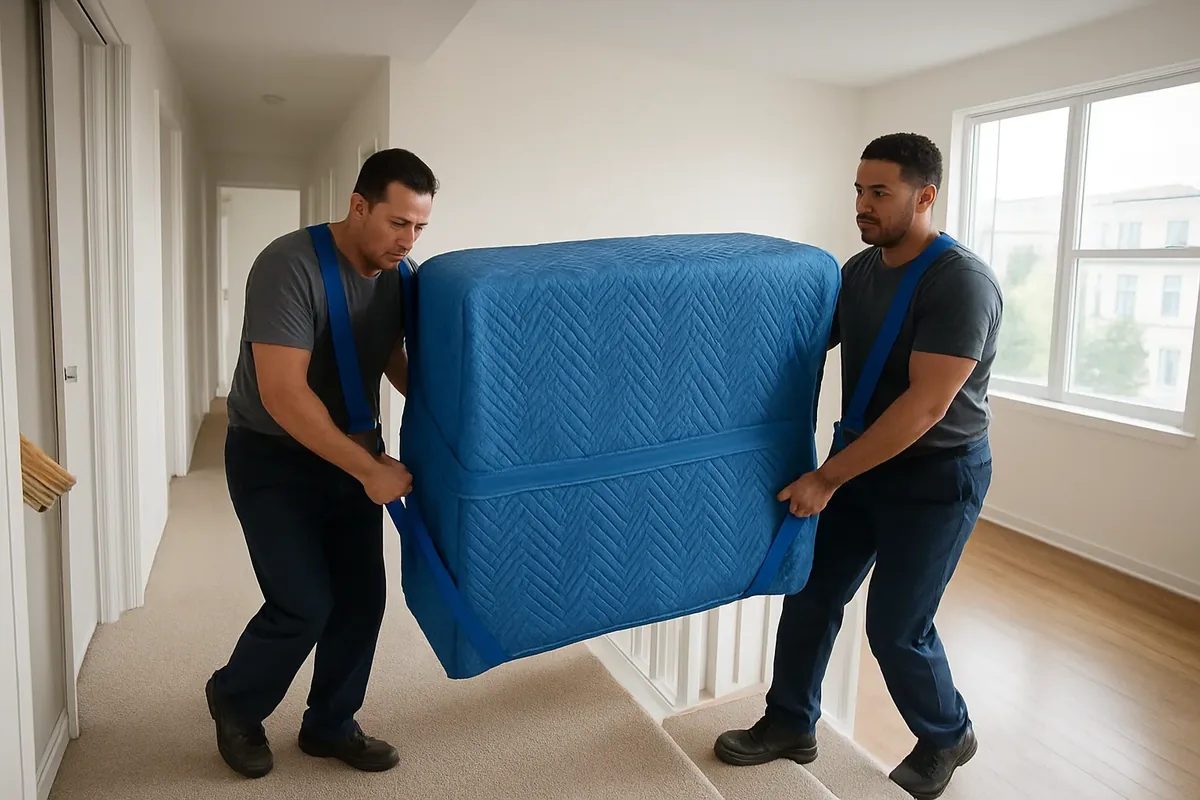
Another silent loophole in arbitration is the 'unprotected furniture / building floor damage' defense. Many apartment leases hold you directly liable for hallway carpet tears or door-frame gouges—deducting $300 to $1,200 from your security deposit—while movers claim in small claims court that your building's narrow corridors or oversized sectional made scuffs unavoidable. Supplying high-spec surface and upholstery protection on DIY moves or verifying your crew uses real padded wraps eliminates both security-deposit losses and carrier excuses.
- Verify every wood dresser, dining table, and bookcase is wrapped in dense quilted pads—on DIY moves or when supplementing a budget crew, heavy 80-inch by 72-inch recycled cotton-fill blankets rated at 75 lb/dozen such as the VEVOR 12-Pack Heavy-Duty 80" x 72" Quilted Moving Blankets with 2 Elastic Straps protect corners and lock snugly against rental truck wall tie-downs.
- Avoid piecing together loose pads over long upholstery; use a single 12-foot wrap like the Oversized 80" x 144" Extra-Long Sectional Sofa & Piano Moving Blanket to cover full 3-seat sofas and tall armoires in one continuous quilted layer.
- Shield apartment bedroom and hallway carpets from tracked-in dolly grit with reverse-wound 3.0-mil peel-clean adhesive sheeting like the Easy Mask Self-Adhesive Carpet Protection Film Roll 24" x 200 ft (200 sq ft coverage), preventing landlord deposit deductions that moving carriers routinely exclude from cargo valuation.
Red Flags Inside a Mover's Arbitration Brochure and Dispute Terms
Before paying any deposit, request the company's FMCSA arbitration summary (for interstate moves) or written dispute policy (for local moves). Walk away immediately if you encounter any of these five warning signs:
- No Named Third-Party Arbitration Administrator. A legitimate interstate carrier lists a recognized neutral forum with a street address, fee schedule, and filing rules. A vague sentence stating 'disputes are settled by company arbitration' violates 49 U.S.C. § 14708.
- Upfront Arbitration Fees Above 50% of Total Cost. If the brochure states the shipper pays 100% of arbitrator fees or demands a non-refundable $750 filing fee on a $2,000 claim, the program violates federal statutory fee caps.
- Cash-Only or Zelle Delivery Demands Refusing Credit Cards. Demanding cash or postal money orders at delivery is paired with hostage-load tactics so you cannot document disputed surcharges or challenge an unauthorized charge later.
- Missing Certified Weight Ticket Rights on Interstate Moves. Under 49 CFR § 375.509, you have a federal right to witness the weighing of the truck and request one free re-weigh if you doubt the weight billed on a non-binding move. Any contract waiving re-weigh rights is a red flag.
- Unlicensed Subcontractor Assignment Clauses. Fine print allowing the company to 'assign your move to an affiliated partner at its sole discretion' signals a broker operation—meaning the company holding your deposit will deny all responsibility if the actual truck damages your goods.
Stress-Test Your Quote Against Transparent Apartment Benchmarks
Every fine-print loophole thrives when a renter evaluates a quote in isolation. Before you commit to a carrier or sign an arbitration addendum, compare the written estimate against real labor hours, truck mileage, access surcharges, and packing supply costs for your exact apartment layout.
Spot padded surcharges before moving day: enter your apartment size, walk-up flights, elevator access, and mileage into our Apartment Moving Cost Calculator and Movers vs. DIY Rental Truck Comparator to benchmark every line item on your quote.
Open Calculator →Frequently Asked Questions
What does 'MCU' on a mover's inventory sheet mean, and why is it a trap in arbitration?+
'MCU' stands for Marred, Chipped, and Used. Unscrupulous crews write MCU beside every piece of furniture on the pickup inventory sheet so that if they gouge a dresser or crack a table leg in transit, they can argue in FMCSA arbitration that the damage was pre-existing. Always inspect condition codes before signing and strike out inaccurate marks.
Can a moving company legally keep my furniture hostage until I pay unquoted stair or long-carry fees?+
On an interstate move, federal law (49 CFR § 375.407) strictly caps delivery payment at 100% of a Binding Estimate or 110% of a Non-Binding Estimate—plus any post-contract services you expressly requested in writing. Holding your shipment hostage for unapproved walk-up stair ($55–$340) or long-carry ($65–$135) fees violates federal law and triggers FMCSA enforcement and civil penalties.
Are high-value items like laptops, jewelry, or monitors excluded from FMCSA Full Value Protection?+
Under federal tariff rules, movers may limit liability on 'articles of extraordinary value' (items worth more than $100 per pound, such as laptops, cameras, watches, or fine art) unless you explicitly declare them in writing on the High-Value Inventory Form before loading. Always transport small electronics and jewelry in your personal vehicle.
Why do movers charge a 1-hour travel fee on local apartment moves, and when is it a red flag?+
A 1.0-hour standard travel fee (for studios through 3-bedroom apartments, or 1.25 hours for 4-bedroom lofts) covers the crew's portal-to-portal drive from their warehouse to your origin and back after unloading. It becomes a red flag only when it was omitted from the written quote or when a mover bills both a 1-hour travel fee and California Double Drive Time (DDT) simultaneously.
Does a 5-mil mattress bag or 32-ECT box requirement really matter in a small claims dispute?+
Yes. Carriers frequently deny soiled-mattress claims by arguing the mattress was unbagged, and deny crushed-box claims by blaming thin recycled grocery cartons. Using 5-mil polyethylene mattress bags and properly rated 32-ECT (standard) or 48-ECT (heavy/dish) cartons removes the mover's favorite 'improper packaging' defense.
Interactive US Moving Tools
Compare Full-Service Movers vs. DIY Rental Truck in 30 seconds
Related Guides
moving quotes insurance and hidden fees
Moving Quotes, Building COI & Hidden Fees: Complete US Benchmarks & Guides
Lowball apartment moving quotes routinely balloon by 35% to 90% on moving day once walk-up stair charges, long-carry penalties, travel-time minimums, building Certificate of Insurance (COI) delays, and valuation upgrades hit the Bill of Lading. This pillar guide decodes binding vs. non-binding contracts, FMCSA $0.60/lb vs. Full Value coverage, landlord COI rules, and exact hidden fee benchmarks.

moving quotes insurance and hidden fees
Pre-Move Audit Scorecard for FMCSA Arbitration & Moving Dispute Protection
Use this 12-point pre-move verification scorecard before paying a moving deposit to verify FMCSA arbitration enrollment, carrier authority, COI readiness, and written fee caps. Audit every binding estimate against national apartment cost benchmarks before moving day.

moving quotes insurance and hidden fees
Using Credit Card Protections If a Moving Broker Refuses a Refund
Learn how to invoke the Fair Credit Billing Act (FCBA) and card-network chargeback rules when a moving broker or carrier refuses to refund a canceled deposit. Includes exact 60-day deadlines, Visa/Mastercard reason codes, and fallback DIY truck cost comparisons.
moving quotes insurance and hidden fees
Red Flags & Contract Traps in Fair Credit Billing Act Mover Deposit Refunds
Expose the fine-print contract traps, payment-method switches, and representment tactics moving brokers use to defeat credit card chargebacks. Learn how to spot 72-hour calendar traps, 'dispatch fee' loopholes, and DIY fallback costs before authorizing a deposit.