In this guide
- Why Phone & Web-Form Moving Quotes Underestimate by 25% to 38%
- Accuracy & Cost Variance: Phone vs. AI Video vs. Live FaceTime vs. In-Person
- How AI Computer-Vision Moving Surveys Calculate Hidden Box Counts
- When You Should Still Insist on an In-Person Apartment Estimator
- Pre-Survey Packing & Labeling Specs That Lock In Quote Accuracy
Why Phone & Web-Form Moving Quotes Underestimate by 25% to 38%
When apartment renters request a moving quote over the phone or click through a 3-minute online inventory checklist, they almost always remember the seven major pieces of furniture they see every day: their queen bed, sofa, TV stand, coffee table, dining table, চার chairs, and desk. What human memory systematically omits is the hidden density stored inside kitchen cabinets, deep coat closets, under-bed storage bins, bathroom vanities, and balcony lockers.
In a standard 1-bedroom apartment (600 to 850 sq ft, 420 cu ft, 3,200 lbs), loose household items that must be packed into boxes account for 35% to 45% of total truck volume—specifically 12 small boxes, 15 medium boxes, 8 large boxes, and 2 tall wardrobe boxes (37 cartons total). When a renter guesses on the phone that their entire 1-bedroom apartment will fit into 'about 10 or 12 boxes,' the phone estimator under-calculates the shipment by 85 to 115 cubic feet (600 to 800 pounds). On moving day, those 25 uncounted boxes add 1.25 to 2.0 extra hours of local crew carry time ($165 to $350 at $130 to $175/hr) or $350 to $780 in interstate weight addendums.
Accuracy & Cost Variance: Phone vs. AI Video vs. Live FaceTime vs. In-Person
Modern apartment moving companies use four primary survey methods to measure your cubic footage (cu ft), estimated weight (calculated at 7.0 to 7.5 lbs per cu ft), and building access time. Understanding how each method handles hidden box counts and hallway obstacles helps you choose the right survey for your apartment size.
| Survey Method | Cubic-Foot Capture Accuracy | Typical Time Required | Average Move-Day Cost Variance ($) | Best Apartment Use Case |
|---|---|---|---|---|
| Verbal Phone Quote or Web Checkbox Form | 62%–78% (Misses closet & kitchen box density) | 5–8 minutes | +$350 to +$1,350 surprise move-day overage | Local studio or minimalist 1BR (<250 cu ft) with hourly billing only |
| Self-Guided AI Video App (e.g., Yembo / Supermove AI) | 93%–96% (3D computer vision measures cabinet & sofa volume) | 10–12 minutes asynchronous | Within ±$75 to $180; eligible for Binding quote | 1-Bedroom & 2-Bedroom apartments (420–680 cu ft) needing fast quotes |
| Live Guided Video Call (FaceTime / Zoom with Estimator) | 95%–98% (Estimator asks you to open cabinets & walk stairs) | 15–20 minutes live | Within ±$0 to $120; gold standard for Binding Not-to-Exceed | 2-Bedroom & 3-Bedroom units (680–980 cu ft) or walk-ups with tight turns |
| In-Person On-Site Estimator Walkthrough | 97%–99% (Inspects street parking, freight elevator & crating) | 30–45 minutes + scheduling window | $0 on Binding Estimate (unless items added post-survey) | 3BR–4BR Penthouses (980–1,280 cu ft) or fine art/marble crating jobs |
Amazon US Apartment Moving Supplies
Recommended Moving Boxes, Blankets & Bags for This Move
Apartment moving supplies matched to this guide (Amazon.com affiliate ID: apartmentmovingcost-20).
Brown Kraft Paper Gummed & Acrylic Moving Box Seam Tape (6-Roll Bundle)
Easy-tear brown kraft flatback paper moving tape that lets you write room labels directly on the seam
Sure-Max 4 Ultra-Thick Supreme Moving Blankets 80" x 72" (90 lb/dz Extra-Heavy)
Maximum-loft 90-lb/dozen padded blankets for high-gloss walnut tables, pianos, and glass credenzas
VEVOR 12-Pack Heavy-Duty 80" x 72" Quilted Moving Blankets with 2 Elastic Straps
Recycled cotton-fill non-woven moving pads bundled with two heavy elastic securing bands
As an Amazon Associate I earn from qualifying purchases. Always verify live stock and pack sizing directly on Amazon.com.
How AI Computer-Vision Moving Surveys Calculate Hidden Box Counts
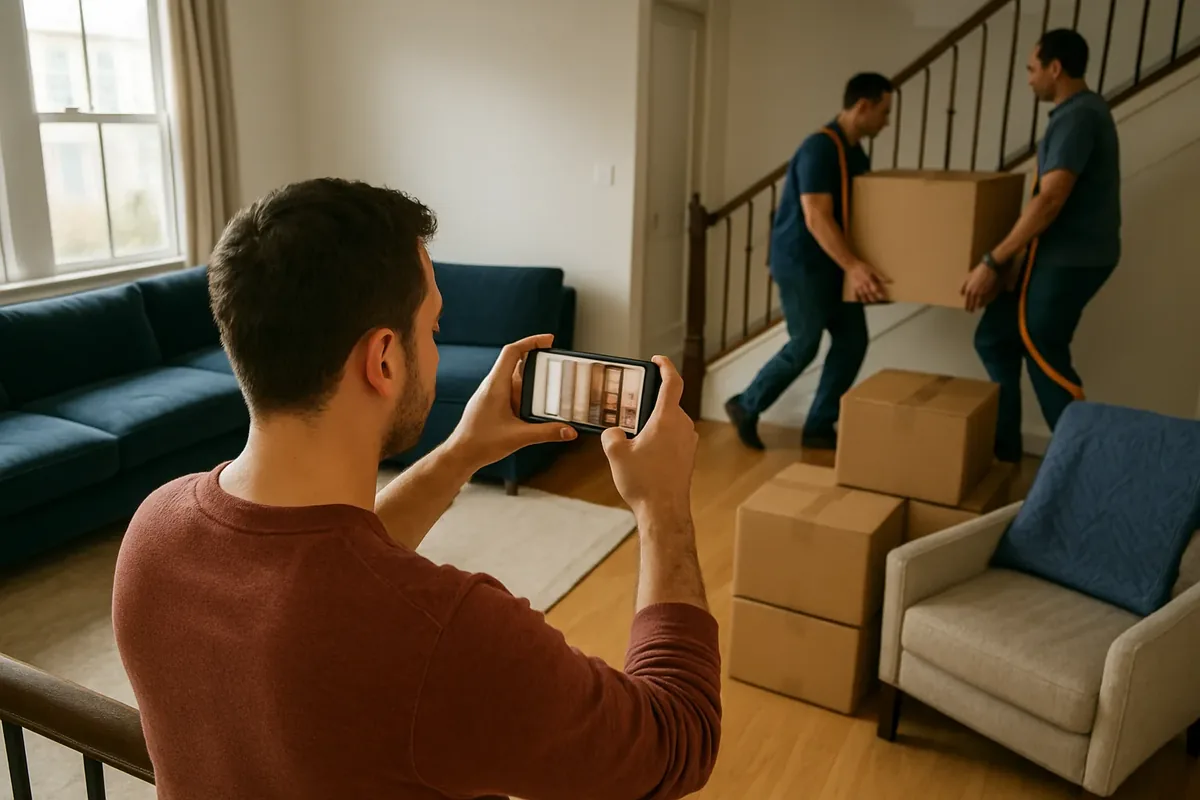
If you have ever wondered how an AI video survey app accurately predicts that your unpackaged kitchen will require 14 medium and dish-pack boxes before you have taped a single carton shut, the answer lies in volumetric cabinet modeling. As you pan your smartphone camera slowly across your kitchen with the cabinet doors propped open, the computer-vision model identifies standard 30-inch and 36-inch upper and lower cabinetry, assesses shelf fill density (sparse, standard, or heavy), and automatically converts internal shelf cubic footage into an equivalent count of 1.5-cu-ft small boxes, 3.0-cu-ft medium boxes, and 5.2-cu-ft dish barrels.
Similarly, when you point the camera into a bedroom closet, the AI measures the linear feet of hanging clothes rod. Because a standard 24-inch-wide metal-bar wardrobe box holds exactly 2 linear feet of hanging closet clothes, an 8-foot walk-in closet rod automatically registers as 4 wardrobe boxes (occupying 40 to 60 cubic feet on the truck). This automated box translation eliminates the #1 cause of move-day invoice disputes.
- Open Every Closet, Kitchen Cabinet, and Bathroom Vanity Before Recording. Closed cabinet doors look empty to both human estimators and AI cameras. Prop open your pantry, linen closet, and under-sink doors before starting your FaceTime or AI walkthrough so the internal box count is included in your binding price.
- Clearly Flag 'Not Moving' Items with Bright Painter's Tape or Verbal Callouts. If you are selling your Peloton bike, leaving a balcony grill, or trashing an old sleeper sofa, explicitly call out 'Do Not Inventory' as you pass it—otherwise an AI vision engine will automatically add 45 cubic feet and 200 pounds to your quote.
- Look Under Beds and Behind Sofa Cushions for Hidden Storage Bins. Lift dust ruffles on queen and king beds during the video call to show under-bed rolling plastic totes, spare rugs, and seasonal shoe boxes, which routinely add 25 to 40 cubic feet of unexpected truck volume.
- Walk the Camera Out Your Front Door Down the Hallway to the Elevator or Curb. Spend the final 90 seconds of your video survey walking from your apartment door to the elevator or down your walk-up stairwell to the street parking zone. This proves whether your carry distance is under 75 feet (avoiding a $65 to $135 Long Carry fee) and documents exact stair flights ($55 to $340 surcharge tier).
- Demand the Itemized Cube Sheet (Table of Measurements) Before Signing. Never accept a lump-sum dollar quote after a video survey without reviewing the attached line-by-line Cube Sheet. Confirm that every major furniture piece and the total carton count match your apartment before signing.
When You Should Still Insist on an In-Person Apartment Estimator
While a 15-minute live FaceTime or AI video survey is ideal for 90% of studio, 1-bedroom, and 2-bedroom apartment relocations (250 to 680 cu ft), three specific apartment scenarios still benefit from an experienced human estimator standing physically inside your building with a laser tape measure:
First, if you live in a 3-bedroom or 4-bedroom loft penthouse (980 to 1,280 cu ft, 7,800 to 10,200 lbs) requiring a 4-person crew ($220 to $315/hr) and full carrier packing ($680 to $1,560 materials), an on-site estimator spots fragile stemware density and high-value cabinetry faster than a narrow phone lens. Second, if you have custom wood crating items—such as marble dining slabs, oversized oil paintings, or hardwired crystal chandeliers—an in-person surveyor measures exact slab thickness and elevator cab diagonal clearance so crating carpenters build the crate to the millimeter. Third, if your apartment has a notorious spiral staircase or a narrow brownstone dog-leg landing that required hoisting your sofa through a 2nd-floor balcony window on move-in day, an on-site visit confirms whether rigging or sofa disassembly ($60 to $130) is needed.
Pre-Survey Packing & Labeling Specs That Lock In Quote Accuracy
Renters who pack and label 50% to 75% of their non-essential books, decor, and out-of-season clothes into uniform corrugated boxes BEFORE conducting their video survey receive the tightest, most accurate moving estimates. When an estimator sees neatly stacked, clearly labeled boxes along one living room wall alongside pre-staged furniture pads, they know your move will load at peak cubic-feet-per-hour efficiency and rarely pad extra buffer hours into your quote.
- High-Visibility Seam Labeling for Video Walkthroughs: Seal and label your pre-packed cartons using Uboxes Brown Kraft Paper Gummed & Acrylic Moving Box Seam Tape (2.0 in x 55 yd, 6-Roll Bundle). Writing 'KITCHEN #1–#8' or 'BOOKS — HEAVY' in black marker directly across the high-tack brown kraft seam allows a video estimator or AI scanner to tally exact box counts at a glance.
- 90-Lb/Dozen Supreme Pads for High-Value Pieces Flagged on Survey: If your video survey identifies high-gloss walnut tables, pianos, or glass credenzas that require extra carrier protection, stage a 4-pack of Sure-Max Ultra-Thick Supreme Moving Blankets (80 x 72 in, 90 lb/doz extra-heavy loft) next to those items to prevent mover material surcharges.
- Complete 12-Blanket + Elastic Band Bundle for DIY or Hybrid Moves: When your video survey convinces you to rent a 15-to-20-foot truck ($30 to $55/day base) and hire 2-hour loading helpers ($170 to $290), equip the truck with the VEVOR 12-Pack Heavy-Duty 80 x 72-inch Quilted Moving Blankets (75 lb/doz with 2 heavy elastic securing straps), which wrap an entire 1-to-2 bedroom furniture load in minutes without wasting rolls of stretch film.
Ready to verify whether your video survey quote aligns with real 2026 apartment benchmarks? Plug your apartment size, box count, access type, and mileage into our Apartment Moving Cost Calculator and Movers vs. DIY Rental Truck Comparator.
Open Calculator →Frequently Asked Questions
Is a Binding Estimate based on a FaceTime video survey legally enforceable?+
Yes. The FMCSA recognizes live video and recorded virtual surveys as valid visual inspections of household goods. Once an interstate carrier issues a signed Binding or Binding Not-to-Exceed Estimate based on your video walkthrough, they cannot raise your price on moving day as long as you do not add extra furniture or boxes that were excluded from the video inventory sheet.
What happens if I pack 10 more boxes than the video estimator estimated?+
On a local hourly move ($125 to $235/hr), 10 extra medium boxes simply add about 15 to 25 minutes of crew loading and unloading time ($35 to $95). On an interstate Binding Estimate, 10 extra medium boxes represent roughly 30 cubic feet or 210 pounds; the driver may either waive a minor variance under 5% or issue a mutually signed Revised Binding Estimate addendum adding $90 to $200 before loading.
Do AI moving survey apps record or store my apartment video publicly?+
Enterprise moving survey platforms like Yembo, Supermove, and SmartMoving process your room walkthrough strictly inside an encrypted estimation workspace accessible only to the moving company's estimating team to generate your 3D item cube sheet. Still, you should put away sensitive financial documents, laptops showing passwords, and open jewelry boxes before starting any video survey.
How do video estimators account for shared passenger elevators or 3rd-floor walk-ups?+
During a live FaceTime survey, the estimator asks about your building's elevator reservation policy and stair flights, applying their standard access tariff: +0.5 to 1.0 extra crew hour ($45 to $95 flat fee equivalent) for a reserved freight elevator, +1.0 to 1.75 hours ($85 to $175) for an unreserved shared passenger elevator, or +1.0 to 1.75 hours ($110 to $190) for a 3rd-floor walk-up.
Should I schedule my video survey before or after I declutter my apartment?+
Whenever possible, declutter and sell unwanted furniture first, or keep a clear written list of items being donated so you can point them out during the video walkthrough. If you schedule your survey first and later sell a heavy sectional sofa and dining set (removing 110 cubic feet / 800 pounds), request a quick 3-minute follow-up video check at least 5 days before move day so your Binding Estimate is adjusted downward.
Interactive US Moving Tools
Compare Full-Service Movers vs. DIY Rental Truck in 30 seconds
Related Guides
apartment moving cost guides
Apartment Moving Cost Guides: Complete US Hourly Rates, Flat-Rate Quotes & Benchmarks
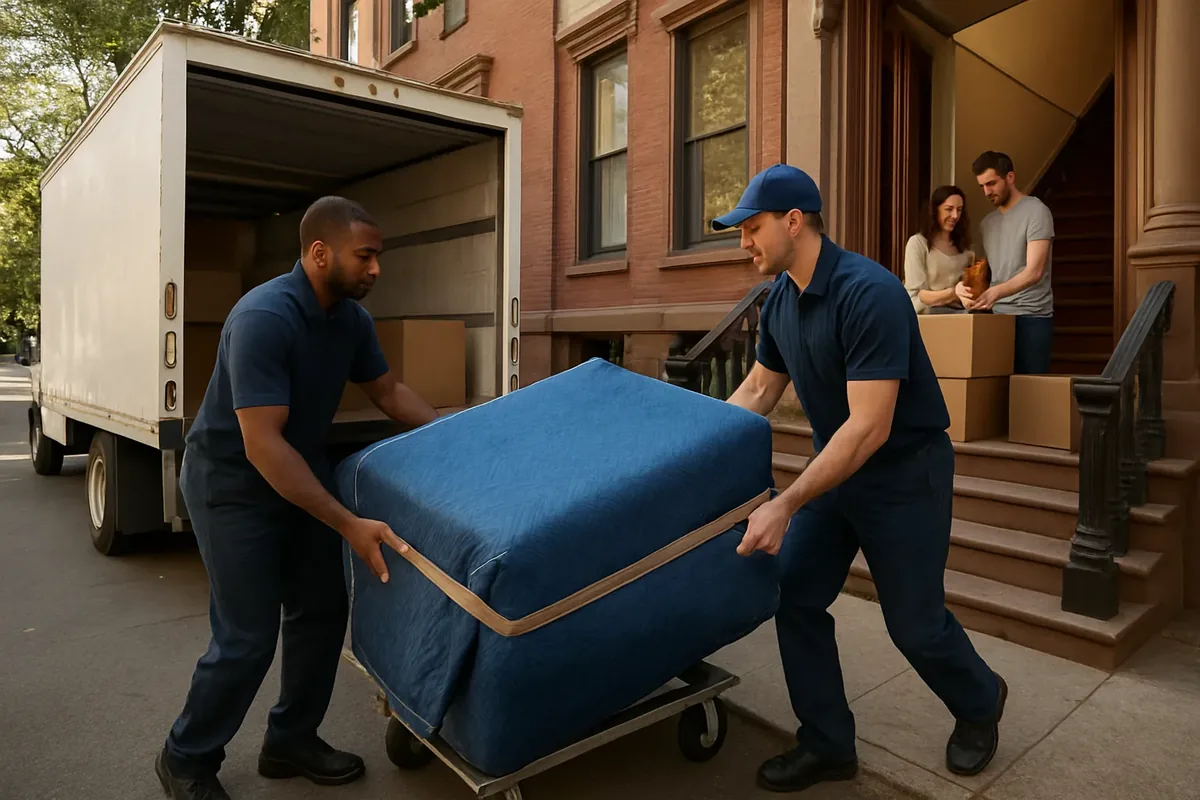
Local US apartment moves with licensed full-service crews average $640 to $1,530 for studios and 1-bedroom units and $1,270 to $3,572 for 2- and 3-bedroom apartments when self-packed, while DIY rental trucks run $155 to $507. This pillar guide decodes hourly crew math, travel fees, access surcharges, FMCSA estimate rules, and packing material ratios across every moving scenario.
apartment moving cost guides
Standard Mover Loading Speed: 100–125 Cubic Feet Per Crew Hour
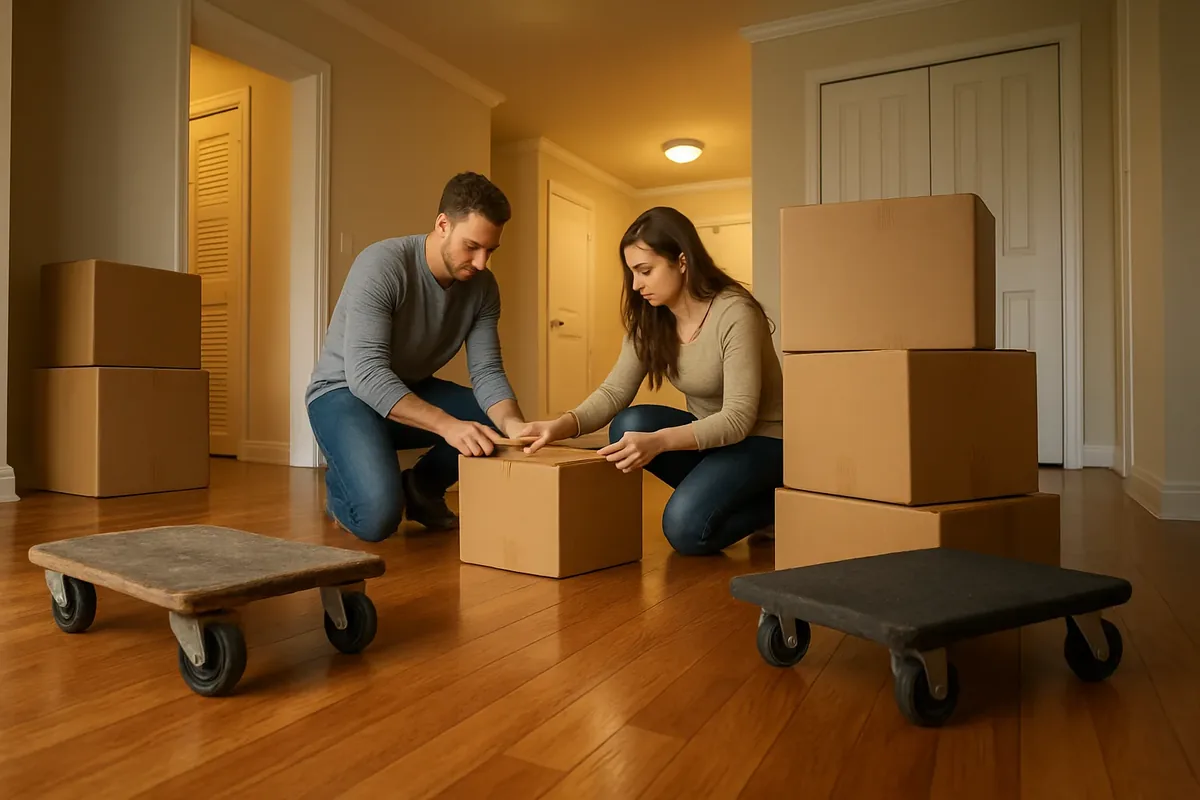
Estimating how long an apartment move takes starts with one metric: standard mover loading speed averages 100 to 125 cubic feet per crew hour under ground-floor or reserved freight-elevator conditions. Knowing how stair flights, shared passenger elevators, and box stacking alter that pace protects you from hourly labor surprises.
apartment moving cost guides
Why Unloading Your New Apartment Takes 30% Less Time Than Loading
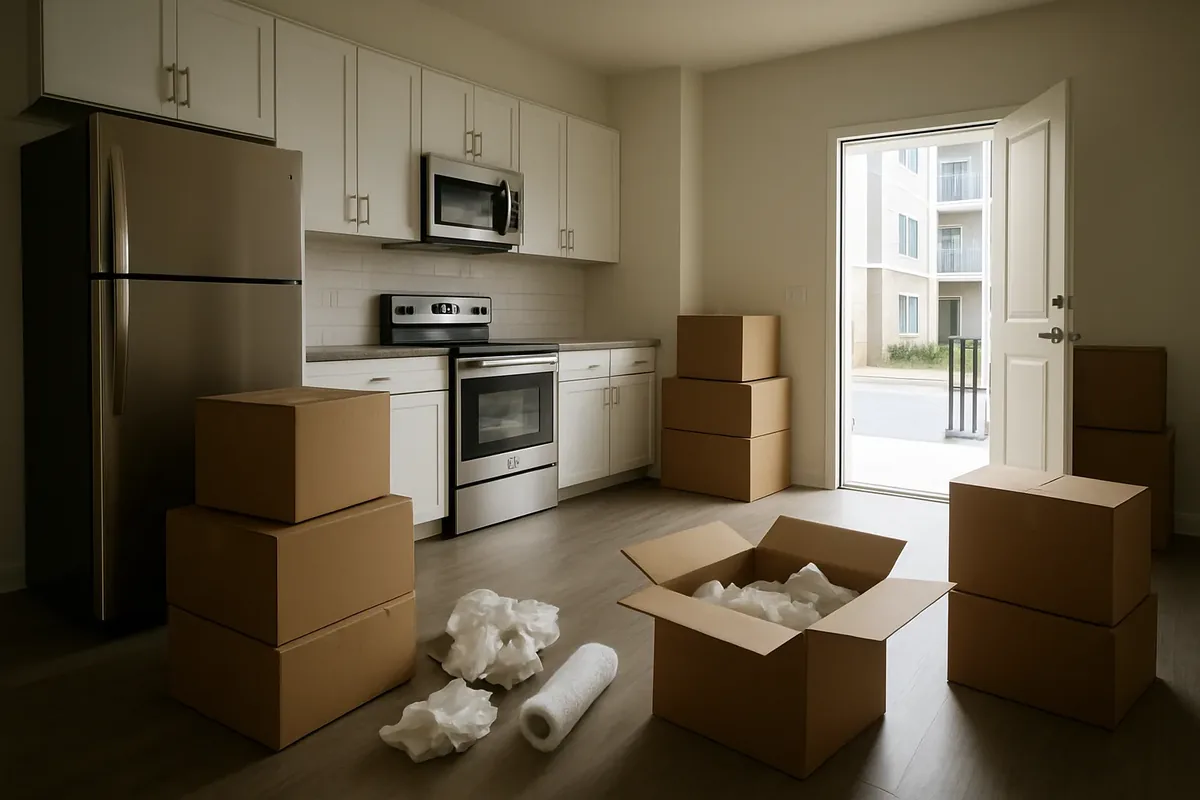
Most renters assume loading and unloading split moving day 50/50, yet unloading time runs roughly 30 percent faster than loading on standard US apartment moves. Understanding that 1.0 : 0.70 ratio helps you schedule tight building elevator windows, catch padded hourly quotes, and budget hybrid unloading labor accurately.
apartment moving cost guides
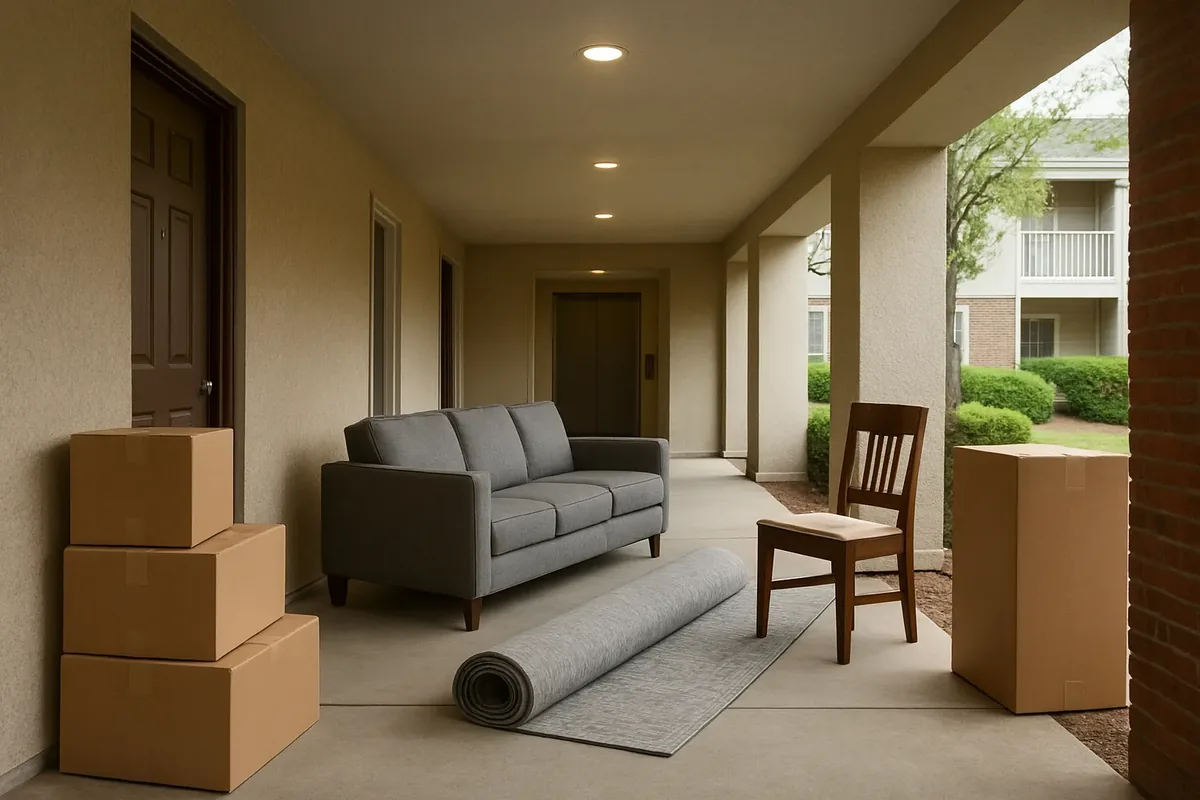
Laying Area Rugs & Assembling Beds Before Unloading Boxes
Unloading your new apartment in the wrong order forces movers to lift heavy king beds, dressers, and sectionals twice—adding 25 to 55 minutes of avoidable hourly billing. Sequencing area rugs, bed assembly, and large case goods before box stacks hit the floor saves up to $160 and protects hardwood finishes.