
In this guide
- Why 100–125 Cubic Feet Per Crew Hour Is the Core Apartment Moving Metric
- Loading Speed, Crew Cost & DIY Truck Benchmarks by Apartment Size
- What Slows Loading Speed Below 75 Cubic Feet Per Hour?
- DIY Rental Truck Loading Speed vs. Hiring 2-Hour Loading Helpers
- Furniture Blankets That Keep Loading Fast Without Scratches
- 6 Ways to Push Loading Speed Toward 125+ Cubic Feet Per Hour
Why 100–125 Cubic Feet Per Crew Hour Is the Core Apartment Moving Metric
Hourly moving estimates look mysterious until you convert your apartment inventory into cubic feet and divide by real-world crew throughput. Under clean loading conditions—ground-floor exit or a reserved freight elevator within 50 feet of the truck tailgate—a coordinated 2-person crew moves roughly 100 to 115 cubic feet per hour, while 3-mover and 4-mover crews hit 120 to 165 cubic feet per hour by keeping one dedicated loader stacking tiers inside the truck box.
Notice how national apartment volume benchmarks map directly onto those throughput windows. A standard studio apartment (350–550 sq ft) holds roughly 250 cu ft and 2,000 lbs; a 1-bedroom apartment (600–850 sq ft) averages 420 cu ft and 3,200 lbs; a 2-bedroom (900–1,250 sq ft) reaches 680 cu ft and 5,400 lbs; a 3-bedroom (1,300–1,800 sq ft) expands to 980 cu ft and 7,800 lbs; and a 4-bedroom or large loft (1,900–2,600 sq ft) totals 1,280 cu ft and 10,200 lbs.
Because a full-service move bills both loading and unloading plus driving and a standard 1.0-hour portal-to-portal travel fee (1.25 hours for 26-ft 4-bedroom dispatches), loading speed typically accounts for 48% to 55% of total on-site labor hours. When a crew stalls at 65 cubic feet per hour because of loose closet clutter, unboxed kitchenware, or narrow walk-up turns, your $130–$315/hr meter climbs rapidly.
Loading Speed, Crew Cost & DIY Truck Benchmarks by Apartment Size
The matrix below translates standard loading throughput into exact labor, transportation, and packing material costs for a local 12-mile in-town move under clean access. Compare full-service crews against renting a truck yourself (with $3.55/gal fuel at 10 mpg) so you know where every dollar goes.
| Apartment Size & Volume | Crew & Loading Speed | Total Billed Hours (Load + Unload + Travel) | Mover Labor + Transport Fee | DIY Rental Truck + Fuel (12 mi) | Materials Cost (DIY vs. Mover-Packed) |
|---|---|---|---|---|---|
| Studio (250 cu ft / 2,000 lbs) | 2 Movers @ 100–115 cu ft/hr ($125–$165/hr) | 4.0 – 5.0 hrs (incl. 1.0 hr travel) | $500 – $825 labor + $75–$145 truck | $41 – $55 (10-ft truck + local mi + fuel) | $65 – $110 DIY / $180 – $320 Mover |
| 1-Bedroom (420 cu ft / 3,200 lbs) | 2 Movers @ 105–125 cu ft/hr ($130–$175/hr) | 5.0 – 7.0 hrs (incl. 1.0 hr travel) | $650 – $1,225 labor + $75–$145 truck | $52 – $66 (12–15 ft truck + mi + fuel) | $95 – $160 DIY / $290 – $520 Mover |
| 2-Bedroom (680 cu ft / 5,400 lbs) | 3 Movers @ 125–150 cu ft/hr ($175–$235/hr) | 6.0 – 8.5 hrs (incl. 1.0 hr travel) | $1,050 – $1,998 labor + $75–$145 truck | $63 – $83 (15–20 ft truck + mi + fuel) | $145 – $235 DIY / $460 – $820 Mover |
| 3-Bedroom (980 cu ft / 7,800 lbs) | 4 Movers @ 155–190 cu ft/hr ($220–$295/hr) | 7.5 – 10.5 hrs (incl. 1.0 hr travel) | $1,650 – $3,098 labor + $75–$145 truck | $74 – $99 (20–26 ft truck + mi + fuel) | $205 – $330 DIY / $680 – $1,180 Mover |
| 4-Bedroom Loft (1,280 cu ft / 10,200 lbs) | 4 Movers @ 165–205 cu ft/hr ($235–$315/hr) | 9.75 – 13.25 hrs (incl. 1.25 hr travel) | $2,291 – $4,174 labor + $75–$145 truck | $85 – $115 (26-ft truck + mi + fuel) | $265 – $420 DIY / $920 – $1,560 Mover |
Amazon US Apartment Moving Supplies
Recommended Moving Boxes, Blankets & Bags for This Move
Apartment moving supplies matched to this guide (Amazon.com affiliate ID: apartmentmovingcost-20).
Sure-Max 12 Pro Moving & Packing Blankets 80" x 72" (85 lb/dz Heavy-Duty Quilted)
Professional zig-zag double-stitched padded polyester/cotton blankets protecting dressers and door frames
Simpli-Magic 72" x 80" Padded Moving Blankets (12-Pack, 65 lb/dz Mid-Weight)
Versatile mid-weight quilted furniture pads for wrapping dining chairs, bookshelves, and elevator walls
72" x 80" Camo & Blue Quilted All-Purpose Furniture Moving Blankets (6-Pack)
Durable zig-zag quilted pads preventing metal truck rail abrasion during bumpy interstate drives
As an Amazon Associate I earn from qualifying purchases. Always verify live stock and pack sizing directly on Amazon.com.
What Slows Loading Speed Below 75 Cubic Feet Per Hour?
Even an experienced 3-mover crew drops from 140 cu ft/hr down to 70–85 cu ft/hr when apartment layout friction breaks continuous dolly cycles. Every bottleneck below shows up on your invoice either as extended hourly time or an explicit access surcharge:
- Walk-Up Stair Flights: A 2nd-floor walk-up (1 flight of 12–16 steps) adds 0.5 to 1.0 extra crew hours or a $55–$95 surcharge; a 3rd-floor walk-up (2 flights) adds 1.0 to 1.75 hours ($110–$190); and a 4th- or 5th-floor walk-up (3–4 flights) adds 1.75 to 3.0 hours ($185–$340) as movers shift from 4-box dolly stacks to single-item hand carries.
- Shared Passenger Elevators Without Reservations: Sharing one small cab with residents slows loading speed by 25% to 40%, adding 1.0 to 1.75 hours ($85–$175 surcharge) compared to a reserved freight elevator (which adds just 0.5–1.0 hours or $45–$95 for pad hanging and COI check-in).
- Long Carries Over 75 Feet: When curb rules or tight courtyards force the truck to park more than 75 feet from the apartment door, walking distance doubles per round-trip and carriers commonly apply a $65–$135 long-carry fee.
- Heavy Furniture Density & Unprepped Beds: Solid-wood bookcases, marble dining tables, and dense kitchenware push a standard load up by a 1.22x volume/time multiplier (turning a 420 cu ft 1-bedroom into 512 effective cu ft), while leaving king beds or sectional sofas assembled adds $60–$130 in crew tool time.
- Loose Items & Crushed Cheap Cartons: Open shopping bags, hanging lamps, and buckling single-wall retail boxes cannot be stacked four-high on a 2-wheel hand truck, forcing extra walking trips and careful hand-placement inside the truck wall.
DIY Rental Truck Loading Speed vs. Hiring 2-Hour Loading Helpers
First-time DIY renters almost always underestimate how slowly two friends load a rental truck compared to trained movers. Without shoulder straps, proper dolly balance, or brick-wall tiering skills, an unassisted amateur pair typically loads just 45 to 65 cubic feet per hour—meaning a 420 cu ft 1-bedroom takes 6.5 to 9.0 exhausting hours to load alone, and a 680 cu ft 2-bedroom easily stretches across two days.
That gap explains why hybrid moves are so effective on 1-bedroom and 2-bedroom relocations. Renting a 12–15 ft or 15–20 ft truck costs $30–$55/day plus $1.09–$1.59/mi locally (or $0.88–$1.42/mi one-way on intrastate 160-mile or interstate 600-mile trips) plus $3.55/gal fuel at 10 mpg, while hiring 2-hour professional loading helpers runs $170 to $290. Having two pros knock out the heavy 250–300 cu ft of dressers, mattresses, sofas, and stacked cartons in two crisp hours saves your back and keeps a tight 1-day rental on schedule.
Furniture Blankets That Keep Loading Fast Without Scratches
Whether you book a labor-only helper crew for your rental truck or wrap furniture yourself ahead of full-service movers, having dedicated padding staged beside your dressers prevents metal truck rails and narrow elevator doors from gouging wood finishes during high-speed loading:
- Sure-Max 12 Pro Moving & Packing Blankets 80" x 72" (85 lb/dz Heavy-Duty Quilted): Built at an 85 lb/doz pro weight across a full 12-blanket pack (80 x 72 in per pad) with zig-zag double-stitched batting, this set matches the exact 12-blanket kit benchmark for 1-bedroom through 3-bedroom furniture wrapping.
- Simpli-Magic 72" x 80" Padded Moving Blankets (12-Pack, 65 lb/dz Mid-Weight): Offering a 65 lb/doz mid-weight quilted cotton/polyester profile in an 80 x 72 in 12-pack, these versatile pads handle dining chairs, coffee tables, bookshelves, and temporary elevator-wall coverage cleanly.
- 72" x 80" Camo & Blue Quilted All-Purpose Furniture Moving Blankets (6-Pack): Sized at 6 blankets (80 x 72 in, 65 lb/doz quilted), this compact half-dozen pack aligns directly with a studio apartment's 6-blanket requirement for protecting bed frames and desks inside a 10-ft box truck.
6 Ways to Push Loading Speed Toward 125+ Cubic Feet Per Hour
- Finish Every Box Before Crew Arrival. Have 100% of small boxes (12–32), medium boxes (15–38), and large boxes (8–22) taped shut with 2-inch acrylic tape before the truck pulls up so movers immediately roll 4-stack columns.
- Stage Boxes Within 12 Feet of the Front Entry. Group heavy 32-ECT book boxes at the bottom of neat foyer stacks so dolly runners trim 25 to 35 feet off every interior apartment walk.
- Disassemble Bed Frames and Bag Hardware. Unbolt queen or king bed rails the night before and tape labeled 4-mil hardware zip bags directly to the headboard cleat to avoid a $60–$130 disassembly delay.
- Reserve the Freight Elevator and Submit Your COI Early. Lock in a continuous 3-to-4-hour service elevator slot and file your mover's Certificate of Insurance 5 business days ahead so building security never holds the crew at the dock.
- Block Curb Space Directly Outside the Main Lobby. Hold 30 to 45 feet of curb frontage (via city permit or a parked car you move on arrival) so a 15-ft to 26-ft truck parks within 50 feet and skips the $65–$135 long-carry fee.
- Seal Mattresses in 5-Mil Poly Bags Before Loading. Sliding queen or king mattresses into fitted plastic bags keeps them clean on dirty truck floors and gives crews slick handles to move them rapidly down stairwells.
Ready to convert your apartment's square footage and stair access into exact crew hours and truck costs? Plug your bedroom count, distance, and floor level into our Apartment Moving Cost Calculator or compare full-service crews against a DIY truck in the Movers vs. DIY Rental Truck Comparator.
Open Calculator →Frequently Asked Questions
How long does it take movers to load a 1-bedroom apartment of 420 cubic feet?+
At the standard 105–125 cubic feet per hour benchmark for a 2-mover crew ($130–$175/hr), pure loading for a standard 420 cu ft (3,200 lb) 1-bedroom apartment takes 3.25 to 4.0 hours from a ground-floor unit or reserved freight elevator. Adding 1.5–2.25 hours to unload at the destination plus the mandatory 1.0-hour travel fee puts total billed move time at 5.5 to 7.0 hours ($715–$1,225 labor).
Does California Double Drive Time (DDT) change how loading speed affects my bill?+
Yes. In California intrastate local moves regulated by the BHGS, carriers cannot charge a flat 1.0-hour travel fee; instead, under Double Drive Time (DDT), they double the actual driving time between your origin apartment and destination apartment at the full hourly rate ($130–$315/hr), while loading and unloading time itself remains billed minute-for-minute based on your cubic-foot crew speed.
Can movers refuse to honor a binding estimate if my loading speed is slowed by unboxed clutter?+
Under federal FMCSA regulations for interstate moves, a binding estimate guarantees your price only for the inventory and services listed on your order for service. If you leave loose closets unpacked or add extra cubic footage on moving day, the carrier can issue a revised written estimate before loading or charge extra for professional packing ($180–$520 for studios and 1-bedrooms) and waiting time.
What box crush rating and blanket weight stop loading slowdowns?+
Use standard 32-ECT corrugated cartons for clothes, linens, and normal pantry goods, and upgrade fragile dish packs or heavy book boxes to 44-ECT or 48-ECT double-wall cartons so tall hand-truck stacks never buckle. Pair those cartons with 85 lb/doz quilted moving blankets and 5-mil mattress bags so crews roll directly onto the truck without stopping to re-stack collapsing piles.
Why does a 3rd-floor walk-up drop cubic-feet-per-hour speed so sharply?+
A two-flight walk-up forces crews off wheeled 4-wheel dollies onto manual shoulder and strap carries for roughly 60% of your household volume, cutting throughput from ~115 cu ft/hr down to ~70–85 cu ft/hr. That physics penalty is why 3rd-floor walk-ups add 1.0 to 1.75 crew hours or a $110–$190 stair surcharge across local quotes.
Interactive US Moving Tools
Compare Full-Service Movers vs. DIY Rental Truck in 30 seconds
Related Guides
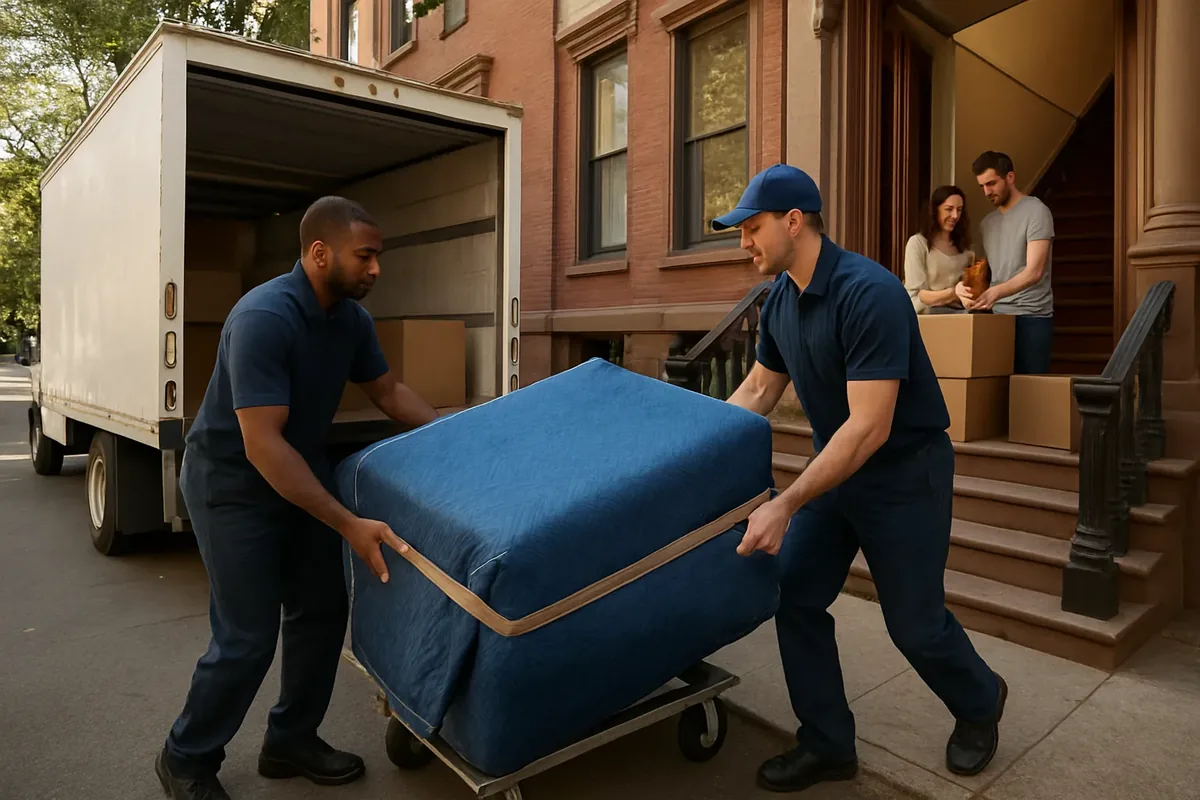
apartment moving cost guides
Apartment Moving Cost Guides: Complete US Hourly Rates, Flat-Rate Quotes & Benchmarks
Local US apartment moves with licensed full-service crews average $640 to $1,530 for studios and 1-bedroom units and $1,270 to $3,572 for 2- and 3-bedroom apartments when self-packed, while DIY rental trucks run $155 to $507. This pillar guide decodes hourly crew math, travel fees, access surcharges, FMCSA estimate rules, and packing material ratios across every moving scenario.
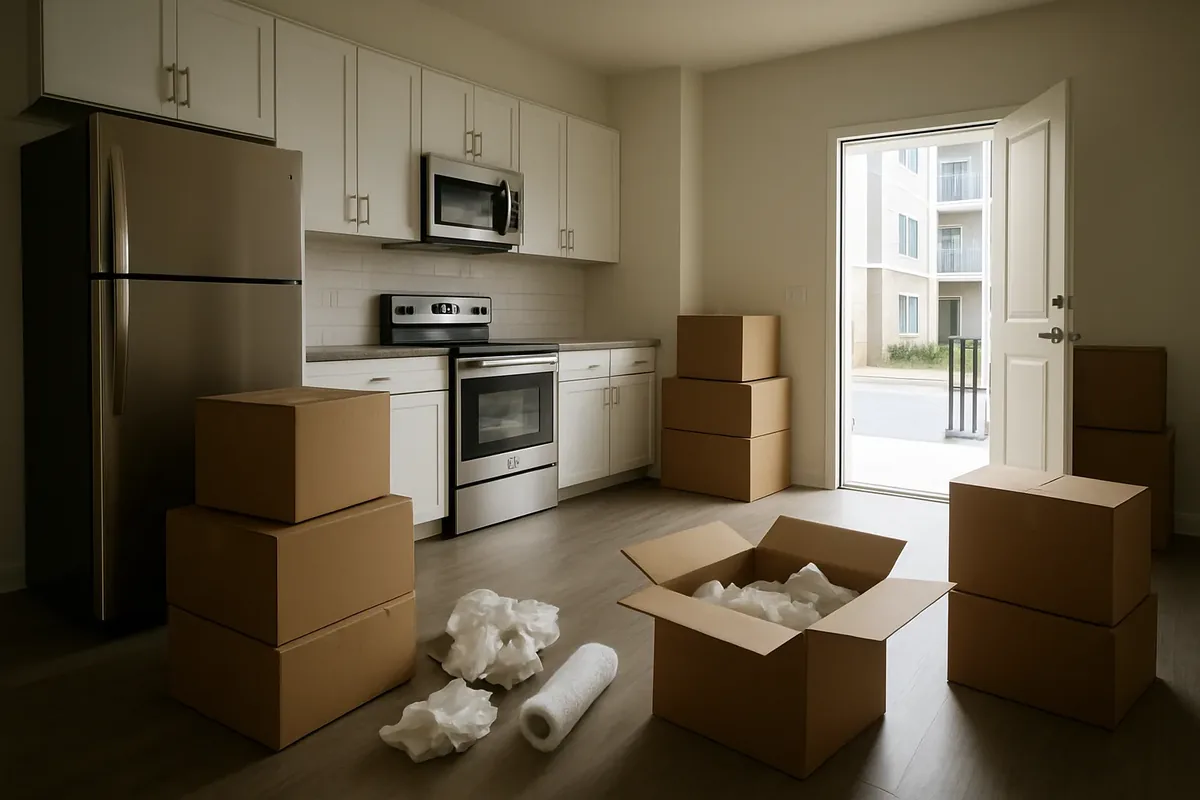
apartment moving cost guides
Why Unloading Your New Apartment Takes 30% Less Time Than Loading
Most renters assume loading and unloading split moving day 50/50, yet unloading time runs roughly 30 percent faster than loading on standard US apartment moves. Understanding that 1.0 : 0.70 ratio helps you schedule tight building elevator windows, catch padded hourly quotes, and budget hybrid unloading labor accurately.
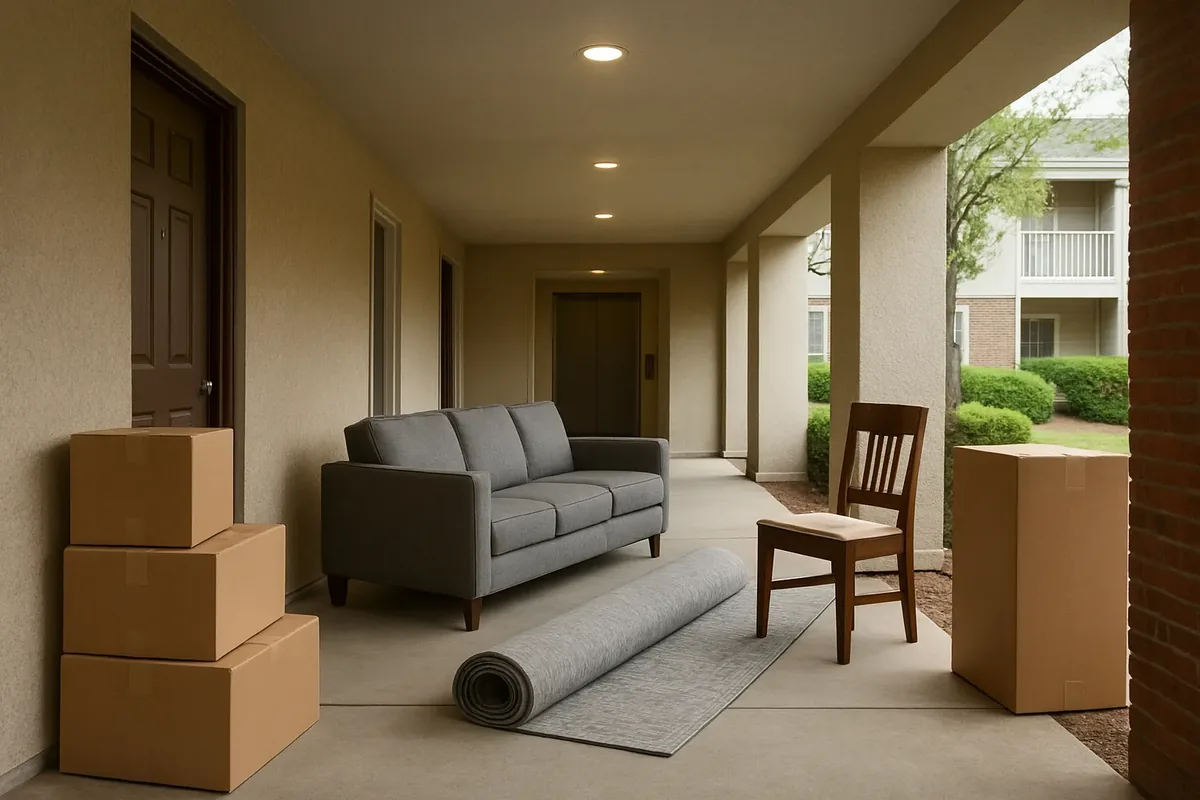
apartment moving cost guides
Laying Area Rugs & Assembling Beds Before Unloading Boxes
Unloading your new apartment in the wrong order forces movers to lift heavy king beds, dressers, and sectionals twice—adding 25 to 55 minutes of avoidable hourly billing. Sequencing area rugs, bed assembly, and large case goods before box stacks hit the floor saves up to $160 and protects hardwood finishes.
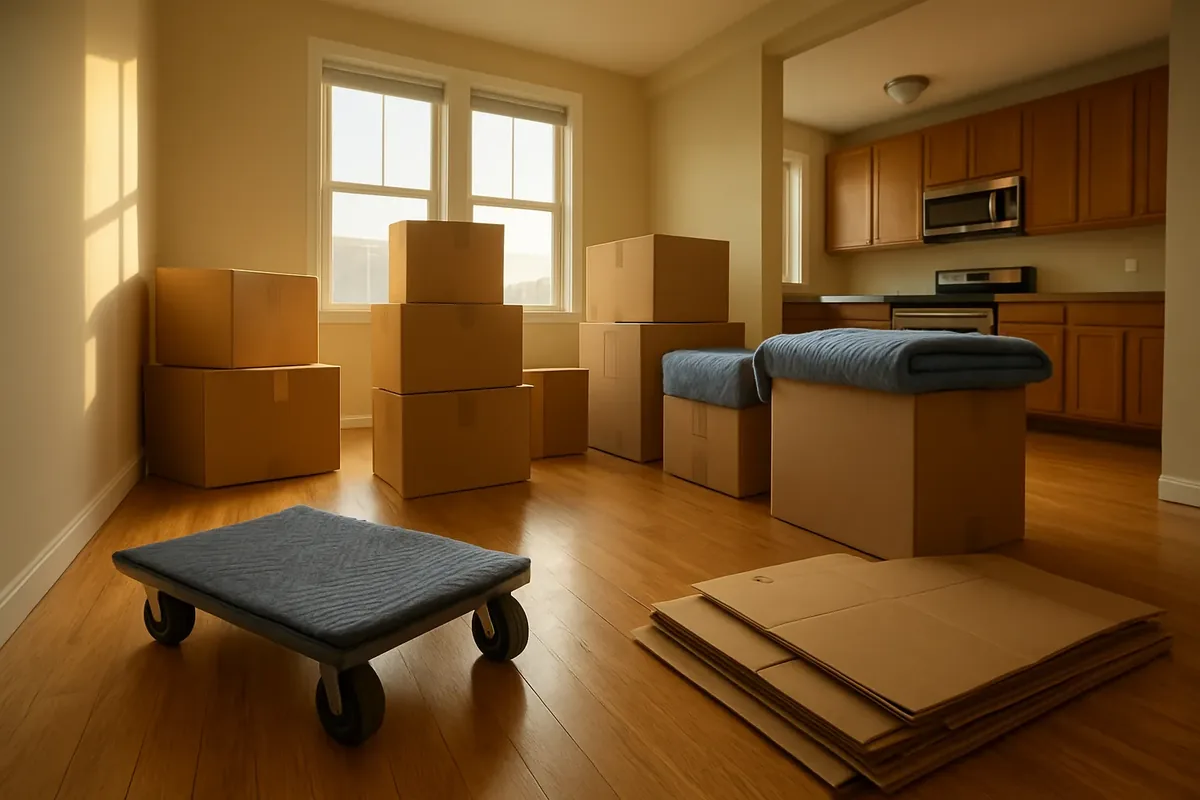
apartment moving cost guides
Mover Debris Pickup Fees vs. Giving Away Flattened Boxes Free
Once unloading wraps up, a 1-bedroom to 3-bedroom apartment generates 35 to 75 empty corrugated boxes plus piles of crushed packing paper. Paying a mover debris box pickup fee costs $85 to $275+ depending on crew return minimums, whereas flattening and listing clean cartons locally eliminates that bill entirely—and avoids apartment dumpster fines.