In this guide
- Why Gated Apartment Keypads and Dead-End Courtyards Trap 20-Ft and 26-Ft Moving Trucks
- Shuttle Fees vs. Long-Carry Surcharges: What Movers Actually Bill at Blocked Gates
- How Keypad Entry Systems and Resident Gate Rules Slow Hourly Clocks
- Smart Staging & Packing Gear for Long Courtyard Carries and Car Shuttles
- 5-Step Gated Apartment Clearance Audit 7 Days Before Moving Day
Why Gated Apartment Keypads and Dead-End Courtyards Trap 20-Ft and 26-Ft Moving Trucks
Gated garden-style and mid-rise apartment complexes are designed around passenger sedans, not commercial 26-foot straight trucks. Narrow resident-and-guest split driveways often place a concrete keypad island right beside a swinging wrought-iron arm, cap visitor entries with decorative stucco archways or fire-lane height bars set at 11'0" to 11'8", and dead-end at building courtyards with 25- to 32-foot curb-to-curb widths lined by covered resident carports.
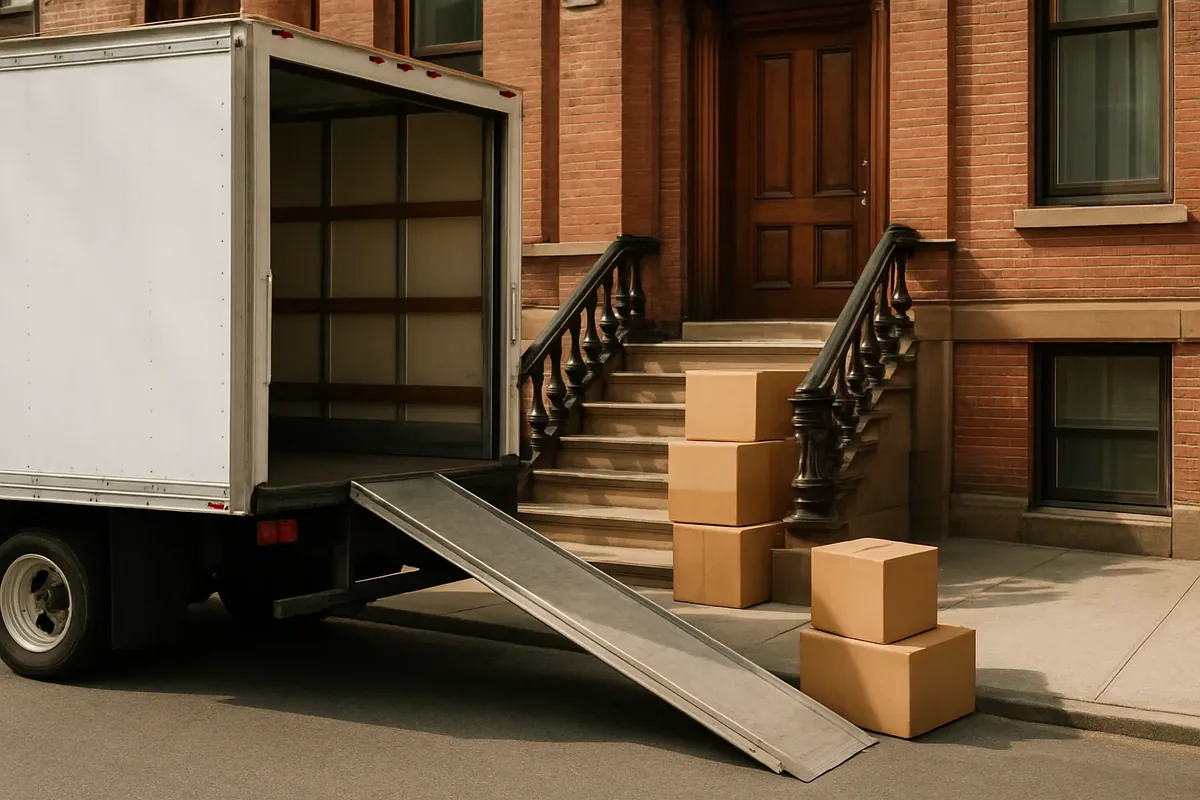
That geometry becomes expensive fast on moving day. Standard 15-ft rental trucks already clear 10'6" to 11'0" tall, while 20-ft and 26-ft box trucks stand 11'6" to 12'6" tall and require 45 to 55 feet of open pavement to execute a three-point turnaround without clipping carport fascia boards or parked bumpers. If your moving crew arrives in a 26-ft truck and stops at the security gate, you immediately face either a lengthy reverse-out maneuver plus outside-curb parking or a last-minute truck-to-truck shuttle dispatch.
| Truck Size & Capacity | Height & Width Clearance | Courtyard U-Turn Width Needed | DIY Daily + Local Per-Mile Cost | Full-Service Shuttle / Long-Carry Exposure |
|---|---|---|---|---|
| 10-ft Box Truck / Cargo Van (250 cu ft — Studio) | 8'6"–9'6" tall x 7'0" wide | 34–38 ft (clears most drive lanes) | $20–$30/day + $0.99–$1.39/mi | Low risk; fits beneath most 10'+ archways |
| 12–15 ft Box Truck (420 cu ft — 1-Bedroom) | 10'6"–11'0" tall x 7'8" wide | 38–42 ft (tight in carport alleys) | $30–$40/day + $1.09–$1.49/mi | $65–$135 long carry if forced outside gate |
| 15–20 ft Moving Truck (680 cu ft — 2-Bedroom) | 11'4"–12'0" tall x 8'0" wide | 44–48 ft (blocks dead-end spurs) | $40–$55/day + $1.19–$1.59/mi | $150–$320 shuttle or +0.75–1.5 hrs backing/walk |
| 20–26 ft Box Truck (980–1,280 cu ft — 3BR+) | 12'0"–12'6" tall x 8'2" wide | 50–55 ft (cannot U-turn in courts) | $50–$85/day + $1.29–$1.79/mi | $225–$450 shuttle truck or $135–$300 long carry |
Shuttle Fees vs. Long-Carry Surcharges: What Movers Actually Bill at Blocked Gates
When a commercial carrier cannot drive up to your apartment stairwell, your moving bill increases through one of two mechanisms—and sometimes both. First, if your unit sits 150 to 400 feet beyond the outside leasing curb or main keypad gate, movers apply a Long Carry Add-On ($65 to $135 standard beyond 75 feet, often stepping up per extra 50- to 75-foot increment) alongside extra hourly labor because every dolly trip takes three to four times longer. On a 2-bedroom crew running $175 to $235/hr, an extra 1.25 hours of 300-foot sidewalk hauling adds $220 to $295 in labor alone.
Second, if your complex forbids walking loads past the main security drive or your move sits 600+ feet inside a sprawling courtyard network, long-distance and large local carriers deploy a Shuttle Service ($150 to $450 flat or hourly transfer fee). Crews park the 26-ft truck or interstate semi on a wide perimeter road, load items into a nimble cargo van or pickup-box shuttle, drive inside the gate, and unload twice—protecting furniture from marathon outdoor carry damage while adding clear budget line items.
Amazon US Apartment Moving Supplies
Recommended Moving Boxes, Blankets & Bags for This Move
Apartment moving supplies matched to this guide (Amazon.com affiliate ID: apartmentmovingcost-20).
TICONN Extra-Large Heavy-Duty Moving Bags with Reinforced Wrap Handles (8-Pack)
Foldable 95-liter zippered apartment moving bags with clear tag pockets for closets and linens
Scotch Box Lock Extreme Grip Moving & Shipping Tape (6-Roll Pack)
Advanced instant-stick adhesive formulated for 100% recycled kraft and textured double-wall boxes
BOMEI PACK Commercial 2.7-Mil Clear Acrylic Moving Tape 65 yd (12-Roll Case + Gun)
780 total yards of anti-splitting acrylic box-sealing tape bundled with a 2-inch handheld dispenser
As an Amazon Associate I earn from qualifying purchases. Always verify live stock and pack sizing directly on Amazon.com.
How Keypad Entry Systems and Resident Gate Rules Slow Hourly Clocks
Even when vertical clearance looks generous, electronic gate infrastructure creates subtle bottlenecks that quietly drain a $130 to $295/hr crew budget. Keypads positioned solely at passenger-sedan height force commercial truck drivers to climb down from high cab steps, walk behind the cab, dial a leasing call box that times out after 20 seconds, and race back to the steering wheel before an automatic barrier arm drops onto the truck roof.
Furthermore, many suburban HOA and corporate apartment managers restrict moving trucks to weekday 9:00 AM–5:00 PM gate windows, block exit-only spike strips, or demand a $1M–$2M Certificate of Insurance (COI) on file before maintenance will latch open the wide fire-lane service gate. Calling leasing 5 to 7 days early to reserve the pinned-open maintenance gate saves 20 to 40 minutes of dead gate-fiddling time ($45–$160 saved).
Smart Staging & Packing Gear for Long Courtyard Carries and Car Shuttles
Whenever gate limits force your moving truck to park at the outer leasing curb—or when you choose two fast 15-ft truck runs or personal-SUV shuttle trips instead of squeezing one giant 26-ft rig through a narrow archway—your boxes and bags must survive tighter dolly stacks and multi-handling transfers without splitting seams:
- TICONN Extra-Large Heavy-Duty Moving Bags with Reinforced Wrap Handles (8-Pack): These 95-liter zippered totes feature 65-lb load-rated wrap webbing handles and transparent tag sleeves, letting you ferry clothing, pillows, and pantry goods rapidly in personal car trunks or stacked flat across 4-wheel courtyard dollies.
- Scotch Box Lock Extreme Grip Moving & Shipping Tape (6-Roll Pack): High-tack 3.1-mil instant-stick adhesive formulated for recycled corrugated boxes, holding bottom seams rigid during bumpy speed-bump runs across apartment drives.
- BOMEI PACK Commercial 2.7-Mil Clear Acrylic Moving Tape 65 yd (12-Roll Case + Gun): Delivers 780 total yards of anti-splitting acrylic tape plus an ergonomic 2-inch handheld dispenser gun so 2-bedroom and 3-bedroom households can double-seal every carton quickly for multi-stage courtyard staging.
5-Step Gated Apartment Clearance Audit 7 Days Before Moving Day
- Measure Gate Height, Keypad Width & Low Tree Limbs Physically. Walk the entry lane with a tape measure or check posted clearance plaques on entry archways, hanging security cameras, fire-lane signs, and carport eaves along the path to your building.
- Request the Wide Fire-Lane Gate & Temporary Vendor Code. Ask leasing management for a dedicated 4-digit moving vendor code or permission to latch open the wide emergency exit gate, and submit your mover's COI document if required.
- Verify Turning Radius or Straight-Line Backing Exit Before Entry. Walk your courtyard loop to confirm whether a 20-ft or 26-ft truck can loop cleanly out—if it ends in a tight hammerhead cul-de-sac, plan to back the truck in slowly with a spotter BEFORE loading.
- Pre-Stage Ground-Floor Boxes Near the Nearest Visitor Parking Bay. Move light bags and smaller 32-ECT cartons down to the covered breezeway or ground landing early, cutting long-carry walking distance by 30% to 50%.
- Send Annotated Satellite Screenshots to Your Moving Coordinator. Email your dispatcher a marked satellite map showing the main entry gate, visitor overflow bay, speed bumps, and exact building door so the driver brings the right truck length from the start.
Worried about gated community clearance, long-carry surcharges, or truck sizing? Run your exact apartment size, access obstacles, and mileage in our Apartment Moving Cost Calculator or test smaller vs. larger trucks in our Movers vs. DIY Rental Truck Comparator.
Open Calculator →Frequently Asked Questions
What is the minimum vertical height clearance a standard full-service moving truck needs to enter a gated apartment complex?+
Small 10-ft box vans need 9'6" to 10'0", standard 15-ft local trucks need at least 11'6" of safe margin, and 20-ft to 26-ft commercial moving trucks require 12'6" to 13'6" of vertical clearance once you account for sloped driveway aprons and swinging gate sensors.
How do movers decide between charging a Long Carry Fee ($65–$135) vs. a Shuttle Fee ($150–$450)?+
Movers typically charge a standard Long Carry Fee when the walking distance from the parked truck tailgate to your apartment entrance exceeds 75 feet (up to roughly 200–250 feet). Once carry distances stretch beyond 250–300 feet, cross busy traffic lanes, or involve an interstate tractor-trailer locked out by gates, carriers require a smaller Shuttle Truck ($150–$450).
Does my mover's 1-hour travel fee or California Double Drive Time cover gate wait delays?+
No—the flat 1.0-hour travel fee covers driving between the moving company warehouse and your apartments, while California's mandatory Double Drive Time (DDT) doubles point-to-point transit time between your origin and destination addresses. Minutes spent waiting at an uncooperative keypad or backing slowly out of a dead-end courtyard bill on your normal hourly load clock.
Can a binding FMCSA estimate change if a gated apartment complex blocks my interstate moving truck?+
Yes. Under federal FMCSA household goods rules, even a Binding Estimate allows the carrier to bill legitimate 'impracticable operations' or unforeseen destination accessorial charges (such as an unquoted shuttle truck or long carry) if you did not disclose gated height/width restrictions during the pre-move visual survey.
Should I protect furniture with 85-lb quilted blankets and 5-mil mattress bags if movers must shuttle loads?+
Absolutely. Every extra truck-to-shuttle transfer doubles abrasion and rain/dust exposure. Confirm your movers wrap upholstered pieces in heavy 85-lb/dozen quilted moving blankets secured with oversized elastic bands and seal mattresses inside puncture-resistant 5-mil plastic bags before leaving your apartment door.
Interactive US Moving Tools
Compare Full-Service Movers vs. DIY Rental Truck in 30 seconds
Related Guides

apartment moving cost guides
Apartment Moving Cost Guides: Complete US Hourly Rates, Flat-Rate Quotes & Benchmarks
Local US apartment moves with licensed full-service crews average $640 to $1,530 for studios and 1-bedroom units and $1,270 to $3,572 for 2- and 3-bedroom apartments when self-packed, while DIY rental trucks run $155 to $507. This pillar guide decodes hourly crew math, travel fees, access surcharges, FMCSA estimate rules, and packing material ratios across every moving scenario.

apartment moving cost guides
Rear Alley Loading vs. Front Curb Staging: Time, Permits & Labor Cost Comparison
Choosing between a tight rear service alley and a permitted front street curb can swing a city apartment move by 1.5 hours and $110 to $320 in labor or ticket penalties. Compare municipal moving permit costs, garbage-truck blockage risks, long-carry fees, and night-before quiet staging tactics across 1-bedroom and 2-bedroom walk-ups.
apartment moving cost guides
Why City Movers Charge a Truck Spotter Fee or Double-Parking Buffer ($45–$350)
In dense urban corridors where legal 40-foot curb spots rarely open up, moving companies either bill a dedicated truck spotter ($45–$75/hr extra) or pass through $115–$350 double-parking citations and towing risk. Understand spotter fee math, 2-mover vs. 3-mover crew economics, and how legal moving permits protect your budget.
apartment moving cost guides
Moving Across the Courtyard in the Same Apartment Complex: Real Cost Math (2026)
Understand why moving across the courtyard in the same apartment complex still triggers 2- to 3-hour mover minimums, dispatch travel fees, and long-carry labor drag. Compare labor-only crews, truck-assisted loop moves, and DIY dolly setups using real US pricing benchmarks.