
In this guide
- Rear Service Alley vs. Front Street Curb: The Core Urban Apartment Trade-Off
- Five Hidden Alley Obstacles That Burn $75–$220 in Crew Labor
- Box Truck Size Limits in Tight Urban Alleys vs. Permitted Curb Moves
- How Pre-Staging With Quiet Tape Cuts Alley-Blockage Time in Half
- 5-Step Curb vs. Alley Site Survey Before Booking Your Moving Truck
Rear Service Alley vs. Front Street Curb: The Core Urban Apartment Trade-Off
Renters moving in older brick walk-up cities—from Chicago three-flats and Boston brownstones to DC rowhouses, Seattle hillside mid-rises, and San Francisco Victorians—rarely get a dedicated apartment loading dock. Instead, you must choose between squeezing a 15-ft to 26-ft box truck into the narrow rear alley behind your building or reserving curbside street space directly out front.
On paper, the rear alley looks like an easy money-saver: there are no parking meters to hood, no $45 to $180 municipal No-Parking signs to post 72 hours ahead, and rear service stairwells frequently sit just 15 to 40 feet from the back fence. Yet once a 102-inch-wide commercial truck parks in a 12-foot alley lined by utility poles, recessed garage doors, and rolling dumpsters, a single delivery van or neighbor backing out of a garage forces your entire $130 to $235/hr crew to drop boxes, pull out to the street, circle the block, and re-park.
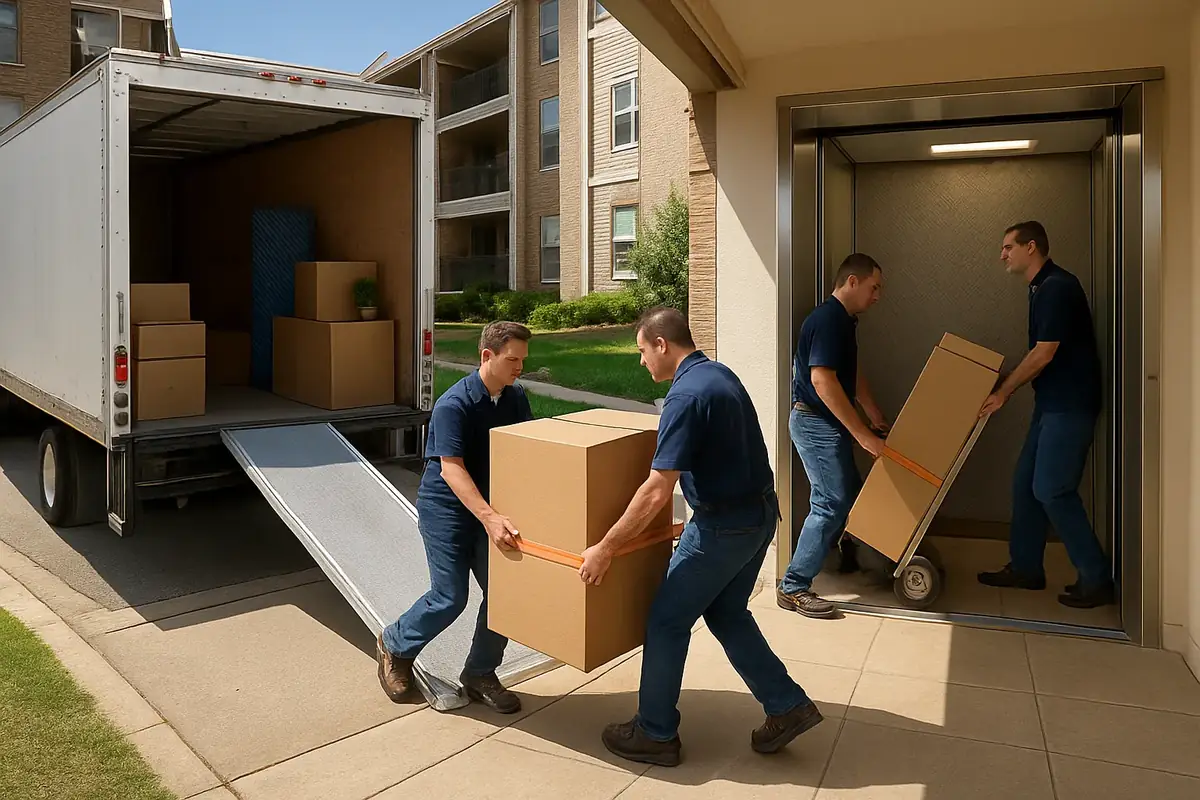
Front curb staging reverses that equation. You pay upfront for city signage ($45–$180 depending on meter rules and municipality) and occasionally add a 50- to 90-foot sidewalk carry, but wide flat concrete sidewalks let movers roll stacked 4-wheel dollies continuously without clearing cars every 20 minutes—shaving 45 to 90 minutes off a typical 2-bedroom load.
| Apartment Size & Metric | Rear Service Alley Loading | Permitted Front Street Curb Staging | Unpermitted Street / Curb Gamble |
|---|---|---|---|
| Permit / Ticket / Tow Exposure | $0 municipal permit ($0–$75 HOA alley notice) | $45–$180 city temporary No-Parking permit | $100–$350+ municipal ticket or $250+ tow risk |
| Carry Distance & Long-Carry Fee | 15–45 ft to rear door ($0 long-carry fee) | 40–85 ft across sidewalk ($0–$95 carry fee) | 80–200 ft distant spot ($65–$135 long carry) |
| 1-Bedroom Labor + Transport + DIY Kit (420 cu ft) | $890–$1,640 (incl. 0.5–0.75 hr alley yield delay) | $820–$1,530 + $45–$120 permit ($865–$1,650) | $985–$1,980 (extra walk time + ticket risk) |
| 2-Bedroom Labor + Transport + DIY Kit (680 cu ft) | $1,445–$2,730 (incl. 0.75–1.25 hr truck pull-outs) | $1,270–$2,378 + $60–$180 permit ($1,330–$2,558) | $1,520–$3,050 (long carry + spotter/citation) |
| DIY 15-ft Rental Truck Local Day Total | $145–$235 ($30–$40 base + mi + fuel + $95–$160 kit) | $190–$355 (includes $45–$120 city curb permit) | $245–$585+ (rental ticket + $25–$50 admin fee) |
Five Hidden Alley Obstacles That Burn $75–$220 in Crew Labor
Before defaulting to rear alley loading on move morning, physically walk the alley behind both your current and new apartments at the exact hour your truck is scheduled to arrive. Even a 20-foot alley stretch can stall a moving crew if any of these common urban bottlenecks appear:
- Commercial Trash & Recycling Pickup Windows: Municipal haulers and private dumpster trucks often run narrow alleys between 6:30 AM and 10:30 AM. A garbage truck trapped behind your moving van forces a mid-load stop and 20-minute exit loop ($55–$115 in crew downtime).
- Low Overhead Telecom & Power Drops: Many older residential alleys droop coaxial cable, fiber lines, and secondary electric drops down to 10'6" to 11'6"—snagging the top corner of a 12-foot 20-ft or 26-ft moving truck.
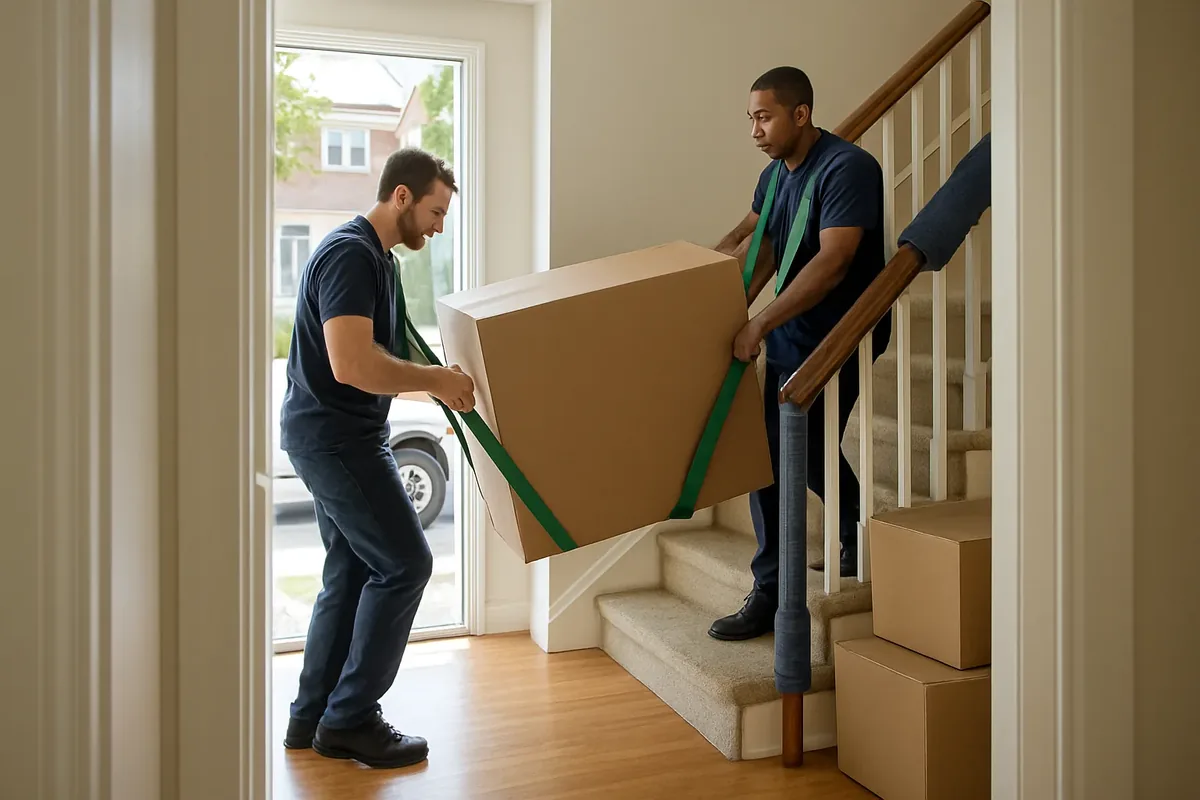
- Confined Rear Stairwell Turns: Historic back wooden porches often feature sharp 90-degree hairpin landings built 30 to 32 inches wide, forcing movers to hoist queen box springs over exterior railings or pivot heavy dressers out front anyway.
- Broken Brick, Standing Puddles & Dumpster Grease: Uneven cobblestones and slick food grease near restaurant-adjacent alleys jam small 4-wheel furniture dollies, tipping tall 3-box stacks and soaking lower corrugated flaps.
- Neighbor Garage Blocked-In Friction: Blocking three adjacent private garages for 3 hours invites angry honking, landlord complaints, and mid-load truck shuffling every time a commuter leaves for work.
Amazon US Apartment Moving Supplies
Recommended Moving Boxes, Blankets & Bags for This Move
Apartment moving supplies matched to this guide (Amazon.com affiliate ID: apartmentmovingcost-20).
Scotch Heavy Duty Shipping & Moving Packaging Tape 1.88" x 54.6 yd (6-Roll Pack)
3.0-mil solvent-free hot-melt adhesive tape engineered to lock 80-lb double-wall boxes with a single strip
Duck Max Strength Heavy-Duty Clear Packing Tape 1.88" x 54.6 yd (6-Pack)
3.1-mil thick tear-resistant BOPP film tape meeting US Postal and UPS commercial parcel strength standards
Duck EZ Start Frustration-Free Quiet Packaging Tape (6-Roll Pack)
Smooth whisper-quiet unrolling adhesive tape ideal for late-night apartment packing without loud screeching
As an Amazon Associate I earn from qualifying purchases. Always verify live stock and pack sizing directly on Amazon.com.
Box Truck Size Limits in Tight Urban Alleys vs. Permitted Curb Moves
Truck length directly dictates whether alley access works at all. For a studio (250 cu ft) or compact 1-bedroom apartment (420 cu ft), a nimble 10-ft cargo van or 12–15 ft box truck ($20–$40/day base + $0.99–$1.49/mi locally + $3.55/gallon fuel) can often tuck tight against a garage apron without blocking through-traffic—especially if you hire 2-hour DIY loading helpers ($170–$290) after pre-staging boxes indoors. Once household volume reaches a 2-bedroom (680 cu ft) or 3-bedroom apartment (980 cu ft) requiring a 20-ft or 26-ft truck ($50–$70/day base) and a 3- to 4-mover crew ($175–$295/hr), pulling a $45–$180 permitted front curb zone almost always beats grinding through tight alley turns.
How Pre-Staging With Quiet Tape Cuts Alley-Blockage Time in Half
Whether you load from a tight rear alley or a narrow 2-hour front curb permit window, speed at the truck ramp determines whether you dodge neighbor complaints and parking tickets. Packing every carton completely by 10:00 PM the night before—and staging stacked boxes inside your rear mudroom or front foyer—lets your movers load continuously at maximum cadence instead of waiting while tape guns screech and open drawers get sorted.
- Duck EZ Start Frustration-Free Quiet Packaging Tape (6-Roll Pack): Uses 2.6-mil quiet-release adhesive engineered to unroll smoothly without loud echoing snaps, letting apartment renters finish late-night box sealing at 11:00 PM without violating quiet-hours lease rules.
- Scotch Heavy Duty Shipping & Moving Packaging Tape 1.88" x 54.6 yd (6-Roll Pack): Delivers 3.0-mil solvent-free hot-melt adhesive locking heavy 80-lb book and cookware boxes cleanly in a single pass so tall dolly stacks survive bumpy alley thresholds.
- Duck Max Strength Heavy-Duty Clear Packing Tape 1.88" x 54.6 yd (6-Pack): Built with 3.1-mil thick tear-resistant BOPP film meeting US Postal and UPS commercial parcel strength standards for interstate or extended multi-stop truck transit.
5-Step Curb vs. Alley Site Survey Before Booking Your Moving Truck
- Compare Rear Stairwell Width vs. Front Lobby Doors. Measure doorway widths and tightest landing turns along both paths—if your sofa requires front-door exit anyway, staging out front avoids repositioning the truck mid-move.
- Check Municipal Curb Permit Pricing & Lead Time. Look up your city transportation department's temporary moving sign cost ($45–$180) vs. metered commercial loading rules at least 14 days ahead of lease end.
- Ask Building Neighbors About Alley Trash & Delivery Hours. Check dumpster lid stickers for private hauler pickup days (e.g., Tuesday/Friday 7:00 AM) and verify no commercial restaurant trucks share your alley wing.
- Pack & Label Every Carton the Night Before Using Quiet & Heavy-Duty Tape. Keep late-night assembly quiet with 2.6-mil EZ Start tape while reinforcing heavy bottom box seams with 3.0-mil hot-melt or 3.1-mil BOPP tape so no box drops onto wet alley pavement.
- Have a Helper Hold the Curb Spot or Spot Rear Backing. Park a personal vehicle across your front curb permit zone the night before—or stand outside in bright clothing with a phone flashlight to guide your truck driver smoothly past alley dumpsters.
Weighing a municipal street permit against rear alley crew hours? Plug your apartment size, access type, and distance into our Apartment Moving Cost Calculator or compare DIY truck totals in our Movers vs. DIY Rental Truck Comparator.
Open Calculator →Frequently Asked Questions
Will moving companies pay my parking ticket if they choose to park in a rear alley or unpermitted street spot?+
No. Standard US moving contracts and Bills of Lading state that the customer is responsible for securing legal loading access and reimbursing any parking citations, commercial-zone fines ($100–$350+), or towing charges incurred while servicing the customer's address—even when the driver agrees to try an unpermitted zone at your request.
Can loading from a narrow rear alley trigger a walk-up or long-carry surcharge?+
If the truck can pull right up to the rear stairwell within 75 feet, you avoid a Long Carry Fee ($65–$135). However, narrow spiral or open wooden rear back-porch stairs still carry standard walk-up flight surcharges ($55–$95 for 2nd floor, $110–$190 for 3rd floor, $185–$340 for 4th–5th floor), and blocking alleys adds hourly creep.
How do building COI rules and freight elevator bookings affect front curb vs. alley staging?+
Mid-rise and high-rise apartments with reserved freight elevators (+0.5–1.0 hr / $45–$95 access factor) almost always require movers to load from a specific designated alley dock or front permit curb printed on the COI (Certificate of Insurance) form—check with property management before filing a city street permit.
How does a mid-move alley truck shuffle affect the 1-hour travel fee or California DDT?+
The standard 1.0-hour travel fee (and California's Double Drive Time rule, which doubles driving minutes between origin and destination) only covers dispatch and point-to-point transit. Pulling out of an alley to let a neighbor's car or garbage truck pass stays strictly on your active hourly load clock.
What blankets protect upholstered furniture best when rolling through tight brick alleys?+
Insist on thick 85-lb/dozen quilted cotton-poly moving blankets secured tightly with stretch wrap or oversized rubber bands rather than flimsy thin dust covers—rough brick alley corners and wet asphalt puddles will tear light pads immediately.
Interactive US Moving Tools
Compare Full-Service Movers vs. DIY Rental Truck in 30 seconds
Related Guides

apartment moving cost guides
Apartment Moving Cost Guides: Complete US Hourly Rates, Flat-Rate Quotes & Benchmarks
Local US apartment moves with licensed full-service crews average $640 to $1,530 for studios and 1-bedroom units and $1,270 to $3,572 for 2- and 3-bedroom apartments when self-packed, while DIY rental trucks run $155 to $507. This pillar guide decodes hourly crew math, travel fees, access surcharges, FMCSA estimate rules, and packing material ratios across every moving scenario.
apartment moving cost guides
Why City Movers Charge a Truck Spotter Fee or Double-Parking Buffer ($45–$350)
In dense urban corridors where legal 40-foot curb spots rarely open up, moving companies either bill a dedicated truck spotter ($45–$75/hr extra) or pass through $115–$350 double-parking citations and towing risk. Understand spotter fee math, 2-mover vs. 3-mover crew economics, and how legal moving permits protect your budget.
apartment moving cost guides
Moving Across the Courtyard in the Same Apartment Complex: Real Cost Math (2026)
Understand why moving across the courtyard in the same apartment complex still triggers 2- to 3-hour mover minimums, dispatch travel fees, and long-carry labor drag. Compare labor-only crews, truck-assisted loop moves, and DIY dolly setups using real US pricing benchmarks.

apartment moving cost guides
Cost of Downsizing From a 3BR House into a 1BR or 2BR Apartment (2026)
See why downsizing from a single-family house to an apartment often prices closer to a 3-bedroom move unless you purge 35%–50% of volume beforehand. Compare local and interstate full-service rates, DIY truck rentals, storage-stop fees, and apartment access surcharges.