In this guide
- Why Unreserved Passenger Cabs Turn Door Jambs & Bare Cab Walls Into High-Risk Pinch Points
- Cab & Doorway Clearance Measurements Before You Lift a Single Sofa
- Mattress Covers, Upholstered Chair Bags & Quilted Blanket Specs
- Pre-Staging 'Cab-Sized Load Pods' & 85-Lb Quilted Blanket Wrapping
- 6-Step Pre-Move Staging & Wall-Protection Workflow
Why Unreserved Passenger Cabs Turn Door Jambs & Bare Cab Walls Into High-Risk Pinch Points
Reserved service elevators come with padded canvas cab curtains, Masonite floor runners, and an attendant who locks the door open until loading finishes. When your building relies on an unreserved shared passenger elevator, none of those safeguards exist: brushed stainless steel cab panels, mirrored side trims, and thin aluminum door-track thresholds stay bare while automatic closing timers nudge carriers forward every 10 seconds.
Because the cab cannot sit parked at your floor while movers tape blankets around an armoire or unscrew sofa feet, unprepped apartments lose money twice. First, the hourly meter ($130–$175/hr for 1-bedrooms; $175–$235/hr for 2-bedrooms) burns while crews pad furniture inside a cramped living room and wait through extra 1.0–1.75 hour cab-cycle delays. Second, rushing unwrapped wood corners or bare upholstery past 36-inch apartment door jambs and steel cab frames leaves dark rubber wheel streaks, chipped wood trim, and torn mattress fabric—giving property managers easy justification to withhold $250 to $950 from your security deposit.
| Budget or Risk Line Item | 1-Bedroom (420 cu ft, 3,200 lbs) | 2-Bedroom (680 cu ft, 5,400 lbs) | Why It Matters in Shared Passenger Cabs |
|---|---|---|---|
| DIY Materials Kit (5-Mil Bags, 85-Lb Pads, 32-ECT Boxes, Tape) | $95 – $160 | $145 – $235 | Saves $195–$585 vs. mover-supplied materials & shrink wrap |
| Mover-Supplied / Packed Materials & Wrapping | $290 – $520 | $460 – $820 | Charged per pad/roll plus wrapping minutes on the clock |
| Hourly Labor Saved via Pre-Staging & Pre-Padding (0.5–1.5 hrs) | $65 – $263 (at $130–$175/hr) | $88 – $353 (at $175–$235/hr) | Eliminates cab-idle minutes while movers search or wrap items |
| Typical Unprotected Deposit / Cab Repair Exposure | $250 – $750 | $350 – $1,100 | Covers apartment door-jamb gouges, elevator scratches & mattress stains |
Cab & Doorway Clearance Measurements Before You Lift a Single Sofa
Nothing stalls an unreserved shared passenger elevator—and invites door-jamb damage—faster than discovering a couch is two inches too tall once you are already blocking the lobby call button. Measure three specific pinch points 72 hours before move day:
- Cab Door Opening vs. Cab Interior Ceiling Diagonal: Most standard passenger elevators open to 36 inches wide by 80–84 inches tall, while the interior cab rises to 88–94 inches. If your sofa measures 86 inches long, it must tilt cleanly through the 80–84 inch door frame diagonally and stand upright inside—otherwise it must take the stairs.
- Apartment Door Jamb Clear Width (With Hinge Pins Pulled): Measure inside the wooden stop molding rather than trim-to-trim. Removing three hinge pins on a 32-inch entry door adds 1.5 to 2.0 inches of critical clearance so wrapped sofa arms never grind against painted jambs.
- Hallway Turn Radius Outside the Elevator Vestibule: A narrow 44-inch corridor running perpendicular to the elevator doors leaves zero horizontal swing for an 82-inch sleeper sofa unless you tilt it vertically BEFORE reaching the vestibule.
Amazon US Apartment Moving Supplies
Recommended Moving Boxes, Blankets & Bags for This Move
Apartment moving supplies matched to this guide (Amazon.com affiliate ID: apartmentmovingcost-20).
5-Mil Extra-Thick Clear Polyethylene Queen Mattress & Box Spring Bags (2-Pack)
Two 5-mil puncture-resistant clear poly bags protecting both a Queen mattress and box spring from truck floor grime
Waterproof Zippered Canvas-Style Mattress Storage & Moving Cover (Queen/Full)
Rip-resistant coated polypropylene mattress cover with dual wrap-around zippers for dust-free storage
4-Mil Clear Armchair & Loveseat Upholstered Furniture Moving Bags (2-Pack)
Heavy clear polyethylene dust and moisture covers for accent chairs, recliners, and loveseats
As an Amazon Associate I earn from qualifying purchases. Always verify live stock and pack sizing directly on Amazon.com.
Mattress Covers, Upholstered Chair Bags & Quilted Blanket Specs
Passenger elevator floors collect rainwater, shoe grit, and grease along the steel door sill tracks. Dragging an uncovered mattress upright across that metal sill—or squeezing an unprotected velvet armchair beside a neighbor's wet umbrella—ruins fabric instantly. Thick 5-mil virgin polyethylene mattress bags, rip-stop zippered mattress covers with durable carry surfaces, and 4-mil armchair bags seal out dirt, while adding folded tarp strap handles or stretch-wrap handholds prevents bags from ripping when tilted upright inside tight cabs.
| Protection Product | Material Thickness & Fit Size | Closure & Handling Spec | Shared Passenger Elevator Advantage |
|---|---|---|---|
| Cosy Family 5-Mil Extra-Thick Clear Polyethylene Queen Mattress & Box Spring Bags | Queen / Full-XL; 5.0-mil virgin polyethylene | 2-pack (mattress + box spring) w/ fold-over sealing flap | Resists snagging against steel elevator door tracks and dirty lobby thresholds |
| Gorilla Grip Waterproof Zippered Canvas-Style Mattress Cover | Queen / Full; rip-stop coated polypropylene weave | 3-side wrap-around dual zipper for full enclosure | Heavy woven shell glides smoothly vertically inside tight cabs and works for humid storage |
| Uboxes 4-Mil Clear Armchair & Loveseat Upholstered Moving Bags | 68 x 42 in oversized cover; 4.0-mil clear poly | 2-pack slip-on dust and moisture barrier | Keeps fabric armchairs and recliners spotless when sharing passenger cabs with resident foot traffic |
Pre-Staging 'Cab-Sized Load Pods' & 85-Lb Quilted Blanket Wrapping
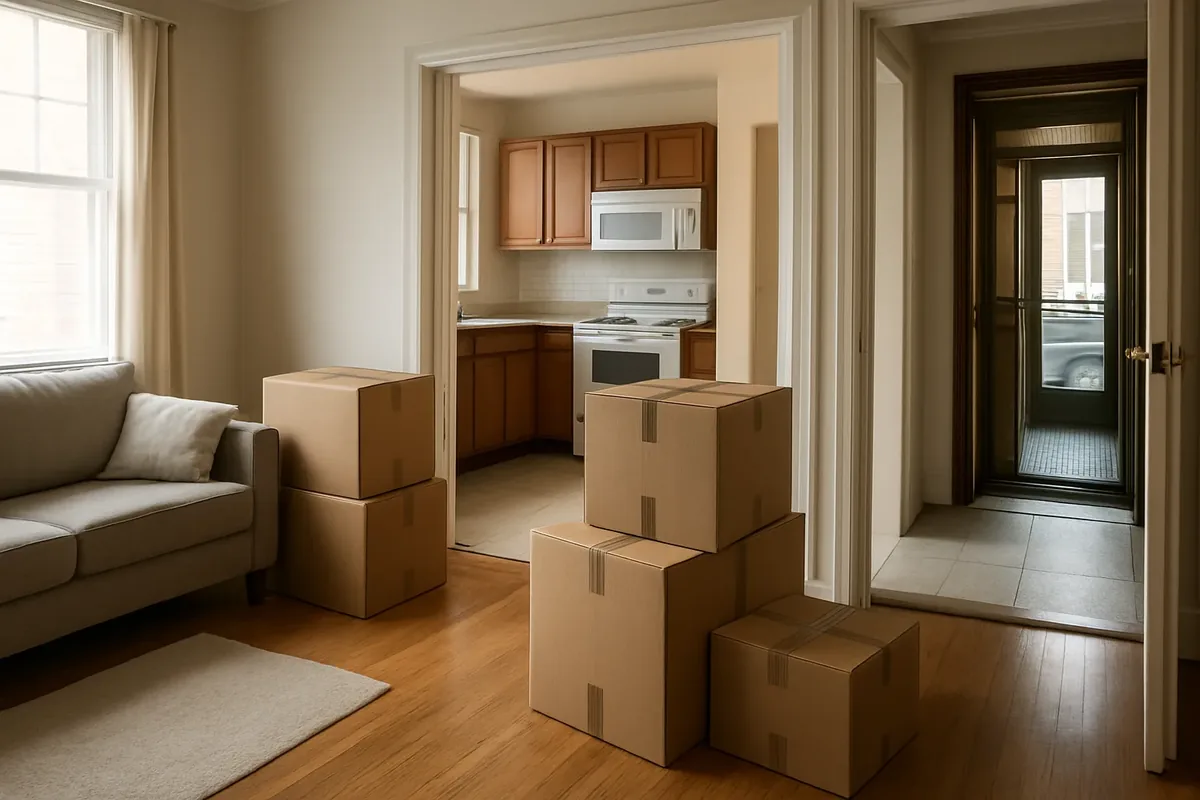
The biggest speed secret on an unreserved passenger elevator is building cab-sized load pods inside your living room the night before moving day. Instead of leaving 35 to 52 boxes scattered across closets and bedrooms—forcing movers to hunt, stack, and wait through slow cycles—group sealed 32-ECT cartons into neat 3-by-2 foot stacks matching a 300-lb folding platform cart footprint. Keep heavy book cartons capped at 35–40 lbs inside small 15x12x10-inch boxes on the bottom tier and lighter kitchen or linen cartons above.
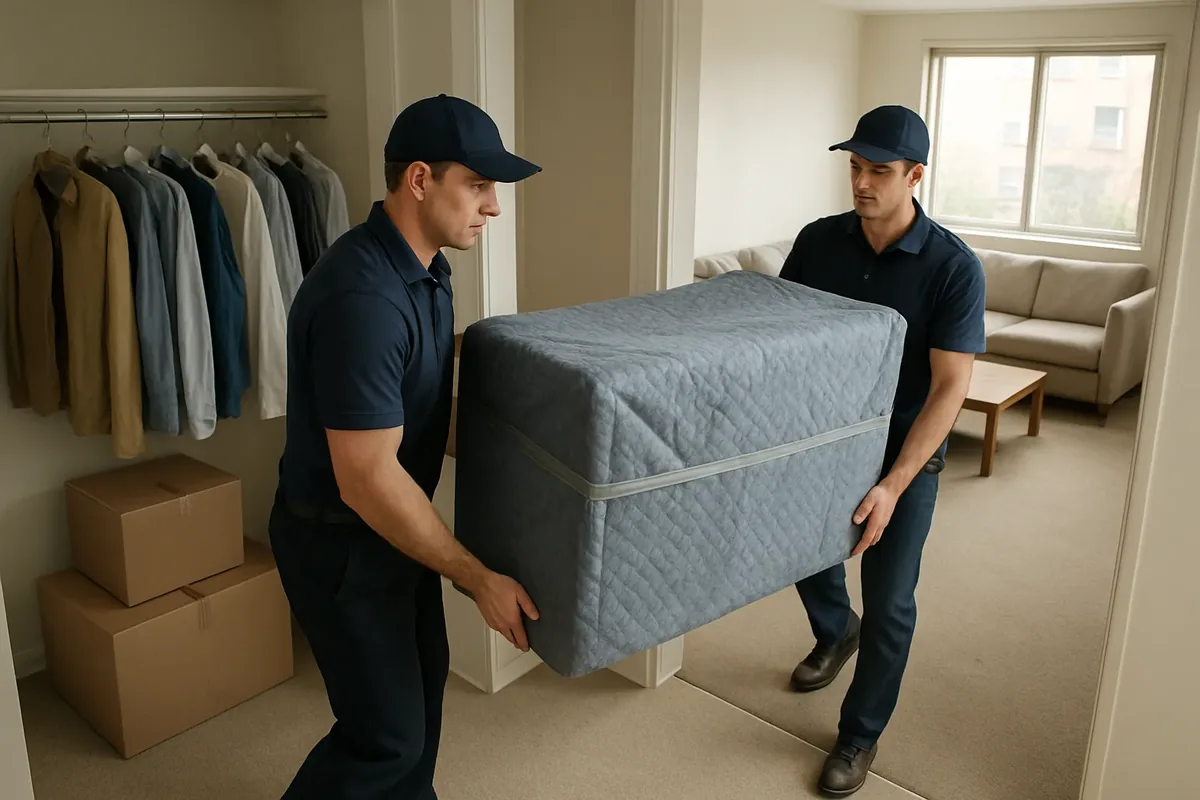
For dressers, media consoles, and wooden dining tables, drape heavy 85-lb/dozen quilted moving blankets all the way down to the bottom corner rails—not just over the top surface—and cinch two wide elastic moving bands or 80-gauge stretch film around the middle so drawers stay locked and soft cloth wraps act as built-in bumpers against unpadded elevator walls. Keep two extra quilted pads in the foyer strictly for hanging temporarily over sharp hallway turns or resting upright mattresses against marble lobby walls.
6-Step Pre-Move Staging & Wall-Protection Workflow
- Measure Doorways, Cab Diagonal Height & Pull Hinge Pins. Confirm diagonal clearance for your sofa and remove interior entry door pins where 1.5 inches of extra frame width avoids jamb contact.
- Tape Temporary Cardboard Door Jamb Shields at Both Ends. Wrap flattened carton panels with blue painter's tape over the narrowest apartment entry door frames and sharp hallway corner beads before Box #1 moves.
- Seal Mattresses in 5-Mil Poly or Rip-Stop Zippered Covers + Add Grip Tape. Bag your queen mattress and box spring cleanly, double-tape excess flap slack flat, and wrap two reinforced tape/tarp carry loops around the long edge so lifters don't tear the plastic.
- Bag Upholstered Chairs in 4-Mil Covers & Unbolt Bed Rails Early. Slide accent chairs into 68x42-inch poly bags, disassemble bed frames and table legs, and tape labeled hardware bags directly to the underside of each piece.
- Pad Dressers & Wood Surfaces in Quilted Blankets the Night Before. Pre-wrapping 6–8 major furniture pieces saves 30–60 minutes of crew billing ($65–$175) and stops exposed wood from bumping unpadded elevator steel.
- Group Cart-Sized Box Pods Beside the Entryway. Cluster sealed boxes in compact stacks that roll onto a platform cart in 30 seconds—minimizing elevator hold time so neighbors and building staff stay happy.
Ready to calculate how much time and money pre-staging and DIY packing supplies save on your shared elevator move? Enter your apartment size and access details in the Apartment Moving Cost Calculator or compare DIY gear vs. full-service quotes in the Movers vs. DIY Rental Truck Comparator.
Open Calculator →Frequently Asked Questions
How can I protect apartment door jambs if my building doesn't pad the shared elevator?+
Tape flattened 32-ECT cardboard moving boxes around the latch and hinge sides of your apartment doorway using removable blue painter's tape, and wrap every dresser and table edge completely in quilted moving blankets with elastic bands so soft padding touches bare elevator steel instead of sharp wood corners.
Does pre-wrapping furniture really lower my moving bill on an unreserved elevator?+
Yes. Movers typically charge $130–$175/hr (1BR) or $175–$235/hr (2BR) while wrapping furniture on site and supply expensive shrink wrap/pad markups ($290–$820). Pre-bagging mattresses, pre-padding dressers, and pre-staging cart-sized box stacks shaves 0.5 to 1.5 hours ($65–$353) off labor.
What thickness mattress bag do I need for a passenger elevator move?+
Use at least 5-mil virgin polyethylene bags or rip-stop coated polypropylene zippered covers. Thin 1.5-mil to 2-mil hardware-store bags rip immediately when stood upright on textured elevator door sills, leaving your mattress exposed to floor grease.
Should I use 32-ECT or 48-ECT moving boxes for elevator moves?+
Standard 32-ECT single-wall boxes work well for books (small boxes capped at 35–40 lbs) and clothing, while upgrading to heavier 44–48 ECT double-wall cartons is smart for stacked kitchen china and fragile glassware riding wheeled carts over uneven elevator door thresholds.
What if a building demands a $1M–$2M COI even though the elevator isn't reserved?+
Many condos and high-rises require a commercial Certificate of Insurance (COI) naming building management as additional insured regardless of elevator booking status. Request the COI requirements two weeks early so your licensed mover submits it before move day.
Interactive US Moving Tools
Compare Full-Service Movers vs. DIY Rental Truck in 30 seconds
Related Guides
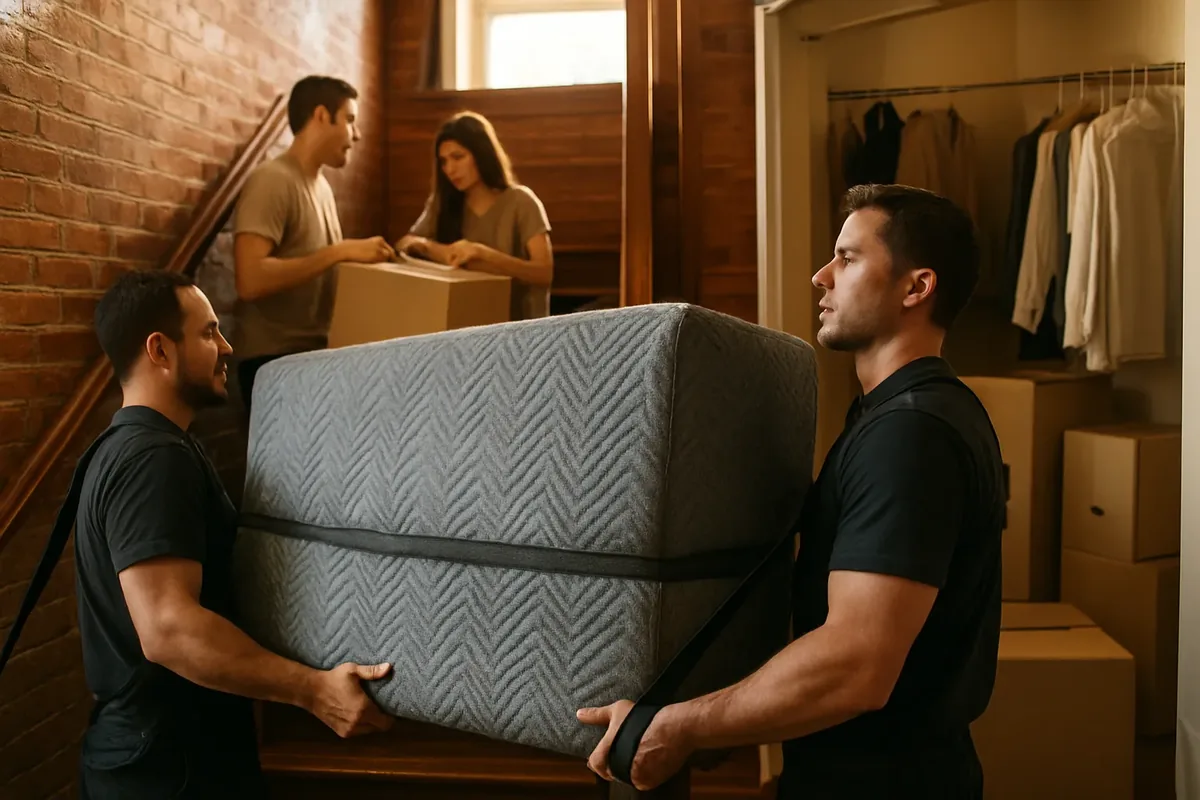
walk up stairs and elevator moving costs
Walk-Up Stairs & Elevator Moving Costs: Complete US Benchmarks & Guides
Walk-up staircases, shared passenger elevators, and long-carry podium corridors routinely add $110 to $1,045 to a US apartment moving invoice through combined extra crew hours and flat tariff surcharges. This hub breaks down exact 2nd-to-5th-floor carry penalties, freight elevator booking rules, shuttle truck triggers, and the strapping gear that saves hours on moving day.
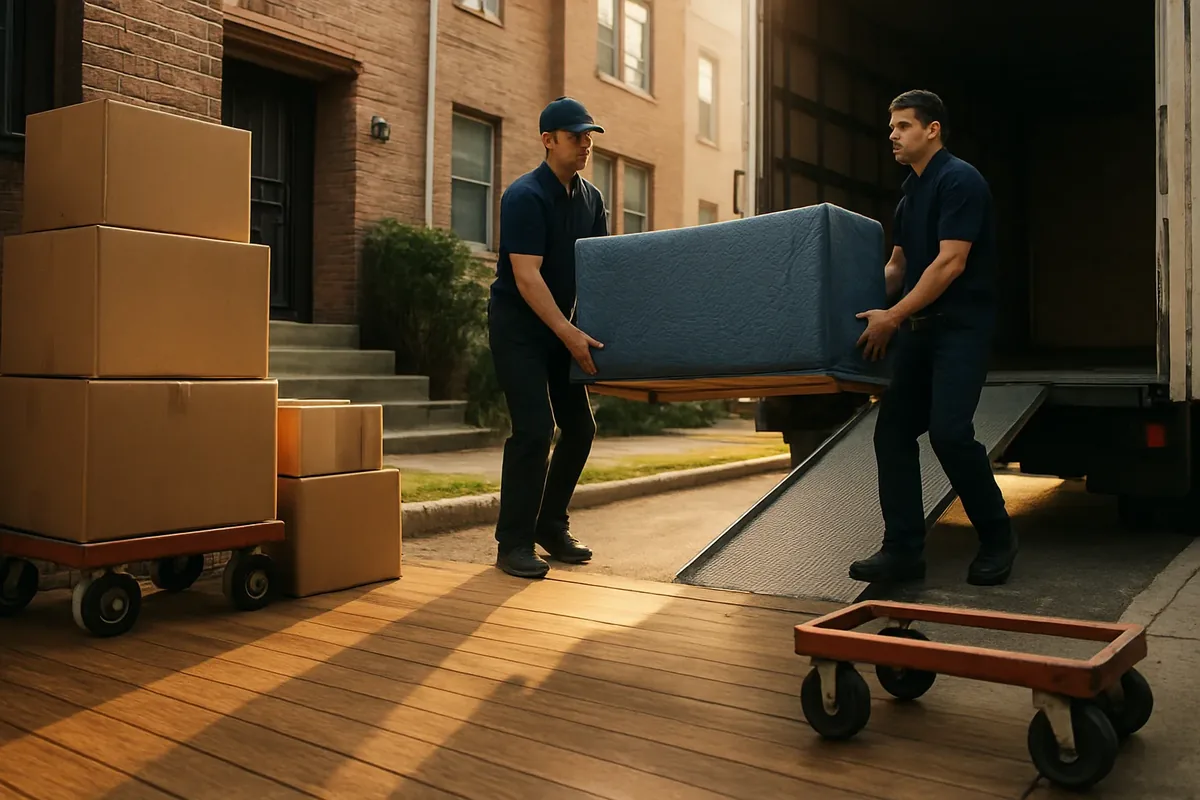
walk up stairs and elevator moving costs
Small Pre-War Birdcage Elevator (Sofa Must Use Stairs) Moving Cost Guide
Pre-war apartment buildings with miniature birdcage or scissor-gate elevators trap movers in a split-access dilemma: cartons ride a tiny 36-by-40-inch cab in slow batches while sofas, box springs, and dressers must climb or descend the adjacent stairwell. Learn how US movers calculate flat step-carry rates ($50–$90 per flight) alongside hourly cab drag, and see realistic totals across studio through 2-bedroom moves.
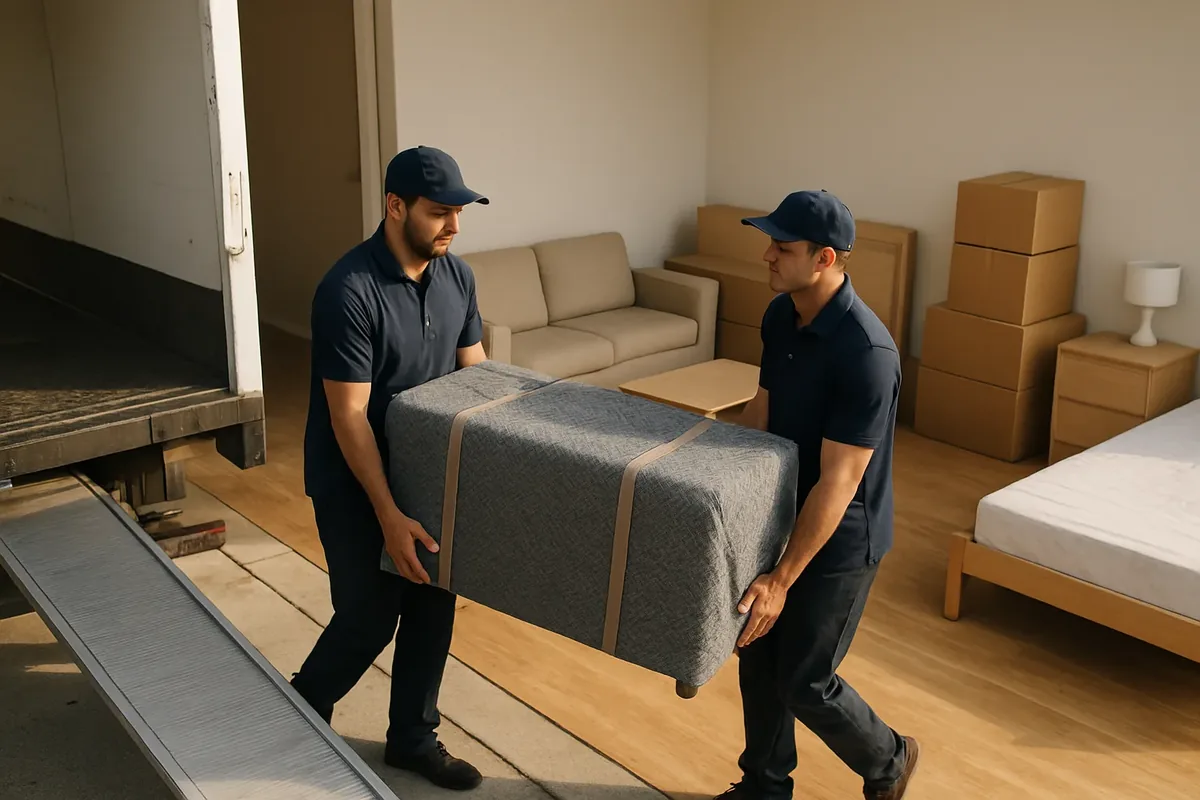
walk up stairs and elevator moving costs
Studio & 1-Bedroom Time & Cost Added by a Small Pre-War Birdcage Elevator
Renters moving a studio (250 cu ft) or 1-bedroom apartment (420 cu ft) out of a pre-war building often underestimate how much a miniature birdcage elevator slows down a 2-mover crew. Track the exact minute-by-minute labor clock split between tiny cab box shuttles and stair-bound sofas, plus compare full-service totals against DIY rental trucks.
walk up stairs and elevator moving costs
2-Bedroom & 3-Bedroom Crew Sizing for Small Pre-War Birdcage Elevators
A 2-bedroom or 3-bedroom apartment inside a small pre-war birdcage elevator building breaks down a 2-mover crew because nobody can run the tiny cab and carry sofas down stairs simultaneously. Discover how a 3-person or 4-person split-path relay keeps the cab moving continuously, prevents lobby logjams, and reduces total billable hours.