In this guide
- How US Moving Companies Define and Price a 75–150 Foot Long-Carry Hallway
- Full Cost Breakdown: Ground-Floor Baseline vs. 75–150 Foot Long Carry
- Flat Access Fees ($50–$135) vs. Hourly Labor Billing Compared
- Vertical Haul Combinations & Hidden Access Multipliers
- DIY Rolling Carts and Mattress Protection Specs That Trim Long-Carry Time
How US Moving Companies Define and Price a 75–150 Foot Long-Carry Hallway
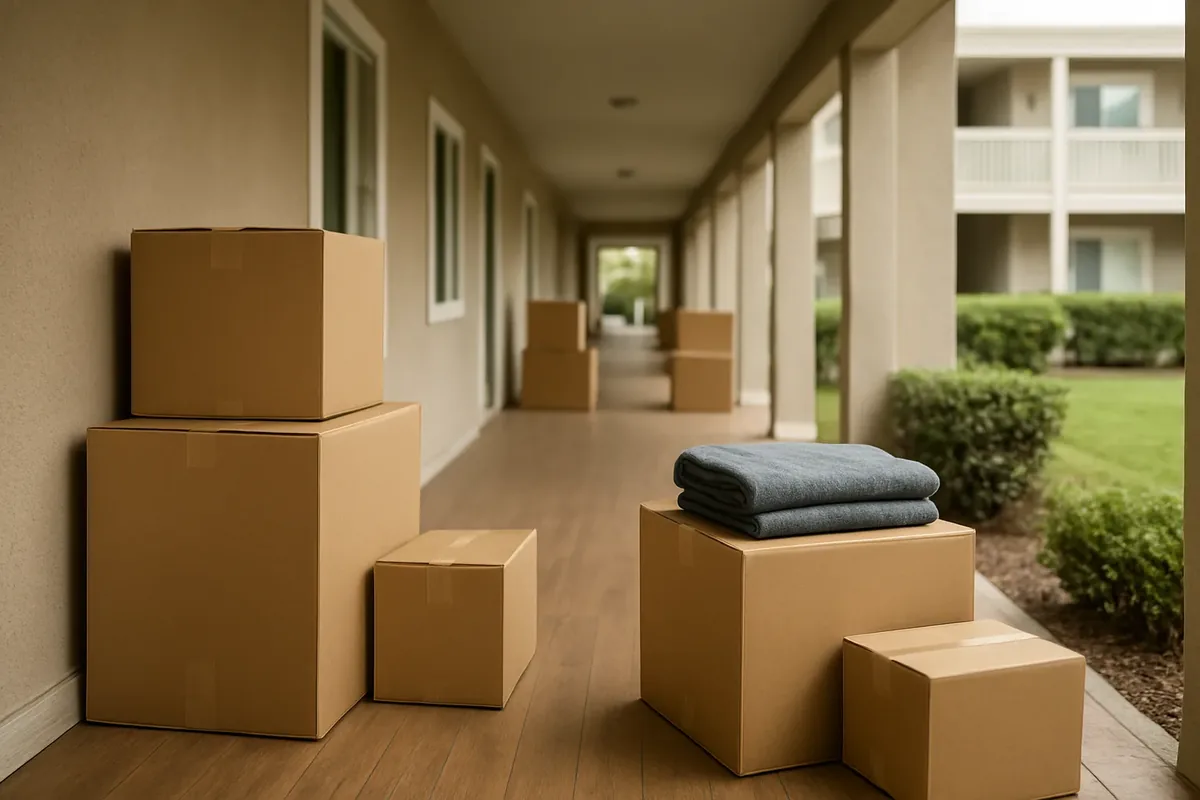
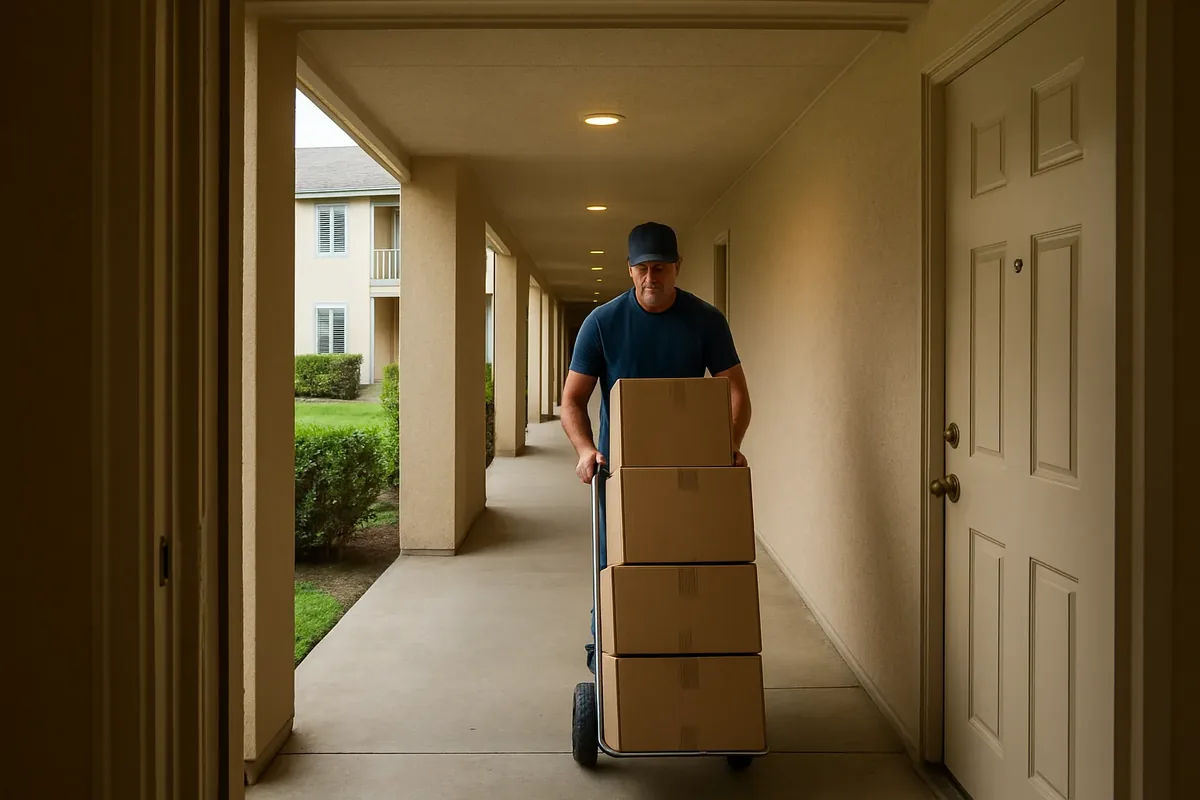
Most residential moving tariffs grant a standard free carry allowance of up to 75 feet measured from the rear tailgate of the parked moving truck to your apartment threshold—or, in multi-story buildings, from the truck to the ground-floor elevator or stairwell entry. Once your total horizontal walk stretches between 75 and 150 feet down a hotel-style wing, corner breezeway, or loading-dock tunnel, carriers apply one of two pricing mechanisms: a flat long-carry fee ($65–$135 per 75-foot block, structurally parallel to $50–$90 per-flight stair charges) or pure hourly clock billing as extra round trips slow production.
On local intracity moves priced by the hour—from $125–$165/hr for a 2-mover studio crew up to $220–$295/hr for a 4-mover 3-bedroom team, plus a 1.0-hour depot travel charge—the extra corridor distance extends loading and unloading by 0.5 to 1.5 hours. That extra walking time adds $63–$124 on a studio, $65–$175 on a 1-bedroom, and $131–$353 on a 2-bedroom before any flat long-carry tariff or elevator fee is even tallied.
Full Cost Breakdown: Ground-Floor Baseline vs. 75–150 Foot Long Carry
The benchmark table below compares standard local moves under 15 miles (12-mile average) with a ground-floor curb pull against apartments burdened by a 75–150 ft hallway carry. Labor figures include the standard 1.0-hour depot travel fee, transportation reflects the $75–$145 local carrier truck fee, and packing materials show DIY-purchased kits (full mover-supplied packing adds $115 to $850+ across apartment sizes).
| Apartment Size & Volume | Crew & Hourly Rate | Ground Baseline (Incl. 1 Hr Travel) | Long-Carry Extra Hours + Flat Fee | Full-Service Long-Carry Total (DIY-Packed) | DIY Rental Truck + Boxes Total |
|---|---|---|---|---|---|
| Studio (250 cu ft / 2,000 lbs) | 2 Movers ($125–$165/hr) | 4.0–5.0 hrs | $640–$1,080 | +0.5–0.75 hr ($63–$124) + $65–$135 | $768 – $1,339 ($180–$320 mover-packed) | $101 – $161 (10-ft truck + $65–$110 kit) |
| 1-Bedroom (420 cu ft / 3,200 lbs) | 2 Movers ($130–$175/hr) | 5.0–7.0 hrs | $820–$1,530 | +0.5–1.0 hr ($65–$175) + $65–$135 | $950 – $1,840 ($290–$520 mover-packed) | $142 – $222 (12–15 ft truck + $95–$160 kit) |
| 2-Bedroom (680 cu ft / 5,400 lbs) | 3 Movers ($175–$235/hr) | 6.0–8.5 hrs | $1,270–$2,378 | +0.75–1.5 hrs ($131–$353) + $65–$135 | $1,466 – $2,865 ($460–$820 mover-packed) | $204 – $313 (15–20 ft truck + $145–$235 kit) |
| 3-Bedroom (980 cu ft / 7,800 lbs) | 4 Movers ($220–$295/hr) | 7.5–10.5 hrs | $1,930–$3,573 | +1.0–1.5 hrs ($220–$443) + $65–$135 | $2,215 – $4,151 ($680–$1,180 mover-packed) | $275 – $425 (20–26 ft truck + $205–$330 kit) |
When moving across an extended metro distance of 15 to 50 miles (35-mile average), expect the carrier's local transportation charge to rise from $75–$145 to $140–$260. On interstate moves of 600 miles or more, weight-based tariffs apply $0.42–$0.64/lb ($780–$1,350 base transport) and calculate long-carry charges per hundredweight (cwt) or as a fixed $65–$135 access line item per address.
Amazon US Apartment Moving Supplies
Recommended Moving Boxes, Blankets & Bags for This Move
Apartment moving supplies matched to this guide (Amazon.com affiliate ID: apartmentmovingcost-20).
Stanley FT585 2-in-1 Folding Multi-Truck 300-Lb Hand Truck & Platform Cart
Compact folding 2-in-1 cart storing under a car seat while rolling 300-lb box loads from curb to elevator
5-Mil Extra-Thick Clear Polyethylene Queen Mattress & Box Spring Bags (2-Pack)
Two 5-mil puncture-resistant clear poly bags protecting both a Queen mattress and box spring from truck floor grime
Waterproof Zippered Canvas-Style Mattress Storage & Moving Cover (Queen/Full)
Rip-resistant coated polypropylene mattress cover with dual wrap-around zippers for dust-free storage
As an Amazon Associate I earn from qualifying purchases. Always verify live stock and pack sizing directly on Amazon.com.
Flat Access Fees ($50–$135) vs. Hourly Labor Billing Compared
Renters often confuse flat access surcharges—such as $50–$90 per stair flight or $65–$135 per 75-foot carry zone—with the hourly crew clock. Understanding which billing model appears on your estimate prevents surprise invoice adjustments on move-out afternoon:
| Carrier Tariff Structure | Flat Long-Carry Line Item | Hourly Crew Clock Impact | Combined 1-Bedroom Cost Impact | How Renters Reduce the Charge |
|---|---|---|---|---|
| Hourly-Only Local Mover | $0 upfront flat surcharge | +0.5–1.0 hr @ $130–$175/hr | $65 – $175 | Stage all packed boxes inside your entry foyer to shorten trips |
| Hourly + Long-Carry Access Tariff | $65–$135 (first 75 ft free) | +0.5–1.0 hr @ $130–$175/hr | $130 – $310 | Secure reserved loading zone directly outside corridor fire exit |
| Flat Per-Unit Stair / Carry Hybrid | $50–$90 per 75-ft / flight block | Usually paired with hourly billing | $115 – $265 | Clarify whether hallway footage is billed separately from stairs |
| Interstate FMCSA Binding Tariff | $65–$135 per address (or per cwt) | Included in binding weight total | $65–$135 (1 end) / $130–$270 (2 ends) | Document exact curb-to-door tape measurement on survey sheet |
Vertical Haul Combinations & Hidden Access Multipliers
Rarely does a 120-foot hallway sit cleanly beside a ground-floor curb. Three physical bottlenecks routinely multiply long-carry costs inside dense apartment developments:
- Shared passenger elevator delays ($85–$175 flat + 1.0–1.75 hrs): When a building has no reserved freight cab, crews lose 4 to 7 minutes per hallway cycle waiting on resident foot traffic.
- Dual-end long carries: Leaving an apartment 120 feet from the street and unloading into another building 110 feet past its loading dock doubles both the flat fee ($130–$270) and the hourly time drag.
- King bed and sectional disassembly ($60–$130): Carrying an assembled 92-inch sectional down a 48-inch-wide corridor with 90-degree corner jogs often fails without unbolting brackets first.
- Heavy appliances and peloton gear ($75–$160): Single-piece steel weights above 200 lbs force two movers onto one slow dolly trip rather than fast solo box stacks.
DIY Rolling Carts and Mattress Protection Specs That Trim Long-Carry Time
Whether you are rolling boxes out yourself on a rented box truck ($20–$70/day base, $0.99–$1.69/mile local, plus $3.55/gallon diesel or gasoline at 10 mpg) or pre-staging cartons near your lobby to shave paid mover hours, choosing purpose-built corridor rolling and mattress protection gear keeps every trip clean:
- Compact convertible rolling cart: The Stanley FT585 2-in-1 Folding Multi-Truck handles 154 lb in upright 2-wheel mode and 300 lb in 4-wheel platform mode while folding flat behind a car seat, using quiet TPR wheels that glide smoothly across 150 feet of tile or carpet.
- Heavy-duty 5.0-mil poly mattress protection: Sliding a Queen mattress and box spring into 5-Mil Extra-Thick Clear Polyethylene Queen Mattress & Box Spring Bags (2-Pack virgin PE) keeps fabric shielded from damp corridor thresholds, elevator grease, and rental truck floor splinters.
- Reusable zippered cover for repeated drags or storage: If your 150-foot hallway includes rough outdoor concrete or moves into climate storage, a Waterproof Zippered Canvas-Style Mattress Storage & Moving Cover (rip-stop coated polypropylene with a 3-side dual zipper) prevents edge tears that snap thin poly bags.
Enter your hallway footage, apartment size, and elevator type in the Apartment Moving Cost Calculator or weigh full-service crews against a DIY truck in the Movers vs. DIY Rental Truck Comparator.
Open Calculator →Frequently Asked Questions
How many feet do moving companies allow before charging a long-carry hallway fee?+
Most US moving companies allow 50 to 75 feet from the rear of the parked truck to your front or lobby door free of charge. Distances from 75 to 150 feet trigger a standard $65–$135 long-carry fee, with additional blocks charged for every extra 50 to 75 feet beyond that threshold.
Is a 1-hour travel fee billed separately from a long-carry surcharge?+
Yes. On local hourly moves, the 1.0-hour depot travel fee covers driving between the carrier's warehouse and your addresses at your crew's hourly rate ($125–$295/hr depending on crew size). Any flat $65–$135 long-carry surcharge or extra hallway walking minutes are added on top of that travel hour.
Do movers charge long-carry fees if my apartment building has a freight elevator?+
Yes, if the horizontal path from the loading dock or street parking to the freight elevator—plus the corridor walk from the elevator cab to your apartment door—exceeds 75 feet combined. Building freight reservations also carry a separate $45–$95 elevator staging surcharge in many metro tariffs.
How does California Double Drive Time (DDT) interact with a 75–150 foot hallway move?+
California intrastate movers bill double the drive time between origin and destination instead of a flat depot travel hour, while still charging your hourly crew rate continuously for all corridor walking, elevator waiting, and loading time. Check written estimates for whether an access fee applies alongside DDT.
Can an interstate mover add a long-carry charge on move day under FMCSA binding rules?+
Under Federal Motor Carrier Safety Administration (FMCSA) rules, a binding estimate holds if you disclosed the 75–150 ft hallway and parking distance beforehand. If street construction or HOA parking bans force the truck over 75 feet away on move day without prior disclosure, the driver can require a signed addendum for impracticable operations or long carry before loading.
Interactive US Moving Tools
Compare Full-Service Movers vs. DIY Rental Truck in 30 seconds
Related Guides
walk up stairs and elevator moving costs
Walk-Up Stairs & Elevator Moving Costs: Complete US Benchmarks & Guides
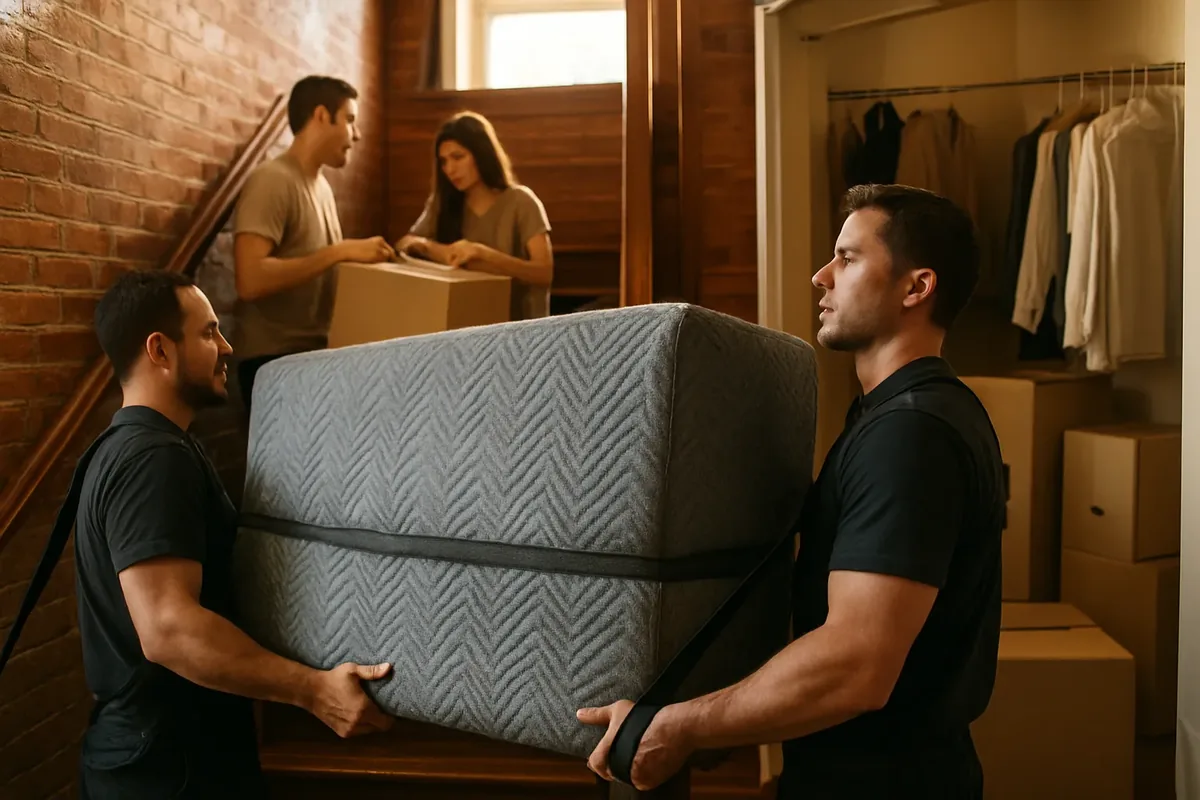
Walk-up staircases, shared passenger elevators, and long-carry podium corridors routinely add $110 to $1,045 to a US apartment moving invoice through combined extra crew hours and flat tariff surcharges. This hub breaks down exact 2nd-to-5th-floor carry penalties, freight elevator booking rules, shuttle truck triggers, and the strapping gear that saves hours on moving day.
walk up stairs and elevator moving costs
How a Long-Carry Hallway (75–150 Feet) Changes a 1-Bedroom Local Move Quote
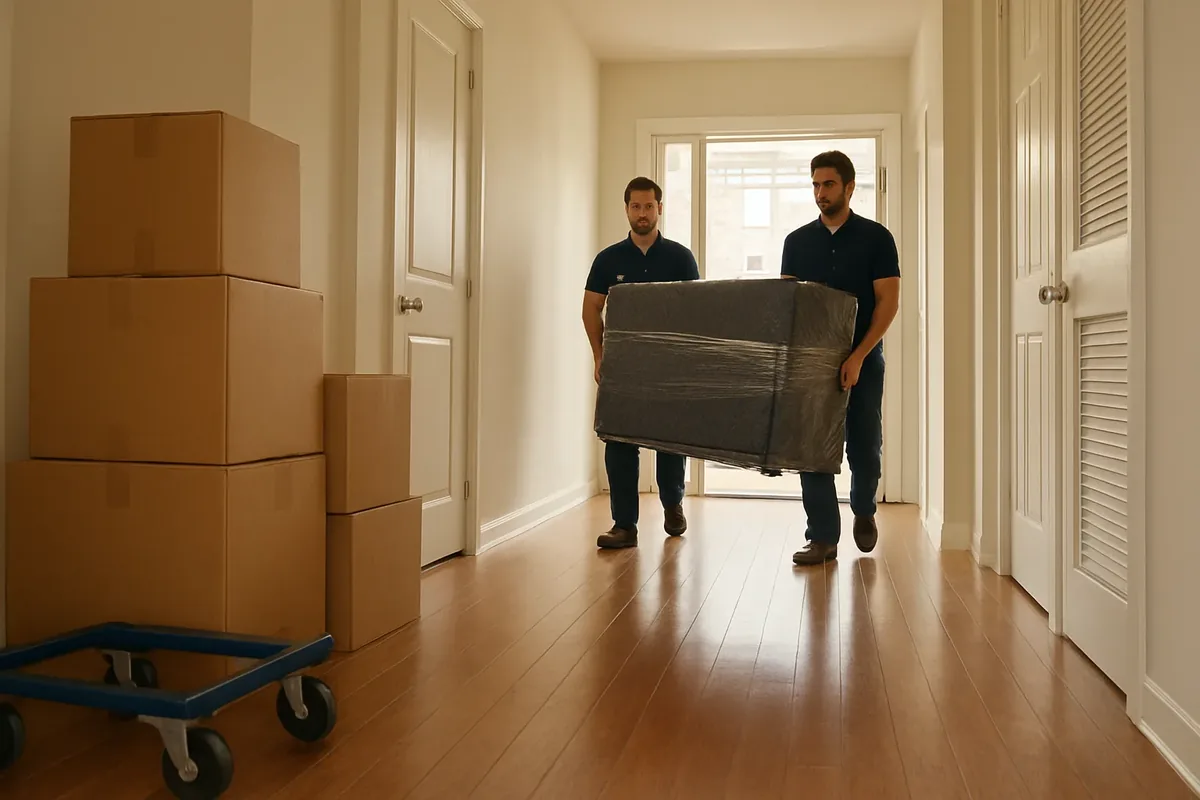
A 75-to-150-foot apartment corridor adds 30 to 60 minutes (and up to 75 minutes with elevator waits) to a 2-mover crew clock, raising a 1-bedroom local quote by $130 to $310. See exact trip-by-trip pace math for studios and 1-bedrooms, plus pre-staging tactics that shave billable crew minutes.
walk up stairs and elevator moving costs
2-Bedroom Long-Carry Hallway (75–150 Feet) Crew Size Guide: 2 vs. 3 vs. 4 Movers
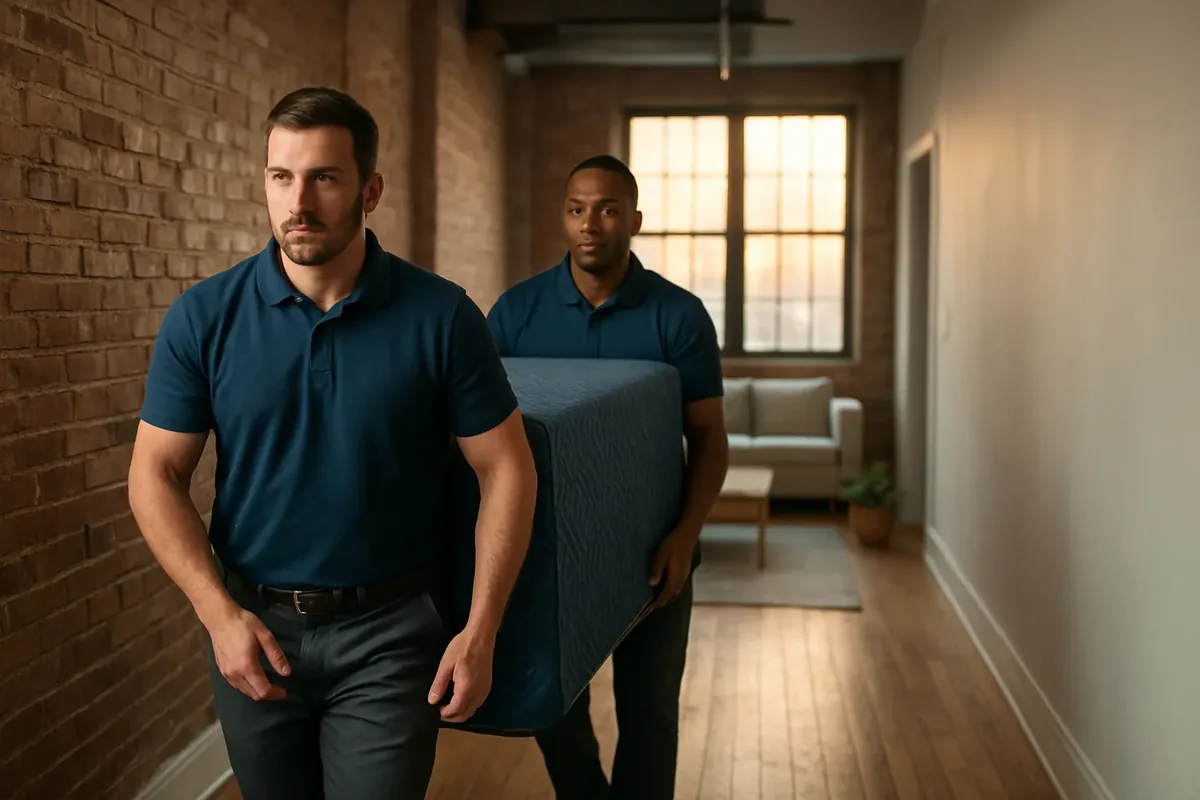
Trying to load a 2-bedroom apartment (680 cu ft, 5,400 lbs) down a 75-to-150-foot hallway with only two movers stalls crew momentum and triggers costly afternoon fatigue. Discover why upgrading to a 3- or 4-mover relay configuration slashes billable hours by 2.0 to 3.5 hours without inflating your final invoice.
walk up stairs and elevator moving costs
DIY Truck + Labor Helpers vs. Full-Service Movers: Long-Carry Hallway (75–150 Feet)
Combining a DIY rental truck with 2-hour loading helpers ($170–$290) saves $638 to $2,262 compared to full-service movers on a 75-to-150-foot apartment hallway—provided you pre-stage boxes and lock down unattended trucks properly. Compare exact DIY, hybrid labor, and full-service math across studio through 2-bedroom local and regional moves.