
In this guide
- Why Origin Stairs Plus a High-Rise Elevator Create a Dual-Access Moving Invoice
- Flat Per-Flight Stair Fees ($50–$90) vs. Pure Hourly Labor Billing
- Total Cost Breakdown: 3rd-Floor Walk-Up to Elevator High-Rise by Apartment Size
- High-Rise Accessorial Charges Renters Miss Until Moving Morning
- Strapping, Dust Covers & Load-Lock Gear That Cut Billable Stair Hours
Why Origin Stairs Plus a High-Rise Elevator Create a Dual-Access Moving Invoice
Relocating out of a third-floor walk-up apartment and into an elevator-equipped high-rise tower is one of the most misunderstood pricing combinations in US apartment moving. Renters often assume that securing a dedicated freight elevator at their new tower offsets the difficulty of leaving an old walk-up building—only to receive a final Bill of Lading carrying separate access charges for both addresses.
Under standard US residential tariff schedules, movers price vertical access independently at origin and destination. Leaving a 3rd-floor walk-up requires descending two full interior flights (roughly 24 to 32 steps, plus any exterior entry stoop), which adds 1.0 to 1.75 extra crew hours alongside a $110 to $190 flat stair surcharge equivalent ($50 to $90 per flight). At the destination high-rise tower, even a reserved service or freight elevator adds 0.5 to 1.0 extra crew hour and a $45 to $95 flat fee because crews must check in with security, verify the building Certificate of Insurance (COI), install elevator wall pads, and haul loads across long podium or loading-dock corridors.
If the high-rise does not offer a dedicated freight cab and forces movers into a shared passenger elevator without an exclusive reservation, destination access balloons to 1.0 to 1.75 extra hours and $85 to $175 in flat surcharges. Worse still, many modern glass towers place loading bays 90 to 160 feet from the service elevator vestibule—triggering an additional $65 to $135 long-carry fee whenever the push distance from the truck tailgate to the first door exceeds 75 feet.
Flat Per-Flight Stair Fees ($50–$90) vs. Pure Hourly Labor Billing
Moving companies quote the 3rd-floor walk-up to elevator high-rise transition using three distinct billing structures. Understanding which model appears on your written estimate prevents double-counting when comparing carriers:
- Flat Per-Flight Tariff + Hourly Base Rate (Hybrid Model): Most urban carriers charge a base hourly crew rate ($130–$175/hr for 2 movers; $175–$235/hr for 3 movers) plus a flat stair surcharge of $50 to $90 per flight above the ground floor ($100–$180 or $110–$190 total for a 3rd-floor walk-up) and a $45 to $95 elevator staging fee at the high-rise. Because stairs also slow down physical carry speed by 20% to 30%, you still pay the hourly clock while the crew descends two flights.
- Pure Hourly 'No Stair Fee' Model: Carriers advertising zero flat stair charges are not performing walk-up labor for free. Instead, their dispatch estimator inflates the estimated labor window from 4.0–6.0 ground-floor base hours to 5.5–8.75 active hours (plus the standard 1.0-hour travel fee), folding the physical stair and elevator delay directly into billable clock time. On a non-binding hourly contract, slow stair pacing shifts all fatigue risk onto the renter.
- Binding Weight/Cubic-Foot Flat Rate + Accessorial Riders (Intrastate/Interstate): On 50+ mile regional moves (for example, 160 miles at $0.22–$0.36/lb or $380–$690 transport), FMCSA interstate tariffs apply standardized accessorial riders: $110–$190 for two origin flights above the first 7 steps, $45–$95 for destination elevator service, and $65–$135 if a high-rise podium corridor triggers a >75-foot long carry.
Amazon US Apartment Moving Supplies
Recommended Moving Boxes, Blankets & Bags for This Move
Apartment moving supplies matched to this guide (Amazon.com affiliate ID: apartmentmovingcost-20).
4-Mil Clear Armchair & Loveseat Upholstered Furniture Moving Bags (2-Pack)
Heavy clear polyethylene dust and moisture covers for accent chairs, recliners, and loveseats
Shoulder Dolly LD1000 2-Person Hands-Free Harness Moving System (800-Lb Rated)
Full ergonomic shoulder-vest harness system leaving both hands free to open apartment doors and grip handrails
Rhino USA Retractable Ratchet Tie-Down Straps 1" x 10 ft with Padded S-Hooks (4-Pack)
Self-retracting push-button ratchet straps keeping appliances and box tiers from shifting during highway braking
As an Amazon Associate I earn from qualifying purchases. Always verify live stock and pack sizing directly on Amazon.com.
Total Cost Breakdown: 3rd-Floor Walk-Up to Elevator High-Rise by Apartment Size
The matrix below combines Labor (base hours + 1.0-hour portal-to-portal travel fee + origin 3rd-floor stair impact + destination reserved freight elevator impact), Local Transportation (under 15 miles), and Packing Materials across all four primary apartment footprints, alongside a local DIY rental truck benchmark.
| Apartment Size & Load | Crew & Total Hours (Base + Travel + Access) | Labor + Access Fees (Hourly + Flat Tariffs) | Local Transport & DIY Packing Kit | Full-Service Total (Mover-Packed Option) | DIY Rental Truck Total (+2-Hr Stair Helpers) |
|---|---|---|---|---|---|
| Studio (250 cu ft / 2,000 lbs) | 2 Movers ($125–$165/hr); 5.5–7.75 hrs | $843 – $1,564 (inc. $155–$285 access fees) | $75–$145 Truck + $65–$110 DIY Kit | $983 – $1,819 ($1,098–$2,029 mover-packed) | $109–$173 DIY ($279–$463 w/ helpers) |
| 1-Bedroom (420 cu ft / 3,200 lbs) | 2 Movers ($130–$175/hr); 6.5–9.75 hrs | $1,000 – $1,991 (inc. $155–$285 access fees) | $75–$145 Truck + $95–$160 DIY Kit | $1,170 – $2,296 ($1,365–$2,656 mover-packed) | $147–$245 DIY ($317–$535 w/ helpers) |
| 2-Bedroom (680 cu ft / 5,400 lbs) | 3 Movers ($175–$235/hr); 7.5–11.25 hrs | $1,468 – $2,929 (inc. $155–$285 access fees) | $75–$145 Truck + $145–$235 DIY Kit | $1,688 – $3,309 ($2,003–$3,894 mover-packed) | $205–$337 DIY ($375–$627 w/ helpers) |
| 3-Bedroom (980 cu ft / 7,800 lbs) | 4 Movers ($220–$295/hr); 9.0–13.25 hrs | $2,135 – $4,194 (inc. $155–$285 access fees) | $75–$145 Truck + $205–$330 DIY Kit | $2,415 – $4,669 ($2,890–$5,519 mover-packed) | $280–$495 DIY ($450–$785 w/ helpers) |
Notice how quickly small destination variables widen those brackets. Switching the destination high-rise from a reserved freight elevator to an unreserved shared passenger elevator adds another 0.5 to 0.75 hour plus $40 to $80 in flat fees—pushing a 1-bedroom total to $1,275–$2,508 and a 2-bedroom total to $1,815–$3,565. Adding a >75-foot long-carry garage corridor ($65–$135) or heavy sectional/king-bed disassembly ($60–$130) pushes high-end urban invoices another $125 to $265 higher.
High-Rise Accessorial Charges Renters Miss Until Moving Morning
Even renters who accurately disclose their third-floor walk-up stairs frequently overlook high-rise operational rules that silently burn billable crew hours at the destination tower:
- Verify High-Rise Loading Dock Clearance and COI Insurance Limits. Many luxury apartment towers enforce 11'0" to 12'6" subterranean dock height limits and demand a $1,000,000/$2,000,000 commercial Certificate of Insurance (COI) naming the property management LLC as Additional Insured. If a 20-ft or 26-ft box truck cannot enter the dock, crews must curb-park outside or pay a shuttle van transfer, adding long-carry fees ($65–$135) and extra hourly staging.
- Lock In a Contiguous 4-Hour Freight Elevator Reservation Window. If your origin 3rd-floor walk-up load-out runs 30 minutes behind schedule because boxes were left unsealed, arriving late to a 1:00 PM–4:00 PM destination freight slot forces the crew into shared resident elevators after 4:00 PM—immediately jumping your destination surcharge from $110–$270 to $215–$481.
- Audit California Double Drive Time and Travel Fee Rules. Most states bill a flat 1.0-hour portal-to-portal travel fee ($130–$295 depending on crew size) for depot round-trips. In California, CPUC-governed carriers apply Double Drive Time (DDT), doubling the driving minutes between origin and destination to cover the return leg—so a 30-minute cross-town trip adds 60 billable minutes on top of stair and elevator time.
Strapping, Dust Covers & Load-Lock Gear That Cut Billable Stair Hours
Whether you hire a two-person crew or run a hybrid rental-truck plan, equipping your move with stair-specific load handling and upholstery covers shrinks carry cycles and prevents damaged fabric when pivoting around tight walk-up banisters and metal high-rise elevator door frames:
- Uboxes 4-Mil Clear Armchair & Loveseat Upholstered Furniture Moving Bags (2-Pack, 68 x 42 in): Slipping 4.0-mil heavy clear polyethylene covers over accent chairs, recliners, and loveseats shields light fabric from dusty brick walk-up stairwell walls and greasy freight elevator tracks before quilted pads go on.
- Shoulder Dolly LD1000 2-Person Hands-Free Harness Moving System (800-lb Polypropylene, 12 ft x 5 in Strap): Built with dual ergonomic chest/shoulder vests that transfer furniture weight onto the legs while leaving both hands free to grip walk-up handrails and push open high-rise fire doors safely.
- Rhino USA Retractable Ratchet Tie-Down Straps 1" x 10 ft with Padded S-Hooks (4-Pack, 1,209-lb Break Strength): Self-retracting push-button ratchets let a DIY driver or helper lock stacked 32-ECT boxes and dressers against truck rub rails in seconds, preventing cargo shifts on the drive from the walk-up to the tower.
Ready to calculate exact stair tariffs, freight elevator hours, and travel fees for your exact move? Run your origin 3rd-floor walk-up and destination high-rise profile through our Apartment Moving Cost Calculator or weigh crew quotes against a rental truck in the Movers vs. DIY Rental Truck Comparator.
Open Calculator →Frequently Asked Questions
Do movers charge per flight of stairs if only the origin apartment is a 3rd-floor walk-up and the destination has an elevator?+
Yes. Walk-up flight charges ($50–$90 per flight, or $110–$190 total for a 3rd-floor walk-up) apply independently to whichever address has stairs. Your destination high-rise avoids stair fees, though it still carries freight elevator staging time (+0.5–1.0 hr and $45–$95) or shared passenger elevator delays (+1.0–1.75 hrs and $85–$175).
How do US movers count flights on a 3rd-floor walk-up?+
Most carriers count 12 to 16 vertical risers (steps) between major floor landings as one billable flight. A 3rd-floor apartment typically sits two full flights above street grade—though if your building also has an elevated 8-to-12-step exterior stone stoop leading up to the first-floor lobby, some movers count the stoop as an additional half-flight or third billable flight.
Is a binding estimate or non-binding estimate better when moving from a 3rd-floor walk-up to a high-rise?+
If you are booking an interstate move (governed by FMCSA rules) or a fixed-price local move, request a Binding Not-to-Exceed estimate after doing a full video walkthrough showing both the walk-up stairwell turns and the high-rise loading dock distance. On standard local hourly contracts, non-binding estimates leave you paying for every extra minute if a shared passenger elevator gets backed up.
Why do high-rise apartment buildings require a Certificate of Insurance (COI) from movers?+
Managed high-rise towers require a commercial COI—usually $1,000,000 per occurrence and $2,000,000 aggregate general liability plus workers' compensation—to cover accidental sprinkler hits, marble lobby scratches, or freight elevator cable damage. Licensed movers typically issue COIs for $0 to $50, whereas DIY renters cannot obtain a commercial COI and must check whether the tower waives COI rules for resident self-moves.
How much does a 1-hour travel fee add to a 3rd-floor walk-up move?+
A standard 1.0-hour portal-to-portal travel fee bills one full crew hour to cover truck dispatch from the depot to your 3rd-floor walk-up and back from the high-rise—adding $125–$165 for a studio crew, $130–$175 for a 1-bedroom crew, $175–$235 for a 2-bedroom crew, and $220–$295 for a 3-bedroom 4-person crew.
Interactive US Moving Tools
Compare Full-Service Movers vs. DIY Rental Truck in 30 seconds
Related Guides
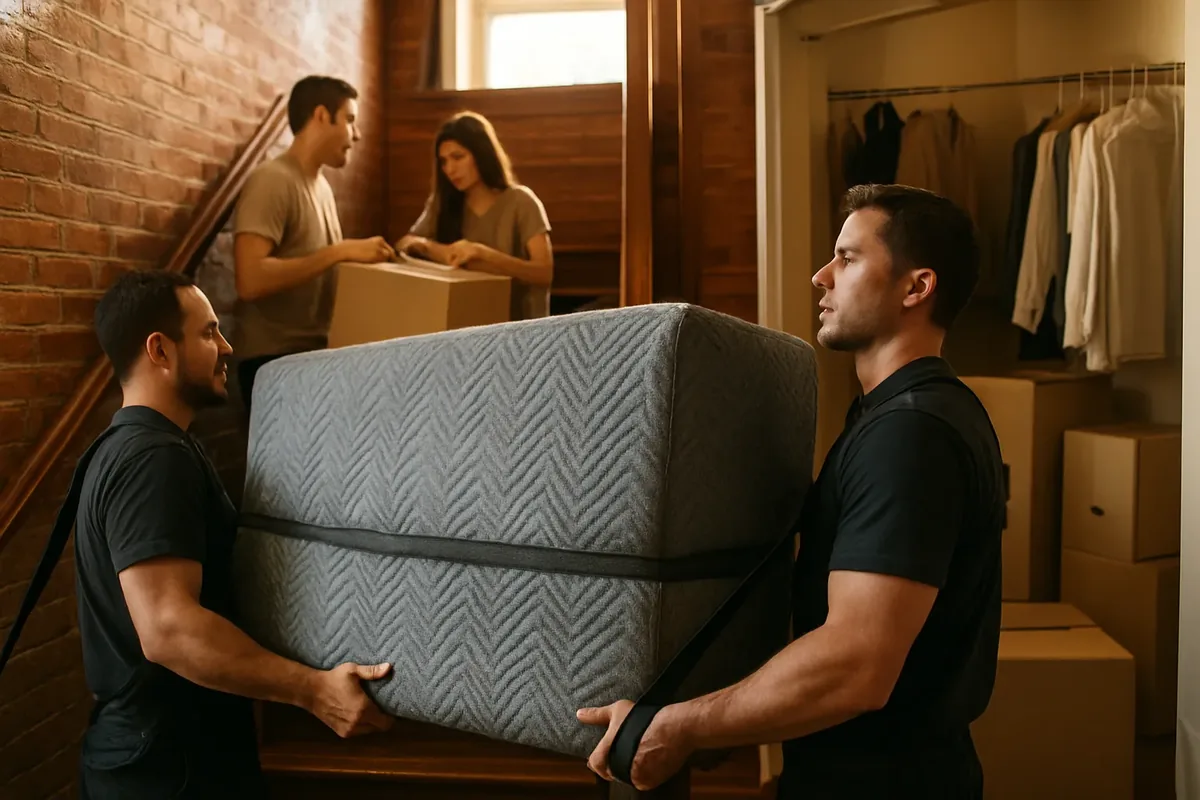
walk up stairs and elevator moving costs
Walk-Up Stairs & Elevator Moving Costs: Complete US Benchmarks & Guides
Walk-up staircases, shared passenger elevators, and long-carry podium corridors routinely add $110 to $1,045 to a US apartment moving invoice through combined extra crew hours and flat tariff surcharges. This hub breaks down exact 2nd-to-5th-floor carry penalties, freight elevator booking rules, shuttle truck triggers, and the strapping gear that saves hours on moving day.
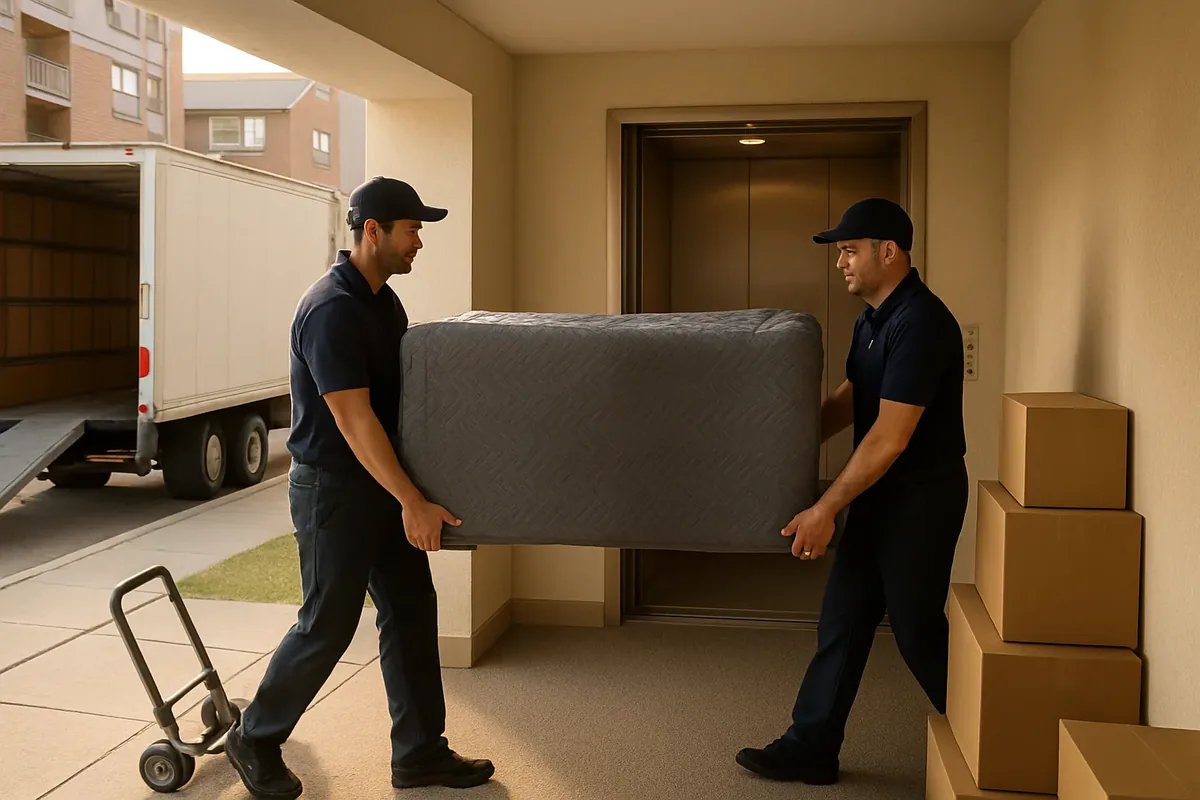
walk up stairs and elevator moving costs
Extra Crew Hours & Fatigue Math: 3rd-Floor Walk-Up to High-Rise Elevator (Studio & 1BR)
Moving a studio or 1-bedroom apartment out of a 3rd-floor walk-up and into an elevator high-rise adds 90 to 210 billable crew minutes on top of base loading hours. Break down the exact stair fatigue clock, furniture density multipliers, and phase-by-phase dollar impact for 2-mover teams.
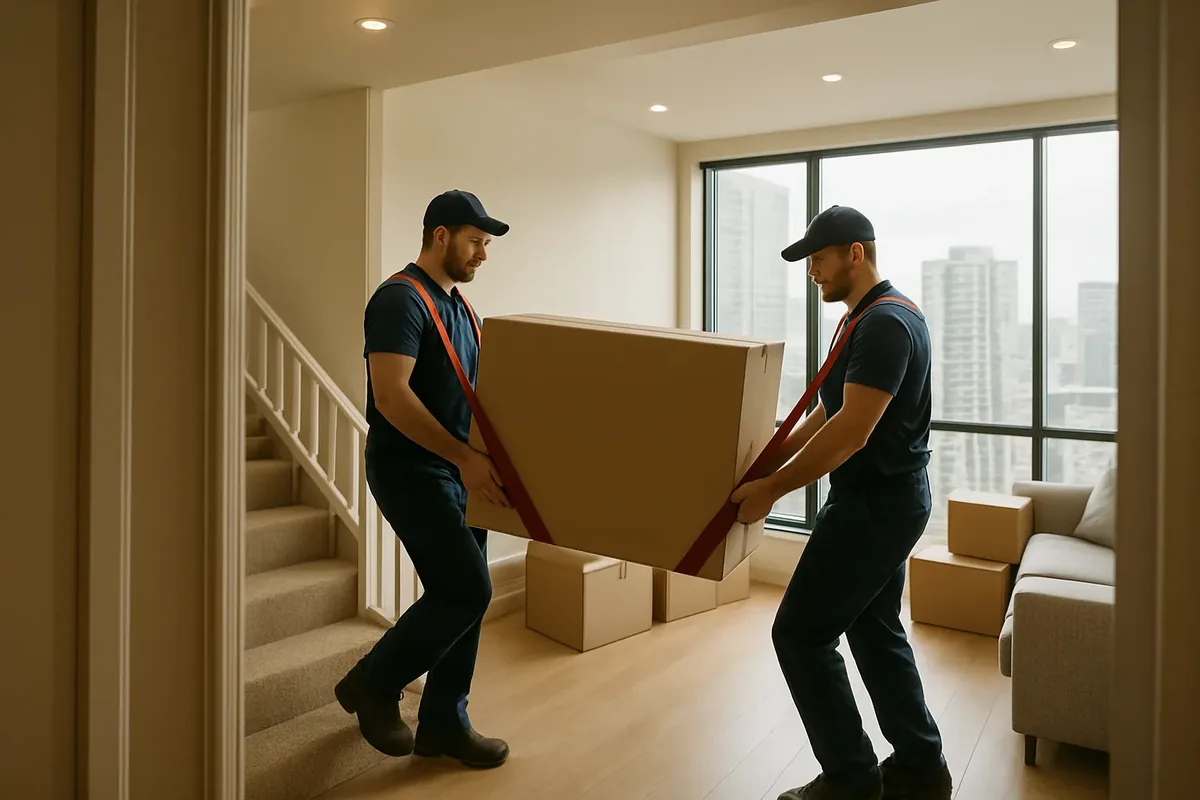
walk up stairs and elevator moving costs
Why You Need 3 or 4 Movers for a 2BR Move From a 3rd-Floor Walk-Up to an Elevator High-Rise
Booking only 2 movers for a 2-bedroom apartment (680 cu ft / 5,400 lbs) moving from a 3rd-floor walk-up into a time-capped elevator high-rise is a costly scheduling trap. Compare 2-mover, 3-mover relay, and 4-mover crew math to slash billable hours and avoid freight elevator lockouts.
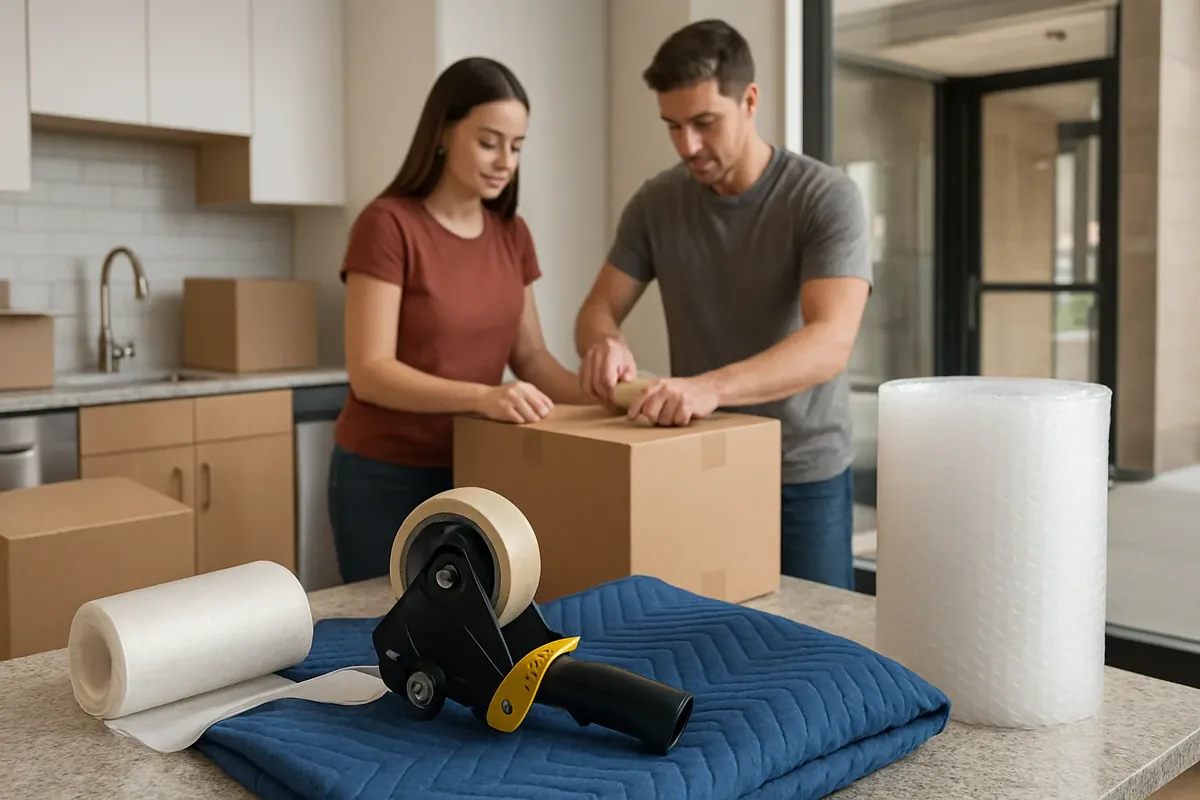
walk up stairs and elevator moving costs
DIY Rental Truck vs. Hiring Movers for a 3rd-Floor Walk-Up to High-Rise Move
Moving out of a 3rd-floor walk-up and into a COI-enforced elevator high-rise puts DIY renters against steep stair injury risk and strict building dock rules. Compare full-service crews against a pure DIY rental truck and the hybrid strategy of pairing a rental truck with 2-hour stair loading helpers.