In this guide
- Dual-Building Damage Risk: Pre-War Plaster Corners vs. High-Rise Elevator Jambs
- Walk-Up vs. High-Rise Damage Fines vs. Preventive Prep Costs
- Doorway & Stairwell Diagonal Measuring Before Moving Day
- Step-by-Step Staging, Mattress Bagging & Blanket Wrapping Workflow
- 85-Lb Quilted Moving Blankets vs. 35-Lb/Doz Economy Non-Woven Pads
Dual-Building Damage Risk: Pre-War Plaster Corners vs. High-Rise Elevator Jambs
A 3rd-floor walk-up to elevator high-rise move puts two completely different property management teams in position to penalize your security deposit on the same day. At your outgoing walk-up, landlords inspect common stairwell drywall corner beads, painted wooden handrail spindles, entry door frames, and hardwood treads after move-out. A single unsecured sofa corner scraping past a tight second-floor landing easily chips plaster or snaps a turned baluster, triggering $150 to $450 in contractor patching fees.
At your incoming high-rise tower, management collects a refundable $250 to $500 move-in freight deposit or holds your unit security deposit against common-area damage. High-rise repair bills are notoriously steep: wet dolly wheels tracking grit onto lobby travertine tile, an unpadded queen headboard gouging brushed stainless-steel elevator door jambs, or rolling heavy carts across vinyl plank floors without runners routinely result in $300 to $950+ building charges.
Walk-Up vs. High-Rise Damage Fines vs. Preventive Prep Costs
| Collision / Surface Hazard | Location & Typical Repair Fine | Preventive Protection Spec | DIY Prep Cost & Time Needed |
|---|---|---|---|
| Gouged Stairwell Corner Beads & Banisters | Origin 3rd-Floor Walk-Up ($150–$450) | 35–85 lb moving pads + giant rubber bands on furniture | $45–$85 (12 pads + bands) | 20 min prep |
| Torn or Soiled Mattress / Sofa Upholstery | Brick Wall & Wet Curb ($200–$1,200 replacement) | 4–5 mil poly covers + tarp mattress bag w/ handles | $20–$40 (covers/bags) | 10 min prep |
| Scratched Hardwood Treads & Lobby Flooring | Both Buildings ($175–$600 refinishing) | 27" x 24 ft slip-resistant rubber-backed canvas runner | $30–$55 (reusable runner) | 5 min laydown |
| Dented Stainless Elevator Door Jambs & Walls | Destination High-Rise ($300–$950 fine) | Building freight cab wall curtains + corner blanket wrap | $0 (reserved freight check-in) | 10 min setup |
| Crushed Box Corners Inside High-Rise Carts | Dishware / Framed Art ($100–$500 breakage) | 32-ECT light / 44–48-ECT heavy boxes + foam corner guards | $95–$235 full 1BR–2BR box kit | 1 hr pack |
Amazon US Apartment Moving Supplies
Recommended Moving Boxes, Blankets & Bags for This Move
Apartment moving supplies matched to this guide (Amazon.com affiliate ID: apartmentmovingcost-20).
Economy Non-Woven Textile Moving & Storage Pads 72" x 80" (12-Pack, 35 lb/dz)
Lightweight breathable storage blankets for wrapping items inside PODS containers or mini-storage units
Large Giant Rubber Moving Bands for Securing Furniture Blankets (12-Pack Assorted)
Ribbed industrial rubber bands (26", 30", and 42" stretches) holding moving blankets tight around dressers without tape
Trimaco Stay-Put Canvas Plus Slip-Resistant Hallway Floor Runner 27" x 24 ft
Rubber-backed absorbent canvas floor runner protecting hardwood and lobby carpet from wet dolly tracks
As an Amazon Associate I earn from qualifying purchases. Always verify live stock and pack sizing directly on Amazon.com.
Doorway & Stairwell Diagonal Measuring Before Moving Day
Half of all walk-up banister scrapes happen because a mover tries to force an 84-inch sofa or rigid box spring around a turn that physically lacks geometric clearance. Spend ten minutes measuring three choke points at both buildings before packing begins:
- Walk-Up Entry Door Width & Height: Pre-war walk-up apartment doors commonly measure 30 to 34 inches wide (narrower than standard 36-inch high-rise doors). Unbolting apartment door hinges adds 1.75 critical inches if a bulky recliner or dresser hits 33 inches deep.
- Half-Landing Diagonal Pivot Height: Measure from the stair tread up to the ceiling soffit at the tightest landing turn. An 84-inch sofa tilted vertically needs at least 88 inches of vertical soffit clearance and 38+ inches of landing depth unless you unscrew the wooden sofa legs (saving 3 to 5 inches).
- High-Rise Freight Elevator Interior Depth & Door Opening: Confirm both the elevator door height (often 80–84 inches) and interior diagonal cab clearance (commonly 96–108 inches). Even a large service elevator can reject a 94-inch one-piece sectional if the cab ceiling sits at 90 inches and the entry hallway is tight.
Step-by-Step Staging, Mattress Bagging & Blanket Wrapping Workflow
Following this four-step protection sequence saves 30 to 45 minutes of paid crew wrapping time while keeping both buildings spotless:
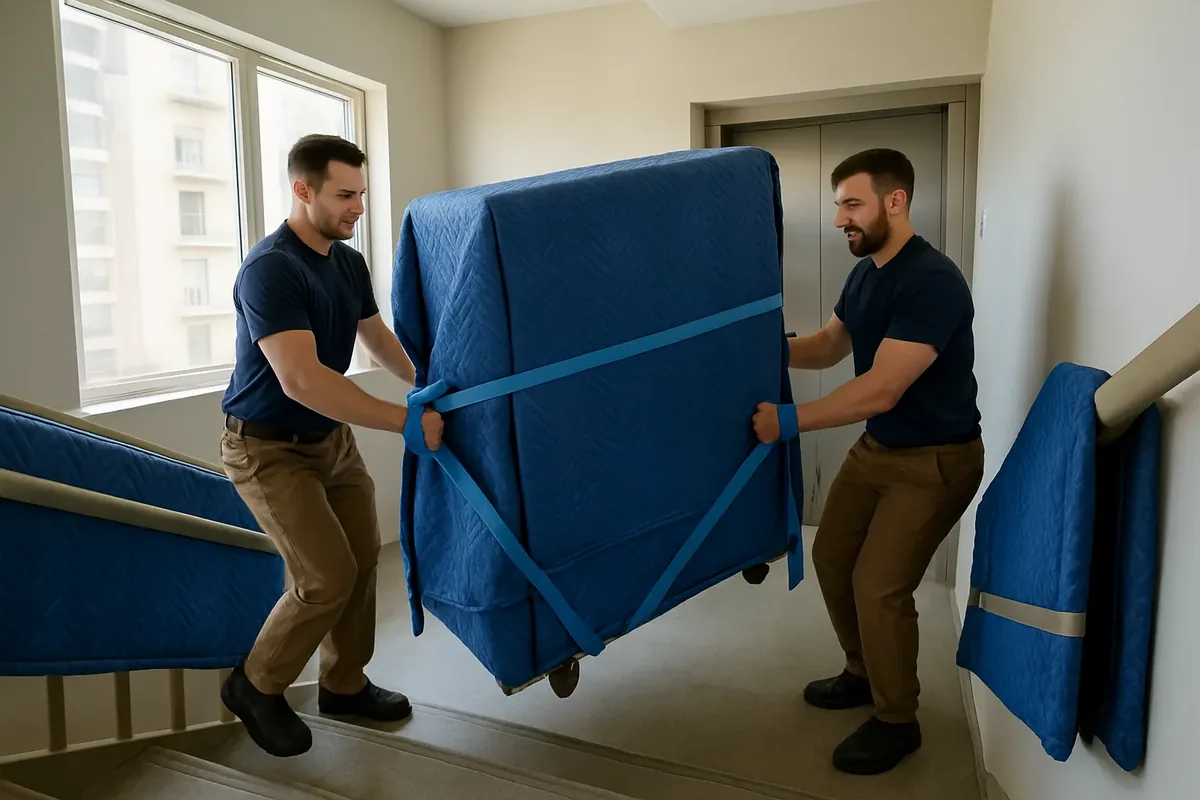
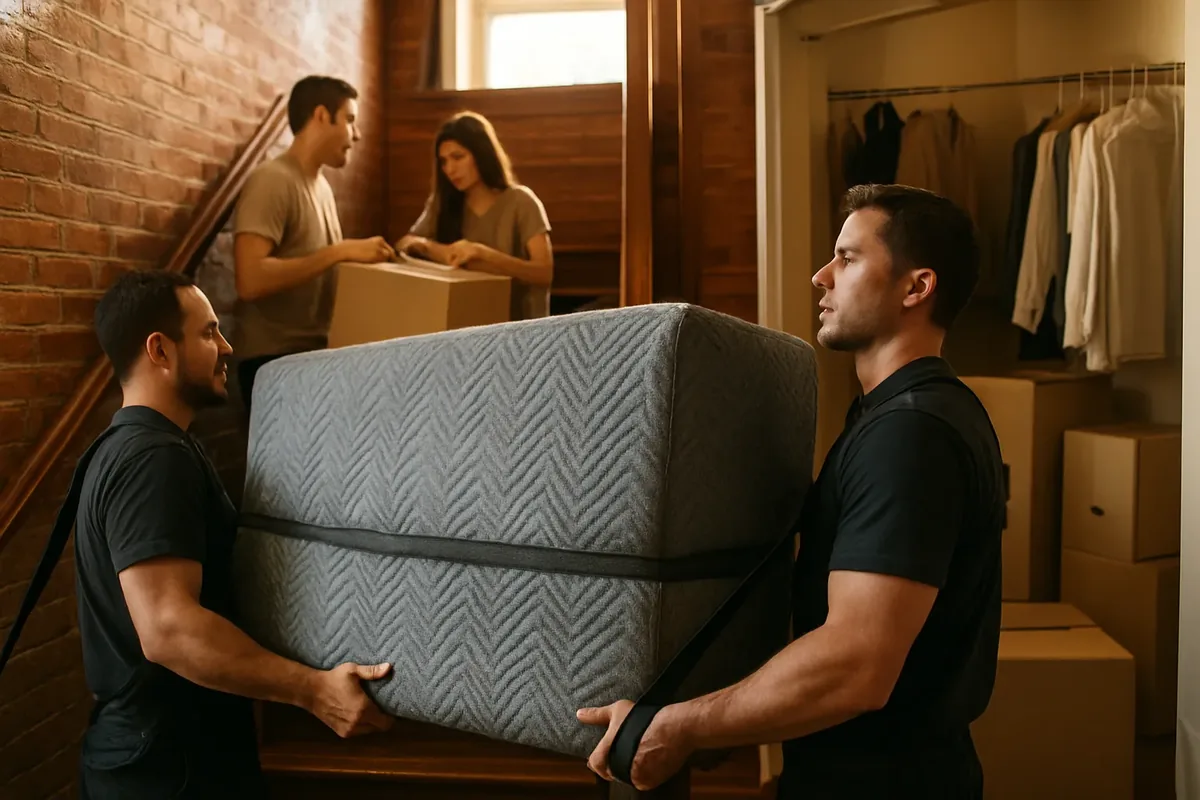
- Bag Mattresses and Upholstered Chairs in 4-to-5-Mil Poly With Handles. Slide queen and king mattresses inside heavy 5-mil tarp-style mattress bags equipped with stitched carry handles, and cover fabric armchairs in 4-mil poly bags. Handles give two carriers controlled grip points down two flights without dragging mattress corners across dusty stairwell landings.
- Pad Dressers and Credenzas with Quilted Blankets and Giant Rubber Bands. Remove drawers from heavy dressers (or secure them with stretch wrap over a padded layer), drape 72" x 80" moving pads completely over every corner, and snap 30" or 42" giant rubber moving bands tightly around the top and bottom so pads never slip mid-stair.
- Shield Walk-Up Newel Posts and Lay High-Rise Floor Runners First. Wrap exposed stairwell banister posts with flattened corrugated cardboard secured with painter's tape at the 3rd-floor landing, then roll a 27" x 24 ft slip-resistant canvas runner across your apartment's oak entry foyer and destination high-rise entryway before the first dolly enters.
- Wait for High-Rise Staff to Hang Protective Elevator Pad Curtains. Never roll a loaded platform cart into an unpadded tower elevator. Verify building maintenance has snapped quilted elevator wall curtains onto the brass hooks and laid Masonite or runner sheets in the cab corridor before bringing loads off the truck.
85-Lb Quilted Moving Blankets vs. 35-Lb/Doz Economy Non-Woven Pads
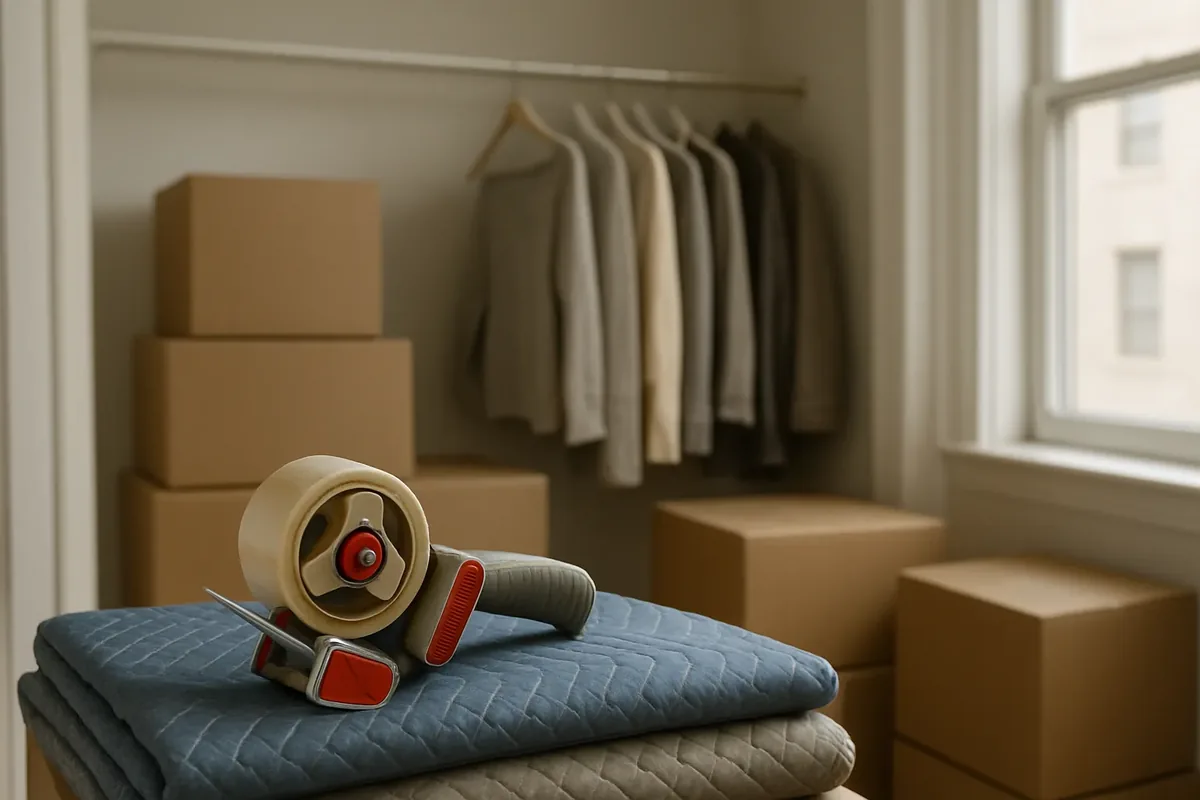
Not all moving pads provide equal wall and furniture protection on narrow staircases. Professional moving crews use heavy 80-to-85-lb-per-dozen woven cotton/polyester quilted pads with thick double-stitched batting that absorbs sharp impact against metal door frames. For DIY renters protecting furniture inside storage containers or padding smooth box stacks and painted surfaces, lighter 35-lb-per-dozen non-woven textile pads still cushion scuffs well—just double-layer them over sharp solid-wood table corners.
- Uboxes Economy Non-Woven Textile Moving & Storage Pads 72" x 80" (12-Pack, 35 lb/dz Textile): Breathable lightweight pads ideal for wrapping bookshelves, dining chairs, and PODS/storage layers, or doubling up over sharp dresser corners.
- US Cargo Control Large Giant Rubber Moving Bands (12-Pack Assorted, 26"–42" Stretch, Ribbed Natural Rubber): Heavy-duty ribbed rubber loops engineered to snap moving blankets securely onto dressers, nightstands, and desks in ten seconds without sticky adhesive residue.
- Trimaco Stay-Put Canvas Plus Slip-Resistant Hallway Floor Runner 27" x 24 ft (Non-Slip Rubber Back): Locks flat over hardwood, marble, and low-pile lobby carpet—blocking tracked rain, mud, and steel dolly wheel marks from costing you a $200+ floor refinishing deduction.
Want to budget exact packing kit quantities (12 to 24 pads, 1 to 3 mattress bags, and 23 to 71 boxes) alongside your moving crew estimate? Calculate your full apartment profile in our Apartment Moving Cost Calculator or compare DIY supply setups in the Movers vs. DIY Rental Truck Comparator.
Open Calculator →Frequently Asked Questions
Who pays if movers scratch the hallway walls in a 3rd-floor walk-up or dent a high-rise elevator?+
Licensed full-service movers carry commercial general liability insurance (documented on the high-rise COI) covering common-area property damage they cause during active work—provided you file a written damage report with photos before signing off or within the building's move-out window. If you move DIY or hire unlicensed cash helpers, your unit security deposit absorbs 100% of building repair charges.
Do full-service movers supply quilted blankets and floor runners automatically?+
Reputable local movers bring 80-to-85-lb quilted moving blankets and Masonite/neoprene floor runners on the truck for free in-transit use during the job—though you should confirm in writing before moving day whether they supply elevator wall pads (usually provided by the high-rise building itself) and whether they charge extra for shrink-wrap rolls ($15–$35).
Why should I use a 5-mil tarp mattress bag with handles instead of thin plastic sleeves on stairs?+
Cheap 1.5-mil to 2-mil plastic mattress covers tear easily the moment a queen mattress rubs against brick stairwell plaster or metal stair nosings. A heavy 4-to-5-mil poly or woven tarp bag with stitched webbing handles keeps dirt off the mattress and lets two people steer cleanly around tight 3rd-floor turns.
What is the best box grade to prevent crushed corners when rolling stacked carts into a high-rise elevator?+
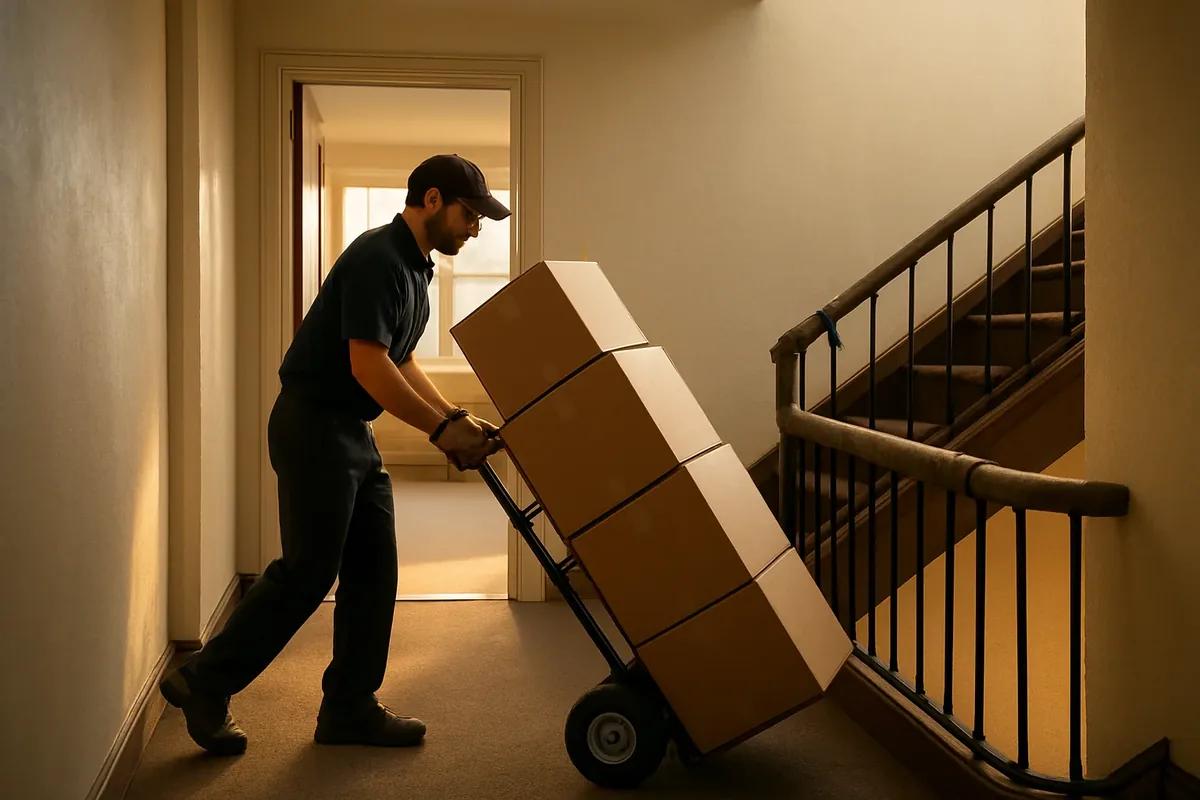
Pack clothes and linens in standard 32-ECT single-wall boxes, but switch to 44-ECT or double-wall 48-ECT boxes for heavy books, kitchen plates, and glassware. Stronger edge-crush walls let you stack boxes four-high on a 4-wheel platform dolly inside a high-rise elevator without the bottom carton buckling.
Interactive US Moving Tools
Compare Full-Service Movers vs. DIY Rental Truck in 30 seconds
Related Guides
walk up stairs and elevator moving costs
Walk-Up Stairs & Elevator Moving Costs: Complete US Benchmarks & Guides
Walk-up staircases, shared passenger elevators, and long-carry podium corridors routinely add $110 to $1,045 to a US apartment moving invoice through combined extra crew hours and flat tariff surcharges. This hub breaks down exact 2nd-to-5th-floor carry penalties, freight elevator booking rules, shuttle truck triggers, and the strapping gear that saves hours on moving day.
walk up stairs and elevator moving costs
Moving Fee Breakdown for Brownstone Front Stoop + Parlor Stairs Apartments
Historic brownstones hide a notorious access trap on moving day: an elevated 8-to-14-step exterior sandstone stoop followed immediately by a narrow parlor-level interior staircase. Learn how US movers price front stoop plus parlor stairs under flat per-flight tariffs ($50–$90) vs. hourly labor rates.
walk up stairs and elevator moving costs
How Brownstone High Stoop + Interior Stairs Changes a 1-Bedroom Local Move Quote
Moving out of a historic brownstone means navigating both an exterior stone stoop and steep interior parlor flights before reaching the curb. Learn the exact extra carry minutes, stair surcharges, and total dollar costs for studio and 1-bedroom local moves.
walk up stairs and elevator moving costs
2-Bedroom Moving Hours & Cost Impact: Brownstone High Stoop + Interior Stairs
Trying to move a 2-bedroom or 3-bedroom apartment out of a brownstone with only two movers creates severe stairwell fatigue and runaway hourly bills. Discover how deploying a 3- or 4-person relay crew slashes total move time and saves money.