In this guide
- Why Exact Box Sizing Matters for Footwear and Outerwear
- Exact Box, Paper Weight & Tape Roll Quantity Table by Closet Load
- Shoe-to-Box Density Math: Sneakers vs. Boots vs. Retail Shoeboxes
- Packing Paper Sheet Count vs. Honeycomb Kraft Cushioning
- Budgeting Your Exact Box Count: Movers vs. DIY Rental Truck
Why Exact Box Sizing Matters for Footwear and Outerwear
Ordering moving boxes by guesswork is the fastest way to derail an apartment pack. Overbuying leaves you paying for extra cardboard and cluttering a tight 700 sq ft floor plan; underbuying triggers last-minute hardware-store runs or forces movers to supply boxes off the truck at $5–$28 per carton. Entryway coat closets and 30+ pair shoe racks are particularly deceptive because footwear volume varies dramatically by shoe type: ten pairs of low-top canvas sneakers fit easily into one 1.75–3.0 cu ft medium box, whereas six pairs of knee-high leather boots or insulated snow boots fill that same carton to the brim.
Across US residential moves, a typical 1-bedroom apartment kit calls for 12 small, 15 medium, 8 large, and 2 wardrobe boxes plus 5 tape rolls ($95–$160 DIY vs. $290–$520 mover-packed), while a 2-bedroom apartment kit scales to 18 small, 22 medium, 12 large, and 3 wardrobe boxes plus 7 tape rolls ($145–$235 DIY vs. $460–$820 mover-packed). Carving out the exact box, paper-pound, and tape-yardage allocation for your entry closet ensures you reserve the right number of medium cartons before the kitchen and bedroom swallow your supply stack.
Exact Box, Paper Weight & Tape Roll Quantity Table by Closet Load
Match your entry closet against one of the three realistic US apartment tiers below—Minimalist (18–25 pairs of shoes, 6–10 coats), Standard 30+ Pair Household (30–40 pairs, 12–18 coats), or Heavy Four-Season / Collector Load (45–60 pairs including tall winter boots, boxed sneakers, and 20+ coats).
| Supply Type | Minimalist Closet (18–25 Pairs) | Standard Entry Closet (30–40 Pairs) | Heavy / 4-Season Closet (45–60 Pairs) | Primary Item Assignment |
|---|---|---|---|---|
| Small Box (1.5 cu ft, 16x12x12 in) | 1 box | 1–2 boxes | 2 boxes | Shoe polish, brushes, cedar shoe trees, gloves, compact umbrellas, leashes |
| Medium Box (1.75–3.0 cu ft, 18x14x12 to 18x15x14 in) | 2–3 boxes | 4 boxes | 6–7 boxes | 8–10 pairs of sneakers/flats or 5–6 pairs of boots per carton |
| Large Box (4.5 cu ft, 18x18x24 in) | 1 box | 1–2 boxes | 2–3 boxes | Compressible puffer jackets, fleeces, hats, scarves, tote bags |
| Wardrobe Box (24x20x46 in w/ steel bar) | 0–1 box | 1–2 boxes | 2 boxes | Structured wool overcoats, leather jackets, long rain trenches |
| Dish-Pack Double-Wall Box (5.2 cu ft, 44–48 ECT) | 0 boxes | 0 boxes (1 if glass decor) | 1 box (optional) | Only needed for entryway ceramic umbrella stands, lamps, or mirrors |
| Packing Paper / Honeycomb Kraft Cushion | 2–3 lbs (~40–60 sheets) | 3–5 lbs (~60–100 sheets) | 6–8 lbs (~120–160 sheets) | Toe-box stuffing, heel separation, leather scuff barriers |
| 2-Inch Packing Tape (55-yd Roll) | 0.5 roll (~25 yd) | 0.75–1.0 roll (~40–50 yd) | 1.25–1.5 rolls (~65–80 yd) | Full 3-strip H-tape top and bottom + hardware pouches |
| Estimated Total Cubic Volume | 25–38 cu ft | 45–65 cu ft | 70–95 cu ft | ~10%–15% of a typical 1BR–2BR apartment volume |
Amazon US Apartment Moving Supplies
Recommended Moving Boxes, Blankets & Bags for This Move
Apartment moving supplies matched to this guide (Amazon.com affiliate ID: apartmentmovingcost-20).
Honeycomb Kraft Paper Cushion Wrap Roll 15" x 200 ft (Eco Bubble Alternative)
3D interlocking die-cut kraft paper roll that expands to cushion wine bottles and ceramics without tape
Bankers Box SmoothMove Classic Medium Moving Boxes 18"x15"x14" (10-Pack)
Tape-free double-bottom medium boxes with lift-off lids and reinforced hand holes for books and decor
Uboxes Medium Corrugated Moving Boxes 18"x14"x12" (20-Bundle)
Workhorse 1.75 cu ft kraft corrugated cartons for pantry cookware, shoes, toys, and desk drawers
As an Amazon Associate I earn from qualifying purchases. Always verify live stock and pack sizing directly on Amazon.com.
Shoe-to-Box Density Math: Sneakers vs. Boots vs. Retail Shoeboxes
The biggest mistake in shoe-box estimation is assuming every pair occupies the same cubic volume. Use these exact capacity ratios for standard medium cartons before finalizing your order:
- Athletic Sneakers, Running Shoes & Loafers: A workhorse 1.75 cu ft carton like the Uboxes Medium Corrugated Moving Boxes (18x14x12 in, 20-bundle, 32-ECT rated to 65 lbs) holds 7 to 9 pairs comfortably when alternated toe-to-heel in two layers with paper dividers, keeping total weight around 18 to 24 lbs.
- Ankle Boots, Dress Heels & Hiking Boots: Slightly taller 2.2 cu ft tape-free cartons such as Bankers Box SmoothMove Classic Medium Moving Boxes (18x15x14 in, 10-pack, double-bottom with lift-off lids and reinforced hand holes) accommodate 5 to 7 pairs of heavier boots without crushing delicate toe caps or stacked heels.
- Tall Knee-High Boots & Insulated Snow Boots: Lay shafts horizontally across the 18-inch length of a medium carton after stuffing each shaft with rolled paper—expect 3 to 4 pairs per box, or lay them in the bottom cavity of a hanging wardrobe box beneath shorter jackets.
- Original Retail Shoeboxes (Sneakerheads): Standard men's size 10–12 retail shoeboxes measure roughly 14x9x5 inches. Four retail boxes fit neatly inside an 18x14x12 carton, or six to eight fit inside an 18x18x24 large carton; packing 32 boxed pairs requires 4 large or 8 medium outer master boxes so movers can stack them safely.
Packing Paper Sheet Count vs. Honeycomb Kraft Cushioning
Never use printed newspaper inside a hallway shoe collection—petroleum newsprint ink transfers permanently onto white sneaker midsoles, tan suede boots, and light-colored wool coat linings when apartment humidity climbs. Standard 24x36 inch unprinted packing paper runs roughly 20 sheets per pound. Plan 2 sheets per pair of structured dress shoes or leather boots (one crumpled inside each toe box to preserve shape, plus one wrapped around the exterior to prevent buckle scratches) and 1 sheet per pair of everyday sneakers. For 35 pairs, that totals 55 to 70 sheets—roughly 3 to 4 lbs of unprinted paper—plus 1 lb for wrapping umbrella handles, coat-rack brackets, and shoe horns.
If your hallway closet also stores delicate suede heels, patent-leather dress shoes, sculptural entryway vases, or ceramic umbrella stands, swap bubble wrap for a recyclable die-cut roll like the RANPAK Honeycomb Kraft Paper Cushion Wrap Roll (15 in x 200 ft, 3D interlocking honeycomb kraft, 100% recyclable). When stretched, the 3D hexagonal cells lock together without tape, cradling heels and buckles securely while taking up a fraction of the storage space of bulky plastic bubble rolls.
Budgeting Your Exact Box Count: Movers vs. DIY Rental Truck
Getting your entry-closet carton count right prevents expensive surprises across the full apartment move. In a studio (250 cu ft, 2,000 lbs) or 1-bedroom apartment (420 cu ft, 3,200 lbs), extra unboxed items on move day stretch crew loading times past your base estimate ($125–$175/hr for 2 movers) and push small apartments from a 10-ft cargo van ($20–$30/day) up to a 12–15 ft truck ($30–$40/day). Here is how exact box planning fits into a full 1-bedroom intrastate regional move (160 miles, 2 DIY rental days) with ground-floor loading dock access.
| Cost Component | Full-Service Movers + Pro Pack | Full-Service Movers (DIY Exact Kit) | DIY 12–15 ft One-Way Rental Truck |
|---|---|---|---|
| Weight / Linehaul or Crew Labor (3,200 lbs @ $0.22–$0.36/lb regional) | $704 – $1,152 base weight | $704 – $1,152 base weight | $0 (or $170–$290 loading helpers) |
| Pro Packing Labor (1BR Full Pack incl. Coat Closet) | $325 – $680 | $0 | $0 |
| Transportation / Truck / Fuel (160 mi @ $3.55/gal, 10 mpg = ~$57 fuel) | $380 – $690 mover transport | $380 – $690 mover transport | $258 – $342 (2 days + $0.88–$1.28/mi + fuel) |
| Packing Materials (Full 1BR Exact Box & Tape Kit) | $290 – $520 mover-supplied | $95 – $160 Amazon DIY kit | $95 – $160 Amazon DIY kit |
| Total Estimated Regional Move Range | $1,699 – $3,042 | $1,179 – $2,002 | $353 – $502 ($523–$792 w/ helpers) |
Need exact carton counts and dollar totals for your whole apartment—kitchen, closets, bedrooms, and living room combined? Plug your unit size and mileage into our Apartment Moving Cost Calculator or compare options in the Movers vs. DIY Rental Truck Comparator.
Open Calculator →Frequently Asked Questions
How many pairs of shoes actually fit in a standard 18x14x12 medium moving box?+
An 18x14x12 inch (1.75 cu ft) 32-ECT medium box fits 7 to 9 pairs of standard sneakers, flats, or dress shoes when paired toe-to-heel with paper sheets between layers, or 4 to 6 pairs of ankle and winter boots. For a 30+ pair shoe rack, plan on 4 medium boxes.
Do I need 48-ECT heavy-duty boxes for coats and shoes, or is 32-ECT sufficient?+
Standard 32-ECT single-wall boxes (rated to 65 lbs) are ideal for both coats and shoes because properly packed footwear boxes average only 18 to 30 lbs and coat cartons average 15 to 25 lbs. Save 44-ECT or 48-ECT double-wall dish packs for dense glass, ceramics, and kitchen appliances.
How many winter coats fit inside a single 24-inch wardrobe box?+
A 24-inch-wide wardrobe carton holds 8 to 12 bulky winter wool coats or parkas on hangers, compared to 20 to 25 thin dress shirts. If your hallway closet holds 18 coats, use one wardrobe box for structured wool and leather pieces and pack compressible puffer jackets and rain shells inside one 4.5 cu ft large box to cut box count and truck cube.
How do walk-up stairs and elevator rules affect how I should size my coat-closet boxes?+
In 2nd- to 5th-floor walk-ups—where movers add $55–$340 in stair surcharges and 0.5 to 3.0 extra hours—compact 18x14x12 or 18x15x14 medium boxes with hand holes let carriers stack two boxes on a hand truck or carry safely on tight landings. In elevator buildings requiring a COI and reserved freight elevator, uniform box footprints maximize every elevator trip and avoid overtime penalties.
How much extra tape and paper should I buffer in case I miscount?+
Always add a 15%–20% buffer on tape and boxes across a full apartment move: at least 1 extra 55-yard tape roll and 2 to 3 spare medium cartons. Unopened rolls and flat-packed boxes are easy to store or return, whereas running short at 10:00 PM the night before movers arrive forces costly move-day carton fees ($5–$28 per box) or non-binding estimate overages.
Interactive US Moving Tools
Compare Full-Service Movers vs. DIY Rental Truck in 30 seconds
Related Guides
packing labor and material cost guides
Packing Service & Supply Cost Calculators: Complete US Benchmarks & Guides
Comparing full-service mover packing rates against buying your own boxes, tape, clean newsprint, bubble wrap, blankets, and mattress bags reveals savings of $115 to $1,140+ depending on apartment size. This pillar hub breaks down exact box counts, crew packing hours, fragile-only kitchen packages, and 32-ECT corrugated material specs from studio to 4-bedroom apartments.
packing labor and material cost guides
Packing Timeline & Crew-Hour Benchmarks: Entry Coat Closet & 30+ Pair Shoe Rack
Benchmark exactly how many hours 1 person, 2 people, or a professional moving crew need to sort, wrap, box, and label an entry coat closet and 30+ pair shoe rack. Follow our 14-day countdown schedule so daily outerwear stays accessible without triggering last-minute move-day delays.
packing labor and material cost guides
7 Packing Mistakes That Break Items in Entry Coat Closet & 30+ Pair Shoe Rack
Stop crushing structured leather boots, scratching entryway mirrors, and splitting shoe cartons on apartment stairs. Master the 7 structural rules—H-tape seams, 2-inch void cushioning, vertical flat-item stacking, and color-coded labels—used by seasoned US moving crews.
packing labor and material cost guides
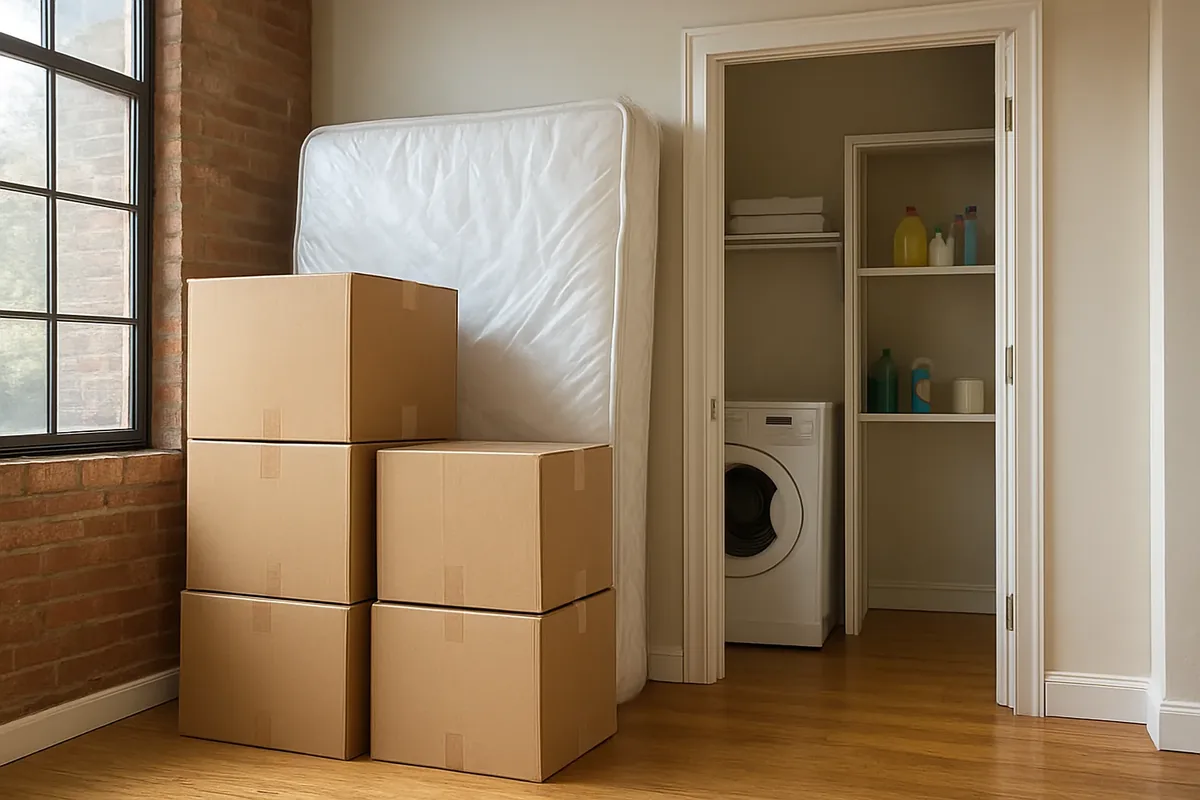
Professional Packing Labor & Material Quote: Laundry Closet & Cleaning Supplies
See exactly how US moving companies bill hourly packer labor, per-carton material fees, and appliance disconnect surcharges for an apartment laundry nook and cleaning closet. Learn which chemicals carriers legally refuse and how to compare mover packing against a DIY rental truck.