In this guide
Why Vertical Plate Stacking Prevents 80% of Kitchen Breakage
The single most common DIY packing mistake in a studio apartment is stacking ceramic dinner plates flat like they sit in a kitchen cabinet. When a moving truck hits a pothole or a hand truck bumps down a 2nd-floor apartment stair tread, downward shock travels straight through the center of horizontally stacked plates, snapping the bottom two dishes cleanly in half. Professional packers always stand plates, platters, and shallow pasta bowls vertically on their rims—just like vinyl records in a crate.
Standing a plate on edge routes vertical road vibration through the circular rim arch, where ceramic is structurally strongest. Wrap each plate individually in two sheets of 24"x30" clean unprinted newsprint, bundle three to four wrapped plates together with an extra outer sheet, and place the bundle upright in a small or double-wall dish-pack carton. Orient the heaviest dinner plates along the bottom tier and lighter salad bowls or mugs on an upper tier separated by a flattened cardboard divider or folded newsprint pad.
| Studio Item Category | Correct Carton Size & Grade | Max Box Weight | Cushioning & Orientation Standard |
|---|---|---|---|
| Dinner Plates & Ceramic Bowls | Small (1.5 cu ft) or 44–48 ECT Dish Pack | 35–40 lbs | Vertical on edge; 2–3 in crushed paper base & top |
| Drinking Glasses & Stemware | Small / Medium w/ Cell Dividers | 25–30 lbs | Stuff cavities w/ newsprint; wrap double; rim up or down upright |
| Hardcover Books & Vinyl Records | Small Book Box (15"x12"x10" or 16"x12"x12") | 35–40 lbs | Pack spine-down or flat in alternating stacks; zero voids |
| Pots, Pans & Small Appliances | Medium Utility Box (18"x18"x16", 32 ECT) | 35–40 lbs | Nest cookware w/ paper interleaving; wrap glass lids vertically |
| Monitors, Art & Mirrors | Mirror/TV Carton or Medium Box + Bubble | 25–35 lbs | 3/16" bubble wrap or honeycomb kraft; pack upright, never flat |
| Comforters, Pillows & Coats | Large Linen Box (20"x20"x15"+, 32 ECT) | 15–25 lbs | Line inside w/ clean bag if rain expected; fill flush to top flaps |
The 2-Inch Void Cushioning Rule and the 'Shake Test'
Cardboard walls alone do not absorb drop energy—internal air compression and void elimination do. Every fragile studio carton requires a minimum 2-inch bed of tightly crumpled unprinted newsprint across the bottom before the first wrapped item enters, plus 2 inches of crumpled paper along perimeter gaps and across the top before sealing. Never leave hollow headspace at the top of a 32-ECT carton; an under-filled box collapses inward the moment another 35-pound carton stacks on top of it inside a 10-ft rental truck.
Before pulling tape across the top flaps, press gently down on the center of the closed lid and perform the commercial 'shake test.' If the lid dips more than half an inch, add another layer of crumpled newsprint or a folded dish towel. If you hear any clinking or feel weight shift when you rock the box side to side, reopen the flaps and wedge rolled paper coils tightly between the interior objects and the outer box wall.
Amazon US Apartment Moving Supplies
Recommended Moving Boxes, Blankets & Bags for This Move
Apartment moving supplies matched to this guide (Amazon.com affiliate ID: apartmentmovingcost-20).
Clean Newsprint Packing Paper 24" x 30" (10-Lb Pack / ~200 Sheets)
Pre-cut unprinted white/gray newsprint sheets sized for 1-bedroom apartment glassware and pantry bowls
Honeycomb Kraft Paper Cushion Wrap Roll 15" x 200 ft (Eco Bubble Alternative)
3D interlocking die-cut kraft paper roll that expands to cushion wine bottles and ceramics without tape
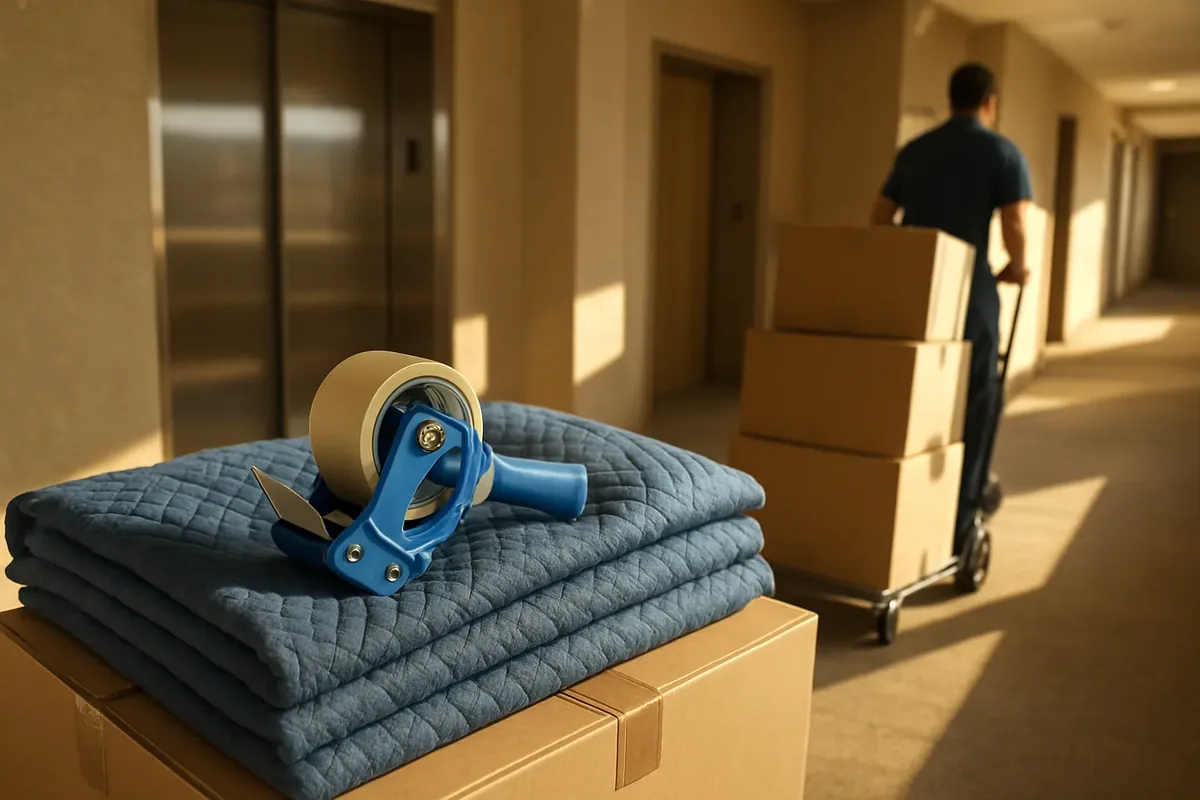
Scotch H180 Heavy-Duty Pistol-Grip 2-Inch Packing Tape Gun Dispenser
Steel-and-high-impact plastic side-loading tape gun with adjustable hub brake for 2-inch moving rolls
As an Amazon Associate I earn from qualifying purchases. Always verify live stock and pack sizing directly on Amazon.com.
H-Taping Seams Correctly (And Why Interlocking Flaps Fail)
Folding box flaps over one another in a pinwheel interlock—a habit many DIY renters try to save tape—weakens corrugated stacking strength by more than 40% and leaves gaps where small objects slip out. Professional packers square the box tightly, fold the two minor (short) flaps inward first, fold the two major (long) flaps flat until they meet seamlessly, and apply the H-taping method to both the bottom and top faces.
- Run the center spine strip. Apply one continuous strip of 2-inch acrylic moving tape (minimum 2.6–3.0 mil thickness) down the center seam, extending at least 3 inches down both vertical end walls so shear stress transfers into the cardboard sides.
- Lock both outer edge seams (completing the 'H'). Run two perpendicular strips across the left and right outer edges where the major flaps meet the box perimeter, sealing dust out and preventing corners from bowing outward under stack weight.
- Double-strip heavy book and kitchen cartons. For 35–40 lb small cartons carrying books, canned goods, or stoneware, add a second overlapping center strip on the bottom face perpendicular to the first seam.
- Burnish the adhesive with your palm. Press firmly along every tape strip immediately after dispensing—pressure-sensitive acrylic moving tape bonds significantly stronger after firm hand rub-down, especially in air-conditioned apartments.
Cushioning & Sealing Tools That Match Pro Crew Standards
Trying to pack 24 studio boxes by biting off thin retail cellophane tape and wrapping plates in thin grocery bags costs hours and causes avoidable chips. Three commercial-grade packing consumables keep your DIY material budget inside the $65–$110 studio benchmark while matching what paid crews carry off their trucks:
- Clean Newsprint Packing Paper 24" x 30" (10-Lb Pack / ~200 Sheets, Pratt Retail Specialties): Ink-free pre-cut sheets sized specifically for studio glassware, ceramic bowls, and crumpled 2-inch void fill without leaving dark newspaper smudges on white dishes.
- Honeycomb Kraft Paper Cushion Wrap Roll 15" x 200 ft (RANPAK, 3D Honeycomb Kraft, 100% Recyclable): Expands into interlocking hexagonal cells that self-grip around wine bottles, ceramic vases, and French presses without tape—a clean, recyclable alternative to bulky plastic bubble rolls in tight studio floor plans.
- Scotch H180 Heavy-Duty Pistol-Grip 2-Inch Packing Tape Gun Dispenser (Fits 2" / 3" core, adjustable hub brake): Enables fast, taut one-handed H-taping across all 24 studio cartons, keeping tape tension flat against cardboard seams and saving 40–60 minutes over handheld plastic dispensers.
Stacking Physics Inside Apartments, Elevators, and 10-Ft Trucks
Once your 24 boxes are cushioned and H-taped, how you stage and load them dictates whether anything crushes in transit. Inside your studio, stage finished cartons in uniform three-high columns along one wall: 1.5 cu ft heavy small boxes on the floor, 3.0 cu ft medium boxes in the middle, and 3.5–4.5 cu ft light linen boxes on top. Leave a clear 36-inch corridor to your front door so movers or DIY helpers can wheel a 4-wheel dolly directly into the room.
Inside a 10-ft rental truck (or when loading a mover's box truck), build tight 'tiers' from floor to ceiling against the front bulkhead wall. Place heavy appliances, solid-wood dressers, and heavy small book cartons directly on the truck floor; stack medium kitchen cartons on the second tier; and reserve the top tier strictly for fragile dish cartons, lampshades, and lightweight comforter boxes. Strap every completed tier to the truck's interior wood slats or E-track rails using ratchet straps or heavy cargo tie-downs so nothing shifts during hard city braking.
Ready to pair pro-grade packing technique with the right moving budget? Run your studio size, floor access, and mileage through our Apartment Moving Cost Calculator or compare DIY truck vs. crew totals in the Movers vs. DIY Rental Truck Comparator.
Open Calculator →Frequently Asked Questions
Should wine glasses and coffee mugs be packed right-side up or upside down?+
Pack wrapped drinking glasses and mugs upright (either rim-up or rim-down works if cushioned properly, though most US movers prefer rim-down for mugs and rim-up for delicate stemmed wine glasses so weight rests on the thicker base). Always stuff crumpled newsprint inside the hollow interior of every glass first so lateral pressure cannot implode the rim.
Why should I never label only the top lid of my studio moving boxes?+
The moment movers stack boxes three or four high on a hand truck or inside a freight elevator, top-lid writing disappears completely. Write the room zone, brief contents, and any 'FRAGILE' warning in bold marker on at least two adjacent vertical side panels as well as the top.
Can I use bath towels and hoodies instead of newsprint paper to cushion studio dishes?+
Soft towels and sweatshirts work great as buffer pads around sturdy mixing bowls, skillets, and picture frames, and can trim your supply order slightly. However, for delicate porcelain plates and thin glassware, crisp crumpled newsprint or 3D honeycomb kraft paper provides firmer, non-slip edge tension than slippery fabric.
How thick should moving tape be so heavy book boxes do not pop open on stairs?+
Choose 2-inch-wide acrylic or hot-melt moving tape rated at least 2.6 mil to 3.1 mil thick. Cheap 1.6-mil shipping tape splits lengthwise under moisture, heat, or stair vibration, and masking or duct tape loses adhesion rapidly on dusty kraft corrugated board.
Does walk-up stair carrying change how tightly I should cushion studio cartons?+
Yes. Carrying cartons down a 3rd-floor or 4th-floor walk-up subjects boxes to 45-degree tilting and stair-tread jostling that flat elevator rolls avoid. For walk-up moves, double-wrap glass items, use a full 3-inch bottom newsprint pad, keep every carton strictly under 35–40 pounds, and slip a 5-mil mattress bag over your mattress so railings never snag the fabric.
Interactive US Moving Tools
Compare Full-Service Movers vs. DIY Rental Truck in 30 seconds
Related Guides
packing labor and material cost guides
Packing Service & Supply Cost Calculators: Complete US Benchmarks & Guides
Comparing full-service mover packing rates against buying your own boxes, tape, clean newsprint, bubble wrap, blankets, and mattress bags reveals savings of $115 to $1,140+ depending on apartment size. This pillar hub breaks down exact box counts, crew packing hours, fragile-only kitchen packages, and 32-ECT corrugated material specs from studio to 4-bedroom apartments.
packing labor and material cost guides
How Much Do Movers Charge to Pack a Full 1-Bedroom Apartment (600–850 Sq Ft)?
Break down exact US moving company charges for hourly packer labor, travel fees, and 37-box material markups on a 600–850 sq ft 1-bedroom apartment. Compare full-service packing invoices against hybrid kitchen-only packing and DIY rental truck budgets.
packing labor and material cost guides
Self-Packing Full 1-Bedroom Apartment (600–850 Sq Ft): How Much Do You Save on Amazon?
See the exact line-by-line markup moving companies add to cartons, dish packs, wardrobe boxes, and tape for a 600–850 sq ft 1-bedroom apartment. Learn how sourcing your own supplies trims $195 to $360 off materials before packing labor even starts.
packing labor and material cost guides
How Many Small, Medium & Large Boxes for Full 1-Bedroom Apartment (600–850 Sq Ft)?
Use this room-by-room volume blueprint to order the exact count of small, medium, large, wardrobe, and dish boxes plus tape rolls and paper sheets for a 600–850 sq ft 1-bedroom apartment. Avoid overbuying cartons or stalling halfway through kitchen packing.