
In this guide
- Why Apartment Kitchen Cartons Fail First on Moving Day
- Vertical Plate Stacking Physics and the 2-Inch Void Buffer
- H-Taping Seams and Quiet-Release Acrylic Adhesive Technique
- Liquid Leak Containment for Pantry Bottles, Oils & Cleaning Supplies
- Color-Coded Room Labels and Load-Order Stacking Inside the Truck
- Cost Math: DIY Kitchen Cushioning vs. Full-Service Mover Packing
Why Apartment Kitchen Cartons Fail First on Moving Day
Across US residential moves, the kitchen accounts for roughly 20% to 30% of total box count in a 1-bedroom or 2-bedroom apartment yet generates more than half of all breakage and water-damage claims. Unlike bedrooms filled with compressible linens, kitchen cabinets hold high-density ceramics, cast iron, glass stemware, and liquid pantry staples. When those dense loads meet the dynamic shock of a 2-wheel appliance dolly bouncing down a 3rd-floor walk-up staircase or riding a tight freight elevator, under-cushioned cartons bow outward along the bottom flaps and buckle vertically under the next tier of boxes in the truck.
Standard single-wall 32-ECT (Edge Crush Test) corrugated boxes are rated to hold up to 65 pounds of evenly distributed static load, but moisture from a single leaking vinegar bottle or soy sauce cap cuts corrugated stacking strength by more than 40% within minutes. Worse, movers loading a 15-foot or 20-foot rental truck build floor-to-ceiling tiers to stabilize cargo over potholes and highway expansion joints. Any kitchen carton with an unfilled air pocket at the top caves inward as soon as a 35-pound box lands on top of it, transferring vertical compression directly onto wineglass stems and salad bowls.
Vertical Plate Stacking Physics and the 2-Inch Void Buffer
Flat-stacked dinner plates fail because stoneware and porcelain have low tensile strength across their wide horizontal face. Every bump from a curb ramp or truck axle sends a downward shockwave straight through the center of the bottom plate, cracking the entire pile at once. Standing plates vertically on their rims—like vinyl records in a crate—channels compressive force along the thick circular perimeter rim, which withstands dramatically higher top-down load without flexing.
To lock vertical stacks against lateral vibration, surround every interior face of the box with a 2-inch shock-absorption zone. Start by crumpling 6 to 8 sheets of unprinted 24 x 30 in newsprint into firm, springy paper balls across the bottom of the carton before placing a single dish. Wrap each plate individually in two sheets of clean newsprint, nest three wrapped plates together into a compact bundle, and add a layer of 3/16-inch perforated small-bubble wrap around delicate porcelain rims or heirloom serving platters. Fill every side gap between plate bundles and box walls with tightly wadded paper, then top the carton with another 2-inch crumpled paper crown so the flaps meet flat with zero inward dip when pressed.
| Kitchen Zone / Item Class | Recommended Carton & Grade | Orientation & Void Rule | Max Loaded Weight | DIY Packing Cost Share vs. Mover-Packed Rate |
|---|---|---|---|---|
| Dinner plates, bowls, stoneware | 1.5 cu ft Small (32-ECT) or 5.2 cu ft Dish Pack (44–48 ECT double-wall) | Plates vertical on edge; bowls nested in pairs on edge; 2 in paper cushion on all 6 sides | 35–40 lbs | $18–$32 DIY supplies vs. $65–$115 mover-packed (labor + carton) |
| Wine glasses, tumblers, coffee mugs | Dish Pack with cardboard cell dividers or 1.5 cu ft Small with bubble sleeves | Standing upright or inverted by thickest rim; stems wrapped in 3/16 in small bubble | 25–30 lbs | $16–$28 DIY supplies vs. $55–$95 mover-packed |
| Cast iron, Dutch ovens, stand mixer | 1.5 cu ft Small (32-ECT) with double-taped bottom seam | Single heavy piece centered in crumpled newsprint; never stacked above glass | 40–45 lbs | $10–$18 DIY supplies vs. $35–$65 mover-packed |
| Pantry jars, oils, sauces, canned goods | 1.5 cu ft Small (32-ECT) + zip-top leak bags or rigid plastic tote | Upright only; plastic wrap under screw caps; tape flip-tops shut; 2 in paper between glass jars | 35–40 lbs | $14–$24 DIY supplies vs. $45–$85 mover-packed |
| Baking sheets, plasticware, dry cereal | 3.0 cu ft Medium (32-ECT) | Lightweight bulky filler boxes placed on upper truck tiers; zero dead air space | 25–35 lbs | $12–$22 DIY supplies vs. $40–$75 mover-packed |
| Full 1-Bedroom Kitchen + Whole-Unit Supply Totals (Ref: pricing benchmarks) | 12 Small, 15 Medium, 8 Large, 2 Wardrobe, 5 Tape Rolls (whole 1BR kit) | Kitchen uses ~40% of total paper and ~35% of small/medium cartons | 420 cu ft / 3,200 lbs whole 1BR | $95–$160 whole 1BR Amazon DIY kit vs. $290–$520 mover-packed materials |
Amazon US Apartment Moving Supplies
Recommended Moving Boxes, Blankets & Bags for This Move
Apartment moving supplies matched to this guide (Amazon.com affiliate ID: apartmentmovingcost-20).
Duck EZ Start Frustration-Free Quiet Packaging Tape (6-Roll Pack)
Smooth whisper-quiet unrolling adhesive tape ideal for late-night apartment packing without loud screeching
Scotch Cushion Wrap Perforated 3/16-Inch Small Bubble Roll 12" x 100 ft
Lightweight tear-by-hand clear bubble cushioning roll for kitchen mugs, picture frames, and ceramics
Clean Newsprint Packing Paper 24" x 30" (10-Lb Pack / ~200 Sheets)
Pre-cut unprinted white/gray newsprint sheets sized for 1-bedroom apartment glassware and pantry bowls
As an Amazon Associate I earn from qualifying purchases. Always verify live stock and pack sizing directly on Amazon.com.
H-Taping Seams and Quiet-Release Acrylic Adhesive Technique
A single strip of cheap 1.8-mil acrylic tape down the center seam is the fastest way to drop 38 pounds of stoneware across an apartment lobby tile floor. Heavy kitchen cartons require the commercial H-tape method on both the bottom and top flaps. First, fold the two short inner flaps and close the two long outer flaps squarely so no corner twists out of alignment. Run one center strip of 1.88-inch-wide, 2.6-mil or thicker packaging tape down the middle seam, extending at least 3 inches down both vertical end walls. Then apply two perpendicular cross-strips over the left and right outer edges where the flaps meet the box walls, forming a capital letter H that resists shear forces when a mover grips the carton by the top rim.
In multi-family apartment buildings with thin walls and quiet-hours lease rules after 9:00 PM or 10:00 PM, standard acrylic tape screeches above 75 decibels every time you pull a yard off the roll. Switching to a whisper-quiet 2.6-mil release tape such as the Duck EZ Start 1.88 in x 55 yd roll eliminates that piercing unroll noise during late-night packing sessions while still delivering full seam adhesion on recycled corrugated kraft liner. Press every tape pass firmly with the palm of your hand—pressure-sensitive acrylic adhesives bond through mechanical friction and pressure, not just light contact.
Liquid Leak Containment for Pantry Bottles, Oils & Cleaning Supplies
Professional moving crews operating under USDOT hazardous-materials rules prohibit loading aerosol sprays, bleach, propane canisters, and open flammable liquids on moving vans, and most local apartment movers also refuse half-open cooking oils unless sealed in leakproof secondary containment. Even a local 12-mile move inside a 12-to-15-foot rental truck exposes pantry boxes to 100-degree cargo box temperatures in summer or freezing swings in winter, forcing air inside plastic and glass bottles to expand and push liquid past factory threads.
- Purge perishable and low-value opened liquids 72 hours prior. Finish or discard opened dressings, half-empty condiment jars, and inexpensive vinegars worth less than the $2–$4 in tape, zip bags, and box space needed to move them safely.
- Install an under-cap plastic film gasket on every keeper bottle. Unscrew the cap on olive oil, maple syrup, vanilla extract, and soy sauce bottles, lay a double square of plastic kitchen wrap directly over the bottle mouth, and screw the cap down tightly over the film.
- Tape flip-top and pump nozzles in the locked position. Wrap a narrow strip of packaging tape vertically over flip-top caps and around pump collars so vibration inside the truck cannot pop a lid open.
- Double-bag glass bottles inside sealed gallon zip bags before upright loading. Place every liquid bottle inside a heavy-duty freezer bag with air pressed out, cushion each glass bottle with two sheets of 24 x 30 in newsprint, and stand all bottles strictly upright inside a plastic bin or small 32-ECT carton lined with a trash bag.
- Keep dry spices and flour sealed against oil or moisture migration. Never share a carton between liquid sauces and dry baking goods. Group dry grains, pasta boxes, and spices in a separate medium 32-ECT box with an intact top moisture seal.
Color-Coded Room Labels and Load-Order Stacking Inside the Truck
Writing 'Kitchen — Fragile' on the top flaps alone fails the moment boxes stack three or four high inside a truck or hallway staging zone—nobody can read a top label once another box covers it. Apply bright color-coded adhesive tape or 2-inch colored labels (for example, red for Fragile Kitchen Glassware, yellow for Pantry & Dry Goods, blue for Cookware) on at least two adjacent vertical sides of every carton, plus a bold black-marker manifest line listing exact contents and handling priority such as 'KITCHEN — PLATES VERTICAL / TOP LOAD ONLY'.
- Base tier (floor of truck or dolly stack): Dense small boxes containing canned goods, cast-iron skillets, and cookbooks kept strictly under 45 lbs, placed over flattened pads or clean dry decking.
- Middle tier (waist height): Double-wall dish packs and vertically stacked stoneware cartons placed flat with directional arrows pointing straight up—never tilted on their sides to squeeze through a narrow apartment doorway.
- Top tier (chest to shoulder height): Stemware cartons, coffee makers, lightweight pantry cereal boxes, and plastic food-storage containers weighing under 25 lbs.
- Elevator and walk-up sequencing: Stage heavy base-tier cookware boxes closest to the apartment entry door so the crew loads the truck floor first while fragile glass boxes wait safely in the dining alcove until the upper tier is ready.
Cost Math: DIY Kitchen Cushioning vs. Full-Service Mover Packing
When apartment renters debate hiring movers for partial kitchen packing versus buying supplies online, the price gap comes from both material markups and hourly crew billing. Based on US apartment moving benchmarks, a standard 2-person moving crew charges $130–$175 per hour for a 1-bedroom move (plus a 1-hour travel fee and $75–$145 local transport fee), and full-service packing of a dense apartment kitchen typically adds 2 to 3.5 labor hours alongside marked-up dish packs, newsprint bundles, and tape rolls. For a 1-bedroom apartment, total DIY materials across the whole unit run $95–$160 versus $290–$520 when supplied by movers; in a 2-bedroom unit (680 cu ft, 5,400 lbs, 3-person crew at $175–$235/hr), whole-unit DIY materials average $145–$235 against $460–$820 mover-packed.
If you are moving out of a 3rd-floor walk-up (2 flights of stairs, adding 1.0–1.75 extra crew hours or $110–$190 in stair surcharges) or coordinating a strict 2-hour reserved freight-elevator window ($45–$95 staging/COI overhead), pre-packing your kitchen with uniform 32-ECT small cartons, a 10-lb pack of 24 x 30 in unprinted newsprint (~200 sheets), a 12 in x 100 ft roll of 3/16-inch perforated small-bubble wrap, and a 6-roll pack of 2.6-mil quiet-release tape delivers two compounding wins: zero mover material markup and 45 to 75 minutes shaved off moving-day loading time because uniform H-taped boxes stack cleanly four-high on a 2-wheel hand truck.
Ready to see how DIY kitchen packing affects your exact move budget? Run your apartment size, stair flights, and distance in our Apartment Moving Cost Calculator or compare full-service packing against a rental truck in our Movers vs. DIY Rental Truck Comparator.
Open Calculator →Frequently Asked Questions
Should I buy 32-ECT standard small boxes or upgrade to 44-ECT to 48-ECT double-wall dish packs for apartment dishes?+
Standard 1.5-cubic-foot 32-ECT small boxes work safely for everyday ceramic bowls, pantry cans, and cookware when kept under 40 lbs and cushioned with a full 2-inch crumpled paper buffer. Upgrade to 44-ECT or 48-ECT double-wall dish-pack cartons for fine porcelain, stemmed wineglasses, long-distance interstate moves over 250 miles, or any 3rd-to-5th-floor walk-up move where cartons experience heavier stacking pressure and repeated hand-truck jolts.
Why do movers refuse to pack or transport open pantry oils and under-sink cleaning bottles?+
USDOT and state household-goods regulations prohibit transporting corrosive, flammable, or aerosol chemicals inside moving vans, and carriers refuse unsealed cooking oils because one spilled bottle can soak through corrugated floors and ruin an upholstered sofa or mattress stacked underneath. Keep essential sealed condiments in leakproof freezer bags inside a hard plastic tote you transport in your personal vehicle.
Does packing my own kitchen dishes change my building COI or freight elevator reservation requirements?+
Packing your own kitchen does not eliminate your apartment building's Certificate of Insurance (COI) requirement if you still hire licensed movers to load and haul your furniture and boxes. However, having every kitchen box sealed, H-taped, and staged before the crew arrives keeps your move inside a 2-hour or 3-hour reserved freight-elevator window and prevents overtime building penalties or extra hourly crew charges.
How does a 1-hour travel fee or California Double Drive Time (DDT) affect moves when the crew also packs the kitchen?+
On local moves, most US movers bill a 1-hour travel fee to cover truck transit between their warehouse and your apartments, while intrastate California local moves apply Double Drive Time (DDT), doubling the actual drive time between origin and destination. If movers spend extra hours packing your kitchen on move day, your crew stays on the clock longer at $130–$235/hr—and if packing pushes a job onto a separate pre-pack day, you often pay a second travel-time charge.
Can I wrap dishes in printed newspaper or use bath towels instead of clean newsprint and small bubble wrap?+
Avoid printed newspaper because oil-based printer ink rubs off onto glazed stoneware and porous unglazed ceramic rims, forcing you to scrub every dish twice after unpacking. Clean bath towels can buffer sturdy baking pans or slow cookers, but they are too slippery and uneven to lock vertical plate stacks; unprinted 24 x 30 in newsprint sheets paired with 3/16-inch bubble wrap provide predictable friction and crush resistance.
Interactive US Moving Tools
Compare Full-Service Movers vs. DIY Rental Truck in 30 seconds
Related Guides
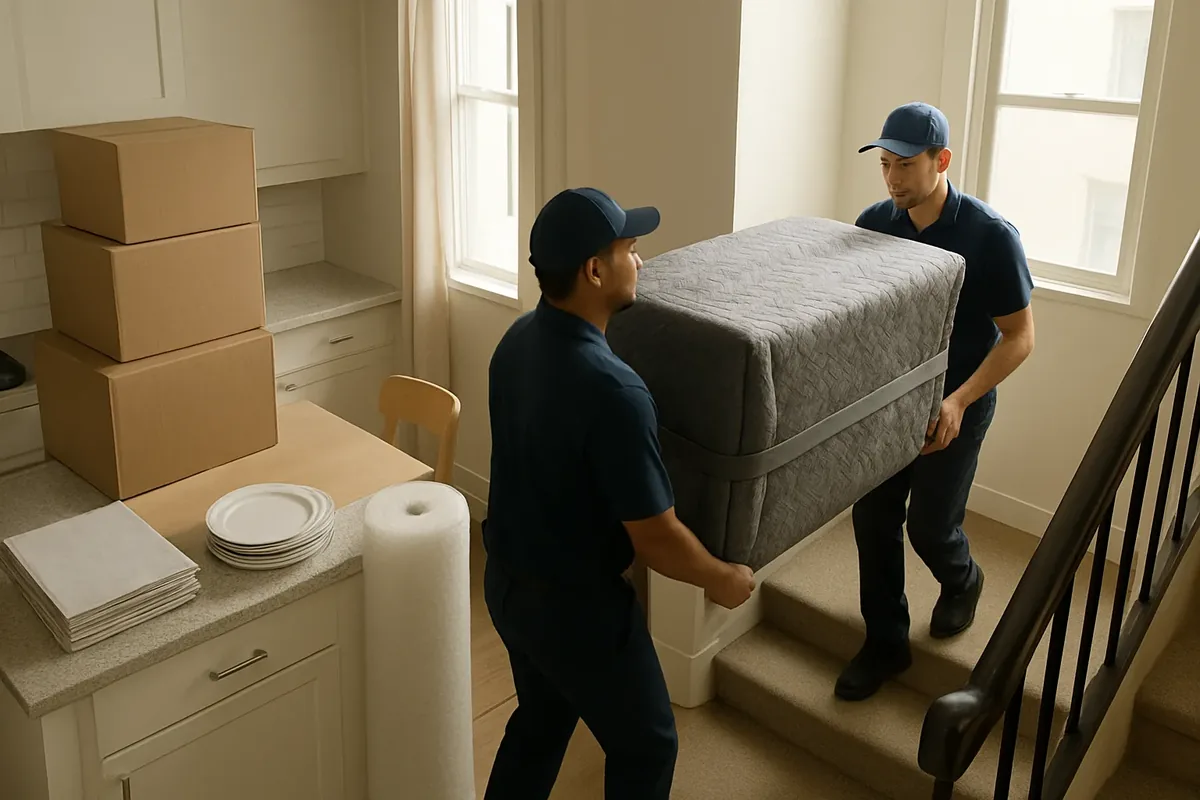
packing labor and material cost guides
Packing Service & Supply Cost Calculators: Complete US Benchmarks & Guides
Comparing full-service mover packing rates against buying your own boxes, tape, clean newsprint, bubble wrap, blankets, and mattress bags reveals savings of $115 to $1,140+ depending on apartment size. This pillar hub breaks down exact box counts, crew packing hours, fragile-only kitchen packages, and 32-ECT corrugated material specs from studio to 4-bedroom apartments.
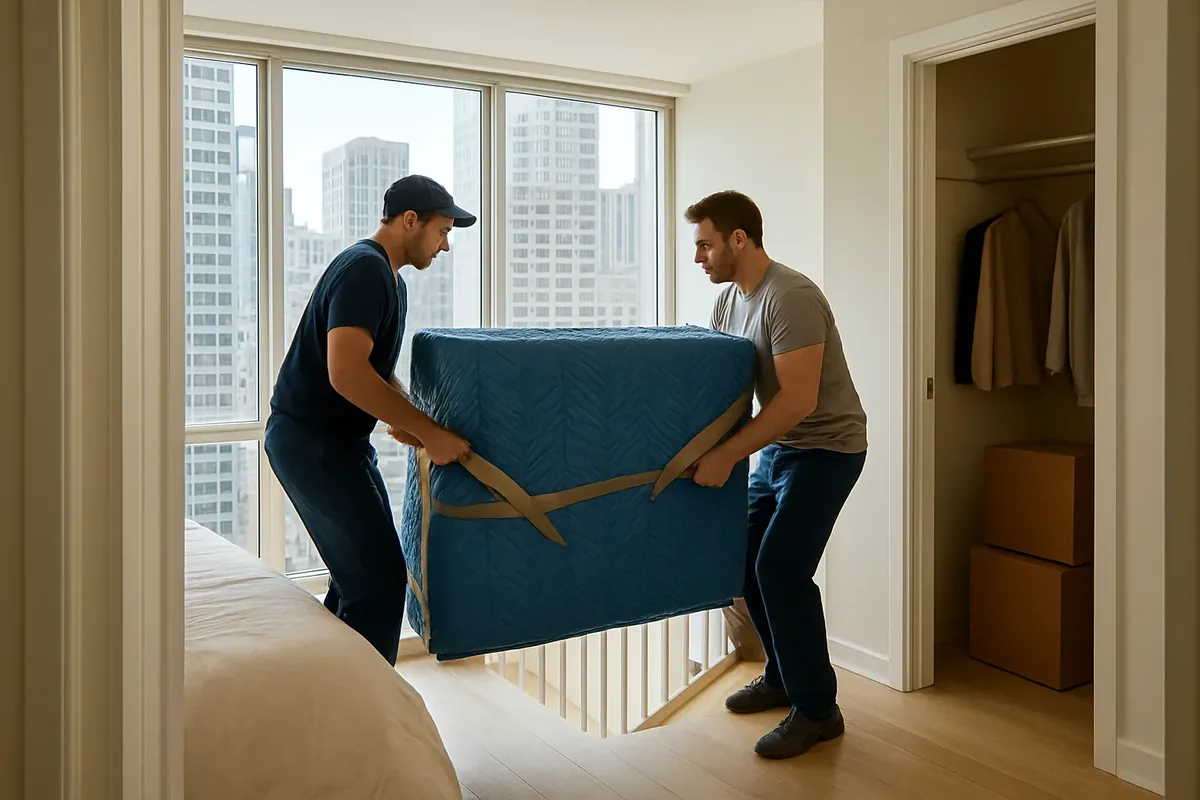
packing labor and material cost guides
Mover Packing Service Cost for Master Bedroom & Walk-In Clothes Closet
Break down exactly what US moving companies charge in hourly packer labor, wardrobe box fees, and mattress protection to pack an apartment master bedroom and walk-in closet. Compare full-service packing quotes against partial DIY hybrid strategies so you avoid surprise day-of-move surcharges.
packing labor and material cost guides
DIY Amazon Supply Cost vs. Mover Quote: Master Bedroom & Walk-In Clothes Closet
Compare line-by-line supply markups when buying moving boxes, wardrobe cartons, paper, and tape online versus paying a moving company's material tariff for your master bedroom and walk-in closet. Learn where mover supply margins are steepest and which apartment box kits eliminate last-minute retail trips.
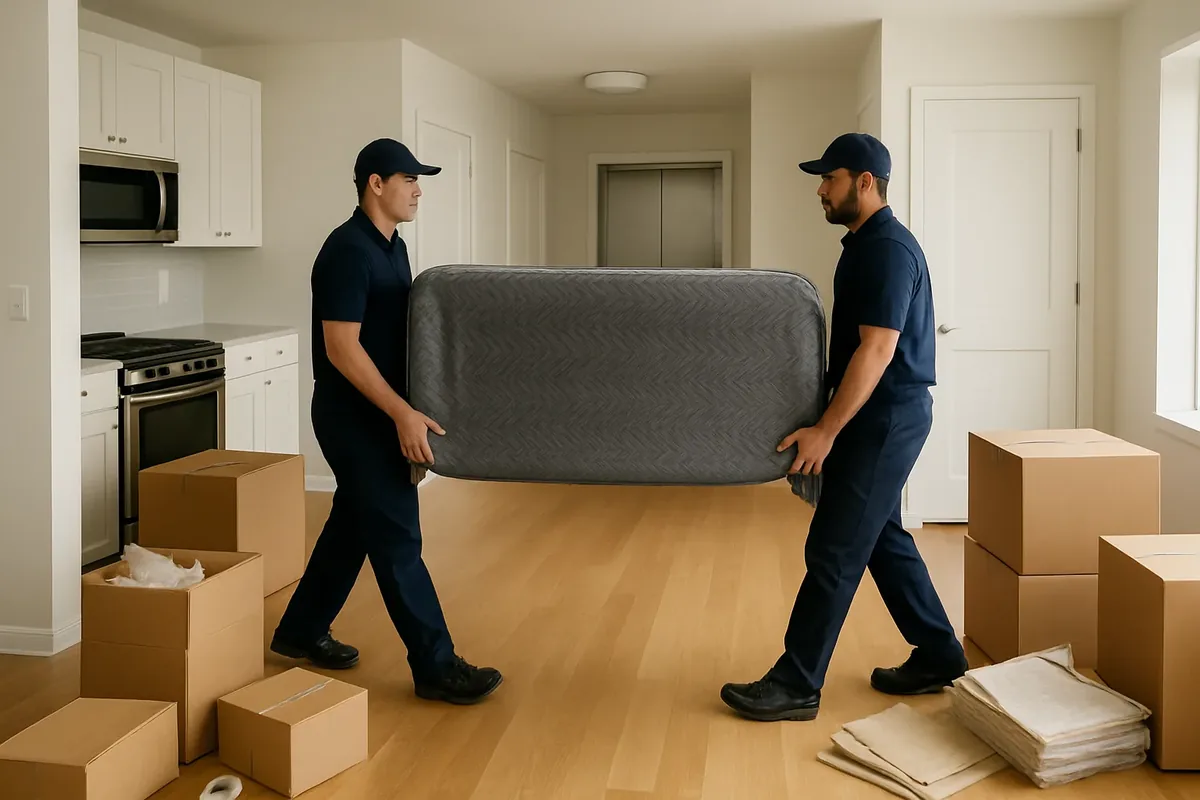
packing labor and material cost guides
Exact Box Sizes, Tape & Paper Count for Master Bedroom & Walk-In Clothes Closet
Use an exact room-by-room box, wardrobe carton, tape roll, and wrapping paper calculator tailored to US apartment master bedrooms and walk-in closets. Eliminate mid-week supply runs and prevent overloaded large boxes by matching carton cubic footage to closet rod length and dresser drawer volume.