In this guide
- Master Supply Tally: 3-Room (1-BR) vs. 4-Room (2-BR) Railroad Tenement Kits
- Room-by-Room Box Allocation Along a Pass-Through Railroad Floorplan
- Why Slim 32-ECT Boxes Outperform Oversized Cubes on Tenement Walk-Up Stairs
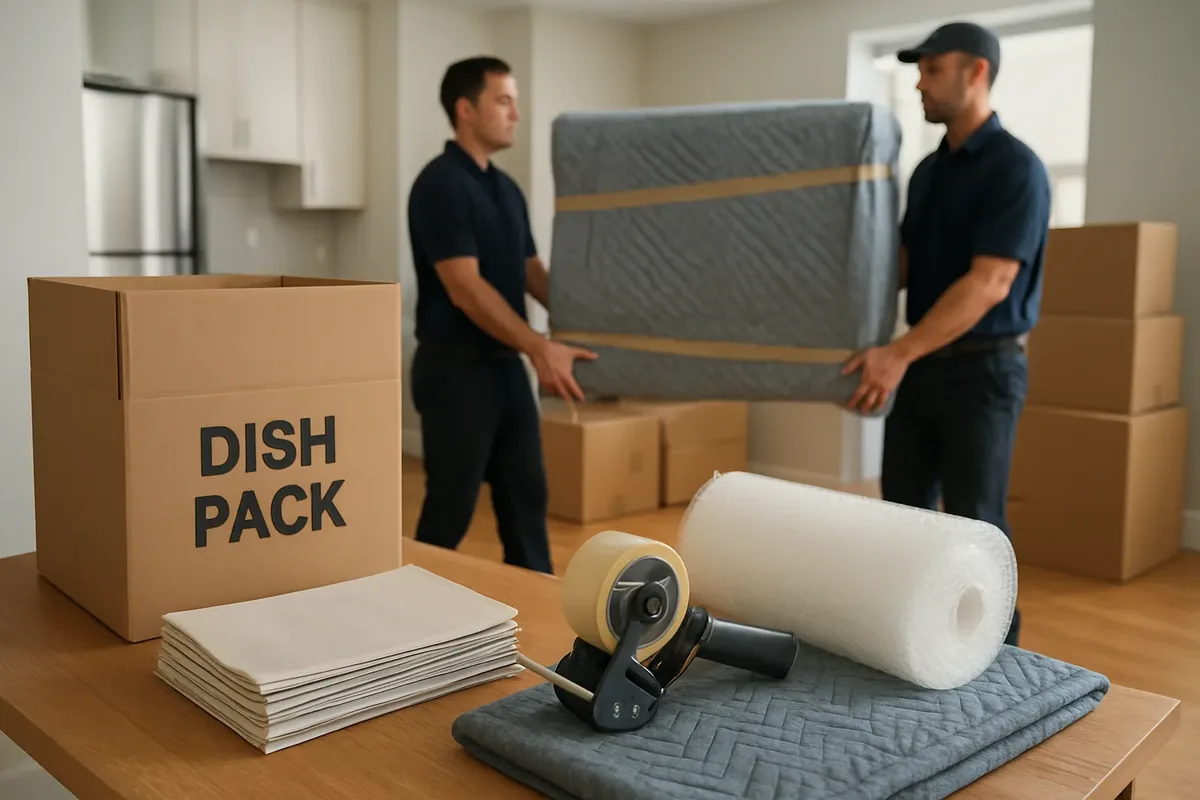
- Three High-Impact Railroad Packing Supplies (Physical Specs Only)
- Banister Protection, 85-Lb Quilted Blankets & 5-Mil Mattress Prep
- 5-Step Sequence to Pack a Railroad Tenement Without Creating a Bottleneck
Master Supply Tally: 3-Room (1-BR) vs. 4-Room (2-BR) Railroad Tenement Kits
Railroad-style tenement flats—found throughout New York City, Hoboken, Boston's North End, Chicago's historic walk-ups, and Philadelphia rowhouses—stack three to four sequential rooms end-to-end along a narrow 10-to-14-foot structural footprint with zero central foyer. Because there is no staging room near an elevator, every carton you seal must clear tight 28-to-30-inch interior door casings and switchback timber stair landings without snagging drywall or radiator valves.
A typical solo or couple's 3-room railroad apartment tracks squarely with the national 1-bedroom benchmark (420 cu ft, 3,200 lbs, 600–850 sq ft), requiring 35 standard boxes plus 2 hanging wardrobes. Four-room railroad layouts housing roommates, home offices, or freestanding Ikea/vintage armoires expand to the 2-bedroom tier (680 cu ft, 5,400 lbs), needing 52 standard cartons and 3 wardrobes. Oversizing beyond 18-inch-wide boxes forces awkward one-at-a-time carrying down steep walk-up flights, which inflates 3rd-to-5th-floor mover carry time by 1.0 to 3.0 billable hours.
| Supply Item & Recommended Spec | 3-Room Railroad (1-BR / ~420 cu ft) | 4-Room Railroad (2-BR / ~680 cu ft) | Primary Railroad Room Assignment |
|---|---|---|---|
| Small Boxes (1.5 cu ft / 16"x12"x12", 32–44 ECT) | 12 boxes | 18 boxes | Galley kitchen pantry, books, vinyl, hardware |
| Medium Boxes (3.0 cu ft / 18"x18"x16", 32 ECT) | 15 boxes | 22 boxes | Cookware, small appliances, folded sweaters, desk gear |
| Large Boxes (4.5 cu ft / 20"x20"x20", 32 ECT) | 8 boxes | 12 boxes | Bedding, pillows, winter coats, lampshades |
| Wardrobe Boxes (24"x24"x40", 48 ECT + Steel Bar) | 2 cartons | 3 cartons | Freestanding garment racks & shallow hall closets |
| Packing Tape Rolls (2-in Acrylic/Hot-Melt, 55–110 yd) | 5 rolls | 7 rolls | H-taping top & bottom seams + bubble bundles |
| Quilted Moving Blankets (85-lb/dozen Textile Pads) | 12 blankets | 18 blankets | Mid-room dressers, parlor sofa, banister wraps |
| Mattress & Box Spring Bags (5-Mil Gusseted Poly) | 1 bag (Queen) | 2 bags (2x Full/Queen) | Keeps bedding clean on narrow tenement stairs |
| Estimated DIY Kit Budget vs. Full Mover Packing | $95–$160 DIY / $290–$520 Movers | $145–$235 DIY / $460–$820 Movers | Self-packing saves $195–$585 in packing labor |
Room-by-Room Box Allocation Along a Pass-Through Railroad Floorplan
Unlike square modern apartments where closets sit inside each bedroom, railroad tenements push storage into freestanding dressers, under-bed bins, and upper kitchen soffits. Packing sequentially from the back windowless bedroom forward toward the front parlor prevents blocking your own exit corridor on moving morning.
| Railroad Room Zone | Box Mix (Small / Med / Large) | Specialty Supplies Needed | Stairwell & Weight Target |
|---|---|---|---|
| Front Parlor / Living Room | 4 Small, 5–7 Med, 2–3 Large | 1 TV/Art carton (55"–85"), 4–6 quilted pads | Keep book cartons <=35 lbs; pad sofa corners |
| Center Pass-Through Dining / Office | 3–5 Small, 4–6 Med, 1–2 Large | 12-cell glassware dividers, 3–4 pads | Clear 30-in walkway; dismantle drop-leaf table |
| Rear Bedroom & Standing Armoire | 2–3 Small, 3–5 Med, 3–4 Large | 2–3 upright 48-ECT wardrobes, 1–2 5-mil mattress bags | Do not stage bulky 24" cubes in side hallways |
| Rear Eat-In Kitchen & Bath | 3–6 Small, 3–4 Med, 2 Large | Cell dividers for wine/stemware, 2 rolls kraft paper | Double-tape bottom seams on dish & jar boxes |
Amazon US Apartment Moving Supplies
Recommended Moving Boxes, Blankets & Bags for This Move
Apartment moving supplies matched to this guide (Amazon.com affiliate ID: apartmentmovingcost-20).
Uboxes Tall Corrugated Wardrobe Moving Boxes with 24" Metal Hanging Bars (3-Pack)
24"x24"x40" double-wall upright closet cartons transferring hanging suits and dresses in 60 seconds
Extra-Large Adjustable Flat-Panel TV & Art Moving Box (Fits 55"–85" Screens)
Heavy double-wall telescoping carton with slide-lock handles and microfiber screen protection bag
Duck Brand Corrugated Wine & Glassware 12-Cell Box Divider Kit (3-Pack)
Slide-together corrugated grid inserts + foam pouches converting standard 16"x12"x12" boxes into wine carriers
As an Amazon Associate I earn from qualifying purchases. Always verify live stock and pack sizing directly on Amazon.com.
Why Slim 32-ECT Boxes Outperform Oversized Cubes on Tenement Walk-Up Stairs
Walk-up stairs in 1900s tenements routinely measure just 34 to 38 inches wide between plaster walls and iron or oak balusters, with sharp 180-degree half-landings between every flight. Under US apartment moving benchmarks, a 2nd-floor walk-up adds 0.5–1.0 labor hours ($55–$95 flat surcharge), a 3rd-floor walk-up adds 1.0–1.75 hours ($110–$190 surcharge), and a 4th- or 5th-floor walk-up adds 1.75–3.0 hours ($185–$340 surcharge) to a $130–$235/hr crew.
When DIY packers fill oversized 4.5-cubic-foot large cartons with books, vinyl records, or stacked dinner plates, two penalties happen simultaneously: the bottom flaps blow out on the second-floor landing, and a mover can only shoulder one 60-pound awkward cube per trip instead of hand-trucking or double-carrying two crisp 1.5 cu ft 32-ECT boxes cleanly strapped together. Reserve 4.5 cu ft large boxes strictly for under-25-pound loads like pillows, duvets, towels, and winter coats.
Three High-Impact Railroad Packing Supplies (Physical Specs Only)
Beyond baseline small, medium, and large 32-ECT corrugated cartons, three specialized packing components protect narrow-corridor valuables and cut walk-up crew loading hours:
- Uboxes Tall Corrugated Wardrobe Moving Boxes with 24" Metal Hanging Bars (3-Pack): Measuring 24x24x40 in and engineered from 48 ECT double-wall corrugated board with a drop-in steel hanger bar, this 3-Pack transfers clothes straight off freestanding tenement garment racks in 60 seconds. Tip: assemble and fill these upright cartons right beside the front parlor exit rather than carrying bulky 24-inch cubes through narrow middle room doorways.
- Extra-Large Adjustable Flat-Panel TV & Art Moving Box (Fits 55"–85" Screens): Constructed from double-wall kraft corrugated board with telescoping halves, slide-lock handles, and a microfiber screen sleeve, 1 Complete Kit isolates large living room TVs or oversized framed prints against stairwell hand-rail scrapes and exposed brick chimneys.
- Duck Brand Corrugated Wine & Glassware 12-Cell Box Divider Kit (3-Pack): Each kit builds 12 partitioned corrugated cells paired with cushioned foam pouches inside standard 16"x12"x12" small boxes—making 3 Divider Kits ideal for tenement bar carts, French presses, and tall wine stemware that otherwise shatter inside unpartitioned medium cartons.
Banister Protection, 85-Lb Quilted Blankets & 5-Mil Mattress Prep
Tenement landlords inspect scarred hallway plaster and chipped antique oak balusters closely before returning security deposits. Standard rental-crew 85-lb-per-dozen quilted textile pads (12 pads for a 1-BR railroad, 18 pads for a 2-BR) aren't just for wooden dressers and sofa arms—drape two blankets across tight ground-floor lobby turns and pinch-point radiators while carrying bulky upholstered pieces down.
Likewise, never drag an exposed Queen mattress down three dusty flights of public stairs or rest it against wet curbside asphalt while waiting to load the truck. Sliding every mattress and box spring into a 5-mil gusseted polyethylene mattress bag sealed tightly with 2-inch packing tape creates a slick outer shield that glides cleanly around tight stairwell angles without tearing ticking or absorbing stairwell dust.
5-Step Sequence to Pack a Railroad Tenement Without Creating a Bottleneck
- Clear and Measure the Front Parlor Staging Zone First. Measure your narrowest pass-through door casing (often 28–31 inches) and designate the front parlor wall nearest the hallway door as your sealed-box stack wall, keeping at least 36 inches of clear center lane.
- Pack Rear-to-Front Starting With the Back Bedroom & Galley Kitchen. Seal out-of-season clothing, rear bedroom books, and pantry jars into 16"x12"x12" 32-ECT small cartons first so heavy boxes migrate forward before furniture disassembly begins.
- Load Cell Dividers and Telescope the Parlor TV & Mirrors. Assemble the 12-cell corrugated dividers inside small boxes for glassware, and slide your flat-panel screen or large parlor mirror into its double-wall telescoping carton with corner padding.
- Bag Mattresses in 5-Mil Poly and Transfer Hanging Clothes at the Door. Encase beds in 5-mil gusseted bags, pull bed frames apart, and move hanging clothes into 48-ECT wardrobe boxes staged right by the entry door so crews carry lighter stacks downstairs.
- Leave 12–18 Quilted Blankets Unfolded Beside Heavy Dressers. Keep quilted moving pads stacked near solid-wood armoires and parlor sofas—and drape a spare pad over narrow stairwell radiator corners—before your crew's clock starts.
Pair your exact railroad tenement box tally with 2nd-to-5th-floor walk-up labor surcharges and truck sizes inside our Apartment Moving Cost Calculator or compare DIY vs. crew rates in the Movers vs. DIY Truck Rental Comparator.
Open Calculator →Frequently Asked Questions
Should I use 32-ECT or 48-ECT corrugated boxes for a 4th-floor railroad walk-up?+
Use standard 32-ECT single-wall small and medium boxes for everyday clothes, folded linens, pantry items, and lighter books kept under 35–40 lbs, and reserve 44-ECT or 48-ECT double-wall cartons specifically for upright wardrobes, dish packs, and 55"–85" flat-panel TVs. Double-wall 48-ECT board resists crushing when stacked five-high inside a 15-ft box truck after surviving four steep tenement flights.
How much extra do movers charge for stairs in a railroad-style tenement walk-up?+
Under US moving benchmarks, a 2nd-floor walk-up (1 flight) adds 0.5–1.0 crew hours or a $55–$95 flat surcharge, a 3rd-floor walk-up (2 flights) adds 1.0–1.75 hours or $110–$190, and a 4th- or 5th-floor walk-up (3–4 flights) adds 1.75–3.0 hours or $185–$340. Plus, expect the standard 1-hour travel fee covering depot-to-origin and destination-to-depot transit.
Why are 85-lb quilted moving blankets and 5-mil mattress bags critical for tenements?+
Tenement staircases are narrow, dimly lit, and frequently scrape furniture against brick walls, cast-iron radiators, and dusty risers. Heavy 85-lb-per-dozen woven quilted pads absorb impact so antique wood edges stay intact, while a thick 5-mil poly mattress bag keeps fabric clean against stair grime and sudden rain outside the stoop.
Can I fit a queen box spring and rigid sofa up a narrow railroad tenement stairwell?+
Often a solid one-piece queen box spring or rigid 84-inch sofa cannot clear a 90-degree tenement landing turn without removing vestibule trim or hoisting through a parlor window. Before buying supplies, measure diagonal stairwell clearance and consider a split queen foundation or a knock-down sofa with removable legs.
What should I check on a mover's estimate for a local or interstate tenement move?+
Confirm whether your local crew quotes hourly rates plus a 1-hour travel fee and written stair-flight cap, or—for interstate moves crossing state lines—demand an FMCSA-compliant Binding or Binding Not-to-Exceed written estimate after disclosing your exact walk-up floor count, hallway turns, and box tally.
Interactive US Moving Tools
Compare Full-Service Movers vs. DIY Rental Truck in 30 seconds
Related Guides
moving cost by apartment size
Moving Cost by Apartment Size & Bedrooms: Cubic Feet, Truck Sizes & Crew Benchmarks
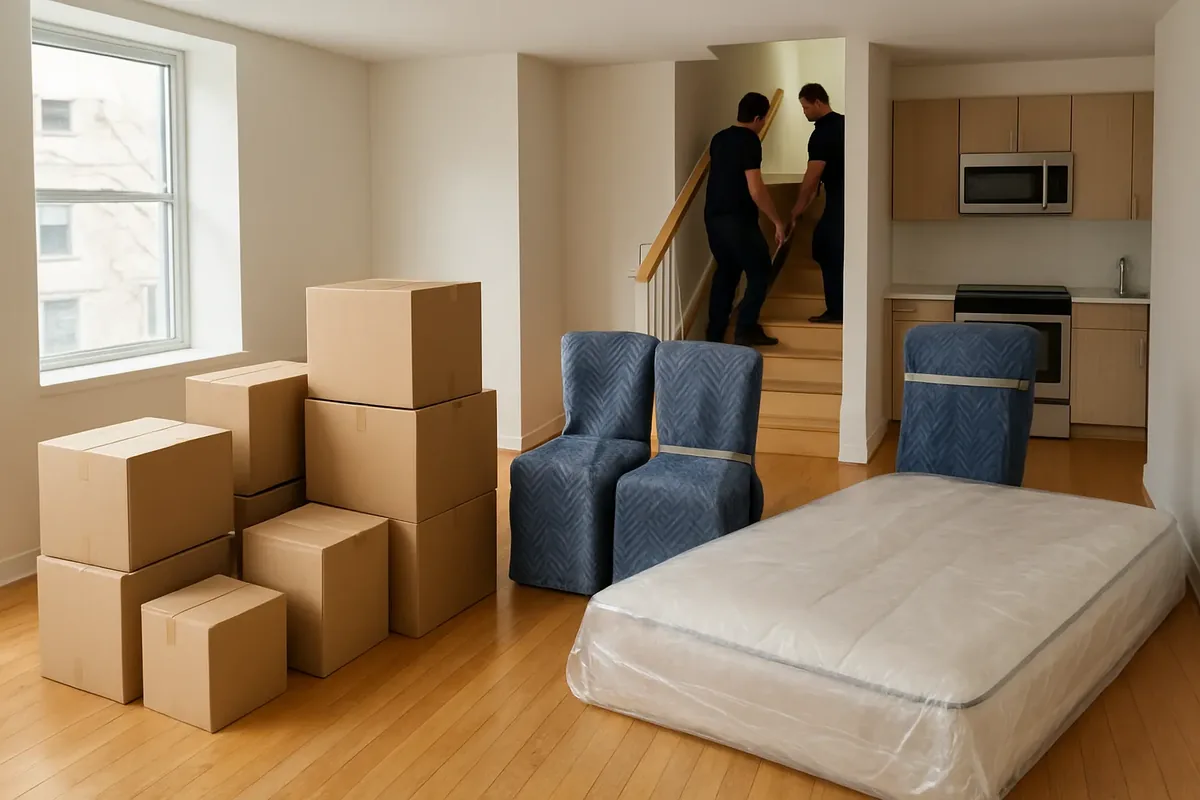
Moving an apartment scales sharply across cubic footage, shipment weight, crew headcount, and truck length—from 250 cu ft in a 350–550 sq ft studio to 1,280 cu ft in a 4-bedroom loft. This guide maps exact US labor hours, DIY truck dimensions, minimalist-to-heavy density multipliers, and box kit counts for every apartment floor plan.
moving cost by apartment size
High-Rise Glass Condo & Apartment Moving Cost: Labor, Dock & DIY Rates
Relocating a 1- to 3-bedroom high-rise glass tower condo or apartment locally runs $930 to $3,963 with full-service movers once freight elevator check-in, COI documentation, and loading-dock staging are priced in, versus $174 to $469 for a permitted DIY rental truck.

moving cost by apartment size
High-Rise Glass Tower Truck Size, Cubic Feet, Weight & Crew Guide
Sizing a rental truck or moving crew for a high-rise glass tower unit requires balancing 250 to 1,280 cubic feet of cargo (2,000 to 10,200 lbs) against strict 11'6"–12'6" loading dock height clearances and freight elevator cab dimensions.
moving cost by apartment size
High-Rise Glass Tower Box, Tape & Blanket Count Packing List
Packing a 1- to 3-bedroom high-rise glass tower unit requires 35 to 71 corrugated cartons, 2–4 wardrobe boxes, 12–24 quilted blankets, and specialized glass-and-screen protection—costing $95 to $330 DIY versus $290 to $1,180 when crew-packed.