
In this guide
- Why 15 Miles Across a State Line Still Punishes Weak Boxes & Loose Loads
- 32-ECT vs. 44–48 ECT Boxes, Pad Weights & Materials Cost by Unit Size
- Blanket Density, Rubber Bands & Hallway Floor Protection
- Truck-Wall Securement: Tier Locking, E-Track & Ratchet Strap Specs
- Pre-Move Packing & Securement Checklist (72 Hours to Load-Out)
Why 15 Miles Across a State Line Still Punishes Weak Boxes & Loose Loads
Renters often treat a 15-mile border move like a slow neighborhood hop and pack dishes into scavenged grocery boxes or leave furniture unwrapped inside a rental truck. That shortcut fails for two concrete reasons: physics and federal claims law. First, virtually every US state-line metro corridor—interstate river bridges, highway on-ramps, toll plazas, and potholed urban arteries—subjects a leaf-spring box truck to 55–65 MPH highway vibration, sudden emergency braking, and sharp lateral sway. A 6-foot-tall stack of flimsy boxes collapses just as violently at mile 4 on a bridge merge as it does at mile 400.
Second, under FMCSA interstate liability rules, any box you pack yourself is stamped PBO (Packed by Owner) on the Bill of Lading. If a carrier transports your self-packed cartons across a state line and glassware shatters inside an intact outer box—or a bottom seam splits because of under-spec cardboard or thin tape—interstate carriers routinely deny the claim unless exterior crush damage occurred while in their custody. Specifying the right Edge Crush Test (ECT) board strength, padding, and tie-downs protects both your belongings and your security deposit.
32-ECT vs. 44–48 ECT Boxes, Pad Weights & Materials Cost by Unit Size
Corrugated moving cartons are graded by Edge Crush Test (ECT), which measures vertical stacking strength per inch of board edge. Use 32-ECT single-wall boxes for light-to-medium apartment contents (linens, clothing, small appliances, pantry items under 45–65 lb max load), and step up to 44-ECT heavy-duty or 48-ECT double-wall dish packs for stacked stoneware plates, stemware, cast-iron cookware, and hardcover book boxes riding at the bottom of a 7-foot truck tier.
| Apartment Size | Recommended Box Count (Small / Med / Large / Wardrobe) | Tape, Blankets & Mattress Bags | DIY Packing Kit Cost | Full Mover-Packed Cost | DIY Savings |
|---|---|---|---|---|---|
| Studio (350–550 sq ft; 250 cu ft) | 8 small, 10 medium, 5 large, 1 wardrobe (24 total) | 3 tape rolls, 6 blankets, 1 mattress bag | $65–$110 | $180–$320 | $115–$210 |
| 1-Bedroom (600–850 sq ft; 420 cu ft) | 12 small, 15 medium, 8 large, 2 wardrobe (37 total) | 5 tape rolls, 12 blankets, 1 mattress bag | $95–$160 | $290–$520 | $195–$360 |
| 2-Bedroom (900–1,250 sq ft; 680 cu ft) | 18 small, 22 medium, 12 large, 3 wardrobe (55 total) | 7 tape rolls, 18 blankets, 2 mattress bags | $145–$235 | $460–$820 | $315–$585 |
| 3-Bedroom (1,300–1,800 sq ft; 980 cu ft) | 25 small, 30 medium, 16 large, 4 wardrobe (75 total) | 10 tape rolls, 24 blankets, 3 mattress bags | $205–$330 | $680–$1,180 | $475–$850 |
Amazon US Apartment Moving Supplies
Recommended Moving Boxes, Blankets & Bags for This Move
Apartment moving supplies matched to this guide (Amazon.com affiliate ID: apartmentmovingcost-20).
Economy Non-Woven Textile Moving & Storage Pads 72" x 80" (12-Pack, 35 lb/dz)
Lightweight breathable storage blankets for wrapping items inside PODS containers or mini-storage units
Large Giant Rubber Moving Bands for Securing Furniture Blankets (12-Pack Assorted)
Ribbed industrial rubber bands (26", 30", and 42" stretches) holding moving blankets tight around dressers without tape
Trimaco Stay-Put Canvas Plus Slip-Resistant Hallway Floor Runner 27" x 24 ft
Rubber-backed absorbent canvas floor runner protecting hardwood and lobby carpet from wet dolly tracks
As an Amazon Associate I earn from qualifying purchases. Always verify live stock and pack sizing directly on Amazon.com.
Blanket Density, Rubber Bands & Hallway Floor Protection
Smart packing protects two surfaces: your furniture inside the truck and the apartment hallways governed by your lease security deposit. High-rise landlords across state-line metro areas regularly withhold $250–$600 from security deposits for scuffed lobby hardwood, gouged door jambs, or dirty dolly wheel tracks.
- Breathable Textile Pads for Light & Storage Loads: When lining container walls, separating framed mirrors, or padding lighter IKEA shelving inside a storage pod or short-haul truck, Economy Non-Woven Textile Moving & Storage Pads 72" x 80" (12-pack, 35 lb/doz non-woven textile) deliver clean dust and scuff protection without excess bulk. Pair them with heavier 75–90 lb/doz quilted cotton-fill pads on solid-wood heirlooms.
- Tape-Free Blanket Fastening: Never wrap packing tape directly over wood finishes or painted metal frames—adhesive pulls lacquer right off. Lock moving blankets tight around dressers, desks, and nightstands using Large Giant Rubber Moving Bands for Securing Furniture Blankets (12-pack assorted 26", 30", and 42" ribbed natural rubber stretch bands) so pads stay anchored through tight stairwell turns and highway vibration.
- Lobby & Hardwood Floor Protection: Lay down a Trimaco Stay-Put Canvas Plus Slip-Resistant Hallway Floor Runner (27 in x 24 ft reusable absorbent canvas with non-slip rubber backing) from your apartment door to the elevator or front stoop. Unlike loose cardboard sheets that slide underfoot on rainy move days, a rubber-backed runner traps grit and wet rubber dolly marks.
Truck-Wall Securement: Tier Locking, E-Track & Ratchet Strap Specs
Whether you are loading a 10-ft, 15-ft, 20-ft, or 26-ft rental truck, highway braking generates up to 0.8G of forward deceleration force—meaning an unstrapped 200-lb dresser turns into a battering ram if traffic stops suddenly on an interstate bridge deck. Follow commercial household goods tier-securement standards:
- Build Floor-to-Ceiling Tight Tiers: Load from front bulkhead to rear door in locked vertical walls (tiers) roughly 3 to 4 feet deep. Place heavy appliances, solid-wood dressers, and 44–48 ECT dish/book cartons at the bottom; stack medium 32-ECT boxes mid-tier; finish the top 18 inches with lightweight wardrobe boxes, pillows, and sofa cushions.
- Use Rated Ratchet Straps on Wooden Rub Rails: Rental trucks include horizontal wooden rub rails or steel E-track along both walls. Lock every tier across the truck width using 1-inch to 2-inch polyester webbing ratchet straps rated for at least 500–1,000 lb Working Load Limit (1,500–3,000 lb break strength). Avoid thin bungee cords, which stretch and snap under highway braking.
- Protect Mattresses & Box Springs Vertically: Seal every mattress in a heavy-duty 5-mil or 6-mil polyethylene mattress bag (1 bag for a studio/1BR, 2 for a 2BR, 3 for a 3BR) and stand mattresses upright flat against the side rub rail, strapped securely behind a vertical furniture tier so truck-floor oil and road moisture never stain fabric.
- Balance Left-to-Right Axle Weight: Alternate heavy appliances (washer, mini-fridge) and dense book boxes evenly across the driver and passenger sides of the truck bed to prevent body roll on curved interstate exit ramps.
Pre-Move Packing & Securement Checklist (72 Hours to Load-Out)
- Step 1: Sort Fragile Heavy Loads Into 44–48 ECT Cartons. Pack all plates vertically on edge inside double-wall dish packs with 2 inches of crumpled paper cushioning top and bottom, keeping every carton under 45 lb so carriers and helpers can stack safely.
- Step 2: H-Tape All Bottoms & Mark Weight Tier on Two Sides. Seal bottom seams with 3.0-mil or thicker tape in an H-pattern and write 'HEAVY — BASE TIER' or 'FRAGILE — TOP TIER' on adjacent side panels (not just the top lid) so labels stay readable when stacked.
- Step 3: Roll Out Floor Runners & Band All Blankets Before Carry-Out. Secure your slip-resistant hallway floor runner across entry hardwood, then wrap dressers with moving pads locked by 26"–42" giant rubber bands so drawers cannot fly open on stairs.
- Step 4: Strap Every 3-Foot Cargo Tier & Check Tension After 2 Miles. Cross-strap each vertical tier to the truck's rub rails with rated ratchet straps before closing the roll-up door. If driving a DIY truck, pull over at a safe lot after 2 miles of city driving to confirm zero load shift before merging onto the interstate bridge.
Compare DIY packing kit costs against full mover packing and calculate your complete 15-mile interstate apartment budget in our Apartment Moving Cost Calculator and Movers vs. DIY Rental Truck Comparator.
Open Calculator →Frequently Asked Questions
Are 32-ECT boxes strong enough for a 15-mile interstate apartment move?+
Yes for light-to-medium items like clothing, bedding, pantry dry goods, and small electronics kept under 40–45 lb. However, for stoneware dishes, glassware, cast-iron pans, and dense book stacks riding at the base of a 7-foot truck tier, upgrade to 44-ECT heavy-duty or 48-ECT double-wall cartons so highway vibration and bridge bumps do not collapse the bottom layer.
Why do FMCSA interstate movers deny damage claims on self-packed boxes?+
Under federal household goods tariffs, boxes packed by the renter are designated PBO (Packed by Owner). Unless the carton shows clear exterior crushing, tearing, or water intrusion caused by carrier mishandling, movers are not liable for broken contents inside a PBO box—making double-wall dish packs, void-free cushioning, and 3.0-mil tape essential.
Should I use ratchet straps or rope to secure furniture inside a rental moving truck?+
Always use polyester ratchet straps or cam-buckle logistics straps rated for at least 500–1,000 lb Working Load Limit anchored to the truck's side rub rails or E-track. Standard nylon rope stretches under highway vibration and loosens knots over bridge expansion joints, allowing tiers to tip forward during sudden braking.
How thick should a mattress bag be for a short state-line move?+
Avoid thin 1.5-mil to 2-mil plastic dust covers, which rip immediately on aluminum truck ramps, stair banisters, and truck-bed splinters. Use a 5-mil or 6-mil heavy-duty polyethylene mattress bag sealed tightly with 3.0-mil packing tape to block rain, wet sidewalk grit, and cargo-floor grease.
Can I save money by having interstate movers pack only my kitchen and fragile art?+
Yes—a partial-pack service (typically $180–$380 for a kitchen and framed art compared to $460–$1,180 for a full 2-bedroom or 3-bedroom pack) shifts FMCSA packing liability onto the carrier for your highest-risk fragile items while letting you self-pack clothing, books, and linens at DIY supply costs.
Interactive US Moving Tools
Compare Full-Service Movers vs. DIY Rental Truck in 30 seconds
Related Guides
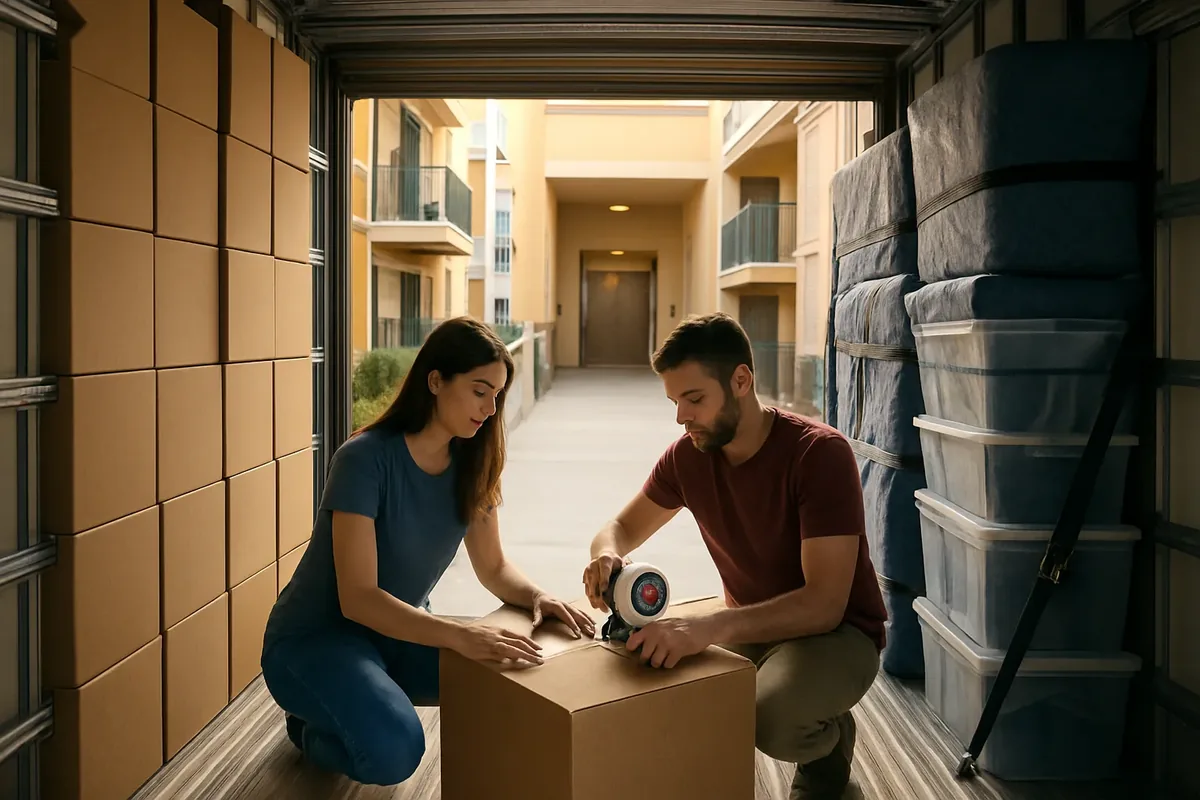
local vs long distance apartment moves
Local vs. Long-Distance Apartment Moves: Complete US Benchmarks & Guides
Crossing the 50-mile to 100-mile boundary flips apartment moving pricing from hourly crew rates to federal weight-and-mileage linehaul tariffs, multi-day delivery spreads, and one-way rental truck charges. This hub compares every US distance tier from same-building floor transfers to 2,500-mile coast-to-coast relocations.
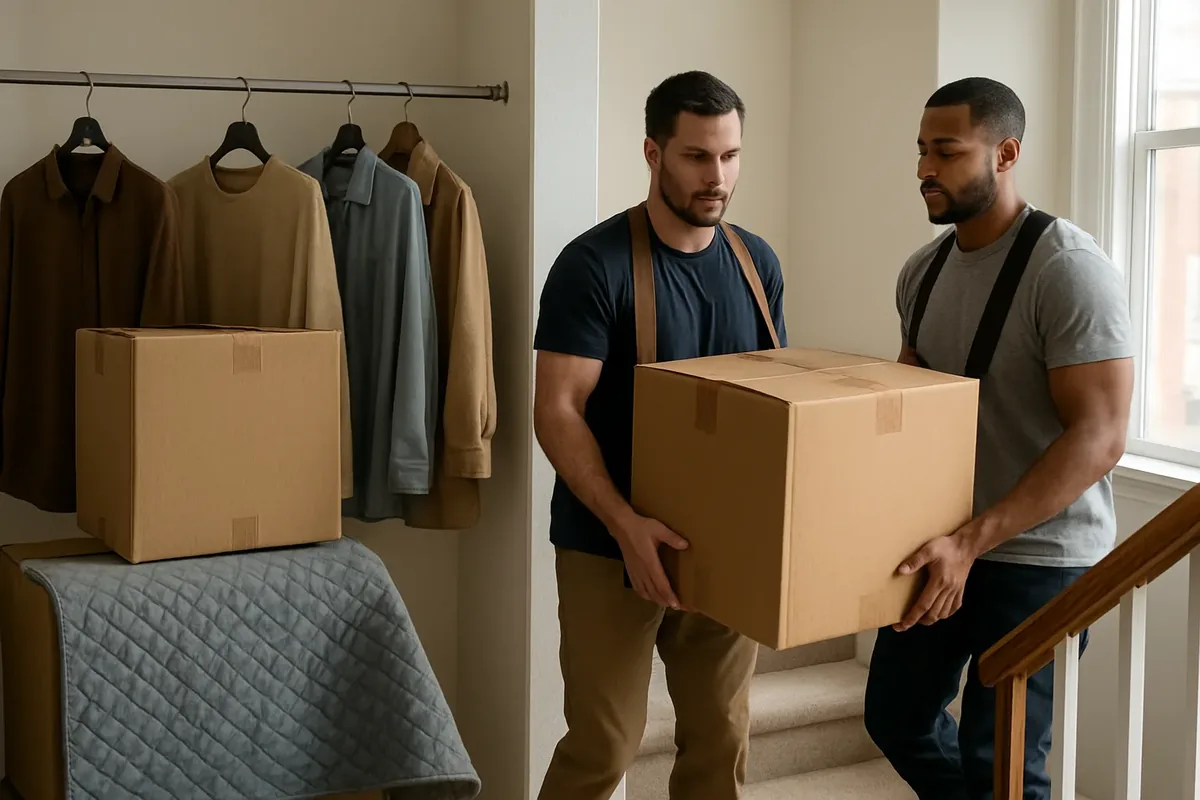
local vs long distance apartment moves
Same-Building Floor-to-Floor Transfer (0 Miles) Cost: Studio, 1BR & 2BR Price Ranges
Moving between floors inside the same apartment building cuts highway mileage to zero, yet professional movers still charge $640–$2,378 across Studio, 1BR, and 2BR units because of crew minimums, 1-hour travel fees, and elevator rules. Compare hourly vs. cubic-foot tariff quotes against DIY carting and baseline truck staging below.
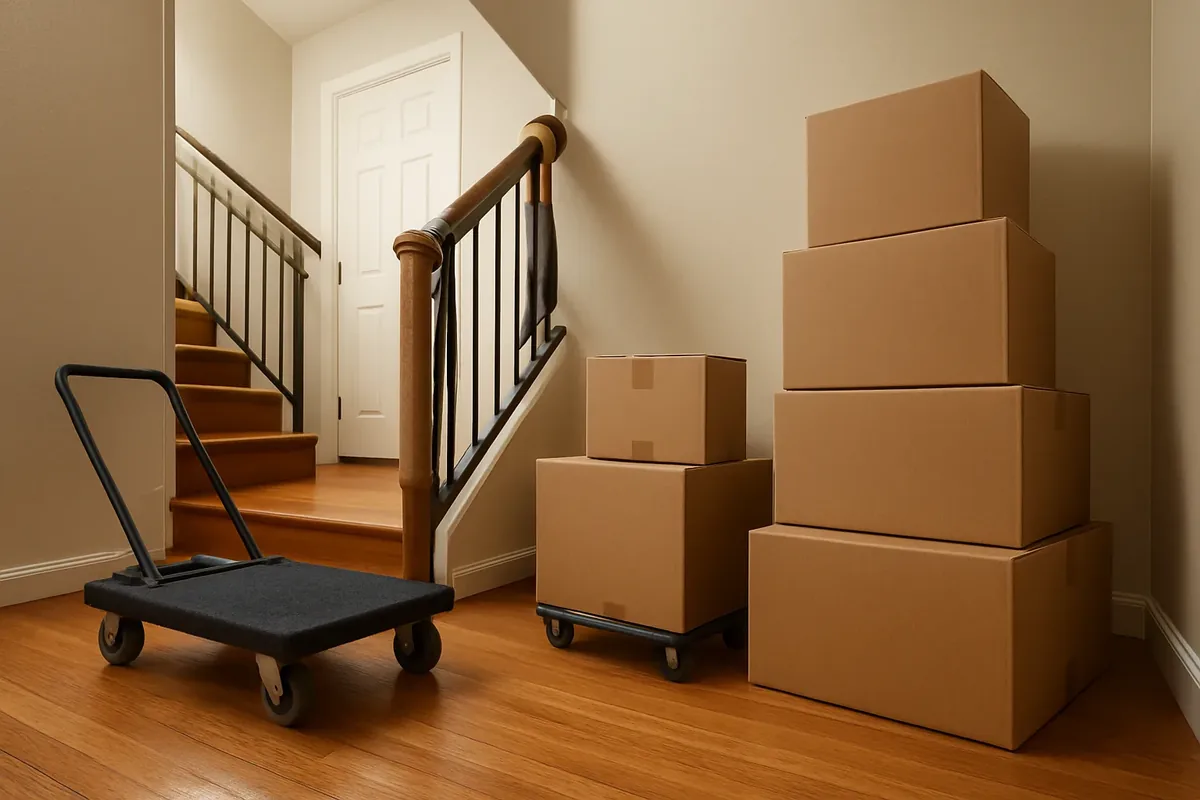
local vs long distance apartment moves
1-Bedroom Same-Building Floor-to-Floor Transfer (0 Miles): Movers vs. 15-Ft Rental Truck Math
Moving a 1-bedroom apartment between floors in the same building puts a $820–$1,800+ licensed 2-mover invoice up against $95–$245 for DIY boxes or 15-ft truck staging—and $265–$535 for a hybrid 2-hour helper crew. Here is the exact Tier #1 cost math for elevator towers and walk-ups.
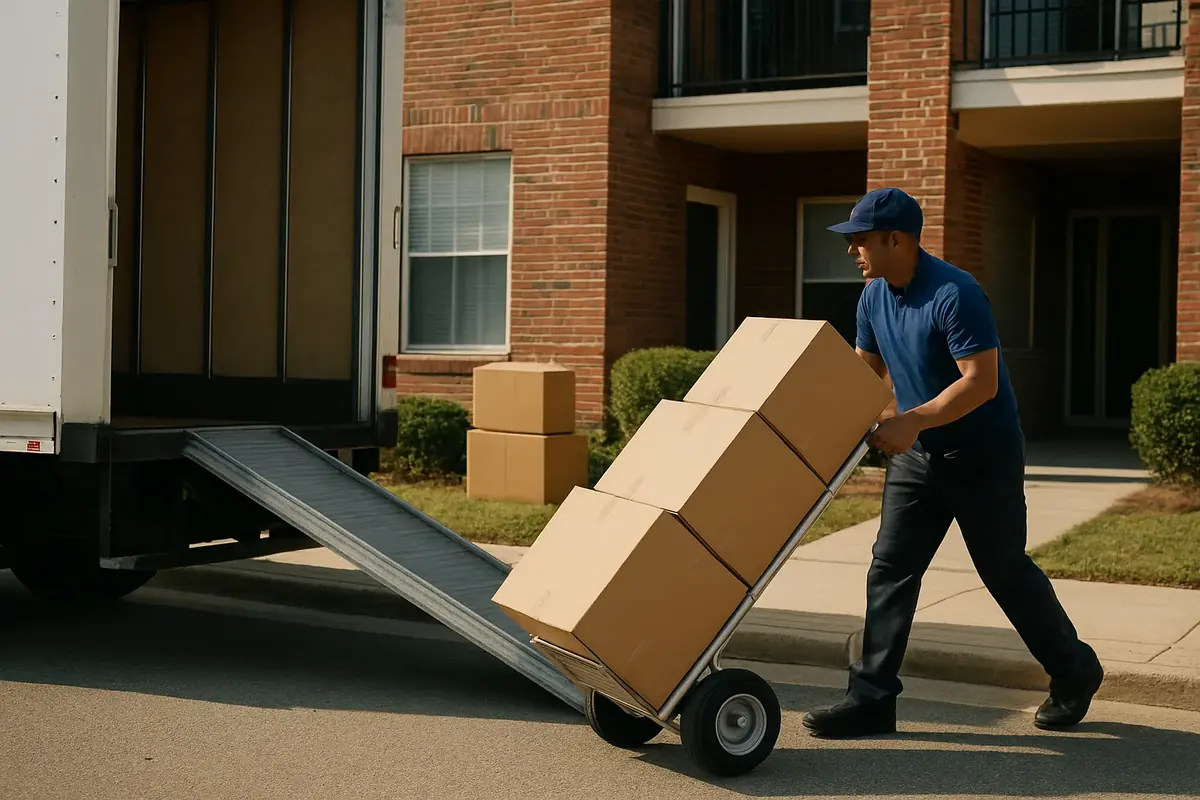
local vs long distance apartment moves
2-Bedroom & 3-Bedroom Payload Pricing: Same-Building Floor-to-Floor Transfer (0 Miles)
Moving a 5,000–8,500 lb 2-bedroom or 3-bedroom household between floors in the same building escalates crew size to 3 or 4 movers and stretches labor clocks to 6.0–10.5 billed hours ($1,270–$3,573 DIY-packed). See how payload weight affects elevator weight limits, truck sizing, fuel burn, and multi-room box kits.