
In this guide
- How Many Days Does a 3,000-Mile Transcontinental Apartment Move Actually Take?
- Transit Speed & Budget Matrix: Consolidated Van Line vs. Expedited Truck vs. 7-Day DIY
- Why FMCSA Consolidated Van Lines Quote a 10- to 21-Day Delivery Spread
- DIY 3,000-Mile Driving Math: Governed Speeds, Mountain Passes & Hotel Buffers
- Synchronizing Apartment Leases, Freight Elevators & Destination Storage-in-Transit
- First-Night Survival & Quick-Unload Tools While Waiting on a Delivery Window
How Many Days Does a 3,000-Mile Transcontinental Apartment Move Actually Take?
First-time coast-to-coast renters often compare Google Maps passenger-car estimates (42 to 45 hours) directly to moving schedules—a miscalculation that wrecks apartment lease handoffs and elevator reservations. Commercial 53-foot tractor-trailers and governed rental box trucks travel at 55 to 62 mph, take wider braking zones down mountain grades, and stop far more frequently for weigh stations or fuel.
More importantly, federal Department of Transportation (DOT) Hours of Service rules cap commercial drivers at 11 driving hours within a 14-hour daily window, mandatory 30-minute rest breaks, and 60–70 hours over 7–8 consecutive days. Combined with multi-household route stops inside a 53-foot van line trailer, your actual calendar gap between origin pickup and apartment delivery ranges anywhere from 5 days to 3 full weeks depending on the carrier tier.
Transit Speed & Budget Matrix: Consolidated Van Line vs. Expedited Truck vs. 7-Day DIY
Choosing between consolidated van lines, dedicated expedited trucks, freight containers, and driving yourself means trading transit speed against total cash spend and interim hotel bills.
| Transport Tier | Loading / Transit Duration | Delivery Window Spread | 1BR / 2BR Carrier Base Cost | Typical Hotel / Temporary Living Exposure |
|---|---|---|---|---|
| Consolidated FMCSA Van Line | 1-day load + 10–21 days in transit | 7 to 14-day delivery spread | $4,565–$6,850 (1BR) | $6,485–$9,565 (2BR) | $900 – $2,200 (10–18 nights empty apt air-bed or extended-stay) |
| Portable Moving Containers (Pods) | 3-day driveway/lot load + 10–18 days freight | 4 to 7-day terminal delivery window | $3,900–$5,800 (1BR) | $5,400–$7,900 (2BR) | $700 – $1,600 (+street parking permit / drayage fees) |
| Dedicated Expedited Straight Truck | 1-day load + 5–7 days direct nonstop | Exact 24-hour guaranteed arrival | $8,500–$11,800 (1BR) | $10,500–$14,800 (2BR) | $0 – $350 (1–2 flight/hotel nights only; aligns tight leases) |
| DIY 15–20 Ft Rental Truck (7-Day) | 1-day load + 5–6 days driving + 1-day unload | You control exact arrival hour | $4,136–$5,569 (1BR) | $4,556–$6,169 (2BR) pre-hotel | $750 – $1,370 (5–6 highway motel nights + road meals) |
Amazon US Apartment Moving Supplies
Recommended Moving Boxes, Blankets & Bags for This Move
Apartment moving supplies matched to this guide (Amazon.com affiliate ID: apartmentmovingcost-20).
6-Mil Ultra-Thick Mattress Vacuum Compression Bag with Straps for Memory Foam (Queen/King)
Air-tight vacuum roll-up compression bag + 4 cinch straps shrinking a thick foam mattress by 75% to fit an SUV
Heavy-Duty 600D Oxford Canvas Zippered Mattress Moving Bag with Handles (Queen)
Breathable 600-denier Oxford fabric mattress carrier with stitched nylon handles for narrow brownstone stairs
Extra-Large 9.5" x 5.75" Oval Heavy Furniture Sliders for Carpet & Rugs (8-Pack)
Wide EVA foam-topped polymer glides distributing heavy sofa and bookcase legs across deep apartment carpet
As an Amazon Associate I earn from qualifying purchases. Always verify live stock and pack sizing directly on Amazon.com.
Why FMCSA Consolidated Van Lines Quote a 10- to 21-Day Delivery Spread
Consolidated carriers keep 1-bedroom and 2-bedroom transcontinental quotes ($4,565–$9,565) dramatically lower than private dedicated trucks by loading 3 to 5 separate households into a single 53-foot air-ride trailer. A Boston-to-San Francisco rig might stop in Cleveland, Chicago, Denver, and Salt Lake City to load or deliver other apartments along the interstate corridor.
During peak summer moving weeks (May 20 through August 31), winter mountain pass closures along I-80 in Wyoming or Donner Pass in California, or driver Hour-of-Service resets, consolidated delivery windows routinely stretch to the full 14–21 day limit. Ask your move coordinator in writing about Delay Claim Reimbursement ($75–$150/day per diem for missed agreed delivery spreads, typically limited strictly to shipments above 3,500–5,000 lbs unless specified).
DIY 3,000-Mile Driving Math: Governed Speeds, Mountain Passes & Hotel Buffers
Renters who drive a 15-ft, 20-ft, or 26-ft rental truck cross-country control their arrival hour completely—but still need a realistic 7-to-8-day operational schedule so fatigue never causes an accident.
| Move Day | Operational Milestone | Target Distance / Hours | Daily Logistics & Budget Note |
|---|---|---|---|
| Day 1 (Origin Load) | Pick up truck, build tiered cargo walls, strap bulkheads | 0 highway miles (6–9 hrs loading) | Use 2-hr local helpers ($170–$290) to finish loading by 3:00 PM |
| Days 2–5 (Main Transit) | Steady interstate cruising at 55–60 mph governed limit | 520 – 575 mi/day (9.5–10.5 hrs road time) | Fuel 2x daily (~$175/day); book ground-floor motels with perimeter curb parking |
| Day 6 (Final Leg) | Clear final mountain grade & enter destination metro | 450 – 520 mi (8.5–9.5 hrs road time) | Arrive before dark to check building clearance & loading zone signs |
| Day 7 (Unload & Return) | Reserved elevator/curb unload + top off fuel tank | 0 – 15 local miles (4–7 hrs unload) | Refill gas to match pickup gauge ($3.55/gal) to skip $6–$8/gal depot fines |
Synchronizing Apartment Leases, Freight Elevators & Destination Storage-in-Transit
Misaligned move-out and move-in dates are the single fastest way to trigger surprise $400–$1,200 Storage-in-Transit (SIT) fees. Follow this coordination sequence at least 4 weeks out:
- Negotiate a 3- to 5-day overlap or early key handoff. Paying 4 days of prorated new-apartment rent ($200–$400) is far cheaper than paying an interstate van line $500–$1,100 for warehouse Storage-in-Transit plus redelivery labor.
- Secure origin and destination COI certificates early. High-rise buildings demand $1M/$2M Certificates of Insurance naming the property LLC before granting freight elevator reservations; submit the COI template 10 business days before pickup.
- Pack a 14-day 'First-Night Car or Suitcase Kit'. Keep laptops, lease paperwork, work attire, basic cookware, and sleeping gear inside your personal car or checked airline luggage so a 14-day consolidated van-line spread leaves you functional immediately.
- Book flexible refundable highway motels without rigid cutoffs. On DIY drives, reserve chain motels with 6:00 PM same-day cancellation policies along your route rather than locking non-refundable stops in case mountain snow or traffic slows a 550-mile leg.
First-Night Survival & Quick-Unload Tools While Waiting on a Delivery Window
Handling mattresses and heavy furniture smoothly during tight elevator reservations or multi-week consolidated delivery gaps comes down to the right portable prep gear:
- SUV Foam-Mattress Gap Solution: The Bacophy 6-Mil Ultra-Thick Mattress Vacuum Compression Bag with Straps for Memory Foam (Queen/King) uses a 6.0 Mil PA+PE air-tight valve and four cinch straps to shrink a queen or king memory foam mattress by roughly 75%—letting you bring your own bed in a crossover SUV ahead of a 14-day van line shipment instead of buying an air mattress.
- Tight-Hallway & Elevator Speed: The Zober Heavy-Duty 600D Oxford Canvas Zippered Mattress Moving Bag with Handles (Queen) protects mattresses up to 14 inches deep inside tear-resistant 600D Oxford fabric with reinforced nylon handles so two people can navigate tight apartment turns quickly before strict freight-elevator cutoffs expire.
- Zero-Delay Room Staging: Extra-Large 9.5" x 5.75" Oval Heavy Furniture Sliders for Carpet & Rugs (8-Pack) pair EVA grip foam with smooth HDPE glides across eight 9.5 x 5.75 in ovals, allowing one person to shift heavy bookcases, sofas, and dressers into final corners after an unloading crew leaves.
Compare your 3,000-mile delivery timeline, helper hours, and full-service vs. 7-day DIY truck costs inside our Apartment Moving Cost Calculator or Movers vs. DIY Rental Truck Comparator.
Open Calculator →Frequently Asked Questions
Can I book an exact delivery date for a 3,000-mile full-service apartment move?+
Only if you pay for a Dedicated Expedited move ($8,500–$14,800+), where your apartment rides alone on a dedicated straight truck. Standard consolidated van lines ($4,565–$12,540) combine multiple shipments on 53-foot semis and quote a binding pickup window paired with a 7- to 14-day delivery spread across 10 to 21 total calendar days.
What happens if my consolidated van line arrives before my new apartment lease begins?+
If you cannot accept delivery inside the carrier's arrival window, the driver places your shipment into regional Storage-in-Transit (SIT). Expect an immediate warehouse handling fee ($350–$650 for 1BR–2BR), daily storage fees ($15–$40/day), and a second local redelivery fee ($300–$600) once your new keys are ready.
How many hours per day is safe when driving a 15-ft or 26-ft rental truck 3,000 miles?+
Plan on 500 to 575 miles per day—roughly 9.5 to 10.5 hours behind the wheel including fuel, rest, and weigh-station stops. Trying to push 750+ miles daily in a slab-sided box truck invites crosswind fatigue and misses commercial truck stops with safe wide parking.
Do rental truck companies enforce daily mileage limits on 3,000-mile one-way contracts?+
Most one-way contracts include a fixed transcontinental mileage allowance plus a set number of transit days (typically 7 to 9 days for 3,000 miles). Exceeding the included day count adds $40–$85 per extra day, and exceeding the mileage cap adds $0.40–$1.28 per excess mile—always verify both caps in writing at pickup.
Should I reserve my destination building freight elevator before my truck leaves?+
For DIY truck drives, yes—book Day 7 or Day 8 in advance because you control arrival. For consolidated van lines, alert your building manager to your tentative 7- to 14-day spread early, submit the mover's $1M/$2M COI ahead of time, and lock the exact 3-hour elevator slot as soon as dispatch confirms the driver is 48 hours out.
Interactive US Moving Tools
Compare Full-Service Movers vs. DIY Rental Truck in 30 seconds
Related Guides

local vs long distance apartment moves
Local vs. Long-Distance Apartment Moves: Complete US Benchmarks & Guides
Crossing the 50-mile to 100-mile boundary flips apartment moving pricing from hourly crew rates to federal weight-and-mileage linehaul tariffs, multi-day delivery spreads, and one-way rental truck charges. This hub compares every US distance tier from same-building floor transfers to 2,500-mile coast-to-coast relocations.
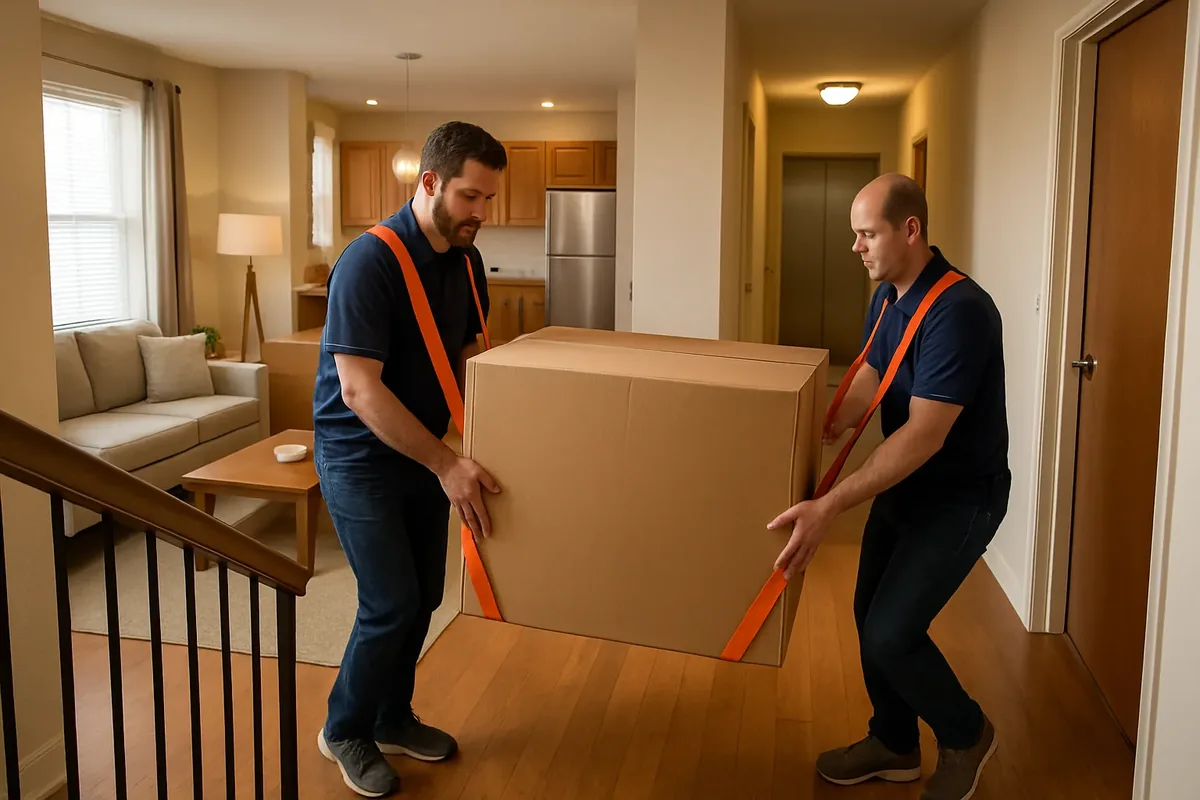
local vs long distance apartment moves
3,000-Mile Transcontinental Packing & Truck Securement: ECT Boxes, Quilted Pads & Tie-Downs
Surviving 3,000 highway miles without crushed boxes, rubbed veneer, or shifted loads demands stricter engineering than a 15-mile local hop. Compare 32-ECT vs. 48-ECT box stacks, 75 to 90 lb/doz quilted blanket lofts, ratchet-strap bulkhead geometry, and roll-up door security at highway motels.

local vs long distance apartment moves
15-Mile Move Crossing a State Line (FMCSA Rules) Cost: Studio, 1BR & 2BR Price Ranges
A 15-mile apartment move that crosses a state border triggers federal FMCSA interstate authority, changing how carriers quote labor, weight tariffs, and valuation. Compare full-service studio, 1-bedroom, and 2-bedroom price ranges against a DIY rental truck before booking.
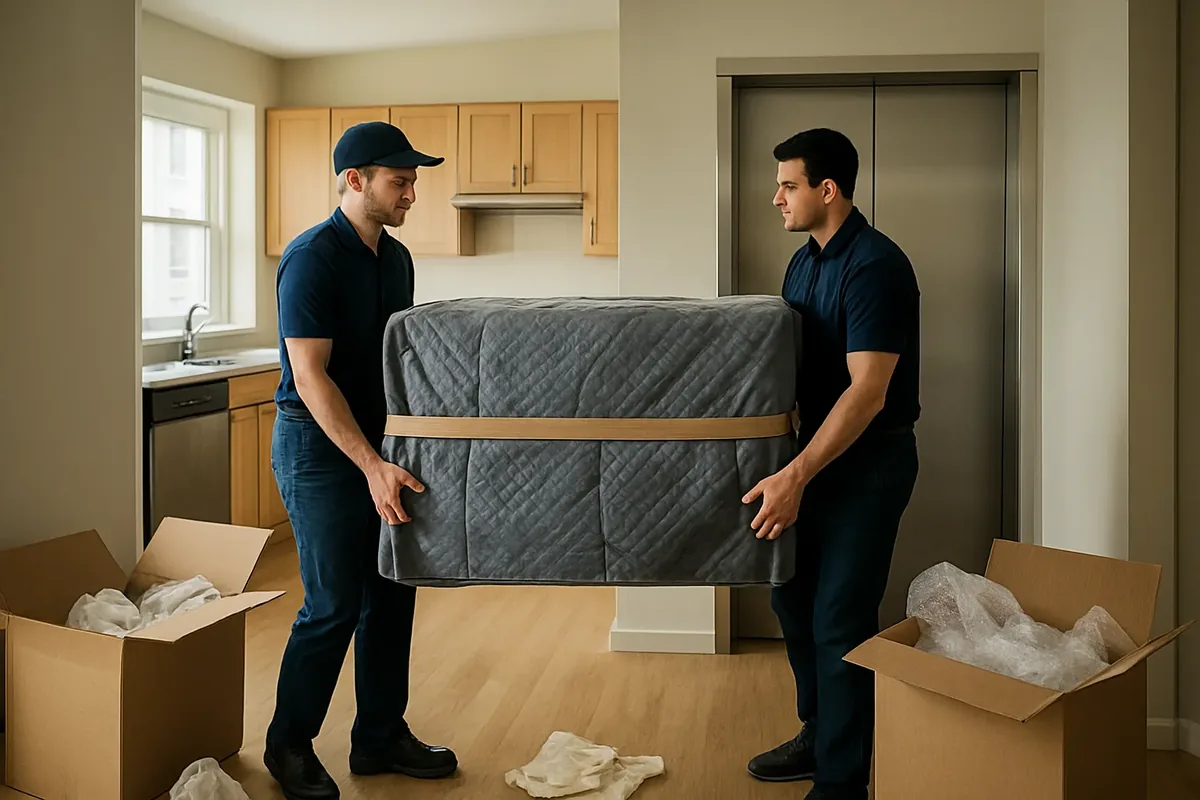
local vs long distance apartment moves
1-Bedroom 15-Mile State-Line Move Budget: FMCSA Movers vs. 15-Ft Rental Truck Math
Moving a 600–850 sq ft 1-bedroom apartment just 15 miles across a state border pits a $205–$345 15-ft rental truck against $820–$2,002 FMCSA interstate movers. Compare round-trip vs. one-way van math, commercial bridge tolls, COI building requirements, and 2-hour helper pricing line by line.