In this guide
Single-Chassis Laundry Center vs. Two-Piece Stacked Tower
Before grabbing a wrench, identify which stacked laundry architecture sits in your apartment closet. Standard US apartments use two very different formats: a modular two-piece stack (a standalone front-load washer with an identical-width dryer bolted on top via a rear stacking kit) or a single-chassis stacked laundry center (a unified vertical frame with a top- or front-load washer welded beneath the dryer).
Modular two-piece stacks can—and almost always should—be unbolted prior to moving day. Separating a 115–135 lb dryer from a 185–225 lb washer halves the center of gravity, drops maximum height from 76–79 inches down to 38–39 inches per unit, and eliminates the risk of shearing rear sheet-metal brackets on a stairwell tilt. Single-chassis laundry towers cannot be split in half; instead, clearance depends on removing closet bifold doors, unpinning interior door hinges, detaching protruding rear vent elbows, and sometimes removing the dryer's front door to shave 2.5–3.5 inches off cabinet depth.
Doorway, Hallway, and Elevator Cab Clearance Math
Never measure an apartment doorway from frame edge to frame edge; always measure the net clear opening between the inner door stop molding and the edge of the open door (or remove the hinge pins to gain 1.5–2.0 inches). Add 1.5 inches to the appliance's physical depth or width to account for a quilted moving blanket and a mover's gloved fingers gripping the cabinet sides.
| Appliance Format | Typical Width x Depth x Height | Minimum Clear Doorway (Padded) | Minimum 90-Degree Hall Turn | Elevator Cab Diagonal / Door Min |
|---|---|---|---|---|
| Compact 24" Two-Piece (Unstacked) | 24" W x 25" D x 33.5" H each | 26.5" clear opening | 30" corridor width | 28" cab door / 42" cab depth |
| Full-Size 27" Two-Piece (Unstacked) | 27" W x 32" D x 39" H each | 29.5" clear (sideways 27" W) | 34" corridor width | 32" cab door / 48" cab depth |
| Full-Size 27" Two-Piece (Left Stacked) | 27" W x 32" D x 78" H combined | 30" W x 80" H (zero tilt margin) | 40" corridor + 84" ceiling | 36" freight door / 84" cab height |
| Unified 24" Laundry Center (Intact) | 24" W x 27.5" D x 72" H | 27" W x 76" H | 34" corridor width | 30" cab door / 80" cab height |
| Unified 27" Laundry Center (Intact) | 27" W x 31.5" D x 75.5" H | 29.5" W x 79" H | 38" corridor width | 34" cab door / 82" cab height |
Check the vertical diagonal whenever you must tilt an intact 72–76 inch laundry center onto a two-wheel appliance hand truck. Using the Pythagorean diagonal formula, tilting a 75.5-inch tall by 31.5-inch deep unit produces a swept diagonal of 81.8 inches—nearly two inches taller than a standard 80-inch residential apartment door header. That single measurement explains why intact towers wedge violently against top jambs unless wheeled upright on a low-profile 4-wheel dolly or unbolted into two separate machines.
Amazon US Apartment Moving Supplies
Recommended Moving Boxes, Blankets & Bags for This Move
Apartment moving supplies matched to this guide (Amazon.com affiliate ID: apartmentmovingcost-20).
DEWALT 8V MAX Gyroscopic Cordless Screwdriver & Hex Bit Set for Bed Disassembly
Motion-activated variable-speed cordless screwdriver + Allen/Hex bits speeding up IKEA and platform bed breakdown
Scotch H180 Heavy-Duty Pistol-Grip 2-Inch Packing Tape Gun Dispenser
Steel-and-high-impact plastic side-loading tape gun with adjustable hub brake for 2-inch moving rolls
Color-Coded Apartment Moving Box Labels for 4 Bedrooms & Fragile (600 Stickers)
High-contrast color-coded adhesive labels for Master Bedroom, Bedroom 2, Kitchen, Living Room, Bath, and Fragile
As an Amazon Associate I earn from qualifying purchases. Always verify live stock and pack sizing directly on Amazon.com.
Step-by-Step Unbolting and Transit-Bolt Prep Before Movers Arrive
Doing the mechanical breakdown yourself the evening before moving day prevents two costly problems: billing $130–$175/hr while a moving crew hunts for specialty nut drivers, and risking stripped sheet-metal fasteners under time pressure. A variable-speed compact driver such as the DEWALT 8V MAX Gyroscopic Cordless Screwdriver & Hex Bit Set (0–430 RPM motion-activated control with Allen and hex bits) lets you back out rear stacking brackets, leveling locknuts, and dryer console screws smoothly without over-torquing soft appliance sheet metal.
- Cut power, shut off valves, and disconnect vents. Flip the dedicated 240V breaker off, unplug both cords, close hot and cold brass quarter-turn valves, and unscrew the flexible metal foil or semi-rigid aluminum dryer exhaust duct.
- Drain the washer sump and install shipping bolts. Open the front lower service flap to empty the pump filter hose into a shallow pan. Pull the tower forward 18 inches and insert all four OEM drum transit bolts into the rear frame sleeves until snug.
- Unbolt the rear stacking brackets and lower the dryer. Remove the rear L-brackets or side rail screws securing the dryer to the washer top plate. With a partner positioned on opposite sides, slide the dryer forward off the front alignment tabs and set it squarely on a padded floor slider.
- Remove bifold closet doors and hinge pins if clearance is under 1 inch. Lift spring-loaded bifold pins out of the top track and stack the panels flat against an adjacent wall. Removing a standard bedroom or hallway door from its hinge pins gains up to 2 inches of clear width in under two minutes.
- Bag and tape all hardware directly to the matching machine. Drop stacking brackets, rubber leveling pads, and vent clamps into a heavy zip-top freezer bag, seal it shut with a Scotch H180 Heavy-Duty Pistol-Grip 2-Inch Packing Tape Gun Dispenser, and tag the bag and rear panel with matching Color-Coded Apartment Moving Box Labels (3" x 2" high-contrast stickers) so nothing vanishes during unloading.
What Happens If You Leave Unbolting to the Moving Crew
Most full-service US apartment movers carry basic Phillips, Torx, and socket sets for beds and dining tables, but appliance stacking kits vary wildly across LG, Samsung, Whirlpool, Bosch, and Miele designs. Leaving disassembly to the crew typically adds 15–30 minutes of hourly labor ($35–$85 on a 2-person crew, or $45–$115 on a 3-person crew) plus a potential $75–$160 heavy-appliance surcharge if the foreman determines the intact tower requires specialty rigging.
- Liability waivers on unbolted doors: If movers must remove a front-load glass door or magnetic latch switch to clear a 26-inch hallway, expect to sign a non-liability waiver for reassembly alignment.
- Shared-elevator bottlenecks: An unstacked pair can ride together inside a standard 48-inch passenger elevator cab on a single trip, whereas an intact 78-inch tower often blocks elevator light curtains and adds 1.0–1.75 hours ($85–$175 surcharge) waiting for service access.
- Missing stacking kit replacement cost: Losing proprietary stacking rails or rubber vibration feet during chaotic load-out forces a $55–$110 OEM replacement order and delays laundry setup by a week.
Reassembly and Leveling Protocol at Your New Apartment
After the movers set the washer inside your new laundry closet, verify floor level front-to-back and left-to-right with a torpedo spirit level before lifting the dryer back on top. Adjust the four front and rear threaded leveling feet and tighten the locknuts firmly against the base frame; an unlevel washer beneath a stacked dryer amplifies 1,200-RPM spin vibration directly into apartment joists and triggers downstairs neighbor complaints.
Remove all four rear shipping bolts before plugging the washer in—running a single spin cycle with transit bolts installed can shatter the outer polycarbonate tub and void the warranty. Thread new braided stainless-steel supply hoses (never reuse cracked rubber hoses), reconnect the rear stacking brackets with your labeled hardware bag, and run a five-minute rinse-and-spin leak check before pushing the tower flush into the alcove.
See how unbolting ahead of time versus adding stair surcharges or extra labor hours affects your move budget inside our Apartment Moving Cost Calculator, or run a side-by-side comparison in the Movers vs. DIY Rental Truck Comparator.
Open Calculator →Frequently Asked Questions
Can movers carry a stacked two-piece washer and dryer without unbolting it?+
Reputable US moving crews almost always refuse to carry a two-piece stacked unit intact down stairs or across thresholds. The rear stacking brackets are engineered for vertical static compression and spin stability, not lateral shear while tilted on a hand truck. Unbolting takes 10–15 minutes and prevents both cabinet collapse and personal injury.
How much clearance do I need to move a 27-inch stacked unit through a 28-inch apartment door?+
A 27-inch wide unit has only 1 inch of total margin inside a 28-inch jamb—not enough once you add a quilted moving blanket. Removing the interior door from its hinge pins recovers 1.5–2.0 inches, and rotating the unstacked units so the 27-inch width passes perpendicular to the jamb allows safe passage without stripping paint.
Will movers charge extra if they have to remove my apartment closet doors?+
Popping off bifold closet doors or tapping out interior hinge pins adds 10–20 minutes to an hourly local move ($25–$60), and many carriers require a signed waiver before detaching landlord fixtures. Removing the doors yourself beforehand protects your security deposit and keeps the crew focused on loading.
What is the difference between a binding and non-binding estimate if disassembly takes longer than expected?+
Under FMCSA interstate rules, a binding estimate locks your total price based on the inventory and services listed, meaning unexpected disassembly not included on the order for service can trigger a written addendum before work proceeds. On local hourly moves (non-binding by nature), every extra 15 minutes spent unbolting appliances is billed directly at the crew's hourly rate.
Where should I store the four washer transit bolts after reassembly?+
Tape the labeled zip-top bag containing your four shipping bolts and plastic hole plugs directly to the rear metal panel of the washer using clean-release tape, or store them inside the laundry closet utility shelf so you never have to reorder OEM bolts before your next lease turnover.
Interactive US Moving Tools
Compare Full-Service Movers vs. DIY Rental Truck in 30 seconds
Related Guides
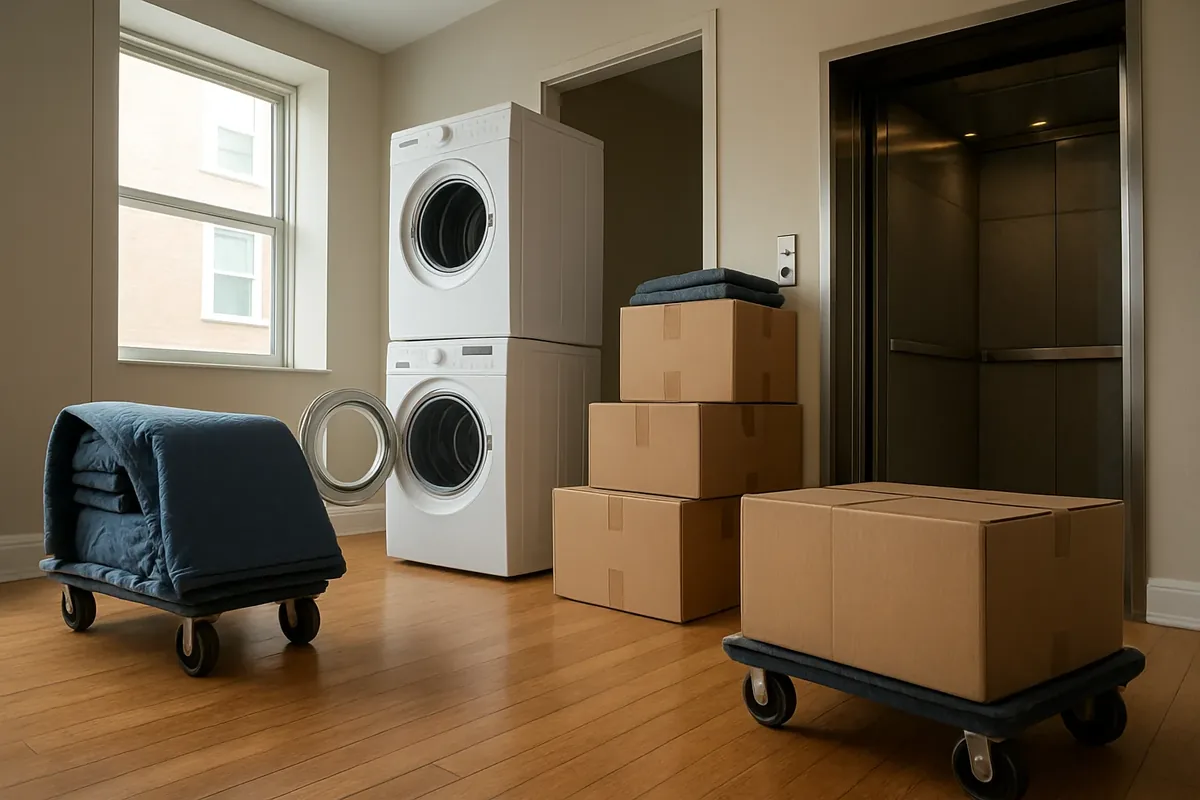
furniture and appliance moving costs
Furniture & Specialty Item Moving Costs: Complete US Benchmarks & Guides
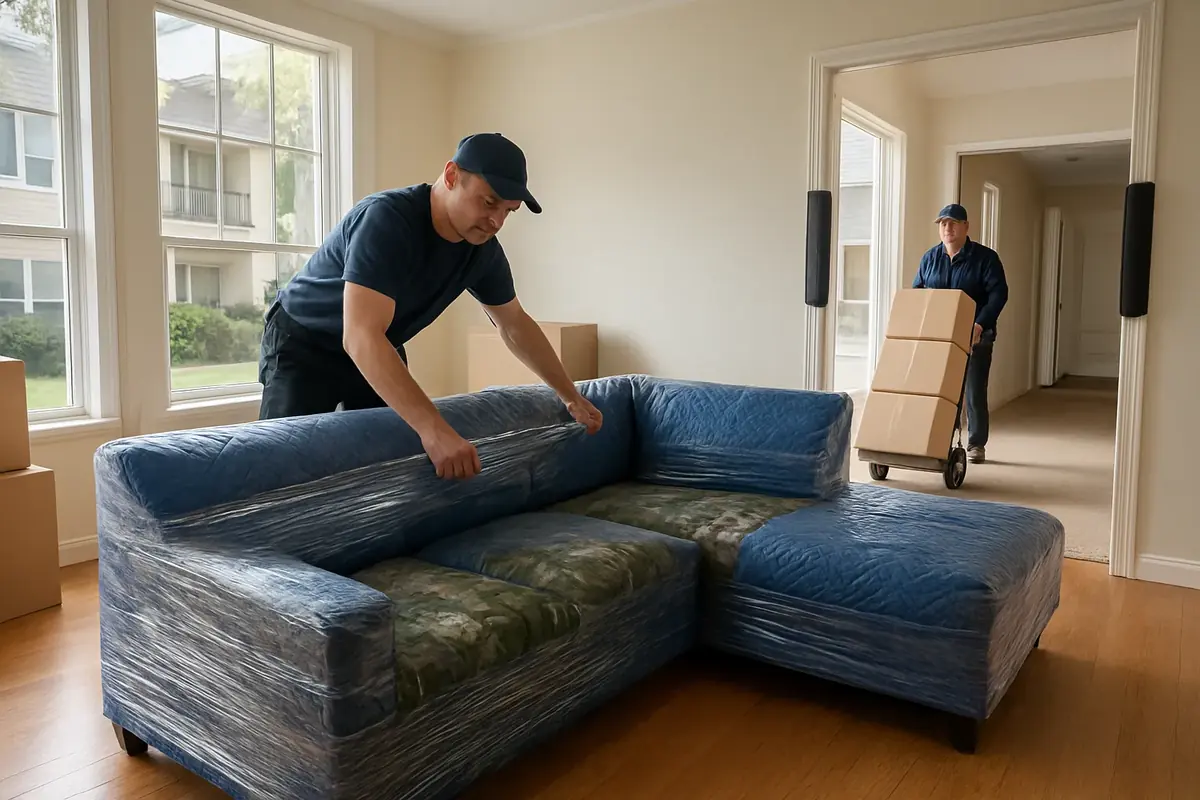
Moving oversized apartment furniture and heavy appliances—from L-shaped sectionals and King adjustable beds to Peloton bikes, glass dining tables, OLED TVs, and stacked washer-dryers—adds $60 to $340+ in specialized disassembly, stair-carry labor, and protective crating fees. This pillar guide benchmarks US mover hourly rates, flat bulky-item add-ons, doorway clearance tactics, and DIY truck padding specs.
furniture and appliance moving costs
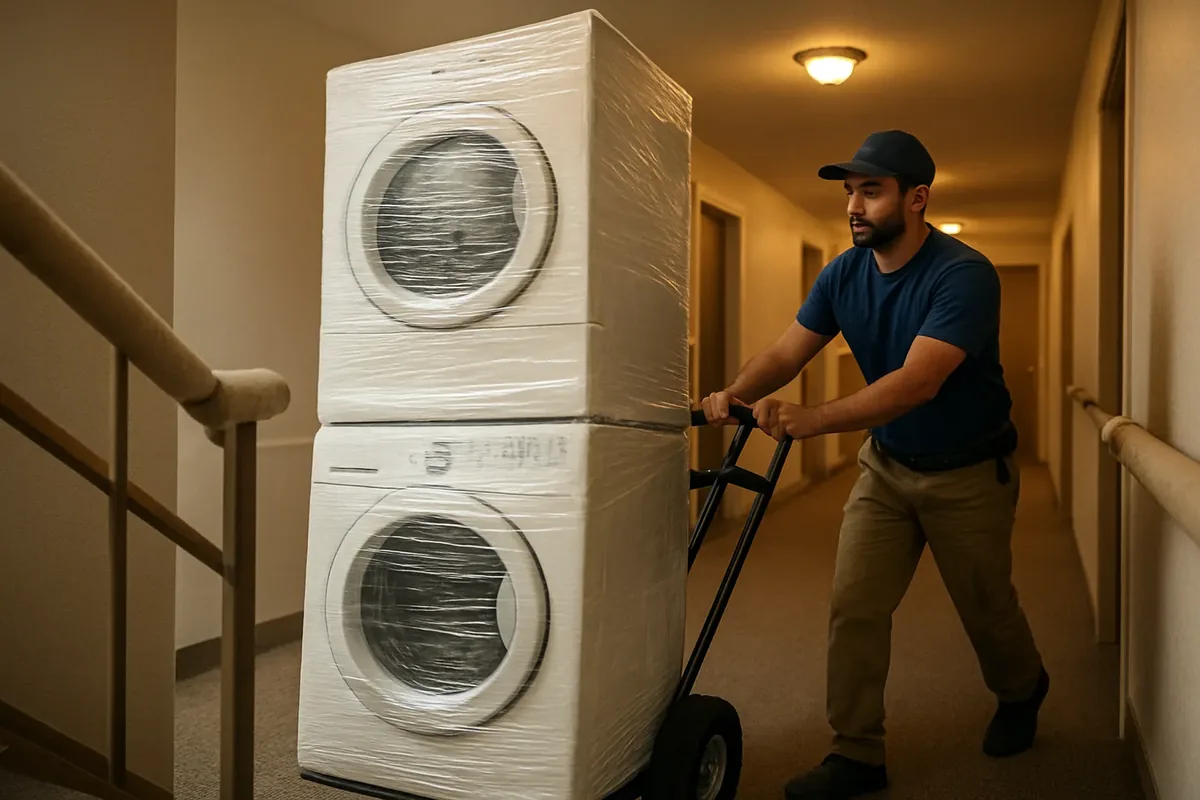
Protective Packaging & Corner Guard Rules: Stacked Apartment Washer & Dryer Unit
Learn the exact moving blanket count, 80-gauge stretch wrap layers, and floor-protection specs required to wrap a stacked apartment washer and dryer without scratching glass doors or enameled side panels. Compare DIY material costs against mover-supplied packing markups.
furniture and appliance moving costs
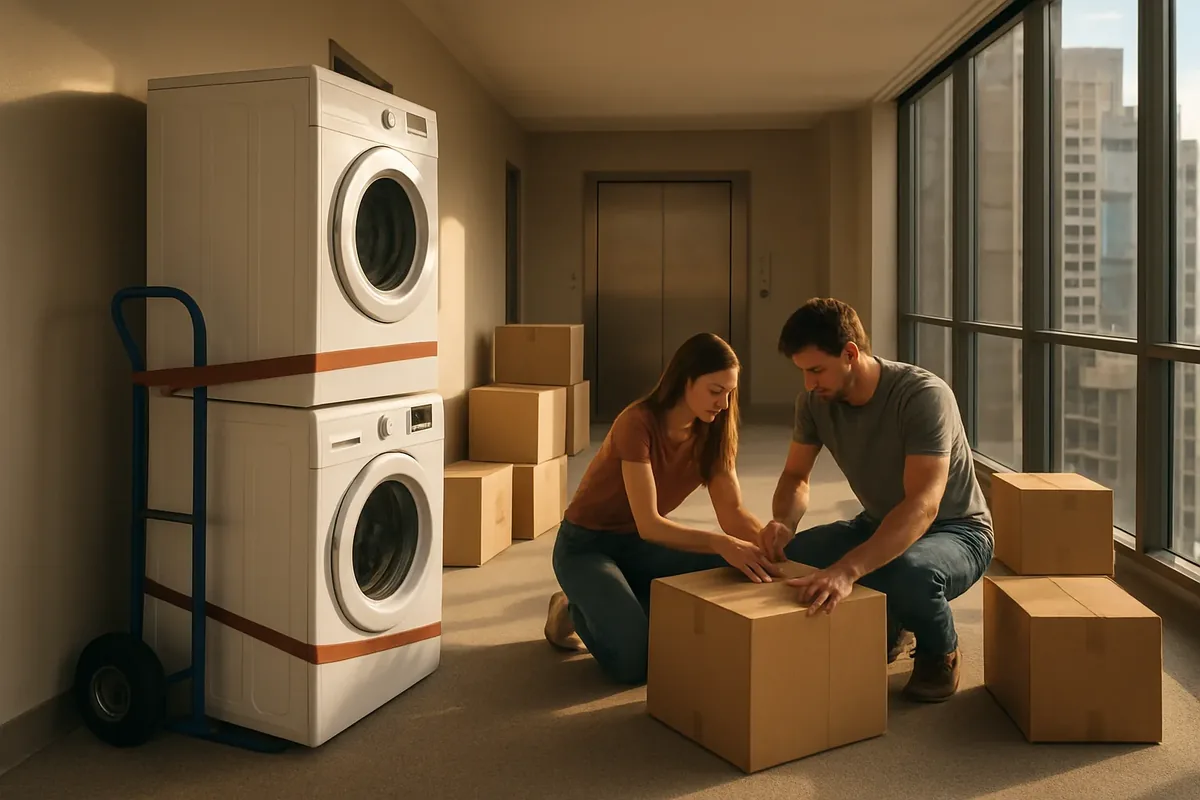
DIY Handling & Floor-Slider Technique for a Stacked Apartment Washer & Dryer Unit
Master the safe two-person technique for extracting, rolling, stair-climbing, and strapping down a stacked apartment washer and dryer using forearm straps, 4-wheel dollies, and stair hand trucks. Compare DIY gear and truck costs against hiring full-service movers.
furniture and appliance moving costs
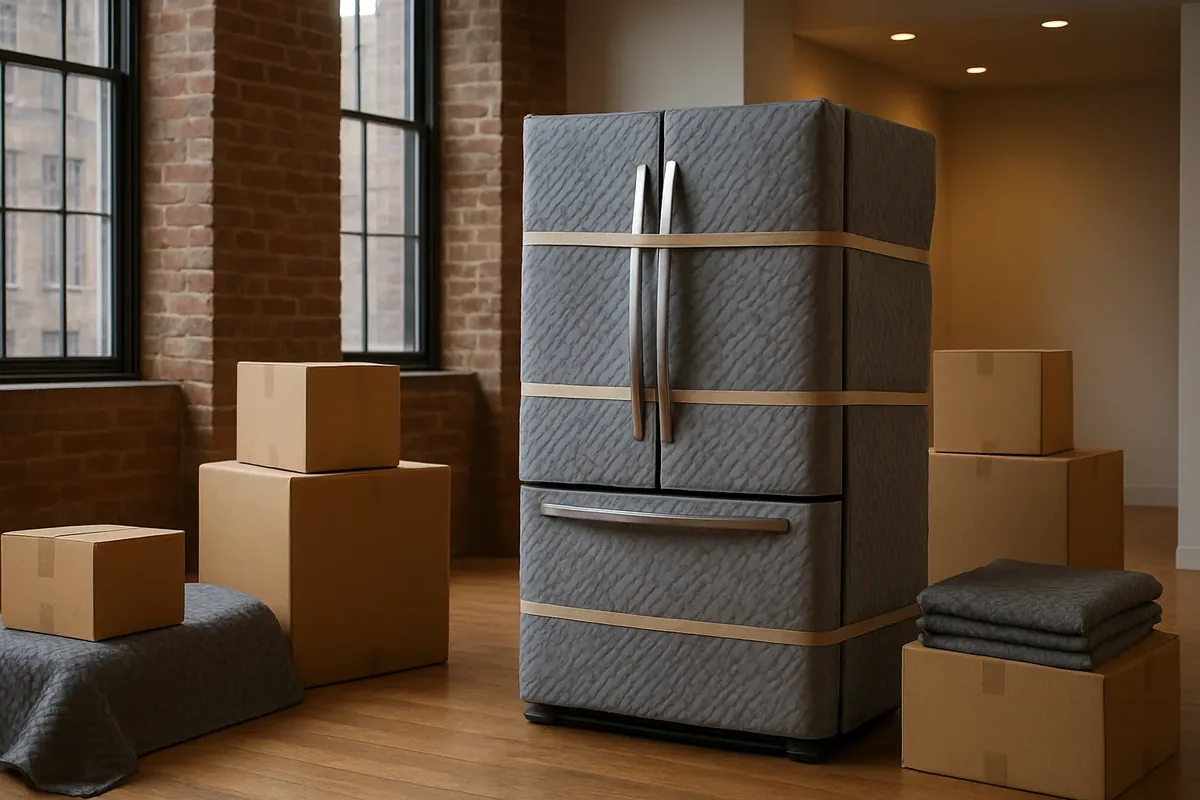
Cost to Move an Apartment Refrigerator & Upright Freezer: Mover Fees & Labor Time
See exact bulky-item fees, crew labor minutes, and long-distance weight charges for moving a French door apartment refrigerator or upright freezer. Compare full-service add-on costs, standalone delivery rates, and DIY rental truck budgets.