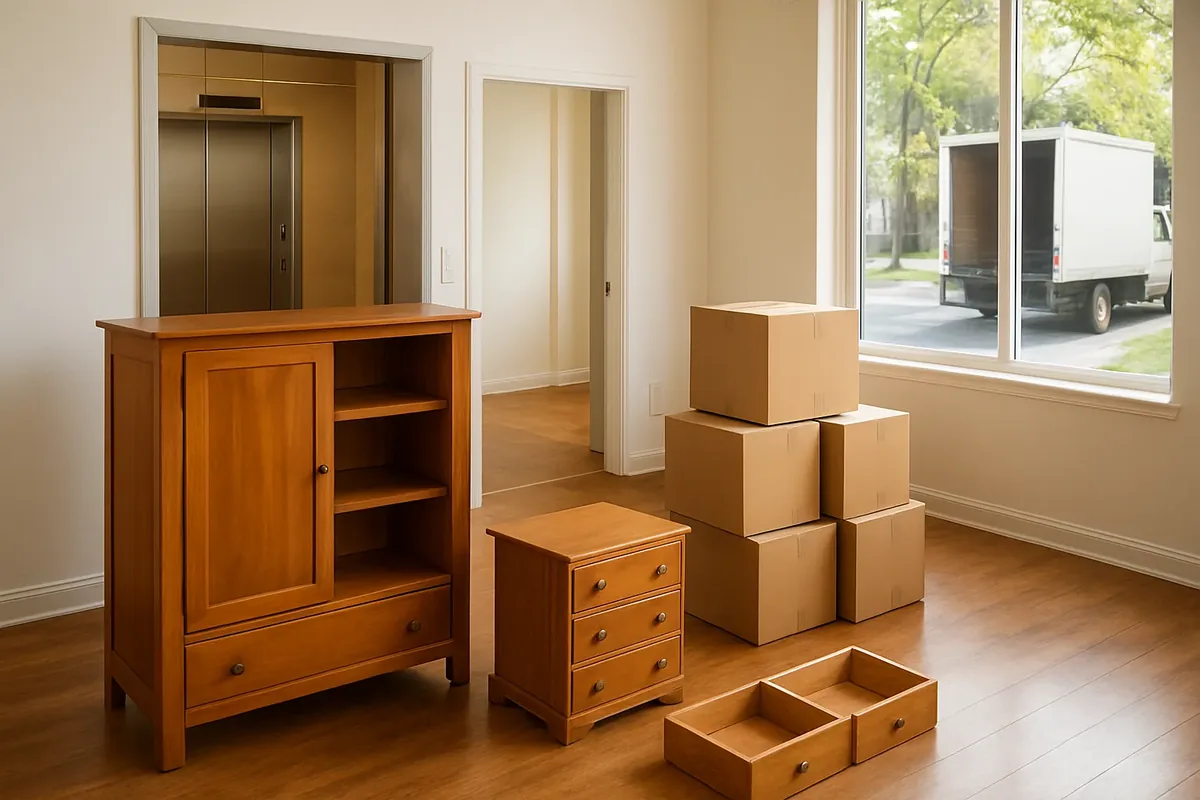
In this guide
- The Doorway and Hallway Math That Prevents Moving-Day Stalemates
- Clearance Benchmarks: Doors, Elevators, and Stair Turns
- What Can (and Should) Be Unbolted on Solid-Wood Dressers & Armoires
- Hardware Bagging Protocol So Nothing Gets Lost in Transit
- Protecting Door Jambs, Banisters, and Elevator Cabs During Tight Pivots
The Doorway and Hallway Math That Prevents Moving-Day Stalemates
Nothing burns through a $130 to $175 per hour moving crew clock faster than discovering a 24-inch-deep oak armoire will not pivot out of a 30-inch bedroom doorway into a 36-inch apartment hallway. Standard US interior bedroom doors measure 30 or 32 inches wide, while older pre-war walk-ups frequently shrink to 27.5 or 28.5 inches once you subtract the wooden door stop molding and hinges. If your furniture's narrowest dimension (usually depth) is even half an inch wider than that clear opening, brute force will only crack the jamb and forfeit your lease deposit.
Use two quick geometric rules 48 hours before moving day. First, for a straight doorway pass, your dresser or armoire depth (front-to-back, including protruding drawer pulls and crown molding) must be at least 1 inch narrower than the clear door opening. Second, for a 90-degree turn from a bedroom door into a narrow hallway, compute the piece's horizontal diagonal: square root of (Width squared + Depth squared). If that diagonal exceeds your hallway width, you must either tilt the armoire vertically through the doorway (requiring its diagonal height to clear the 80-inch door header) or reduce its dimensions by unbolting removable components.
Clearance Benchmarks: Doors, Elevators, and Stair Turns
Compare your dresser and armoire tape measurements against standard US apartment choke points below—and note how failing a passenger elevator fit directly changes your moving bill.
| Apartment Choke Point | Typical Clear Opening | Max Unstripped Armoire Size | Easy Clearance Fix | Cost Impact If Blocked |
|---|---|---|---|---|
| Interior Bedroom Door | 28 to 31 in W x 79 in H | 26 in D x 76 in H | Pull door hinge pins + remove knobs/feet | +20 to 40 min crew delay ($45 to $115) |
| Apartment Front Entry Door | 32 to 35 in W x 80 in H | 30 in D x 78 in H | Remove crown molding + clamp jamb pads | $200 to $500 landlord jamb repair claim |
| Shared Passenger Elevator | 36 in W door x 82 in H cab | 32 in W x 24 in D x 78 in H | Separate 2-piece hutch & base | Switch to stairs: +$55 to $340 + 1-3 hrs |
| Reserved Freight Elevator | 42 to 48 in W x 96 to 108 in H | 42 in W x 30 in D x 92 in H | Reserve COI slot 72 hrs ahead | $45 to $95 staging fee (missed slot = idle hrs) |
| Walk-Up Switchback Landing | 36 to 42 in deep landing | 72 in H max without rail tilt | Unbolt legs, doors, and top pediment | +$110 to $340 stair fee + possible 3rd mover |
Amazon US Apartment Moving Supplies
Recommended Moving Boxes, Blankets & Bags for This Move
Apartment moving supplies matched to this guide (Amazon.com affiliate ID: apartmentmovingcost-20).
Simpli-Magic 72" x 80" Padded Moving Blankets (12-Pack, 65 lb/dz Mid-Weight)
Versatile mid-weight quilted furniture pads for wrapping dining chairs, bookshelves, and elevator walls
72" x 80" Camo & Blue Quilted All-Purpose Furniture Moving Blankets (6-Pack)
Durable zig-zag quilted pads preventing metal truck rail abrasion during bumpy interstate drives
Door Jamb & Banister Padded Neoprene Protector Sleeves (3-Piece Walk-Up Set)
Clip-on padded door-frame guards protecting apartment entry molding from security-deposit dings
As an Amazon Associate I earn from qualifying purchases. Always verify live stock and pack sizing directly on Amazon.com.
What Can (and Should) Be Unbolted on Solid-Wood Dressers & Armoires
Even traditional joinery dressers and armoires have modular components designed to shed bulk and weight without compromising structural glue joints. Work methodically through this disassembly checklist before movers arrive—or before you rent your DIY truck:
- 1. Unbolt dresser mirrors and vertical wooden supports. Remove the 4 to 8 wood screws or hex bolts securing the vertical mirror slats along the back of the dresser. Never carry a dresser with its mirror attached; the slightest flex cracks the glass and voids mover valuation coverage.
- 2. Separate two-piece armoires (upper cabinet and drawer base). Inspect the interior floor of the upper wardrobe section and behind the top drawer rail for recessed metal mending plates, butterfly bolts, or hidden vertical lag screws. Splitting a 280-lb armoire into a 150-lb top and 130-lb base cuts crew stair time in half.
- 3. Remove bun feet, tapered legs, and decorative crown pediments. Twisting off threaded hanger-bolt legs or unbolting corner leg brackets trims 3 to 6 inches off total height—often the exact margin needed to clear a 79-inch bedroom door frame or 82-inch elevator door header.
- 4. Detach hinged armoire doors and lift out heavy dovetail drawers. European cup hinges snap off with a single release lever, and mortised brass hinges unscrew cleanly in two minutes. Removing thick solid-wood doors reduces snag hazards and drops cabinet weight by 35 to 60 lbs; pulling all drawers sheds another 60 to 90 lbs.
- 5. Remove protruding brass pulls or reverse them inward. Extended bail handles and ceramic knobs add 1.5 inches to total depth and act like chisels against painted hallway drywall. Either bag all hardware or screw knobs temporarily to the inside face of each drawer front.
Hardware Bagging Protocol So Nothing Gets Lost in Transit
Losing four antique brass hinge screws or specialty lag bolts turns a 15-minute reassembly into a frustrating hardware-store hunt. Follow the pro-mover double-anchor hardware method: place bolts, washers, shelf pins, and mirror brackets into thick 4-mil zip-top freezer bags, label each bag with a permanent marker (for example, 'Master Armoire — Left Door Hinges + 6 Brass Screws'), and tape the sealed bag flat inside the furniture's empty interior cavity using blue painter's tape—or place every labeled bag into a single bright 'Parts Box' that rides in the truck cab with you.
Protecting Door Jambs, Banisters, and Elevator Cabs During Tight Pivots
Once your solid-wood piece is stripped down to minimum clearance, pad both the furniture and the building's vulnerable trim so tight 1-inch tolerances stay damage-free:
- Apartment entry and bedroom molding: Snap spring-clamp sleeves like the Pro Mover Door Jamb & Banister Padded Neoprene Protector Sleeves (3-piece set, 54-inch tall guards) directly onto your unit's entry frame and stair banister posts before carrying heavy hardwood past the threshold.
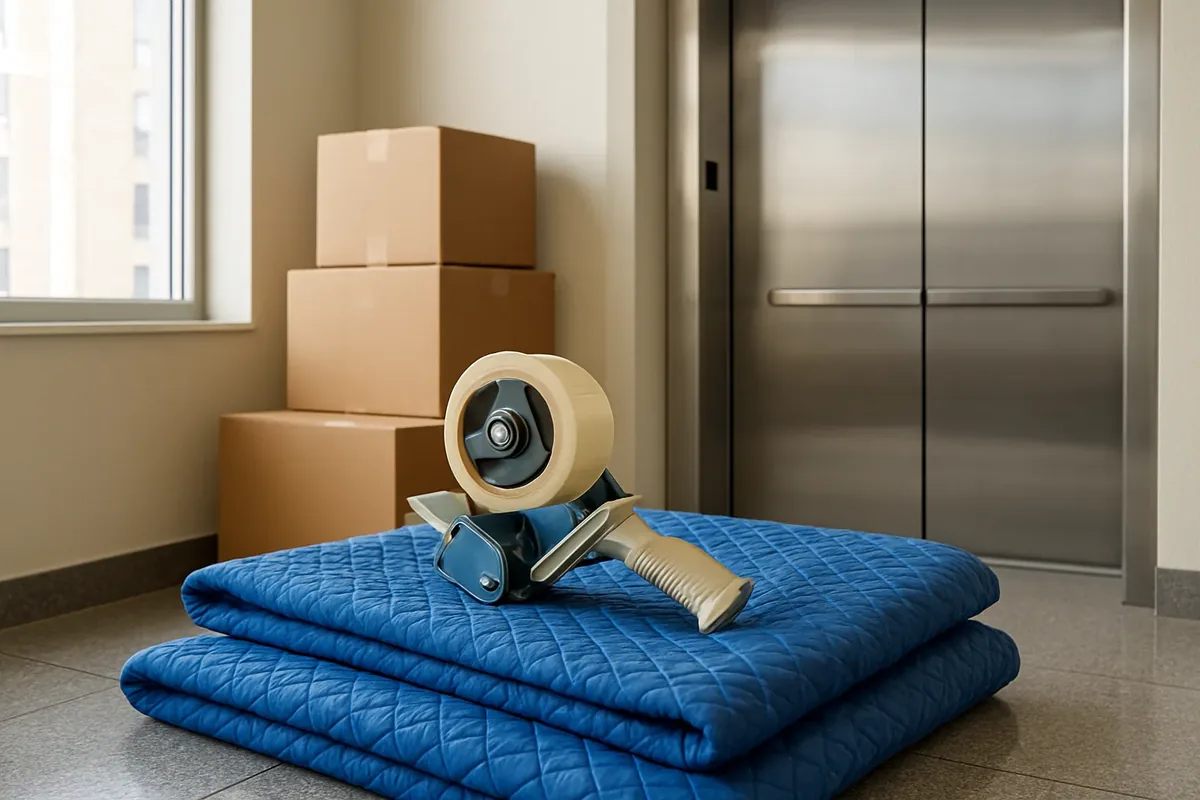
- Full-cabinet cushioning on tight turns: Drape 80x72-inch mid-weight quilted blankets such as the Simpli-Magic 72" x 80" Padded Moving Blankets (12-pack, 65 lb/dozen mid-weight) around the dresser carcass and secure them tightly with stretch wrap so loose blanket tails do not catch on door latches.
- Rental truck wall and hallway staging protection: Keep extra quilted pads like the Harbor Freight / Haul-Master 72" x 80" Camo & Blue Quilted All-Purpose Furniture Moving Blankets (6-pack, 65 lb/dozen) folded along narrow hallway baseboards or draped over metal truck rails where unbolted armoire sections rest during loading.
Not sure whether your tight walk-up or freight elevator setup makes DIY rental cheaper than a 2- or 3-person crew? Plug your floor level, access type, and apartment size into our Apartment Moving Cost Calculator or Movers vs. DIY Rental Truck Comparator.
Open Calculator →Frequently Asked Questions
Will full-service movers disassemble and reassemble my solid-wood armoire and dresser mirror?+
Yes, licensed full-service crews handle basic unbolting (mirrors, legs, two-piece hutches, and standard door hinges) as part of hourly labor ($130 to $175/hr for 2 movers). However, specialty carpentry disassembly or antique glued trim is excluded, and doing simple unbolting yourself beforehand saves 20 to 45 billable minutes ($45 to $130).
What if my solid-wood armoire is 1 inch wider than my apartment door even after removing the door?+
First check if removing protruding crown molding, bottom base trim, or hinged doors shaves off 1 to 2 inches. If the main carcass still exceeds the framed jamb, avoid cutting trim without landlord approval; look for an alternate path such as a wider patio slider or evaluate whether hoisting is permitted under building COI rules (hoisting typically adds $250 to $600+).
Should I leave empty drawers inside a solid-wood dresser while squeezing through a tight doorway?+
Take the drawers out completely. Removing six solid-wood drawers sheds 60 to 90 lbs, gives movers recessed handholds inside the cabinet frame to pivot cleanly around narrow corners, and prevents drawers from sliding out mid-tilt and smashing into painted drywall.
How do I measure whether an armoire fits on a 90-degree walk-up staircase turn?+
Measure three numbers: stair width from wall to handrail, landing depth from the top riser to the opposite wall, and vertical ceiling clearance straight up from the bottom step of the turn. Compare those to your armoire's diagonal height—square root of (Height squared + Depth squared)—because movers must tilt tall pieces across the stairwell incline.
Do movers charge extra for removing and reinstalling apartment doors?+
Most local crews will pop hinge pins quickly at no flat surcharge beyond normal hourly labor, though many company policies prohibit unscrewing mortised door hinges or removing metal security-door closers due to property liability. Always ask your foreman before moving day and keep a screwdriver handy to handle door pins yourself.
Interactive US Moving Tools
Compare Full-Service Movers vs. DIY Rental Truck in 30 seconds
Related Guides
furniture and appliance moving costs
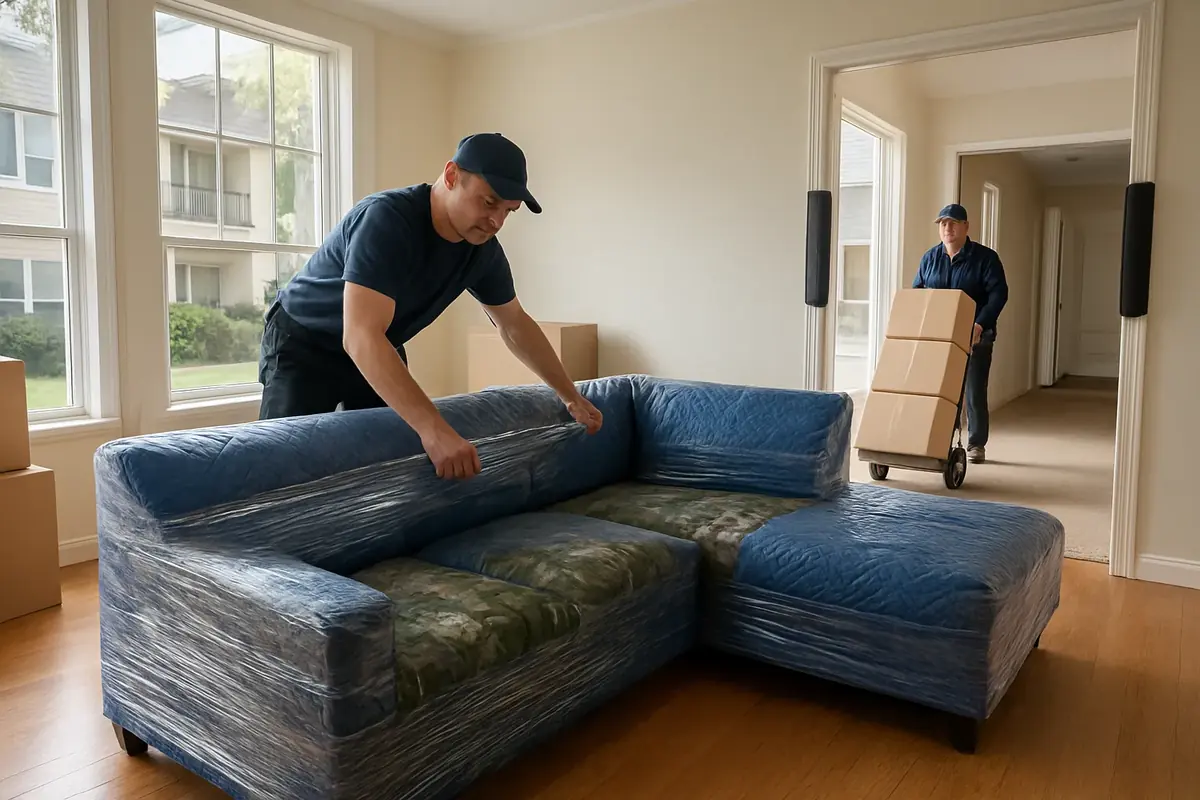
Furniture & Specialty Item Moving Costs: Complete US Benchmarks & Guides
Moving oversized apartment furniture and heavy appliances—from L-shaped sectionals and King adjustable beds to Peloton bikes, glass dining tables, OLED TVs, and stacked washer-dryers—adds $60 to $340+ in specialized disassembly, stair-carry labor, and protective crating fees. This pillar guide benchmarks US mover hourly rates, flat bulky-item add-ons, doorway clearance tactics, and DIY truck padding specs.
furniture and appliance moving costs
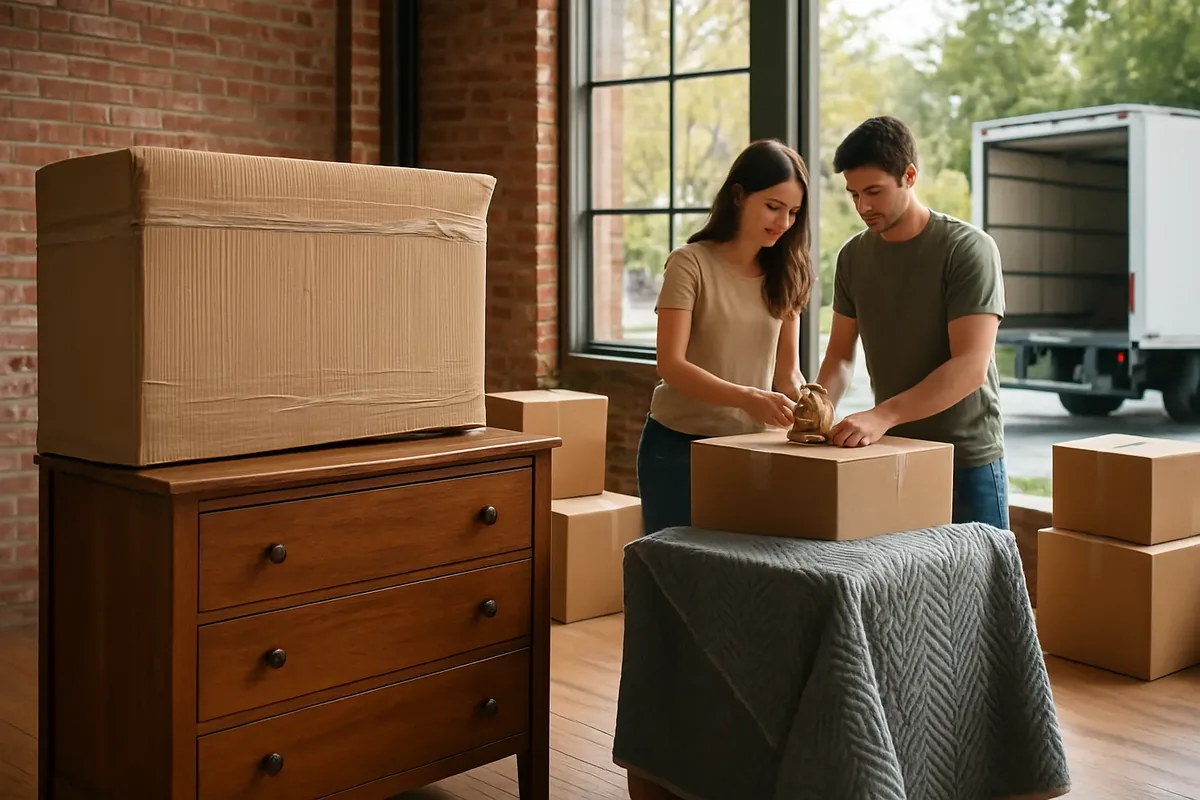
Wrapping a Solid-Wood Dresser & Tall Armoire: Blankets, Stretch Film & Bags
Follow the exact quilted blanket counts, 80-gauge stretch film layering rules, and wood-finish moisture safeguards that protect heirloom solid-wood dressers and tall armoires during local and long-distance apartment moves.
furniture and appliance moving costs
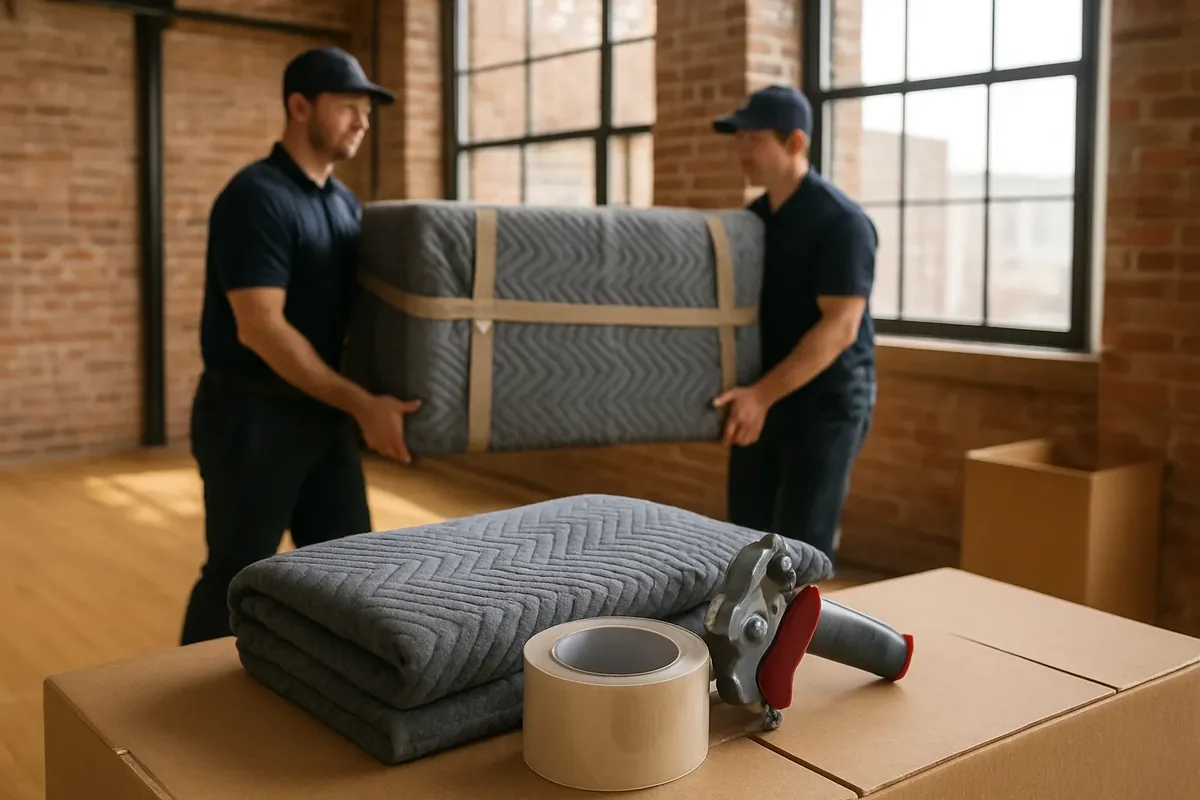
Moving a Solid-Wood Dresser & Tall Armoire Yourself: Straps, Dollies & Sliders
Learn the proven two-person technique for lifting, sliding, dollying, and tying down a 180- to 300-lb solid-wood dresser or tall armoire in a DIY rental truck without back strain or floor gouges.
furniture and appliance moving costs
How Much Do Movers Charge for a Glass-Top & Marble Slab Dining Table?
A marble slab or tempered glass dining table triggers bulky-item surcharges, extra crating minutes, and stricter crew sizing in apartment buildings. Here is the exact line-item cost breakdown for full-service crews versus a DIY rental truck move.