In this guide
- The Diagonal Depth Formula: Will Your Sectional Clear Apartment Doors?
- Elevator Cab & Stairwell Turn Math: Don't Forget the 90-Degree Pivot
- 4 Types of Sectional Connectors & How to Unbolt Each Safely
- Step-by-Step Disassembly, Hardware Bagging & Reassembly Workflow
- What to Do When a Sectional Still Won't Fit: Cost of Pro Furniture Breakdown
The Diagonal Depth Formula: Will Your Sectional Clear Apartment Doors?
Most apartment moving disasters happen because renters measure the outside width of their doorframe trim rather than the clear interior opening—or they measure the sofa's overall depth instead of its diagonal depth. A standard US apartment entry door slab is 32 or 36 inches wide, yet the interior door stop molding and hinged door leaf (when open only 90 degrees against a hallway wall) shrink the usable passage to 29.5 to 33.5 inches. Interior bedroom or narrow pre-war corridor doors can drop as low as 27.5 inches.
Because movers rarely push a sectional module straight through flat—they hook the back frame through the doorway first and pivot the front seat deck around the jamb—the critical dimension is Diagonal Depth (DD). To measure it accurately, place a straightedge from the highest point of the rigid backrest frame (cushions removed) straight down to the front bottom edge of the seat frame, then measure perpendicularly from that line back to the deepest lower-rear corner of the sofa frame. If that diagonal depth is smaller than your clear doorway width (minus 1 inch for blanket thickness), the module will pivot through cleanly.
| Sectional Module Type | Typical Frame Height (No Legs) | Typical Diagonal Depth | Minimum Clear Door Width | Elevator Cab Diagonal Requirement |
|---|---|---|---|---|
| Compact Apartment Sofa Section (68–78 in long) | 26–29 in | 27–30 in | 30 in (32-in door) | 82 in vertical or 84 in diagonal cab |
| Deep Modern Chaise Lounge (60–68 in long) | 27–31 in | 28–32 in | 31–33 in | 72 in vertical cab clearance |
| Standard Corner Wedge Module (38 x 38 in) | 28–32 in | 30–34 in | 32–35 in (remove door leaf) | 44 in depth x 44 in width cab |
| Oversized Deep Modular Pit (42–46 in deep) | 28–33 in | 32–36 in | 34–36 in (check hallway turns) | Freight elevator (>90 in interior height) |
| Power-Reclining End Module (backs detached) | 24–28 in (backs off) | 26–30 in (backs off) | 30–32 in | Standard passenger or freight cab |
Elevator Cab & Stairwell Turn Math: Don't Forget the 90-Degree Pivot
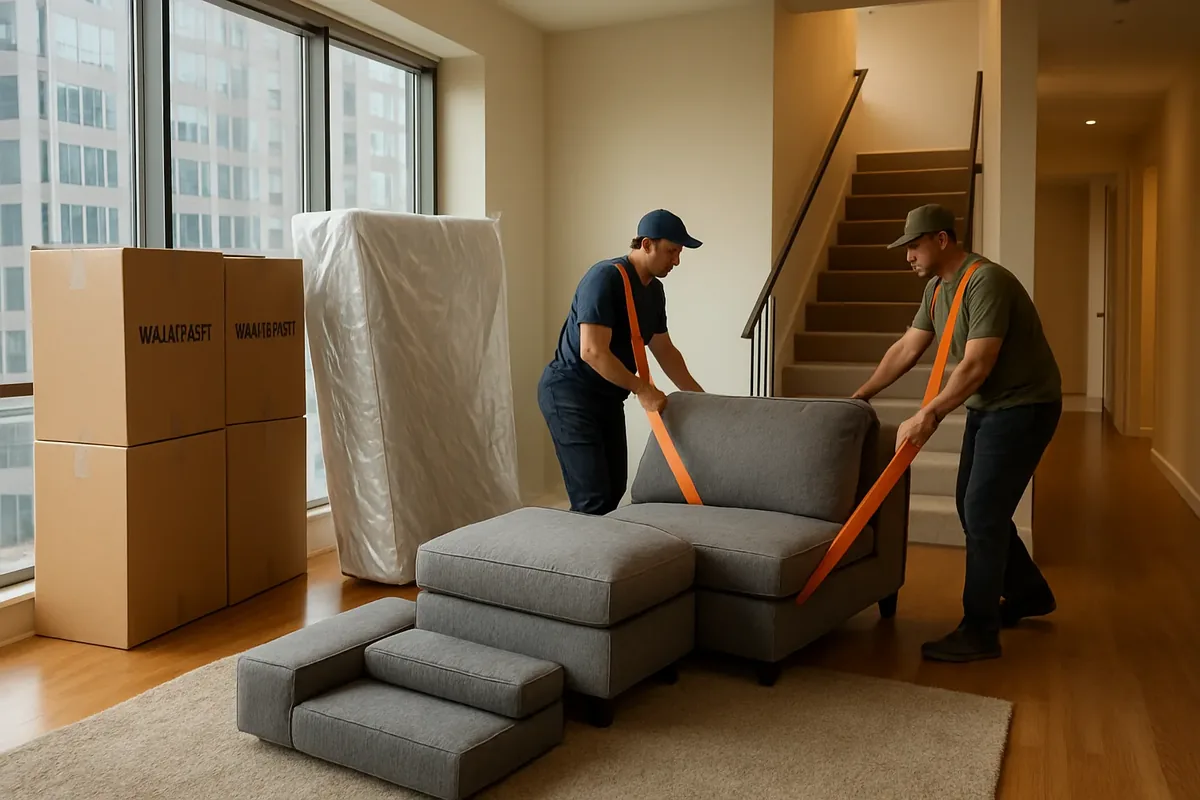
Clearing your apartment front door is only stage one. In mid-rise and high-rise apartments, movers stand long sectional pieces vertically on their armrests inside the elevator. Measure three elevator dimensions before moving day: door opening width (usually 36 inches on passenger cabs, 42–48 inches on freight cabs), interior ceiling height (84–96 inches on passenger cabs, 96–114 inches on freight cabs), and interior floor diagonal.
If your longest unclipped sectional piece measures 84 inches and the passenger elevator ceiling is 88 inches, you must verify that the doorway header height (often 80–84 inches) allows you to tilt the sofa diagonally into the cab. When an 86-inch piece will not fit the passenger elevator, you either book the reserved freight elevator (+0.5–1.0 crew hour, $45–$95 building/mover staging cost) or haul it down the fire stairs, where walk-up surcharges jump from $55–$95 for 1 flight to $185–$340 for 3 to 4 flights. In tight stairwells with 180-degree switchback landings, check that the landing depth exceeds the sofa's frame height plus 6 inches so the bottom carrier can swing the nose up toward the next flight.
Amazon US Apartment Moving Supplies
Recommended Moving Boxes, Blankets & Bags for This Move
Apartment moving supplies matched to this guide (Amazon.com affiliate ID: apartmentmovingcost-20).
EZ Moves Professional Furniture Lifter Lever Bar & 8 Carpet/Hardwood Slides
High-leverage steel pry bar lifting 300-lb dressers 2 inches off the floor to slip sliders underneath solo
MaxiFlex Ultimate 34-874 Micro-Foam Nitrile Grip Moving Work Gloves (6-Pair Pack)
Breathable micro-foam nitrile palm coating providing non-slip grip on slick cardboard boxes and sweaty stair rails
DEWALT 8V MAX Gyroscopic Cordless Screwdriver & Hex Bit Set for Bed Disassembly
Motion-activated variable-speed cordless screwdriver + Allen/Hex bits speeding up IKEA and platform bed breakdown
As an Amazon Associate I earn from qualifying purchases. Always verify live stock and pack sizing directly on Amazon.com.
4 Types of Sectional Connectors & How to Unbolt Each Safely
Modern L-shaped and modular sectionals rely on four main coupling mechanisms. Identifying yours before the moving truck arrives eliminates stripped fasteners and broken wooden rails:
- Alligator / interlocking metal floor clips: Common on West Elm, Crate & Barrel, and Pottery Barn sectionals. Stand at the seam, lift the lighter chaise or armless piece straight up 2 to 3 inches, and the sawtooth metal teeth disengage cleanly without tools.
- Side-mounted drop-in hooks (flush mounts): One section has a vertical steel pin plate and the mating section has a slotted bracket. Lift the pin side straight up—never pull sideways or you will rip the wood screws straight out of the kiln-dried hardwood rail.
- Underside carriage bolts and wing nuts: Common on IKEA and heavy modular frames. Flip the sofa gently onto its back over a moving pad, unzip or fold back the black cambric dust cover if needed, and back out the bolts using a hex/Allen bit or wrench.
- Power-recliner KD (knock-down) backrest clips: On reclining L-sectionals, unzip the rear fabric flap and squeeze or pry the twin steel locking tabs on the side slides so the padded backrests lift straight off the heavy steel base, reducing diagonal depth by 6 to 9 inches.
Step-by-Step Disassembly, Hardware Bagging & Reassembly Workflow
Prepping your sectional the evening before moving day takes about 25 minutes and saves $60 to $130 in mover disassembly billing (at $130–$175/hr for a 2-mover crew or $175–$235/hr for 3 movers). Use tools sized for confined underside clearances: a compact motion-activated driver like the DEWALT 8V MAX Gyroscopic Cordless Screwdriver & Hex Bit Set (0–430 RPM with Allen/Hex bits) removes bolted legs and metal brackets in seconds without over-torquing softwood inserts; a 25-inch steel pry bar such as the EZ Moves Professional Furniture Lifter Lever Bar (rated to lift up to 300 lb) lets one person raise a corner 2 inches to slip floor sliders underneath; and breathable EN388 Abrasion Level 4 MaxiFlex Ultimate 34-874 Micro-Foam Nitrile Grip Moving Work Gloves protect your knuckles around sharp underside staples and steel recliner scissor arms.
- Photograph every bracket, power cord, and leg position. Snap quick smartphone photos of how the interlocking clips face, which power cables bridge the center console, and whether the front tapered legs differ in height from the rear block legs.
- Strip all loose cushions, throw pillows, and armrest bolsters. Removing cushions immediately reduces module weight by 25 to 45 pounds and exposes the exact rigid frame edges you will guide through tight door jambs.
- Slide modules apart onto hardwood or carpet sliders. Use your steel furniture lifter lever bar to tuck sliders under the outer corners, disengage the alligator clips or unbolt the underside carriage fasteners, and pull the sections apart so you have full 360-degree working room.
- Unscrew all feet and detach power-recliner backrests. Twist off threaded wood legs counterclockwise or use a hex bit on bolted metal legs. On reclining sections, disconnect the low-voltage DIN power splitter and lift off the KD backrests.
- Bag and tape hardware directly to the underside frame. Place every bolt, washer, Allen key, power brick, and wooden leg into heavy-duty 4-mil reclosable zip bags labeled 'Sectional Legs & Bolts.' Tape the bag securely to the underside webbing or inside a zippered dust cover—never toss hardware loose into a random moving box.
- Remove the apartment entry door leaf if clearance is under 1 inch. If diagonal depth leaves less than 1 inch of margin, tap the three hinge pins upward with a flathead screwdriver and hammer, lift the door off cleanly, and gain an instant 1.5 to 2 inches of extra passage.
What to Do When a Sectional Still Won't Fit: Cost of Pro Furniture Breakdown
Sometimes even with legs off and the front door unhinged, a rigid 44-inch-deep single-piece chaise or corner frame physically cannot make a tight 90-degree hallway bend in an older walk-up building. You have three realistic options, each with distinct cost implications:
- Hire a certified furniture disassembly/reassembly technician ($250–$450): Specialists in major US metros (such as Dr. Sofa or local upholstery mechanics) unstaple the bottom fabric, detach a wooden arm or split the back rail along factory joints, move the collapsed pieces inside, and re-bolt and re-staple the frame invisibly.
- Exterior balcony or window hoist ($300–$650+): Only viable on 2nd- or 3rd-floor walk-ups with wide double-hung windows or balconies, requiring carrier rigging ropes, extra crew liability sign-offs, and landlord approval.
- Sell and replace locally: If your sectional's current resale value is under $500, paying $400 for professional structural splitting plus $200+ in walk-up stair labor rarely makes financial sense compared to listing it locally and buying a flat-pack modular sofa engineered for narrow apartment doors.
Planning your move budget around disassembly, freight elevator reservations, or walk-up stairs? Run your exact apartment specs in our Apartment Moving Cost Calculator or compare crew rates against a DIY truck in our Movers vs. DIY Rental Truck Comparator.
Open Calculator →Frequently Asked Questions
How much width do you save by unscrewing sectional sofa legs?+
Removing standard tapered wooden or metal sofa legs trims 3 to 6 inches off the vertical height and roughly 2 to 4 inches off the diagonal depth. That small reduction is frequently the difference between a sectional wedging in a 30-inch pre-war apartment doorway and pivoting smoothly through without scratching the door jamb.
Will full-service movers unbolt and reassemble my L-shaped sectional automatically?+
Yes, standard full-service US movers routinely unclip alligator brackets, remove screw-on legs, and re-clip the sectional at your new apartment as part of their hourly rate or a $60–$130 large-furniture disassembly add-on. However, movers will NOT cut or unstaple upholstery fabric or split glued wood frames—structural sofa disassembly requires a separate specialty technician.
Can movers remove my apartment front door from its hinges to fit a sectional?+
Most moving crews will pop standard interior or entry door hinge pins if you sign a simple liability waiver, which adds 1.5 to 2 inches of clearance. However, fire-rated self-closing apartment corridor doors with overhead hydraulic closers often require building maintenance permission before detaching the closer arm, so check with your superintendent ahead of time.
What happens if my sectional doesn't fit through the doorway on moving day?+
If a sectional jams at pickup or delivery, the moving clock keeps ticking at $130 to $235 per hour while options are evaluated. Movers will either leave the piece in your lobby or storage, transport it to a local self-storage unit at extra mileage/labor cost, or wait while you arrange a third-party furniture disassembly service—making pre-move diagonal measurements essential.
Should I wrap the sectional before or after removing the legs and unclipping modules?+
Always unclip the modular pieces, remove all loose cushions, and unscrew every leg BEFORE wrapping with quilted blankets and 80-gauge stretch film. Wrapping over attached legs causes the feet to punch through moving pads, snag on stair railings, and snap off inside the doorway or elevator cab.
Interactive US Moving Tools
Compare Full-Service Movers vs. DIY Rental Truck in 30 seconds
Related Guides
furniture and appliance moving costs
Furniture & Specialty Item Moving Costs: Complete US Benchmarks & Guides
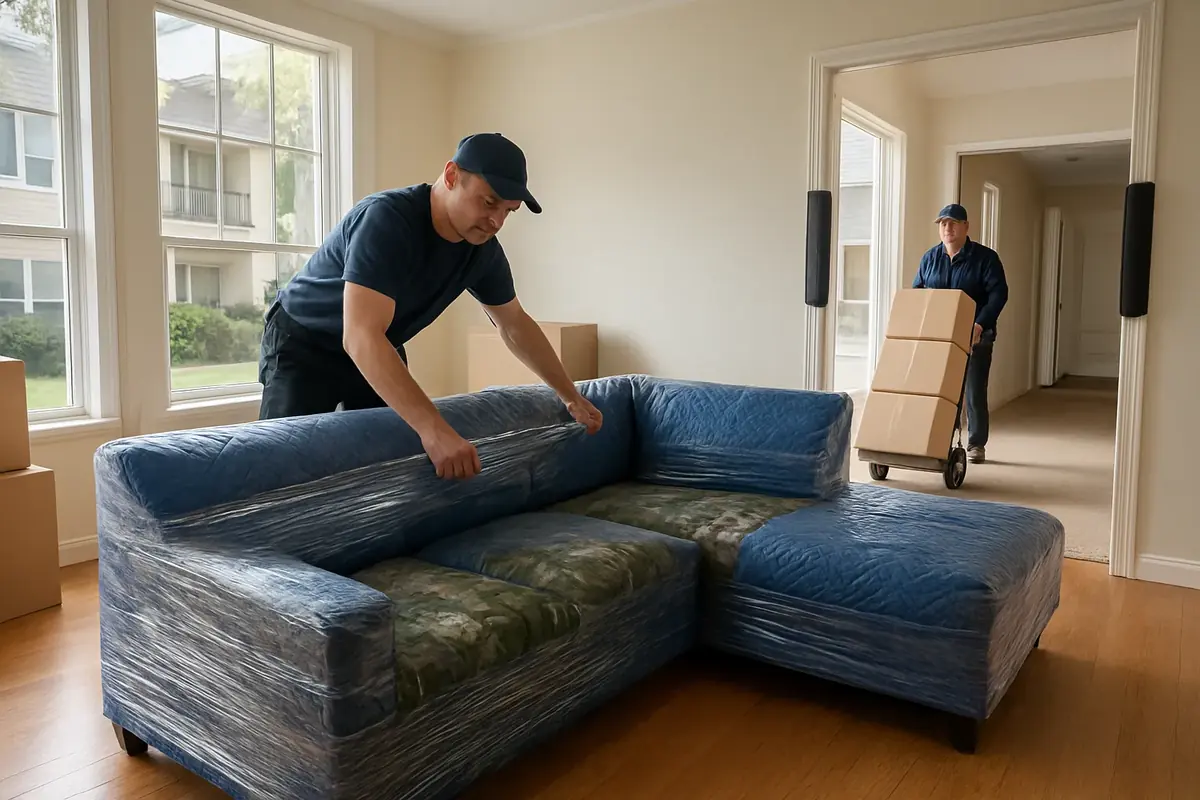
Moving oversized apartment furniture and heavy appliances—from L-shaped sectionals and King adjustable beds to Peloton bikes, glass dining tables, OLED TVs, and stacked washer-dryers—adds $60 to $340+ in specialized disassembly, stair-carry labor, and protective crating fees. This pillar guide benchmarks US mover hourly rates, flat bulky-item add-ons, doorway clearance tactics, and DIY truck padding specs.
furniture and appliance moving costs
Wrapping an L-Shaped & Modular Sectional Sofa: Blankets, Stretch Film & Bags
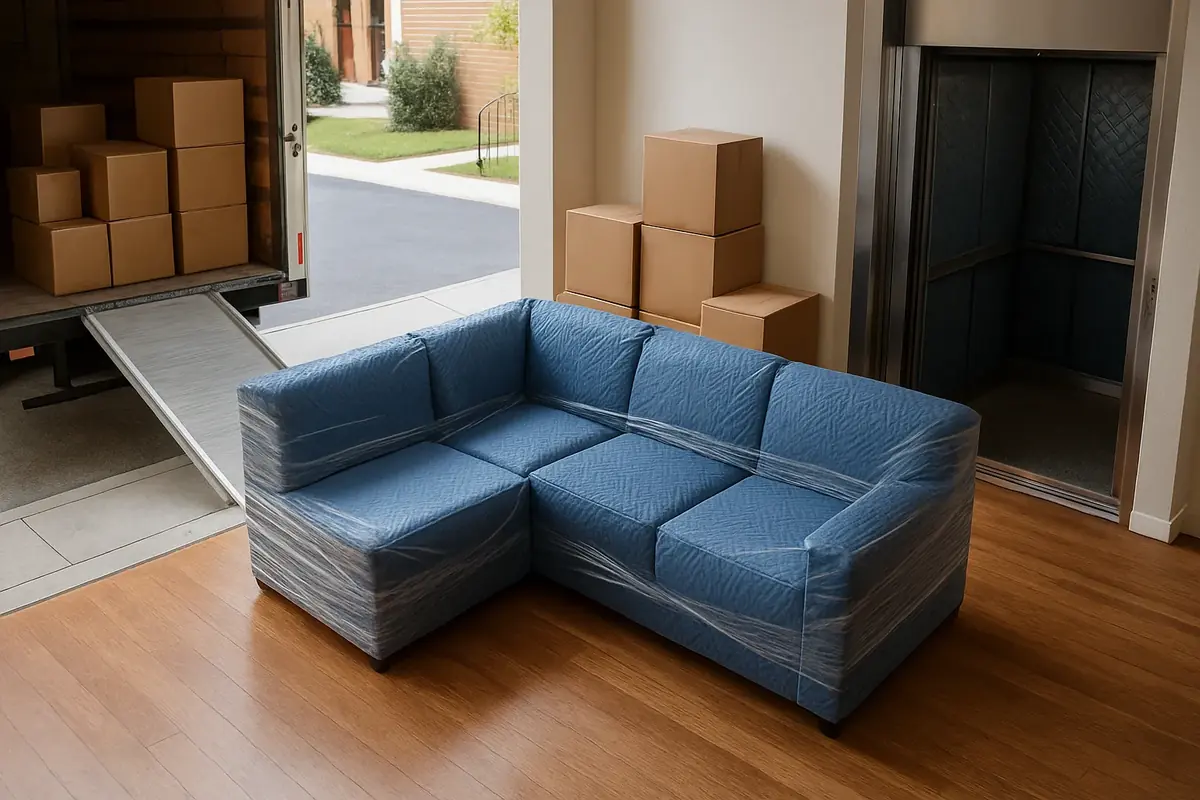
Protecting an L-shaped or modular sectional sofa against truck rub-rail tears, stair-rail scuffs, and sidewalk grime requires the right blanket weight per dozen and exact 80-gauge stretch film layering. Learn the exact blanket counts, moisture warnings for leather, and DIY versus mover-wrapped costs.
furniture and appliance moving costs
Moving an L-Shaped & Modular Sectional Sofa Yourself: Straps, Dollies & Sliders
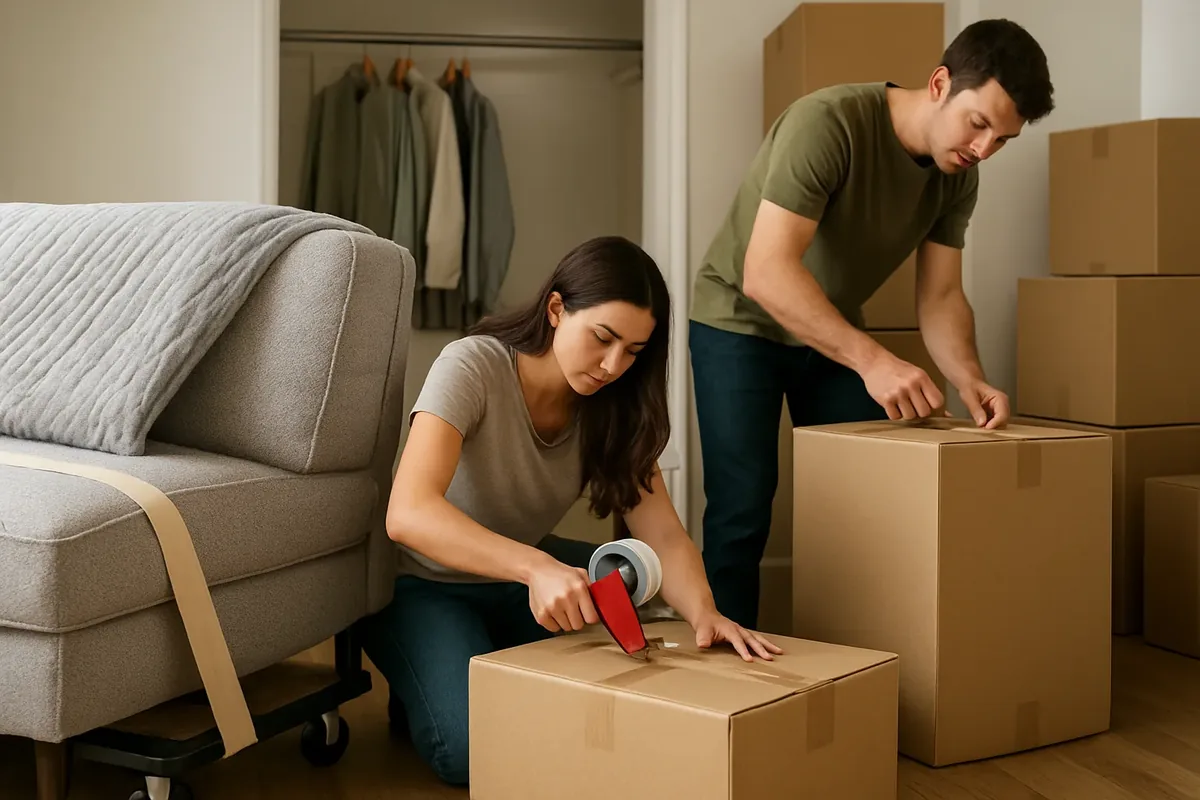
Two people can safely move a 280-pound L-shaped sectional sofa out of an apartment without back strain by combining felt/plastic sliders, forearm lifting straps, a 4-wheel dolly, and 4,400-lb break-strength cargo ratchet straps. Follow our exact carry geometry, truck-wall stacking plan, and DIY cost breakdown.
furniture and appliance moving costs
How Much Do Movers Charge for a Heavy Pull-Out Sleeper Sofa Bed?
A queen pull-out sleeper sofa bed weighs 240 to 360 pounds—nearly triple a standard couch—which routinely triggers $75 to $165 heavy-item surcharges or a mandatory 3-mover crew. Compare full-service local and long-distance moving rates against DIY rental truck costs before booking.