In this guide
- The Geometry Problem: Why Assembled Dining Tables Jam in Apartments
- Diagonal Doorway, Hallway Turn, and Elevator Cab Clearance Math
- How to Identify Your Table's Mounting System Before Unbolting
- Step-by-Step Disassembly & Hardware-Bagging Protocol
- What to Do If the Slab Fails the Elevator or Doorway Test
The Geometry Problem: Why Assembled Dining Tables Jam in Apartments
An assembled dining table occupies a rigid three-dimensional envelope—commonly 72 to 84 inches long, 38 to 42 inches wide, and 30 inches tall. Most US apartment entry doors offer a clear opening of only 30 to 34 inches once you account for the interior door stop molding and the thickness of the open door slab itself (which steals 1.75 to 2 inches unless you pull the hinge pins). Trying to hook a 30-inch-tall assembled base around a 36-inch hallway L-turn almost guarantees chipped drywall, bent steel aprons, or a jammed pedestal.
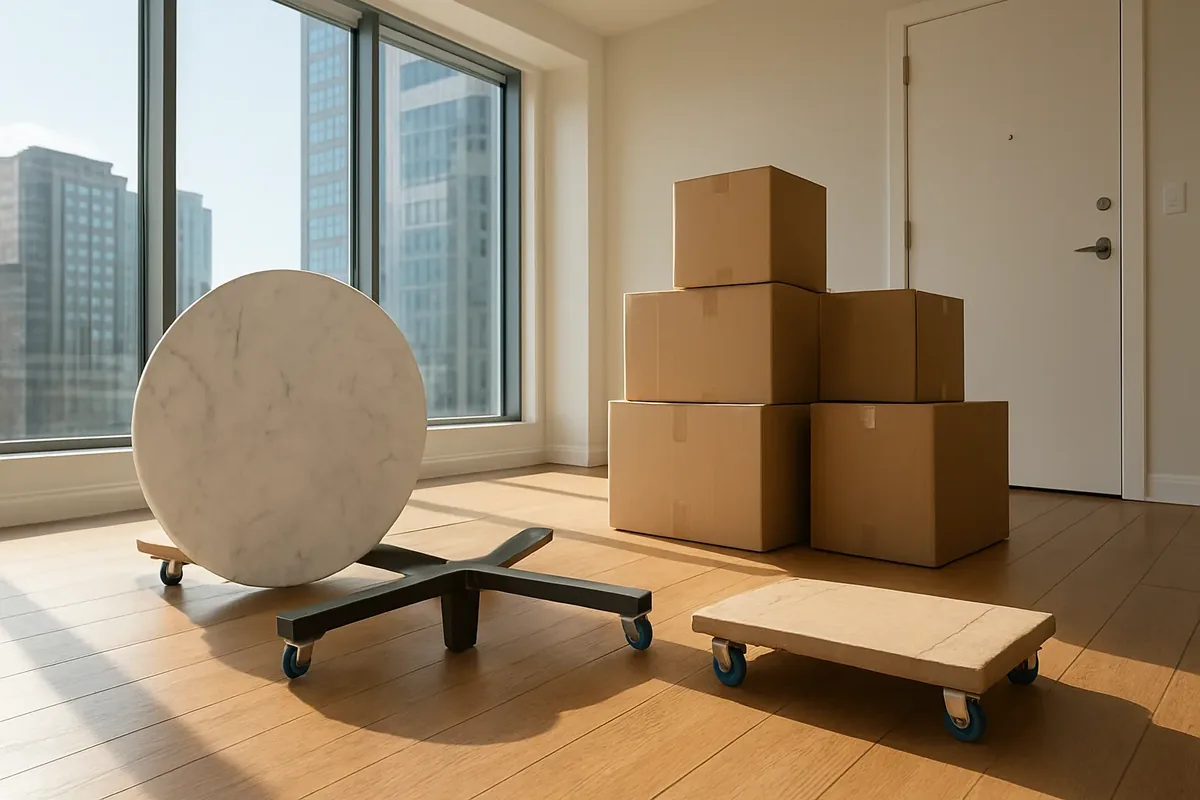
Separating the glass or marble top from the frame solves two problems simultaneously. First, the tabletop's profile collapses to just 2 to 4 inches thick (including quilted blankets and edge cardboard), allowing carriers to carry it vertically on edge through virtually any interior doorway. Second, the unbolted base—whether a four-leg wood apron, crossed steel spider legs, or a hollow drum pedestal—sheds 100 to 350 pounds of top-heavy ballast and can pivot around 90-degree corridor turns without threatening the slab.
Diagonal Doorway, Hallway Turn, and Elevator Cab Clearance Math
Before anyone lifts a wrench, measure four pinch points along both your origin and destination routes: the apartment front door clear width, the tightest hallway 90-degree turn, the elevator door height and width, and the interior elevator cab diagonal. Remember to add 3 inches to the tabletop's length and 2 inches to its width to account for heavy moving blankets and rigid corner protectors.
| Pinch Point | Typical US Apartment Dimension | Max Safe Padded Slab Dimension | Critical Clearance Formula / Check |
|---|---|---|---|
| Interior / Entry Door Clear Width | 30"–34" wide x 80" tall | Up to 44" wide (carried on edge) | Padded thickness (2"–4") << door width; slab height (width) must be < 76" vertical clearance. |
| 90-Degree Hallway L-Turn | 36"–42" hall width x 96" ceiling | 72"–84" long (tilted vertically on edge) | If slab length exceeds hall width + door width, tilt nose upward toward 96" ceiling to shorten horizontal footprint. |
| Standard Passenger Elevator Cab | 48"–60" deep x 68"–80" wide x 84"–92" tall | 72"–86" max diagonal length | Diagonal = sqrt(Cab Depth^2 + Cab Height^2). Leave 4" margin for handlers' fingers and blankets. |
| Reserved Freight / Service Elevator | 72"–96" deep x 54"–66" wide x 96"–108" tall | 96"–110" slab length comfortably | Verify cab door opening height (usually 84")—long slabs may need a 30-degree tilt at threshold. |
| Walk-Up Stairwell Landing Turn | 36"–44" stair width, 40"–48" landing depth | 60"–78" long depending on ceiling rake | Measure vertical headroom above the landing (not just floor depth); low stairwell soffits trap 84"+ slabs. |
Amazon US Apartment Moving Supplies
Recommended Moving Boxes, Blankets & Bags for This Move
Apartment moving supplies matched to this guide (Amazon.com affiliate ID: apartmentmovingcost-20).
Large Giant Rubber Moving Bands for Securing Furniture Blankets (12-Pack Assorted)
Ribbed industrial rubber bands (26", 30", and 42" stretches) holding moving blankets tight around dressers without tape
Trimaco Stay-Put Canvas Plus Slip-Resistant Hallway Floor Runner 27" x 24 ft
Rubber-backed absorbent canvas floor runner protecting hardwood and lobby carpet from wet dolly tracks
EZ Moves Professional Furniture Lifter Lever Bar & 8 Carpet/Hardwood Slides
High-leverage steel pry bar lifting 300-lb dressers 2 inches off the floor to slip sliders underneath solo
As an Amazon Associate I earn from qualifying purchases. Always verify live stock and pack sizing directly on Amazon.com.
How to Identify Your Table's Mounting System Before Unbolting
Glass and stone dining tables use four primary mounting systems, and pulling the wrong fastener can snap bonded hardware or strip threaded brass inserts. Kneel underneath with a flashlight before move day to identify yours:
- Gravity-rest glass on silicone bumpers: Common on modern chrome, wood, or iron bases. No bolts attach the glass—simply verify no clear silicone adhesive dots were applied by a previous owner, then have two people lift straight up before sliding out.
- UV-bonded stainless steel pucks: Clear glass tops often feature metal discs glued directly to the glass underside with a recessed M8 or M10 threaded bolt connecting to the leg bracket. Unscrew only the bolt beneath the bracket—never pry or twist the bonded puck itself.
- Sub-top wood or MDF plinth (typical on marble slabs): Genuine marble is rarely drilled directly for leg screws. Instead, factories epoxy a 3/4-inch plywood or MDF sub-panel underneath the stone, and lag bolts or machine bolts anchor the pedestal to that sub-panel. Remove the bolts connecting the pedestal to the sub-panel, leaving the bonded sub-panel attached to the stone for rigidity.
- Heavy stone pedestal with steel dowel pins: Sculptural travertine or marble bases sometimes stack in two or three gravity-locked pieces aligned by dry steel dowels. Lift strictly vertically—rocking a slab sideways snaps stone around the dowel socket.
Step-by-Step Disassembly & Hardware-Bagging Protocol
Rushed disassembly on move morning is how custom metric spacers disappear into moving blankets. If you are moving with hired pros ($130–$175/hr for 2 movers or $175–$235/hr for 3 movers), doing light prep—or staging the right tools and floor protection—shaves 20 to 35 minutes off billable clock time. If you have a heavy 250+ lb stone slab, wait for your helper or moving crew before lifting the top off the pedestal.
- Protect Hardwood & Entryway Path First. Roll out a non-slip floor runner along the dining room exit path and hallway—such as the Trimaco Stay-Put Canvas Plus Slip-Resistant Hallway Floor Runner (27 in x 24 ft with rubber-backed absorbent canvas)—so grit under boots or dolly wheels never gouges apartment oak flooring and forfeits your security deposit.
- Reposition Heavy Bases Without Dragging. If a stone pedestal or dining table sits tightly against a wall or radiator, slip a high-leverage lifter under one corner—like the EZ Moves Professional Furniture Lifter Lever Bar & 8 Carpet/Hardwood Slides (25-inch steel bar rated up to 300 lb)—to slide the table into the center of the room where two carriers can stand on opposite sides.
- Photograph Every Bracket & Fastener Orientation. Snap three close-up phone photos showing washer order (lock washer vs. flat washer), angled leg orientation, and any felt shims used to level the slab.
- Crack Bolts Loose While Supporting the Slab. Use the exact metric hex key (usually 4mm, 5mm, or 6mm) or socket wrench—never pliers that round off bolt heads. Leave two opposing corner bolts finger-tight until both carriers are positioned to lift the glass or marble slab off onto padded vertical blocking.
- Bag, Label, and Tape Hardware to the Base Frame. Place all bolts, washers, silicone suction bumpers, and the matching Allen wrench inside a thick zip bag labeled 'DINING TABLE HARDWARE — 8 BOLTS + 4 BUMPERS.' Tape the bag directly to the underside of the table base (never to bare wood veneer or marble) or carry it in your personal essentials box.
- Fasten Blankets to the Disassembled Base Without Tape Residue. Wrap the table legs or pedestal in quilted blankets and lock the pads down using ribbed industrial bands like the US Cargo Control Large Giant Rubber Moving Bands (12-pack assorted 26-inch, 30-inch, and 42-inch stretch). Rubber bands hold tight through tight elevator turns and leave zero sticky adhesive on lacquered metal or walnut.
What to Do If the Slab Fails the Elevator or Doorway Test
Discovering on move morning that an 84-inch marble slab will not clear your passenger elevator cab is an expensive surprise. When a slab fails the cab diagonal check, you have three realistic options depending on floor height:
- Pull the apartment door off its hinges: Removing the entry door gains 1.75 to 2.25 inches of clear width—often enough to get an awkward curved base or thick pedestal cleanly into the corridor. Always get permission or carefully tap hinge pins upward with a flat screwdriver and hammer.
- Route the slab via the fire stairwell: For 2nd- through 5th-floor apartments, crews carry the padded slab vertically on edge down the stairs. Budget the standard stair surcharge ($55–$95 for 2nd floor, $110–$190 for 3rd floor, $185–$340 for 4th–5th floor) plus a 3rd mover if the stone exceeds 200 lbs.
- Book a balcony hoist or sell locally before move day: Above the 5th floor—or in narrow pre-war walk-ups with tight 36-inch scissor stair landings—professional exterior hoisting costs $450 to $1,200+ and requires municipal street permits and building COI approval. Compare that fee against the replacement value of the table before committing.
Factor your exact floor level, elevator type, and bulky-furniture disassembly time into the Apartment Moving Cost Calculator or compare full-service vs. rental truck costs in the Movers vs. DIY Rental Truck Comparator.
Open Calculator →Frequently Asked Questions
Should I unbolt my marble dining table before the movers arrive to save money?+
You can remove dining chairs, clear the room, and locate the right hex key ahead of time, but leave lifting a heavy 200+ lb marble slab off its base to the moving crew. If you unbolt the slab yourself and it tips or cracks while resting against a wall, the mover is not liable; plus, most movers only spend 10 to 15 minutes unbolting a clear table once they have two carriers supporting the stone.
Can movers remove my apartment front door if my table base is 1 inch too wide?+
Many licensed movers will pull standard residential hinge pins if you sign a quick property-waiver note, though apartment fire-rated entry doors with hydraulic closers or heavy commercial hinges often require building maintenance approval. Measure clear doorway width with the door open 90 degrees before move day so you know in advance.
How does a narrow hallway or walk-up staircase change my moving quote?+
When a glass or marble slab cannot use the elevator and must go down stairs, movers apply walk-up surcharges plus extra hourly labor: roughly $55–$95 for a 2nd-floor walk-up, $110–$190 for a 3rd-floor walk-up, and $185–$340 for 4th- or 5th-floor walk-ups. On tight turns, a 3rd mover ($175–$235/hr crew rate) is commonly added to spot corners.
What if my glass dining table uses glued metal pucks that feel loose?+
If a UV-bonded steel puck wobbles or shows milky delamination beneath the glass, do not carry the table assembled or stress the puck during unbolting. Support the glass flat on padded sawhorses or blankets while unthreading the leg bolt gently, and have a local glass shop re-bond the puck with structural UV adhesive after the move.
Will my apartment building require a COI just for delivering or removing one dining table?+
In most mid-rise and high-rise US apartment communities, yes—any commercial crew using the loading dock or freight elevator must submit a Certificate of Insurance (COI) naming the property owner and management firm 3 to 5 business days ahead of time, even for a single-item dining table move.
Interactive US Moving Tools
Compare Full-Service Movers vs. DIY Rental Truck in 30 seconds
Related Guides
furniture and appliance moving costs
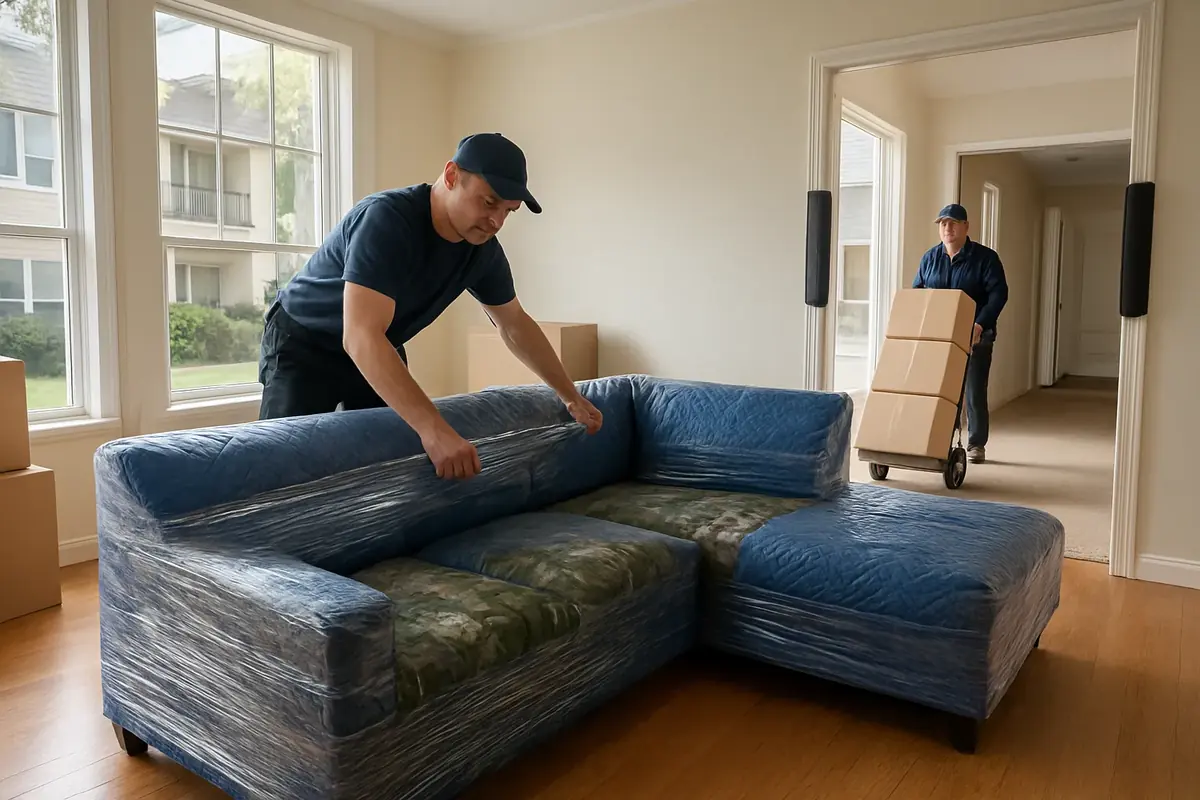
Furniture & Specialty Item Moving Costs: Complete US Benchmarks & Guides
Moving oversized apartment furniture and heavy appliances—from L-shaped sectionals and King adjustable beds to Peloton bikes, glass dining tables, OLED TVs, and stacked washer-dryers—adds $60 to $340+ in specialized disassembly, stair-carry labor, and protective crating fees. This pillar guide benchmarks US mover hourly rates, flat bulky-item add-ons, doorway clearance tactics, and DIY truck padding specs.
furniture and appliance moving costs
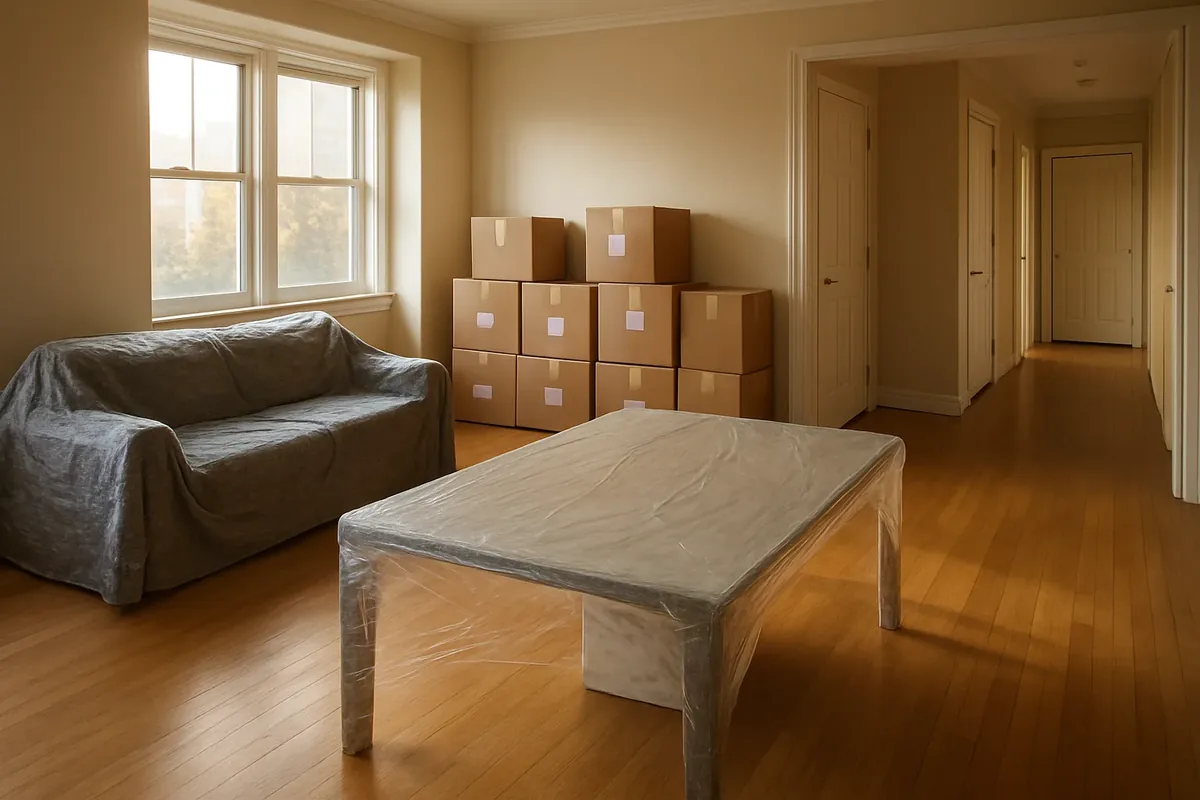
How Professional Movers Pad & Protect a Glass-Top & Marble Slab Dining Table
A single chipped beveled corner or adhesive scar ruins a $1,500 glass or marble dining table. Follow the exact multi-layer padding, edge-armor, and carton specifications used by veteran US apartment moving crews.
furniture and appliance moving costs
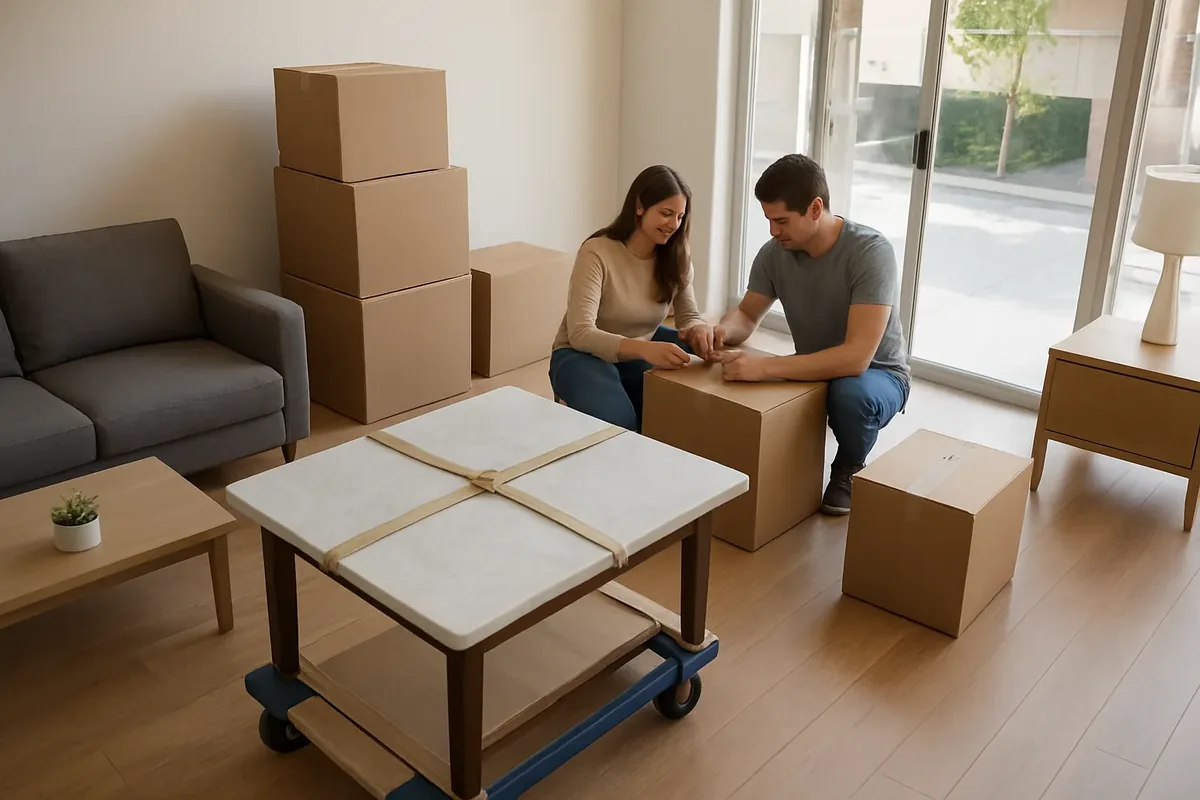
2-Person DIY Guide to Lifting a Glass-Top & Marble Slab Dining Table on Stairs
Lifting a 280-pound marble slab or 110-pound glass top down apartment stairs with bare fingers invites both back strain and shattered stone. Master the 2-person harness, 4-wheel dolly, and truck-securement mechanics before move day.
furniture and appliance moving costs
Moving a Dual-Motor Electric Standing Desk: Bulky-Item Surcharges & Hours
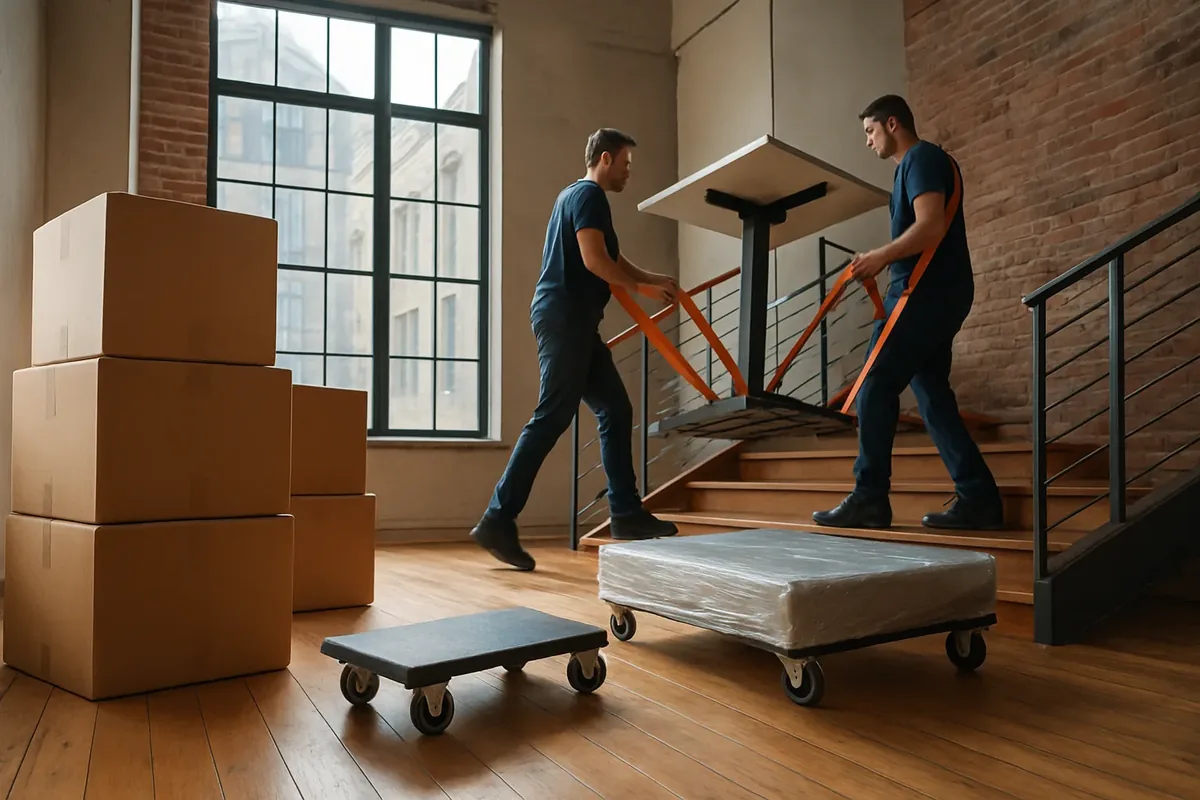
Dual-motor electric standing desks weigh 110 to 180 pounds and pack sensitive control boxes, cable trays, and multi-monitor mounts that slow moving crews down. See the exact labor minutes, bulky fees, and DIY vs. pro costs.