
In this guide
- Weight, Balance, and Center-of-Gravity Profile of Nursery Pieces
- Matching Equipment to Your Apartment Layout: Elevator vs. Walk-Up Stairs
- DIY Nursery Move Cost vs. Full-Service Movers & Hybrid Loading Help
- Step-by-Step Two-Person Handling Protocol From Nursery to Truck Wall
- Loading Sequence: Making the Nursery Last On and First Off
Weight, Balance, and Center-of-Gravity Profile of Nursery Pieces
Most DIY moving injuries in a two-bedroom apartment do not come from the heaviest appliance in the unit—they happen while wrestling awkward, off-balance nursery furniture around 90-degree hallway turns. Each of the three core nursery pieces has a completely different weight distribution that dictates whether you should roll it on a 4-wheel dolly, push it on a folding platform cart, or carry it with forearm lifting straps.
- Disassembled Convertible Crib (55–85 lbs total across 4 panels + metal spring deck): Individually light, but wide and slick when wrapped in stretch film. Carry panels upright in two manageable bundles or roll them edge-on atop a folding platform cart so spindles never take lateral torque.
- Six-Drawer Changing Table Dresser (110–150 lbs empty): Tall, boxy, and front-heavy even after emptying drawers because of solid hardwood drawer fronts and full-extension steel slides. Always glide it out from the wall on floor sliders, lift it vertically onto a solid-deck 4-wheel carpeted dolly across flat hallways, and switch to forearm straps only on walk-up staircases.
- Reclining Nursery Glider & Ottoman (85–115 lbs combined): Bottom-heavy with an exposed circular steel swivel base and high-friction footrest linkage. A standard two-wheel upright hand truck tips easily under a glider's round steel ring; a flush-deck 4-wheel carpeted dolly keeps all four edges supported across lobby thresholds and elevator gaps.
Matching Equipment to Your Apartment Layout: Elevator vs. Walk-Up Stairs
Before reserving a 12-to-15-ft or 15-to-20-ft rental truck, map the exact path from the nursery door to the loading zone. High-rise apartments with reserved freight elevators reward rolling gear—wide non-marking casters cut hallway transit time by half and eliminate dropped-corner gouges in vinyl plank or oak flooring. Third- and fourth-floor walk-ups require ergonomic strap geometry and controlled stairwell pivots.
| Gear Type | Best Nursery Load | Physical Spec Benchmark | Where It Excels | Where to Avoid It |
|---|---|---|---|---|
| Solid-Deck 4-Wheel Carpeted Dolly | Changing table dresser & reclining glider | 18" x 30" flush deck, 1,200-lb rating, 4" non-marking casters | Flat hallways, freight elevators, lobby ramps | Stair flights and steep unpaved curbs |
| Folding Steel Platform Cart | Bundled crib rails, mattress & nursery diaper/linen boxes | 29" x 19" non-slip steel deck, 330-lb rating, 360° swivel casters | High-rise elevator shuttles and long carries (>75 ft) | Uneven gravel paths or narrow 180° walk-up landings |
| 2-in-1 Folding Hand Truck / Cart | Stacked 32-ECT nursery book boxes & rolled crib rug | 154 lb 2-wheel / 300 lb 4-wheel TPR quiet wheels | Curb-to-elevator apartment shuttles and car-trunk storage | Wide 54-inch changing dressers or round glider bases |
| Forearm Lifting Straps (2-Person) | Changing dresser & glider on staircases | 2.5"–3" polypropylene webbing rated 600–800 lb | 2nd-to-4th floor walk-up stairs and tight door thresholds | Long >100 ft flat corridors (rolls faster on a dolly) |
| Hardwood & Carpet Floor Sliders | Pulling dresser & glider off walls before lifting | Hard polymer base + removable felt or carpet caps | Zero-scratch staging inside hardwood or carpeted nurseries | Never leave under feet once lifted onto a ramp |
When choosing rolling gear for an apartment complex, non-marking casters protect your security deposit. A flush platform like the Sure-Max Heavy-Duty Solid Deck 4-Wheel Carpeted Piano & Appliance Dolly (18" x 30", 1,200-lb capacity with 4-inch non-marking wheels) prevents rubber scuff streaks on polished lobby terrazzo while cradling the full steel base of a reclining glider. For shuttle trips carrying crib panels and 32-ECT nursery boxes down long corridors, a WELLMAX Foldable 330-Lb Steel Push Platform Cart or a compact Stanley FT585 2-in-1 Folding Multi-Truck with quiet TPR wheels turns eight hand-carried hallway trips into two smooth elevator runs.
Amazon US Apartment Moving Supplies
Recommended Moving Boxes, Blankets & Bags for This Move
Apartment moving supplies matched to this guide (Amazon.com affiliate ID: apartmentmovingcost-20).
Heavy-Duty Solid Deck 4-Wheel Carpeted Piano & Appliance Dolly 18" x 30" (1,200-Lb)
Flush-deck carpeted platform dolly keeping crate stacks and heavy safes rolling smoothly into freight elevators
Foldable 330-Lb Steel Push Platform Cart with 360-Degree Swivel Wheels
Textured non-slip steel deck flatbed cart holding 330 lbs of books and kitchen boxes per elevator trip
Stanley FT585 2-in-1 Folding Multi-Truck 300-Lb Hand Truck & Platform Cart
Compact folding 2-in-1 cart storing under a car seat while rolling 300-lb box loads from curb to elevator
As an Amazon Associate I earn from qualifying purchases. Always verify live stock and pack sizing directly on Amazon.com.
DIY Nursery Move Cost vs. Full-Service Movers & Hybrid Loading Help
Renters moving a 1-bedroom or 2-bedroom apartment with a nursery often debate three options: pure DIY with friends, a hybrid DIY rental truck paired with 2 hours of hired loading helpers ($170–$290), or full-service local movers ($130–$235/hr plus travel and access fees). Here is how the exact 2026 US apartment benchmarks line up on a 12-mile local move from a 2nd-floor walk-up (1 flight, adding 0.5–1.0 hour and $55–$95 in mover stair surcharges):
| Expense Category | Pure DIY (15-ft Truck) | Hybrid DIY + 2-Hr Loading Help | Full-Service Movers (1-BR, 2 Movers) | Full-Service Movers (2-BR, 3 Movers) |
|---|---|---|---|---|
| Truck Rental + 12 Miles + Fuel ($3.55/gal) | $47–$62 (12–15 ft) / $59–$78 (15–20 ft) | $47–$78 rental truck + mileage + gas | $75–$145 local transport fee | $75–$145 local transport fee |
| Crew Labor (Incl. 1-Hr Travel) | $0 (2 adults self-loading) | $170–$290 (2-hr labor-only help) | $715–$1,400 (5.5–8 hrs @ $130–$175/hr) | $1,138–$2,233 (6.5–9.5 hrs @ $175–$235/hr) |
| Walk-Up Stair Surcharge (2nd Floor) | $0 | $0–$50 (confirm w/ labor crew) | $55–$95 (1 flight surcharge) | $55–$95 (1 flight surcharge) |
| Protective Gear & Materials Kit | $95–$235 (pads, wrap, bags, boxes) | $95–$235 (pads, wrap, bags, boxes) | $290–$520 mover packing materials | $460–$820 mover packing materials |
| Estimated Local Total | $142–$313 | $312–$603 | $1,135–$2,160 | $1,728–$3,293 |
Step-by-Step Two-Person Handling Protocol From Nursery to Truck Wall
- Step 1: Clear Thresholds and Slide Pieces Into the Center of the Room. Remove the nursery door from its hinge pins if your changing table exceeds 28 inches in depth—popping three hinge pins buys 1.75 inches of critical doorway clearance in under two minutes. Slip polymer floor sliders under all four feet of the changing dresser and glide it away from the baseboard so both lifters have 360-degree footing before picking it up.
- Step 2: Center the Changing Dresser on a 4-Wheel Carpeted Dolly. Lift one end of the blanket-wrapped changing dresser 6 inches while your partner slides the 18x30-inch carpeted dolly squarely beneath the center of gravity. Confirm the dresser sits flush across the solid deck with equal overhang on both sides; if the dolly rides too far forward, the rear corners will dip and gouge hallway drywall on elevator thresholds.
- Step 3: Hook the Glider Through Tight 30-Inch Doorways. Because a nursery glider is typically 32 to 36 inches deep, push it straight toward the bedroom doorframe only until the seat edge touches the jamb, then rotate the backrest around the vertical frame in an 'L-hook' pivot so the seat clears first and the backrest follows. Keep the steel swivel ring facing upward or forward so the upholstered headrest never drags along the painted trim.
- Step 4: Walk the Rental Truck Ramp Without Letting Dollies Run Away. A 15-ft or 20-ft rental truck aluminum ramp angles steeply down to the street. When pushing a 130-lb changing table up the ramp on a 4-wheel dolly, keep the heavier lifter at the low end pushing upward while the uphill partner pulls gently to steer—never pull a heavy dolly downhill from in front where runaway momentum can pin your ankles.
- Step 5: Build a Locked Wall Tier Inside the Truck Box. Place the changing dresser tight against the side rub-rail of the truck box with its finished front facing away from the metal wall and an extra folded blanket cushioning the wooden slats. Lash the dresser directly to the wood E-track or rub-rail using 1-inch ratchet straps—snug enough to stop shifting, never cranked so hard that the strap bows the top panel. Stand bundled crib panels vertically between the dresser and the truck wall, and place the bagged crib mattress upright behind the glider to act as a secondary shock cushion.
Loading Sequence: Making the Nursery Last On and First Off
In a standard apartment truck pack, heavy dressers go toward the cab to balance axle weight. However, parents relocating with an infant or toddler benefit enormously from loading the nursery crib, crib mattress, and essential diaper/bedding box in the final third of the truck—properly secured behind a sturdy tier of uniform 32-ECT medium boxes—so those items roll off first at the destination apartment. Keep the changing dresser in the mid-forward section for axle stability, since you can set up the crib and glider in 25 minutes while the rest of the apartment is still being unloaded.
Deciding between renting a 15-ft box truck with forearm straps and dollies or hiring a licensed apartment crew? Run your exact bedroom count, stairs, and mileage through our Movers vs. DIY Rental Truck Comparator or Apartment Moving Cost Calculator for an instant itemized estimate.
Open Calculator →Frequently Asked Questions
Can two average-strength adults safely move a changing table dresser down a 3rd-floor walk-up?+
Yes, provided the dresser is completely emptied (reducing weight to roughly 110–145 lbs), wrapped in quilted pads and 80-gauge film, and carried with properly fitted forearm lifting straps rather than bare hands. On a 3rd-floor walk-up (2 flights), plan on resting at each landing; if either lifter has knee or back concerns, hiring 2 hours of local loading helpers ($170–$290) saves significant injury risk.
Why shouldn't I use a 2-wheel appliance hand truck for a reclining nursery glider?+
A reclining glider sits on a round steel swivel ring that slides off the narrow noseplate of a standard 2-wheel hand truck, and cinching a vertical appliance strap across cushioned armrests crushes internal wooden framing. Rolling the glider flat on a solid-deck 4-wheel carpeted dolly supports the entire base ring evenly across hallways and elevator gaps.
How do I keep a rental truck's wooden rub-rails from scratching my wrapped nursery dresser?+
Always drape an extra 80x72 quilted pad directly over the exposed wooden rub-rail or steel E-track slot before pressing the wrapped dresser flush against the wall. Run soft tie-down loops or padded ratchet straps over the blanket layer—never directly over bare stretch wrap—and check tension after the first 5 miles of city driving.
Does a DIY move require a building Certificate of Insurance (COI) in high-rise apartments?+
Most apartment complexes only require a commercial COI from licensed third-party moving companies, while DIY tenants sign a move-in/move-out damage waiver or place a refundable $150–$500 elevator security deposit. Confirm elevator booking windows and non-marking wheel rules with your leasing office at least 10 days before moving day.
Is it cheaper to buy a 4-wheel dolly and straps or rent them from the truck company?+
Rental truck counters charge $10–$15 per day per dolly and $10 per dozen rental pads, which is economical for a one-day local move under 15 miles. However, on multi-day regional or interstate moves (250–1,800+ miles) or if you plan to move apartments again within two years, owning a carpeted 4-wheel dolly, folding platform cart, and reusable floor sliders pays for itself quickly and guarantees clean, non-marking wheels.
Interactive US Moving Tools
Compare Full-Service Movers vs. DIY Rental Truck in 30 seconds
Related Guides
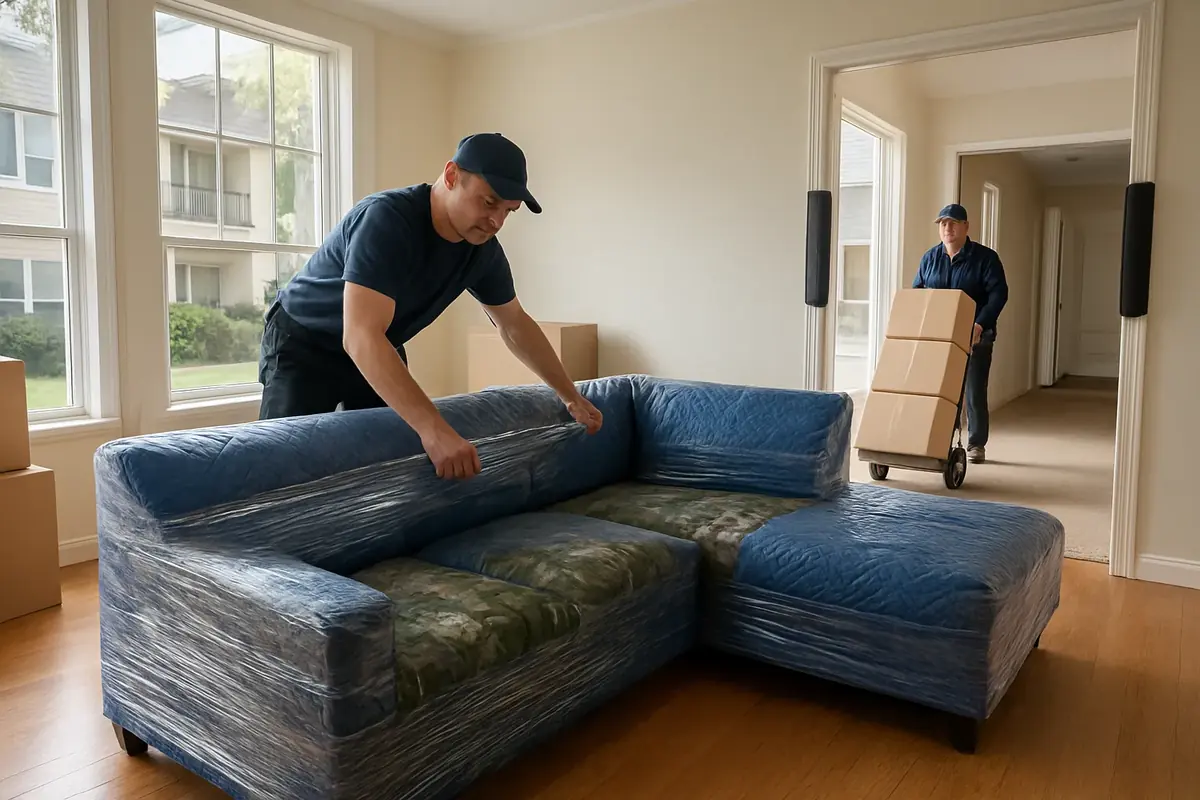
furniture and appliance moving costs
Furniture & Specialty Item Moving Costs: Complete US Benchmarks & Guides
Moving oversized apartment furniture and heavy appliances—from L-shaped sectionals and King adjustable beds to Peloton bikes, glass dining tables, OLED TVs, and stacked washer-dryers—adds $60 to $340+ in specialized disassembly, stair-carry labor, and protective crating fees. This pillar guide benchmarks US mover hourly rates, flat bulky-item add-ons, doorway clearance tactics, and DIY truck padding specs.

furniture and appliance moving costs
Cost to Move a Metal & Wood Loft or Bunk Bed Frame: Mover Fees & Labor Time
See exact mover disassembly fees, labor minute benchmarks, and single-item delivery vs. full-apartment relocation costs for a metal or solid-wood bunk bed or loft bed frame. Learn when pre-unbolting saves $120+ on moving day.
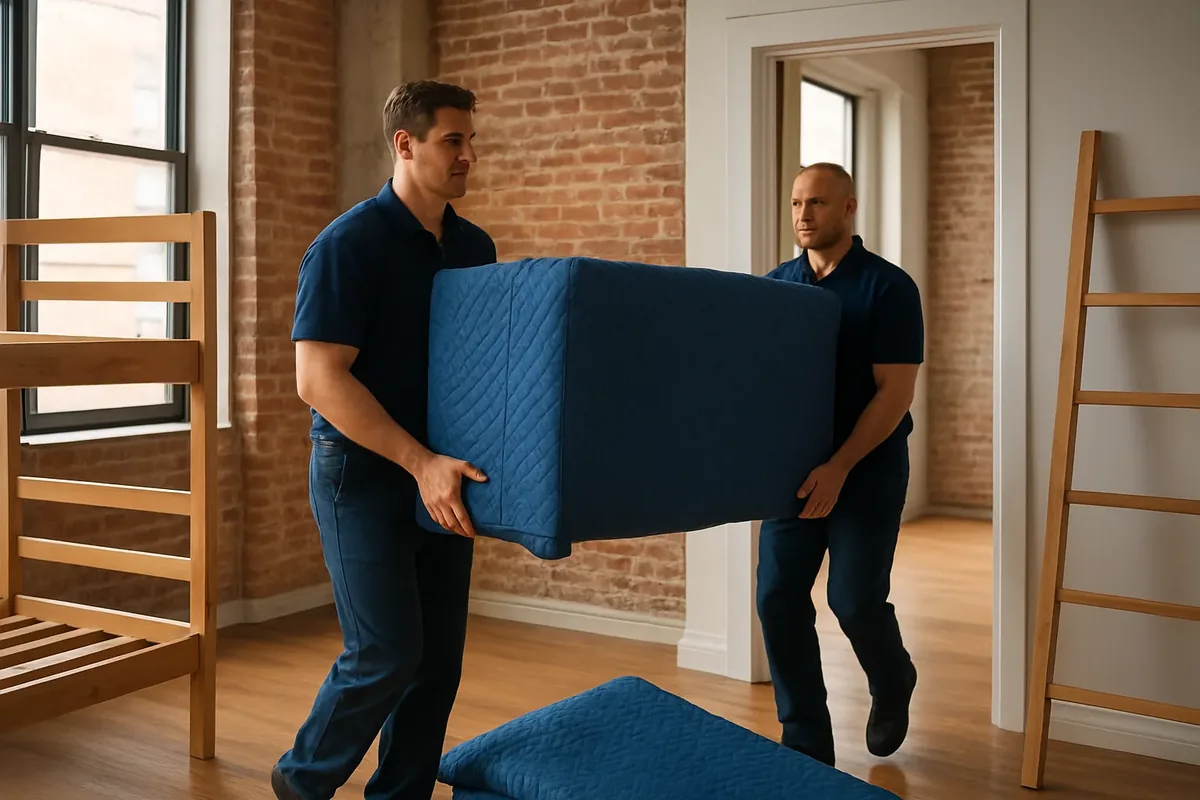
furniture and appliance moving costs
Disassembly, Reassembly & Doorway Clearance: Metal & Wood Loft or Bunk Bed Frame
Master diagonal doorway math, elevator cab height limits, and color-coded hardware bagging for unbolting a metal or wood bunk bed or loft bed frame. Avoid security-deposit doorframe gouges and save $60–$130+ in mover disassembly charges.
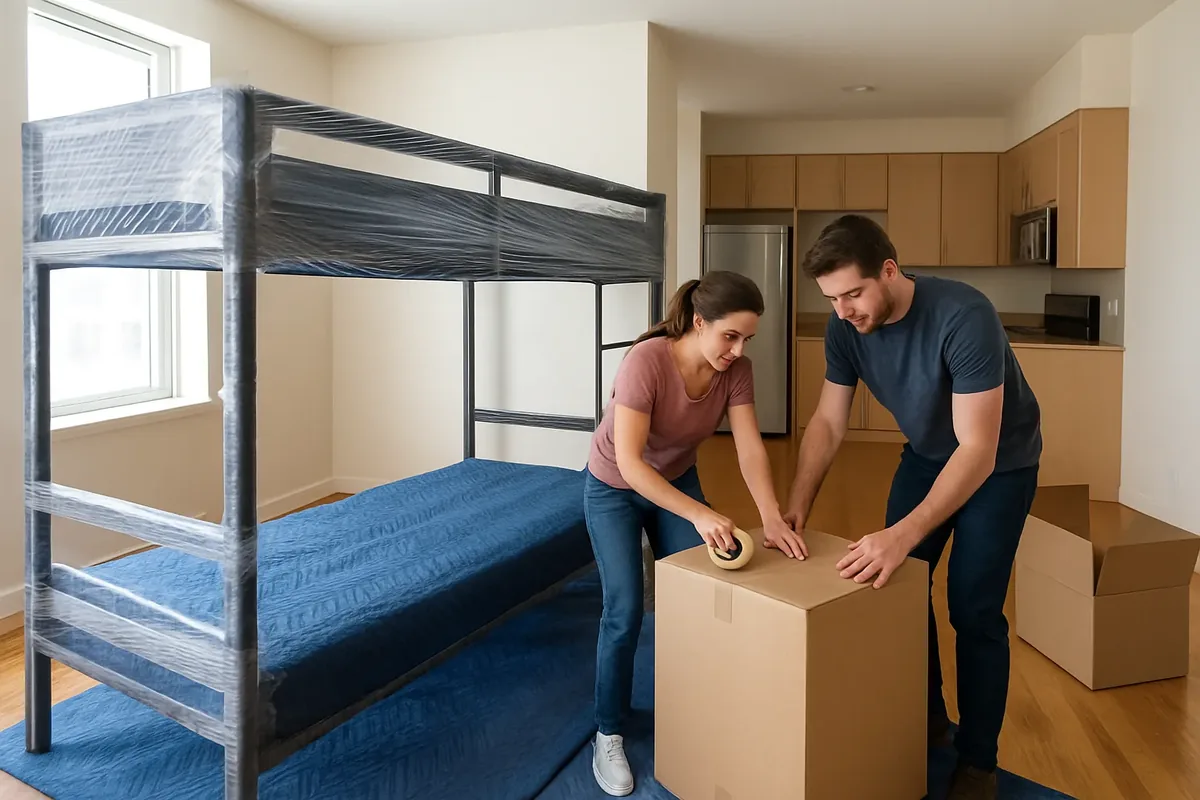
furniture and appliance moving costs
Wrapping a Metal & Wood Loft or Bunk Bed Frame: Blankets, Stretch Film & Bags
Get exact 80x72 quilted pad counts, 80-gauge stretch film bundling patterns, and 5-mil mattress bag specs to wrap a metal or wood bunk bed or loft bed frame without bent brackets or chipped paint. Compare DIY kit budgets with mover packing fees.