In this guide
- Why Wine Coolers and Espresso Bars Add More Cost Than Standard Kitchen Gear
- Cost Breakdown: Full-Move Add-On vs. Standalone Mover vs. DIY Van
- Exact Labor Minutes & What Triggers Bulky-Item Surcharges
- Pre-Move Defrosting & Boiler Draining That Prevents $400+ Repairs
- Interstate Weight & Valuation Considerations for High-End Espresso Gear
Why Wine Coolers and Espresso Bars Add More Cost Than Standard Kitchen Gear
A compact under-counter or freestanding dual-zone wine cooler looks small on an apartment floor plan, yet it behaves like a specialty appliance on moving day. Compressor-driven 30- to 54-bottle units weigh 95 to 155 pounds empty (and tall 100+ bottle wine columns push 190 to 260 pounds), feature double-pane UV-tinted glass doors that shatter if flexed, and contain sealed refrigeration oil that migrates into cooling lines if the unit is laid flat carelessly. Pair that cooler with a 35- to 65-pound dual-boiler espresso machine, a heavy conical burr grinder, a marble-top coffee bar console, and three to four cases of wine bottles, and one compact dining corner suddenly represents 350 to 500 pounds of high-value, fragile cargo.
On local hourly apartment moves (typically billed at $130–$175/hour for a 2-person crew plus a 1.0-hour travel fee), these items add dedicated crew minutes for appliance dollying, protective wrapping, and stair navigation. On itemized or long-distance tariffs, wine coolers over 100 pounds frequently trigger a heavy-appliance handling add-on ($75–$160) alongside separate liquor-box packing charges if the crew packs your bottles.
Cost Breakdown: Full-Move Add-On vs. Standalone Mover vs. DIY Van
The table below aligns with current US apartment moving pricing benchmarks (12-mile local move, $130–$175/hour 2-person crew, $20–$40 daily rental truck base, $0.99–$1.49/mile local rate, and $3.55/gallon fuel at 10 mpg) for a typical apartment setup: one 46-bottle dual-zone wine cooler, one espresso machine and grinder, one 42-inch coffee bar cabinet, and 36 bottles of wine.
| Cost Component | Add-On to Full Apartment Move | Standalone Single-Item Mover | DIY Cargo Van / 10-ft Truck |
|---|---|---|---|
| Crew Labor / Appliance Handling | $65–$165 (30–60 min @ $130–$175/hr) | $135–$275 (1.5–2 hr minimum booking) | $0 (2-person DIY) or $170–$290 w/ 2-hr hired helpers |
| Truck, Travel Fee & Mileage (12 mi) | $0 incremental (covered by main move) | $65–$145 (1-hr travel or dispatch fee) | $36–$55 ($20–$30 base + 12 mi + $4 fuel) |
| Heavy Appliance / Stair Surcharge | $0–$120 ($75–$160 for tall units; $55–$95 for 2nd-fl stairs) | $0–$140 (varies by stair flights & unit weight) | $0 cash surcharge ($10–$15 appliance dolly rental) |
| Wine Cartons, Pads & Floor Protection | $45–$85 (3 wine cell boxes + espresso carton + pads) | $35–$75 (blankets & wrap + bottle cartons) | $39–$110 (cell boxes, moving pads, rubber bands, runner) |
| Estimated Total Out-of-Pocket | $115–$320 incremental | $210–$460 (up to $590 on 3rd-fl walk-up) | $75–$165 pure DIY ($245–$455 w/ loading helpers) |
Amazon US Apartment Moving Supplies
Recommended Moving Boxes, Blankets & Bags for This Move
Apartment moving supplies matched to this guide (Amazon.com affiliate ID: apartmentmovingcost-20).
Economy Non-Woven Textile Moving & Storage Pads 72" x 80" (12-Pack, 35 lb/dz)
Lightweight breathable storage blankets for wrapping items inside PODS containers or mini-storage units
Large Giant Rubber Moving Bands for Securing Furniture Blankets (12-Pack Assorted)
Ribbed industrial rubber bands (26", 30", and 42" stretches) holding moving blankets tight around dressers without tape
Trimaco Stay-Put Canvas Plus Slip-Resistant Hallway Floor Runner 27" x 24 ft
Rubber-backed absorbent canvas floor runner protecting hardwood and lobby carpet from wet dolly tracks
As an Amazon Associate I earn from qualifying purchases. Always verify live stock and pack sizing directly on Amazon.com.
Exact Labor Minutes & What Triggers Bulky-Item Surcharges
Understanding how crew dispatchers price heavy kitchen appliances helps you eliminate surprise add-on fees before signing a bill of lading:
- Under-counter or freestanding 24–54 bottle dual-zone wine cooler (85–155 lb): Takes 15 to 22 crew minutes on ground-floor or reserved freight-elevator access. Usually billed strictly by hourly labor when under 150 pounds, though a 3rd-floor walk-up adds $110 to $190 in stair handling across a move because two movers must strap the cooler vertically to an appliance dolly.
- Tall 100–160 bottle wine column (185–280 lb): Frequently triggers a $75 to $160 heavy-appliance surcharge plus a mandatory 3-person crew rate ($175–$235/hour) if stairs or tight turns are involved.
- Dual-boiler espresso machine (30–65 lb) + burr grinder (15–25 lb): Takes 10 to 15 minutes if pre-drained and boxed by the renter. If movers must pack loose portafilters, tamper bases, ceramic cups, and glass water reservoirs on moving day, expect 20 to 30 extra minutes ($45–$90) plus dish-pack carton fees.
- Coffee bar credenza or marble-top console (80–140 lb): Adds 12 to 18 minutes to pad doors, tape glass shelves out, and dolly safely. Marble or quartz slabs sitting loose on top must be removed and carried vertically on edge to prevent snapping along natural veins.
- Long carry (>75 feet from curb to elevator): Heavy appliance dollies move slower over uneven courtyard pavers and lobby thresholds, often triggering a $65 to $135 long-carry fee if your building lacks a loading dock.
Pre-Move Defrosting & Boiler Draining That Prevents $400+ Repairs
The costliest mistake renters make with a wine cooler and espresso bar has nothing to do with hourly moving rates—it is internal water damage and compressor failure caused by rushing prep on moving morning. Follow this strict timeline:
- Unplug and defrost the wine cooler 24 hours ahead. Remove every bottle and slide-out beechwood shelf, unplug the unit, and prop the glass door open with a clean towel at the base so condensation evaporates completely. Trapped defrost water leaks onto hardwood floors and fries lower control boards when tilted on a dolly.
- Drain the espresso machine steam and brew boilers completely. Empty the removable water tank, purge steam pressure, and follow your manufacturer's boiler-drain procedure (critical in freezing fall/winter moves where residual water expands and cracks brass or stainless boilers). Dry the drip tray and pack the portafilter separately.
- Secure doors and blankets without sticky tape on stainless steel. Wrap the wine cooler and coffee console in breathable storage or moving pads (such as Economy Non-Woven Textile Pads 72" x 80" for light dust/storage layers or thicker quilted pads for transit) and hold them tightly around the cabinet using ribbed natural rubber bands (US Cargo Control Giant Rubber Moving Bands, 26"–42" stretch) so doors never swing open mid-carry.
- Shield apartment floors along the appliance dolly route. Roll out a non-slip rubber-backed canvas runner (such as the Trimaco Stay-Put Canvas Plus 27" x 24 ft Hallway Floor Runner) before wheeling a 140-pound wine cooler across engineered hardwood or lobby carpet to prevent black wheel scuffs and residual drip marks.
- Let the wine fridge rest upright 12 to 24 hours before plugging in. Even when moved upright, dolly tilts slosh compressor lubricant into evaporator tubing. Wait at least 12 hours (or 24 hours if tilted past 30 degrees on stairs) before restoring power at your new apartment.
Interstate Weight & Valuation Considerations for High-End Espresso Gear
On interstate moves of 250 to 1,800+ miles where carriers charge roughly $0.42 to $0.98 per pound, a 130-pound wine fridge, 50-pound espresso machine, and 110-pound coffee bar cabinet add 290 pounds ($120 to $285 in linehaul weight). More importantly, prosumer Italian espresso machines worth $1,800 to $3,500 qualify as high-value articles: under default federal Released Value coverage ($0.60/lb), a crushed 50-pound espresso machine pays only $30. Either declare it on your carrier's High-Value Inventory Form under Full Value Protection, or pack it inside its original double-walled foam shipping box and ride it in the back seat of your personal car.
Want to see how your wine cooler, espresso setup, apartment floor level, and mileage stack up in total move cost? Run your complete apartment numbers in our Apartment Moving Cost Calculator or compare crews vs. a rental van in our Movers vs. DIY Rental Truck Comparator.
Open Calculator →Frequently Asked Questions
Can movers carry a dual-zone wine fridge with wine bottles still inside?+
No. Movers will require every bottle and loose wooden rack to be removed before lifting the cooler. Leaving 30 to 50 bottles inside adds 90 to 150 pounds of shifting glass weight that snaps rack glides, shatters the tempered glass door, and voids all carrier damage coverage.
Why do movers charge a heavy-appliance fee on large wine coolers?+
Freestanding wine coolers over 150 pounds or tall 100+ bottle columns require specialized stair-climbing appliance dollies, extra padding over glass doors, and often a third carrier on walk-up stairs. That added risk and slower pace explains the $75 to $160 heavy-appliance add-on common on itemized estimates.
How long should a wine fridge stay unplugged before and after an apartment move?+
Unplug and defrost the wine cooler at least 24 hours before movers arrive so internal condensation drains completely. After delivery, let the fridge stand upright unplugged for at least 12 hours—or 24 hours if it was tilted steeply on apartment stairs—so compressor oil settles before restarting.
Does California Double Drive Time (DDT) or a 1-hour travel fee apply to a single-item wine fridge move?+
Yes. Local movers across most US states add a flat 1-hour travel fee to cover truck dispatch and return to the depot, while California movers regulated by the BHGS apply Double Drive Time (doubling the drive time between your old and new apartment). Combined with a 2-hour minimum, standalone bookings typically land between $210 and $460.
Should I put my espresso machine and grinder on the moving truck or in my personal car?+
Whenever possible, transport a drained prosumer espresso machine, burr grinder, and your wine bottles in your personal vehicle. You avoid paying mover dish-pack fees, protect delicate brass boilers and glass bean hoppers from truck vibration, and keep wine safe from 110-degree cargo box heat.
Interactive US Moving Tools
Compare Full-Service Movers vs. DIY Rental Truck in 30 seconds
Related Guides
furniture and appliance moving costs
Furniture & Specialty Item Moving Costs: Complete US Benchmarks & Guides
Moving oversized apartment furniture and heavy appliances—from L-shaped sectionals and King adjustable beds to Peloton bikes, glass dining tables, OLED TVs, and stacked washer-dryers—adds $60 to $340+ in specialized disassembly, stair-carry labor, and protective crating fees. This pillar guide benchmarks US mover hourly rates, flat bulky-item add-ons, doorway clearance tactics, and DIY truck padding specs.
furniture and appliance moving costs
Step-by-Step Breakdown, Hardware Prep & Doorway Fit for a Dual-Zone Wine Cooler & Espresso Bar
Follow exact doorway clearance math, built-in cabinetry extraction steps, and hardware bagging protocols for dual-zone wine coolers and espresso coffee bars. Avoid chipped door jambs, jammed elevators, and expensive moving-day disassembly delays.
furniture and appliance moving costs
Exact Quilted Pad, Stretch Wrap & Carton Kit for a Dual-Zone Wine Cooler & Espresso Bar
Learn the exact count of 80x72 moving blankets, 80-gauge stretch wrap revolutions, and double-wall cartons needed to move a dual-zone wine cooler and espresso machine out of a US apartment without shattered glass or cracked boilers. Compare DIY packing costs against full-service mover packing fees.
furniture and appliance moving costs
Best Dollies, Forearm Straps & Truck Tie-Downs for a Dual-Zone Wine Cooler & Espresso Bar
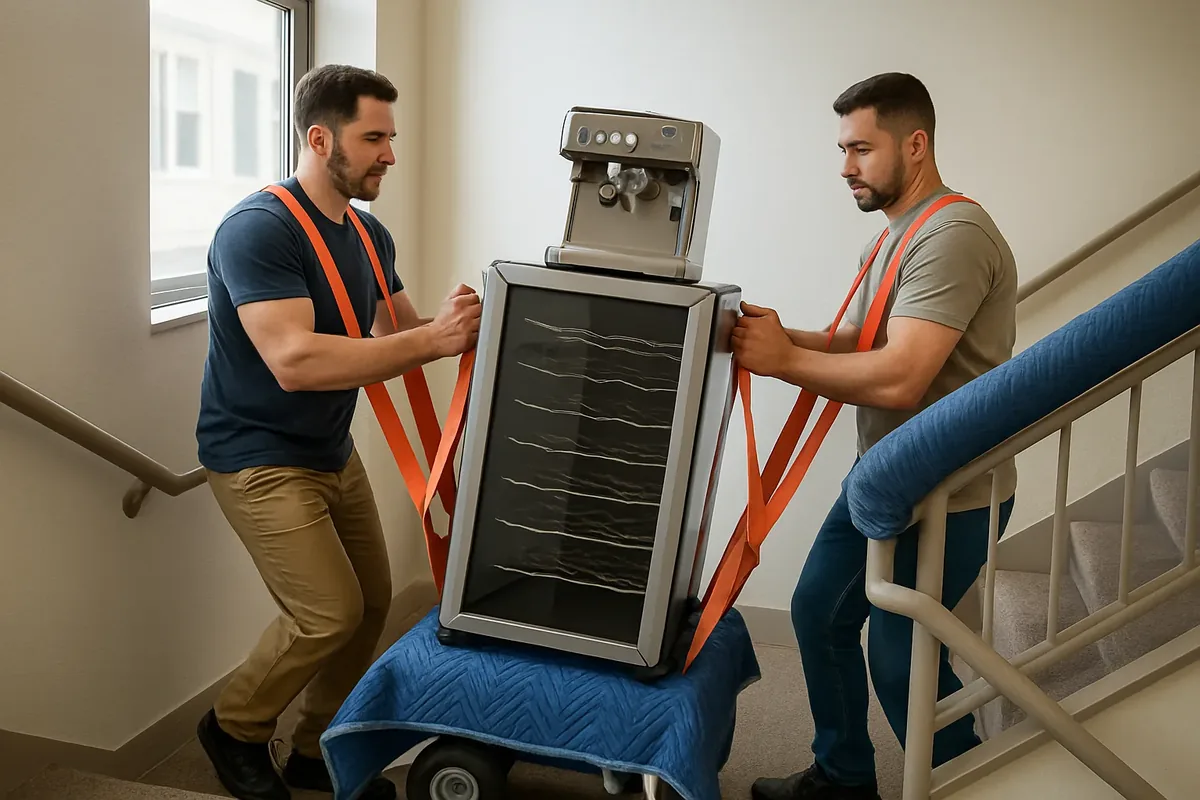
See how two renters can carry, roll, and anchor a 120-pound dual-zone wine cooler and espresso coffee bar out of a walk-up or elevator apartment using lifting harnesses, 4-wheel dollies, and rental truck tie-downs. Compare DIY truck and gear costs against hiring local movers.