
In this guide
- Exact Dimensions and Clearance Math for 40–100 Gallon Aquariums & Stands
- Diagonal Doorway Math and 90-Degree Stairwell Turn Limits
- What to Unbolt vs. What Must Stay Intact on Stands, Canopies & Plumbing
- Hardware Bagging, Labeling & Pre-Move Protection Checklist
- How Pre-Disassembly Impacts Your Full-Service vs. DIY Budget
Exact Dimensions and Clearance Math for 40–100 Gallon Aquariums & Stands
Unlike upholstered couches that compress by two inches when squeezed past a doorstop molding, a glass aquarium or front-opening reptile terrarium is completely unforgiving. Worse, once wrapped in two layers of 85-lb/dozen quilted moving blankets (80" x 72"), every dimension expands by 2.0 to 3.0 inches. A 75-gallon rimmed tank with an external footprint of 48.5" L x 18.5" W x 21.5" H becomes roughly 51" x 21" x 24" when properly padded—and its cabinet stand adds another 2 to 4 inches in base overhang and decorative crown molding.
Measure the clear opening of every choke point—from inside the doorstop trim to the inner edge of the open door slab, not jamb-to-jamb. Most US apartment bedroom and hallway doors are 30 or 32 inches nominal, yielding only 27.5 to 29.5 inches of clear passage once you account for the door thickness and hinges. If your aquarium stand exceeds 24 inches deep with doors attached, unhinging the apartment entry door from its pins adds a crucial 1.75 to 2.0 inches of clearance in under three minutes.
| Tank Size & Type | Bare Tank (L × W × H) | Padded Carry Width | Min. 90° Hallway Width | Fits Standard 54" Passenger Elevator? |
|---|---|---|---|---|
| 40-Gallon Breeder Glass | 36.2" × 18.2" × 17.0" | 20.5"–21.5" | 34" hallway | Yes — flat on 4-wheel dolly |
| 55-Gallon Standard Long | 48.2" × 12.7" × 21.0" | 15.5"–16.5" | 36" hallway | Yes — tight straight in (4" margin) |
| 75-Gallon Glass + Stand | 48.5" × 18.5" × 21.5" | 21.5"–22.5" | 39" hallway | Borderline — measure cab depth minus handrail |
| 90-Gallon Tall Reef Tank | 48.5" × 18.5" × 25.5" | 21.5"–22.5" | 39" hallway | Borderline — stand often requires diagonal entry |
| 100-Gallon / 60"–72" Long | 60.5"–72.5" × 18.5" × 23.5" | 21.5"–22.5" | 44"–48" hallway | No — requires 80" freight elevator or walk-up stairs |
| 4×2×2 ft Bioactive Terrarium | 48.0" × 24.0" × 24.0" | 26.5"–27.5" | 42" hallway | Tight — remove door slab on 30" apartment doors |
Diagonal Doorway Math and 90-Degree Stairwell Turn Limits
Apartment moving delays happen most often at two places: the 90-degree turn immediately inside a narrow foyer and the U-turn landing of a walk-up stairwell. To verify whether a padded tank or cabinet stand clears an L-shaped turn without pivoting vertically, apply the hallway corner formula: for a rectangular object of length L and padded width W turning from hallway width A into hallway width B, confirm that L is less than (A + B) × 1.414 minus 2W. For a 51-inch padded 75-gallon aquarium (W = 22 inches) turning from a 38-inch apartment foyer into a 42-inch exterior corridor, (38 + 42) × 1.414 − 44 = 69.1 inches—plenty of clearance to stay completely horizontal.
Drop into a pre-war 32-inch entry hallway feeding a 36-inch stairwell landing, however, and that available turning length falls to 52.1 inches—leaving barely 1 inch of margin around plaster walls and metal handrails. Never tilt a 75- to 100-gallon tank vertically on end to squeeze around a tight stairwell unless it is completely empty, rim-protected, and supported across the entire short-end perimeter with an 85-lb/dozen quilted blanket; point-loading a single corner on a stair tread will crack the pane immediately.
Amazon US Apartment Moving Supplies
Recommended Moving Boxes, Blankets & Bags for This Move
Apartment moving supplies matched to this guide (Amazon.com affiliate ID: apartmentmovingcost-20).
Color-Coded Apartment Moving Box Labels for 4 Bedrooms & Fragile (600 Stickers)
High-contrast color-coded adhesive labels for Master Bedroom, Bedroom 2, Kitchen, Living Room, Bath, and Fragile
Sharpie Chisel-Tip Permanent King-Size Black & Red Moving Box Markers (4-Pack)
Wide felt chisel-tip permanent ink markers readable from 15 feet away on brown corrugated cardboard
Sure-Max 6 Heavy-Duty Pro Moving Blankets 80" x 72" (85 lb/dz Navy Blue/Black)
Half-dozen thick quilted furniture pads sized for a 1-bedroom apartment sofa, dresser, headboard, and dining table
As an Amazon Associate I earn from qualifying purchases. Always verify live stock and pack sizing directly on Amazon.com.
What to Unbolt vs. What Must Stay Intact on Stands, Canopies & Plumbing
While the silicone-bonded glass tank itself is obviously a single unit, aquarium stands, reef sumps, lighting arms, and PVC terrarium frames have dozens of breakable protrusions. Paying a 2-person moving crew ($130–$175/hr) to figure out bulkhead unions and cam-lock cabinet fasteners adds 45 to 75 minutes ($100–$220) to your bill—and most standard movers refuse to touch wet plumbing or electrical lighting controllers for liability reasons.
- Disconnect Sump Unions, Bulkheads, and Canister Hoses. Unscrew union nuts below overflow boxes and lift bulkhead strainers out completely. Leaving rigid PVC pipes protruding from the bottom of a drilled reef tank is the number-one cause of shattered bottom glass during apartment loading.
- Remove Glass Lids, Hinged Canopies, and Light Mounts. Detach clamp-on LED arms, T5 fixtures, and hinged wooden canopies. Wrap glass canopy panels individually in bubble cushioning and pack them vertically inside a double-walled mirror carton.
- Strip Cabinet Doors and Adjustable Shelves From the Stand. Pop quick-release European cabinet hinges off wooden stands and pull out loose interior shelves and shelf pins. Removing doors shaves 15 to 25 lbs off the stand weight and eliminates swinging panels that gouge elevator walls.
- Decide Whether to Knock Down Particleboard vs. Solid-Wood Stands. Keep factory-glued solid hardwood or welded steel stands assembled—unbolting wood screws repeatedly strips threads and compromises the 900+ lb load rating needed once refilled. Only flat-pack aluminum extrusion stands or bolt-together steel frames with threaded machine bolts and hex nuts.
Hardware Bagging, Labeling & Pre-Move Protection Checklist
Losing two specialty stainless bulkhead gaskets, a metric Allen bolt from a steel stand, or the glass-door track pin from a front-opening terrarium can delay reassembly for days while your fish or reptiles sit in temporary tubs. A disciplined hardware-tracking system takes ten minutes and ensures movers put every component in the exact destination room.
- Label every zip-top hardware bag with a 5mm chisel-tip permanent marker (black for structural stand bolts, red for fragile glass/plumbing gaskets) so markings stay legible from 15 feet away on cardboard boxes and interior stand walls.
- Apply 3" x 2" color-coded room and Fragile stickers directly to the wrapped tank exterior, sump carton, lighting box, and cabinet stand so a 2- or 3-person crew immediately routes every piece to the destination room without asking.
- Photograph every plumbing union, power strip layout, and door hinge orientation on your phone before loosening the first screw.
- Stage 80" x 72" heavy-duty quilted moving blankets (85 lb/dozen cotton-fill rating) right beside the drained tank so movers can pad all six surfaces before the glass ever leaves the stand.
How Pre-Disassembly Impacts Your Full-Service vs. DIY Budget
On a standard 1-bedroom apartment move (4.0–6.0 base hours plus 1.0 travel hour at $130–$175/hr), having your aquarium drained, plumbing unbolted, doors removed, and doorway clearances verified cuts 45 to 65 minutes of crew hesitation—saving $100 to $190 in billed labor. If you are tackling a DIY rental truck move with a 12–15 ft box truck ($30–$40 daily base plus $1.09–$1.49 per local mile and fuel at $3.55/gal), verifying stairway and elevator clearances a week early also tells you whether two friends can safely clear the exit or whether you need to book 2-hour loading helpers ($170–$290) equipped with stair-climbing straps.
Want to see how walk-up flights, freight elevator reservations, and specialty disassembly affect your total moving estimate? Plug your apartment size and floor access into our Apartment Moving Cost Calculator or run a side-by-side check in the Movers vs. DIY Rental Truck Comparator.
Open Calculator →Frequently Asked Questions
Can movers carry a 75-gallon glass aquarium vertically through a tight apartment hallway?+
Reputable apartment movers avoid tipping large glass aquariums vertically unless absolutely unavoidable, because vertical orientation concentrates 140+ lbs of glass weight onto a short perimeter edge and increases torque on silicone seams. Always measure horizontal hallway turns first and reserve the freight elevator when available.
Should I disassemble an MDF or particleboard aquarium stand before moving?+
No. Cam-lock and wood-screw particleboard stands lose structural integrity if disassembled and reassembled—a dangerous failure mode when supporting 500 to 1,000 lbs of water later. Remove only the cabinet doors, shelves, and sump, then wrap the intact stand shell in quilted moving blankets.
How much clearance do apartment movers need around a staircase turn for a 48-inch tank?+
Plan for at least 39 to 42 inches of unobstructed stairwell width and landing depth for a padded 48-inch aquarium or 4x2x2 terrarium. Narrower pre-war walk-ups (32–36 inches wide) often require removing apartment entry doors from their hinges and carrying the tank over the stair railing with a dedicated third spotter, which adds 20–30% to stair carry time.
What size moving blankets should I have ready for a 40–100 gallon tank and stand?+
Stock at least 3 to 4 full-size 80" x 72" quilted moving blankets rated at 85 lb/dozen—two blankets double-wrapped around the glass tank and one to two blankets covering the cabinet stand. A 6-pack covers the entire aquarium setup plus your sofa or dresser on a 1-bedroom apartment move.
Do buildings require a COI even if I only hire a 2-person crew to move my aquarium?+
Most managed US mid-rise and high-rise apartment complexes require a Certificate of Insurance (COI) showing $1M–$2M general liability and workers' compensation for any commercial mover entering the lobby or freight elevator—even for a single specialty item. Request the building's exact certificate holder wording at least 5 business days ahead.
Interactive US Moving Tools
Compare Full-Service Movers vs. DIY Rental Truck in 30 seconds
Related Guides
furniture and appliance moving costs
Furniture & Specialty Item Moving Costs: Complete US Benchmarks & Guides
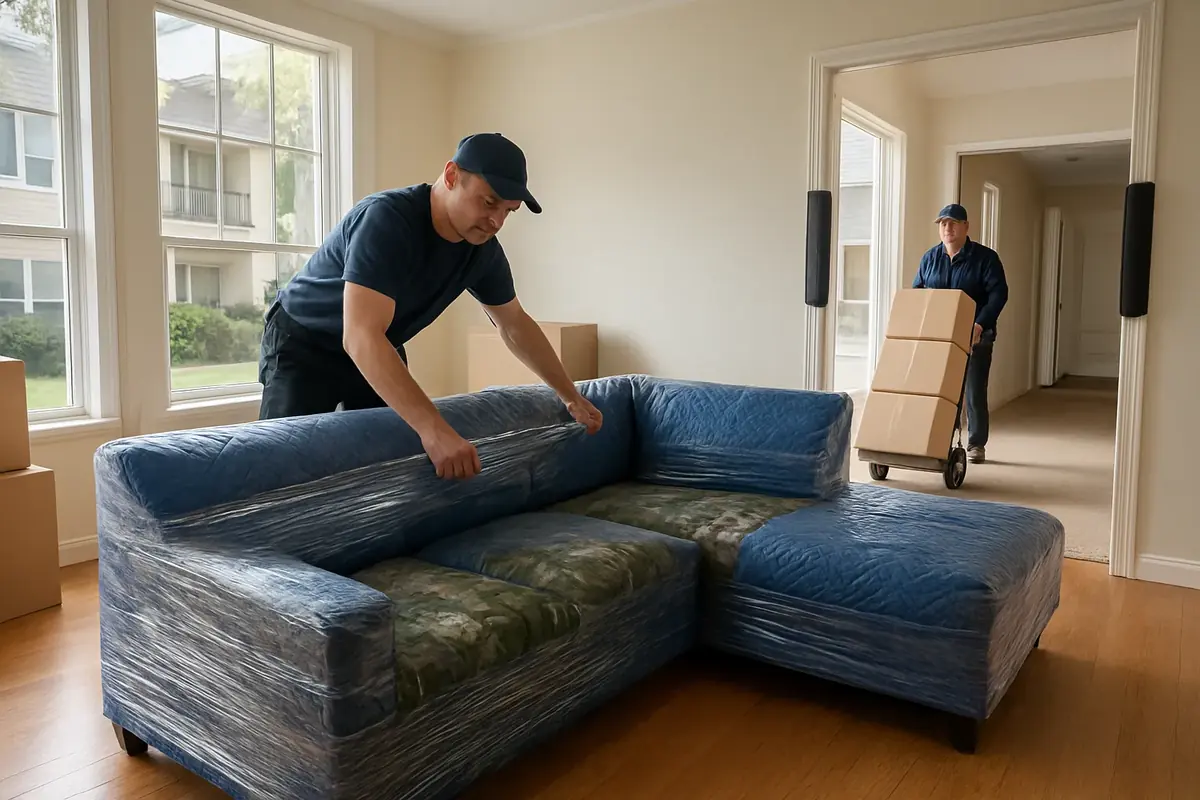
Moving oversized apartment furniture and heavy appliances—from L-shaped sectionals and King adjustable beds to Peloton bikes, glass dining tables, OLED TVs, and stacked washer-dryers—adds $60 to $340+ in specialized disassembly, stair-carry labor, and protective crating fees. This pillar guide benchmarks US mover hourly rates, flat bulky-item add-ons, doorway clearance tactics, and DIY truck padding specs.
furniture and appliance moving costs
Preventing Scratches & Cracks When Moving a 40–100 Gallon Glass Aquarium & Stand
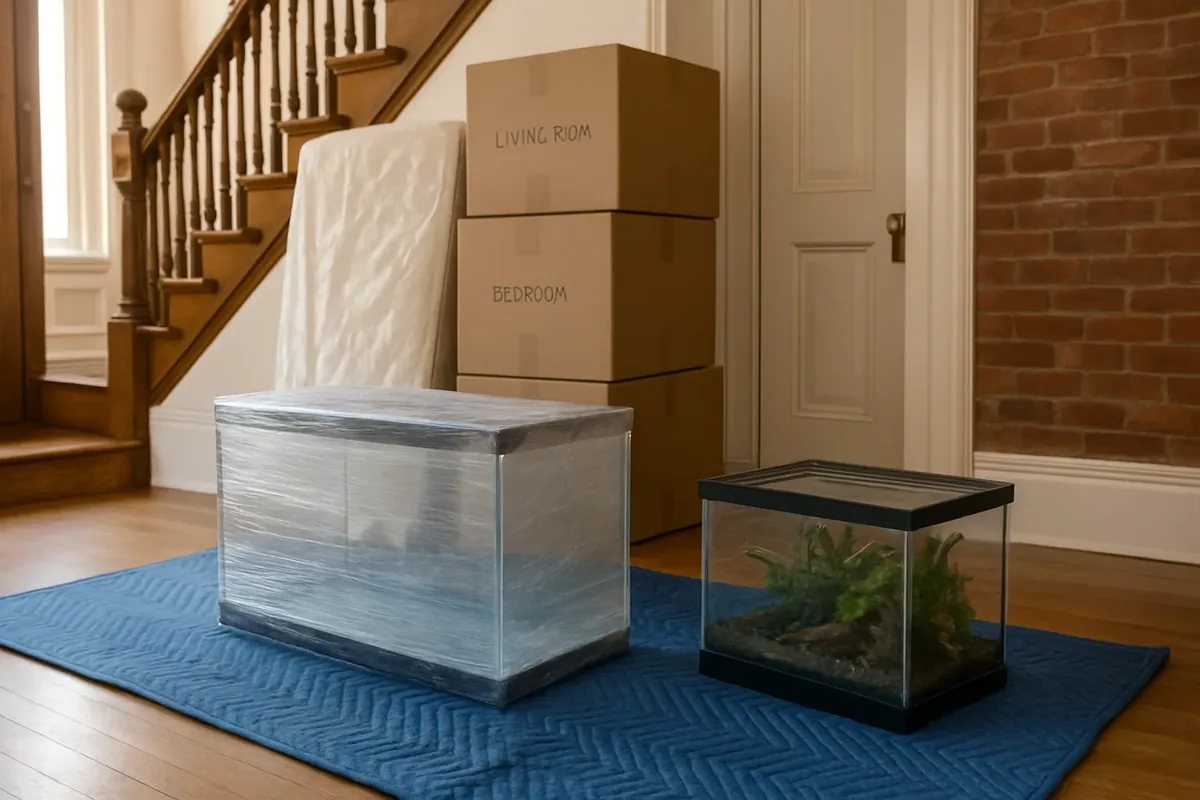
A single unpadded knock against a stairwell rail or an abrasive cardboard seam can permanently scratch low-iron aquarium glass or chip a mitered corner. Learn the exact blanket count, 80-gauge stretch wrap tension, and corrugated edge-armor protocol professional movers use—plus DIY vs. mover-packed material costs.

furniture and appliance moving costs
How to Load & Anchor a 40–100 Gallon Glass Aquarium & Stand Inside a Rental Truck
Moving a 40–100 gallon glass aquarium and cabinet stand yourself cuts $150–$365 off a local apartment move, provided you use the right 4-wheel dolly geometry and truck-wall tie-downs. Here is the exact two-person carry workflow, dolly spec comparison, and rental truck anchoring plan.
furniture and appliance moving costs
What a Nursery Crib, Dresser & Reclining Glider Adds to Your Moving Quote
Moving a full apartment nursery suite—convertible crib, double-wide changing dresser, and heavy upholstered reclining glider—adds 45 to 85 minutes of crew labor and $145–$360 to a typical full-service local quote. Compare add-on labor, single-item courier fees, and DIY truck costs below.