In this guide
- Why 40 Feet of Curb Space Controls Your Entire Apartment Moving Bill
- How Municipal Meter Hooding and Temporary 'No Parking' Permits Work across Major US Cities
- When Do Movers Assign an Extra 'Truck Spotter' to Avoid Tickets?
- Step-by-Step Guide to Securing Curb Space for Moving Day
- Curb-Staging & Rapid-Load Packing Gear for Urban Apartment Moves
Why 40 Feet of Curb Space Controls Your Entire Apartment Moving Bill
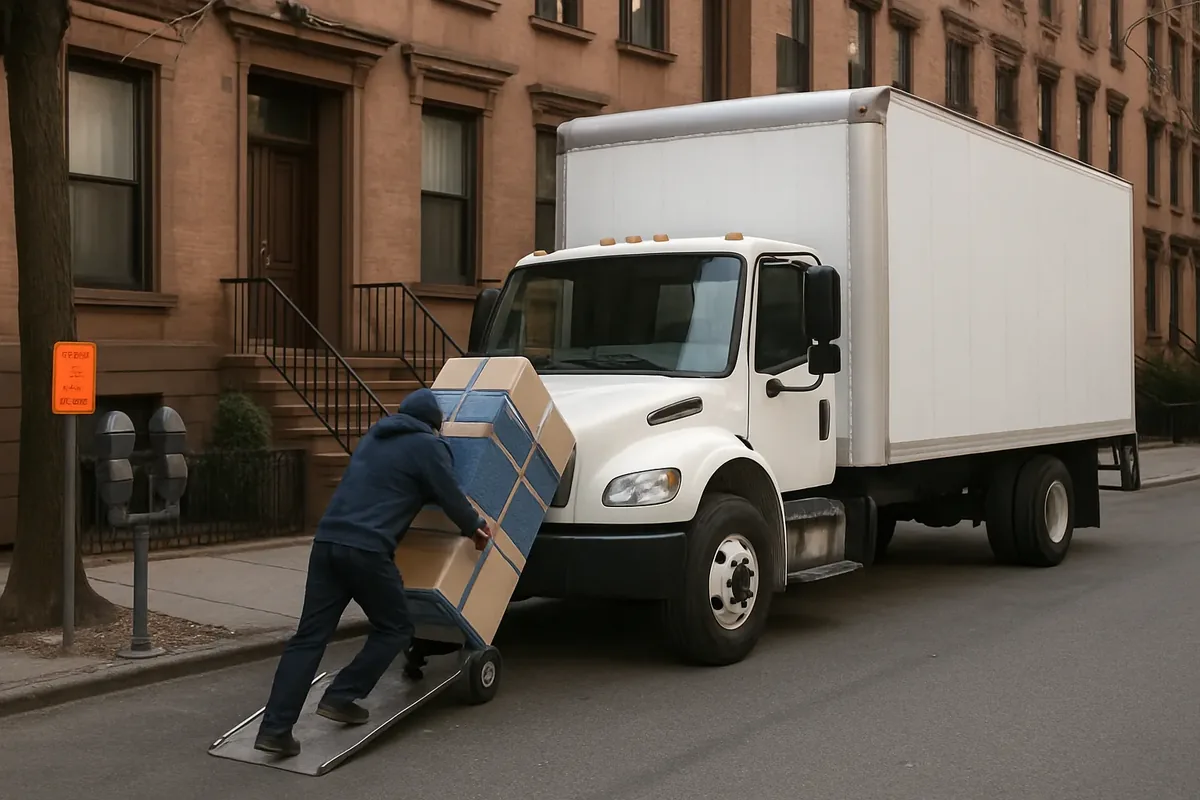
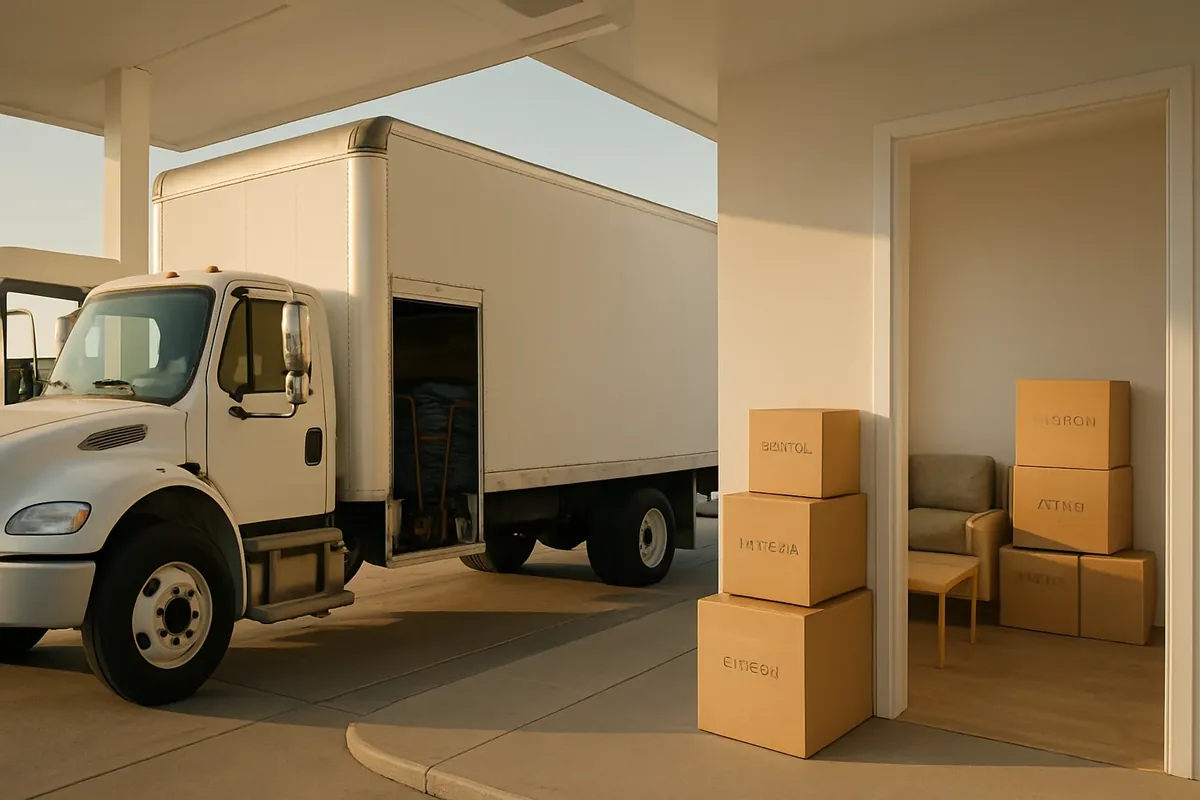
A standard 1-bedroom apartment move requires a 12-to-15-foot moving truck, while a 2-bedroom or 3-bedroom apartment (680 to 980 cubic feet) arrives in a 20-to-26-foot commercial box truck. Once the crew slides out the 12-foot aluminum walk-ramp or lowers the hydraulic liftgate at the rear of a 26-foot straight truck, the vehicle requires 40 to 45 continuous linear feet of unobstructed curb space—roughly the equivalent of two full-size parallel parking stalls.
When that curb space directly in front of your building lobby is filled with commuter sedans, your moving cost escalates on three simultaneous fronts. First, moving tariffs assess an automatic Long Carry add-on ($65 to $135 flat fee, or billed in 75-foot increments) whenever the distance from the truck's tailgate to your apartment building's front entrance exceeds 75 feet. Second, rolling a dolly 180 feet down a crowded sidewalk instead of 25 feet from the curb adds 0.75 to 1.5 hours of billable labor ($130–$175/hr for a 2-person crew; $175–$235/hr for a 3-person crew). Third, if the driver double-parks in an active lane, commercial enforcement officers can issue multiple citations within a single 4-hour load window.
| Curb Parking Scenario | Upfront Permit / Ticket Cost | Long Carry & Extra Labor Impact | Total Curb Logistics Cost |
|---|---|---|---|
| 1. DIY Municipal Meter Hooding / Tow-Away Permit | $45–$145 per address (City DOT fee + meter buyout) | $0 long carry; fastest curb-to-door rolling time | $45–$145 (Lowest total cost & zero ticket stress) |
| 2. Turnkey Permit Service / Mover-Pulled Permit | $135–$260 per address (City fee + $65–$110 runner fee) | $0 long carry; crew posts signs 72 hrs ahead | $135–$260 (Best for out-of-state arrivals) |
| 3. Unpermitted Legal Parking Around the Block (>125 ft) | $0 permit / $0 ticket | $65–$135 long-carry fee + 1.0–1.5 extra crew hrs ($130–$350) | $195–$485 (Hidden labor inflation exceeds permit cost) |
| 4. Unpermitted Double-Parking or Loading Zone Violation | $115–$250 per ticket (Passed to customer on bill) | $0–$120 (Driver forced to circle block when police arrive) | $115–$370+ (High stress; risk of second ticket or tow) |
| 5.DIY Rental Truck Towed from Restricted Bus/Fire Zone | $165–$275 citation + $350–$650 commercial tow impound | 2.5–4.0 hrs lost rental & helper wait time ($170–$290) | $685–$1,215 (Worst-case urban DIY nightmare) |
How Municipal Meter Hooding and Temporary 'No Parking' Permits Work across Major US Cities
Across major US metro areas, reserving street parking for a moving van falls into two municipal processes depending on whether your apartment block has paid commercial parking meters or unmetered residential permit parking:
- Commercial Meter Hooding / Meter Bagging ($25–$65 per meter per day + $35–$85 application fee): If your apartment fronts an avenue with individual parking meters or a digital multi-space pay-by-plate kiosk, the city Department of Transportation (DOT) or Parking Authority charges a flat administrative permit fee plus the lost daily revenue for 2 to 3 meter spaces (typically 40 to 60 feet). In cities with physical post meters, a city crew or licensed permit runner places locked canvas or plastic 'Meter Hoods / Bags' over the meter heads 24 to 72 hours before your move.
- Unmetered Residential 'Temporary Tow-Away' Sign Posting ($45–$145 flat permit fee): On residential side streets without meters, you apply online with your lease or moving contract, pay the city right-of-way reservation fee, and either pick up official weather-resistant cardboard 'Emergency No Parking – Moving Van' signs at a precinct/city hall or print them for posting on trees, signpost poles, or A-frame barricades.
- Mandatory 48-to-72-Hour Police Verification Lead Time: In cities like Boston, Chicago, Seattle, San Francisco, and Washington, D.C., simply taping signs to a pole the night before moving day gives you zero legal tow authority. Signs must be posted and time-stamped in the municipal enforcement portal 48 to 72 hours in advance so a traffic control officer can verify that parked cars had legally required notice before a tow truck can relocate a vehicle blocking your spot on move morning.
Amazon US Apartment Moving Supplies
Recommended Moving Boxes, Blankets & Bags for This Move
Apartment moving supplies matched to this guide (Amazon.com affiliate ID: apartmentmovingcost-20).
BOMEI PACK Commercial 2.7-Mil Clear Acrylic Moving Tape 65 yd (12-Roll Case + Gun)
780 total yards of anti-splitting acrylic box-sealing tape bundled with a 2-inch handheld dispenser
Sure-Max 12 Pro Moving & Packing Blankets 80" x 72" (85 lb/dz Heavy-Duty Quilted)
Professional zig-zag double-stitched padded polyester/cotton blankets protecting dressers and door frames
Simpli-Magic 72" x 80" Padded Moving Blankets (12-Pack, 65 lb/dz Mid-Weight)
Versatile mid-weight quilted furniture pads for wrapping dining chairs, bookshelves, and elevator walls
As an Amazon Associate I earn from qualifying purchases. Always verify live stock and pack sizing directly on Amazon.com.
When Do Movers Assign an Extra 'Truck Spotter' to Avoid Tickets?
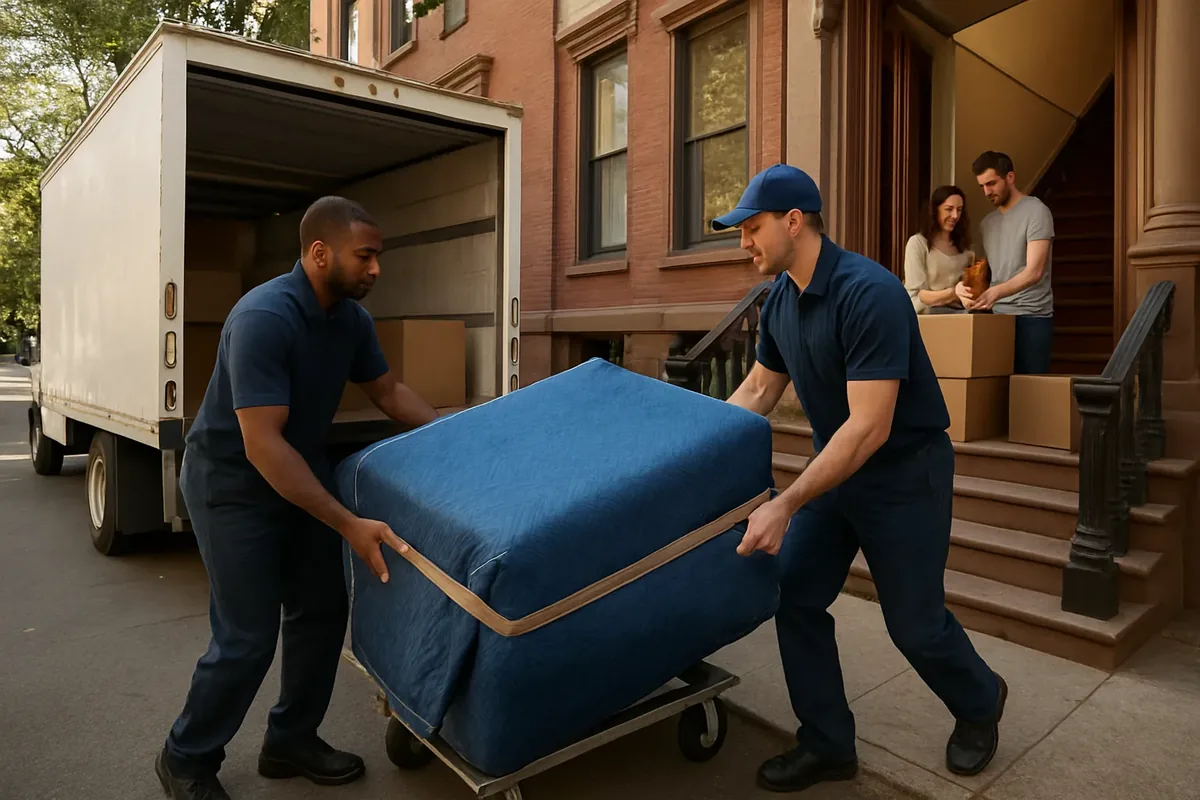
If you are moving a 1-bedroom (2-person crew @ $130–$175/hr) or 2-bedroom apartment (3-person crew @ $175–$235/hr) on a busy commercial corridor where double-parking or commercial loading-zone staging is the only option, many urban movers will strongly recommend—or require—adding an extra crew member to serve as a dedicated Truck Spotter. While two movers carry pad-wrapped dressers and box stacks up the freight elevator or 3rd-floor walk-up stairs, the spotter remains at the open tailgate with the truck keys.
Adding a spotter achieves two things: it prevents street theft from an unattended open moving truck while the crew is inside the building for 15-minute elevator cycles, and it allows the driver to immediately pull the truck around the block if a meter maid, transit bus, or police cruiser approaches—avoiding a $150 double-parking ticket. However, an extra crew member adds $45 to $65 per billable hour ($225 to $390 across a 5-to-6-hour move). In nearly every jurisdiction where a $65 to $145 municipal meter hooding parking permit is available, pulling the permit 10 days early is less than half the cost of paying for a full-day truck spotter.
Step-by-Step Guide to Securing Curb Space for Moving Day
- 14 Days Before Moving Day: Check City DOT Permit Lead Times. Search your city's '.gov' transportation portal for 'Temporary No Parking Moving Permit' or 'Meter Hooding Application.' Note the exact business-day cutoff (typically 5 to 10 business days before move date) and reserve 40 to 45 feet (2 spaces) in front of both origin and destination if neither has an off-street loading dock.
- 72 Hours Before Moving Day: Post Signs & Log Inspection Photos. Attach your official city permit signs at the exact measured curb markers 48 to 72 hours prior to the start window. Take timestamped photos showing the posted signs AND the license plates of any cars currently parked there, then call the municipal verification hotline so your tow enforcement right is activated.
- Night Before Moving Day: Stage a Personal 'Blocker Car' If Unpermitted. If you missed the city permit deadline on an unmetered residential street, park your personal vehicle (and a friend's car bumper-to-bumper with a 6-foot gap) directly in front of your apartment entrance the evening before moving day, then pull your car out the moment the moving truck turns onto your block.
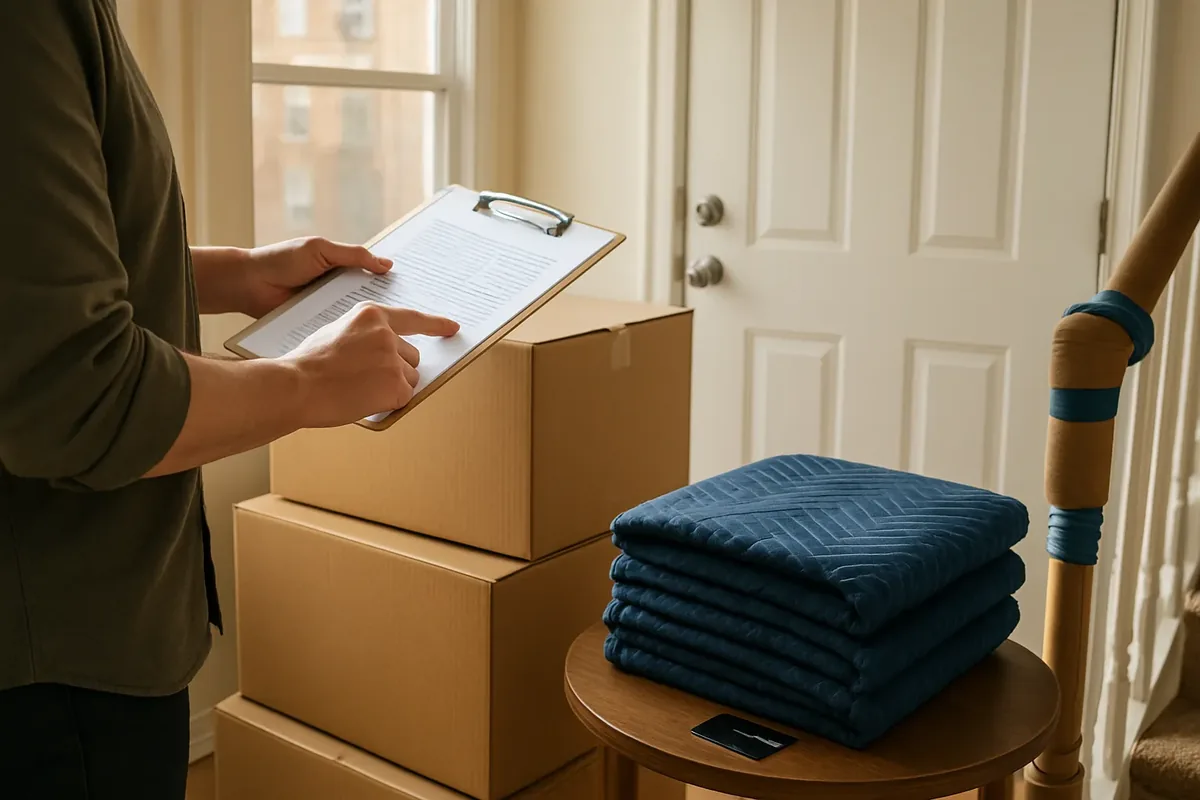
- Pre-Wrap All Furniture Before the Truck Arrives at the Curb. Whether your truck is parked at a timed meter hood or a shared loading dock, every 30 minutes saved on the clock reduces your ticket exposure and hourly labor bill. Have all boxes sealed with 2.7-mil acrylic tape and wood furniture pre-wrapped in 65-lb/dz to 85-lb/dz moving blankets before the crew rings your buzzer.
Curb-Staging & Rapid-Load Packing Gear for Urban Apartment Moves
When your moving truck or DIY rental van is parked at a tight urban curb under a 4-hour meter hood permit window, you cannot afford to have box bottoms split open on the sidewalk or waste 45 minutes wrapping bare dressers at the tailgate. Professional-grade acrylic tape and heavy-duty quilted blankets let you stage a rapid curb load:
- BOMEI PACK Commercial 2.7-Mil Clear Acrylic Moving Tape (12-Roll Case + Gun, 1.88 in x 65 yd): Includes 780 yards of anti-splitting 2.7-mil acrylic box tape and a 2-inch handheld dispenser gun so you can reinforce every bottom box seam for high-speed 4-wheel sidewalk dolly runs.
- Sure-Max 12 Pro Moving & Packing Blankets (80 x 72 in, 85 lb/dz Heavy-Duty Quilted): A 12-pack of pro-weight 85-lb/dozen double-stitched blankets ideal for pre-wrapping dressers, headboards, and desks inside your apartment so pieces can be carried straight across the sidewalk into the truck.
- Simpli-Magic 72" x 80" Padded Moving Blankets (12-Pack, 65 lb/dz Mid-Weight): Versatile mid-weight quilted furniture pads designed for wrapping dining chairs, bookshelves, and lining elevator cab walls or iron stairwell railings during rapid city load-outs.
Want to see how long-carry surcharges, walk-up stairs, and crew hourly rates affect your total move? Plug your origin and destination access details into our Apartment Moving Cost Calculator and Movers vs. DIY Rental Truck Comparator.
Open Calculator →Frequently Asked Questions
Who pays if the moving company's truck gets a parking ticket while loading my apartment?+
In 95% of urban local moving contracts, the customer is financially responsible for parking citations ($115–$250) unless the customer obtained an official municipal parking permit and the driver willfully chose to park outside the reserved zone. Because the customer selects the apartment address and controls whether a municipal curb permit or building loading dock was reserved, movers pass ticket receipts directly onto the final invoice.
What should I do on moving morning if a neighbor's car is parked inside my paid city permit zone?+
Provided you posted your municipal 'Temporary No Parking – Tow Away' signs at least 48 to 72 hours in advance and completed the city's photo/phone verification check, call the municipal traffic enforcement number printed on your permit as soon as you spot the offending vehicle (ideally 60 to 90 minutes before the moving truck arrives). A city traffic officer will ticket the car and dispatch a municipal or contracted tow truck to clear your 40-foot zone.
How many linear feet of parking space do I need to request on a city moving permit application?+
Always request at least 40 linear feet (two standard 20-foot parallel parking stalls) for a 10-foot, 15-foot, or 20-foot moving truck, and 50 to 60 linear feet (three stalls) for a 26-foot straight moving truck. Why? A 20-foot box truck measures roughly 27 feet bumper-to-bumper including the cab, and the crew needs an extra 12 to 15 feet behind the rear bumper to extend the walk-ramp and roll loaded 4-wheel dollies safely off the ramp.
Can I park a DIY U-Haul or Penske moving truck at a standard city parking meter and just pay the meter?+
It depends on the street's commercial zoning and time limits. Many urban retail streets enforce a strict 1-hour or 2-hour maximum stay at standard meters (even if you try to feed the app for more time), and commercial vehicles over 20 feet long are often prohibited from occupying single passenger-car stalls if the bumper overhangs into an adjacent stall. Furthermore, in cities like New York City, commercial plates are required in designated 'Commercial Vehicles Only' metered loading zones—meaning a consumer rental truck with standard passenger/apportioned plates can sometimes be ticketed depending on local DOT rules.
Interactive US Moving Tools
Compare Full-Service Movers vs. DIY Rental Truck in 30 seconds
Related Guides
apartment moving cost guides
Apartment Moving Cost Guides: Complete US Hourly Rates, Flat-Rate Quotes & Benchmarks
Local US apartment moves with licensed full-service crews average $640 to $1,530 for studios and 1-bedroom units and $1,270 to $3,572 for 2- and 3-bedroom apartments when self-packed, while DIY rental trucks run $155 to $507. This pillar guide decodes hourly crew math, travel fees, access surcharges, FMCSA estimate rules, and packing material ratios across every moving scenario.
apartment moving cost guides
How Moving Company Fuel Surcharges (5%–12%) and Diesel Tariffs Work
Many apartment renters are shocked when a moving company adds a 5% to 12% diesel fuel surcharge tariff percentage on top of their total hourly labor bill—even when the truck only drives 12 miles across town. Learn how to distinguish legitimate transportation fuel fees from padded total-invoice percentage surcharges.

apartment moving cost guides
Mover Credit Card Processing Fees (3%–4%) vs. Cash or Cashier's Check Discounts
At the end of moving day, choosing between a credit card with a 3% to 4% processing fee versus a cash or cashier's check discount of 3% to 8% can swing your final apartment moving bill by $35 to $250. Learn when paying cash saves real money—and when a cash-only demand is a dangerous rogue-mover red flag.
apartment moving cost guides
Mover Booking Deposits & Cancellation Refund Rules: What Apartment Renters Should Pay ($50–$150)
Most reputable US local moving companies ask for a modest $50 to $150 refundable booking deposit to hold your truck and crew, credited in full toward your final moving-day bill. Learn standard 48- to 72-hour cancellation refund windows, how DIY truck rental holds differ, and when an oversized upfront deposit signals a moving broker scam.