In this guide
- Why Historic Landmark Buildings Enforce Masonite & Woodwork Rules
- Historic Protection & Relocation Cost Breakdown by Apartment Size
- Comparing Surface Protection Methods & Woodwork Rules
- Pre-War Elevators, Narrow Turns & Couch Disassembly Costs
- Tape-Free Blankets, Bands, and Canvas Runners for Historic Moves
- 5-Step Protocol for Moving Through Historic Landmark Buildings
Why Historic Landmark Buildings Enforce Masonite & Woodwork Rules
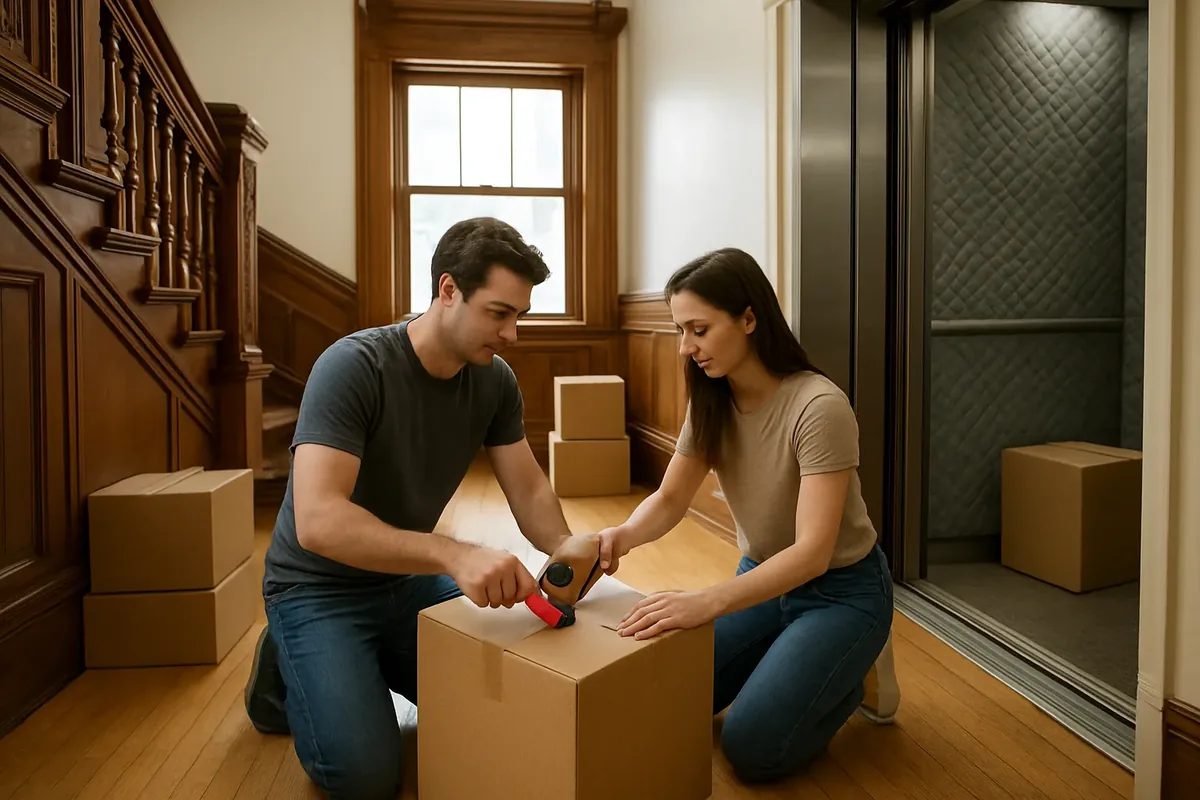
Pre-war co-ops, limestone townhomes, converted Victorian brownstones, and registered historic apartment buildings cannot replace hand-carved quarter-sawn oak wainscoting, herringbone parquet, encaustic lobby tile, or plaster crown molding with off-the-shelf big-box trim. To prevent a single steel dolly wheel from gouging 100-year-old hardwood or stripping shellac finishes, historic boards enforce strict historic landmark wainscoting masonite protocols before a single box leaves the curb.
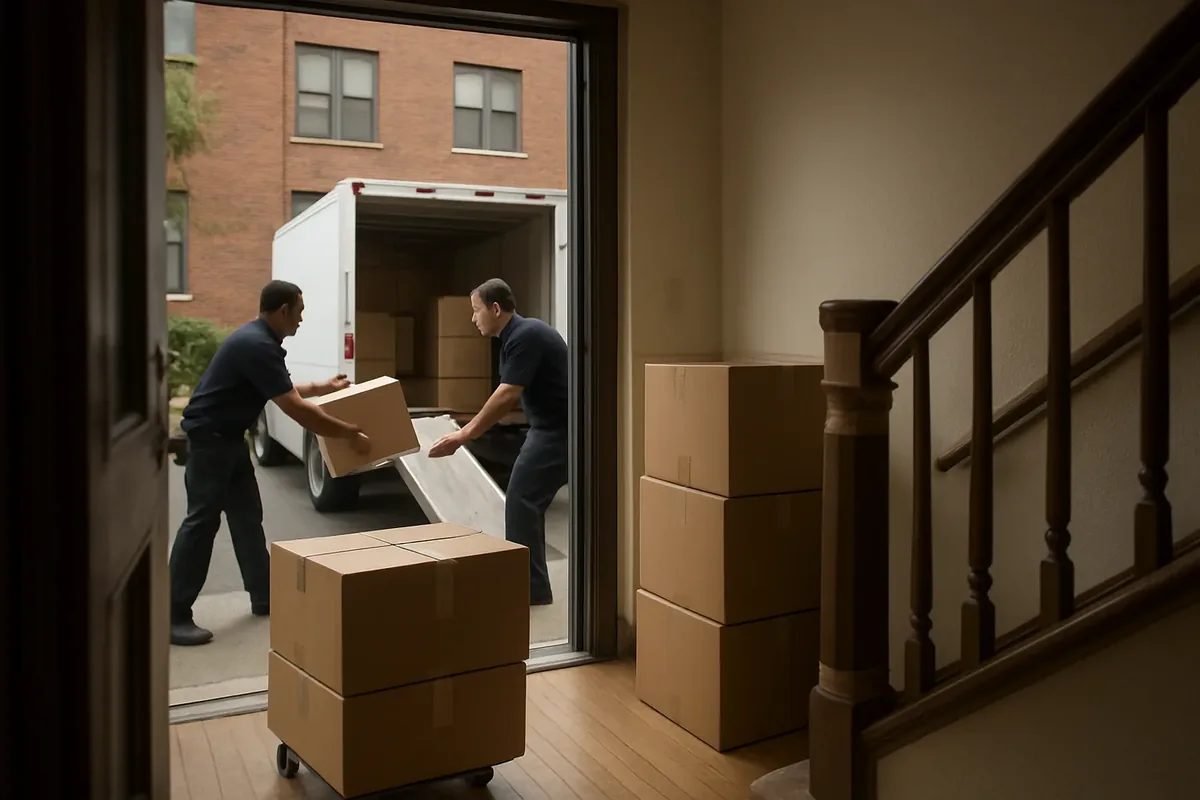
Unlike standard suburban apartment complexes where movers simply wheel dollies straight down carpeted halls, historic landmark superintendents often inspect protection before permitting furniture inside—requiring 1/8-inch tempered Masonite hardboard along lobby paths, rosin paper beneath seams, padded banister wraps, and non-marking rubber casters. Accounting for this setup upfront prevents day-of move turnaways and $500–$2,500 preservation fines.
Historic Protection & Relocation Cost Breakdown by Apartment Size
Adding full Masonite path setup and teardown consumes roughly 0.5 to 1.0 extra crew hours ($65–$295) plus $15–$28 per sheet for mover-supplied Masonite packages (typically 6–16 sheets covering lobby, elevator vestibule, and apartment entry). When paired with narrow pre-war stairs (+$55–$340 walk-up access) and base local rates (<15 miles), total pricing maps out as follows.
| Apartment Size | Base Local Mover + Truck (w/ DIY Boxes) | Masonite & Wall Protection Package | Narrow Pre-War Stair / Cab Factor | All-In Pro vs. DIY Truck Total |
|---|---|---|---|---|
| Studio (250 cu ft / 2,000 lbs) | $640–$1,080 | $100–$240 (4–8 sheets + 0.5 hr labor) | $0–$130 (tight cab or 1 flight) | $740–$1,450 pro vs. $210–$410 DIY |
| 1-Bedroom (420 cu ft / 3,200 lbs) | $820–$1,530 | $120–$360 (6–12 sheets + 0.75 hr labor) | $55–$190 (small cage elevator / 2 flights) | $995–$2,080 pro vs. $270–$560 DIY |
| 2-Bedroom (680 cu ft / 5,400 lbs) | $1,270–$2,378 | $170–$480 (10–16 sheets + 1.0 hr labor) | $110–$280 (turn landings / 2–3 flights) | $1,550–$3,138 pro vs. $380–$750 DIY |
| 3-Bedroom (980 cu ft / 7,800 lbs) | $1,930–$3,573 | $240–$620 (14–22 sheets + 1.0 hr labor) | $185–$340 (stair carries for sofas) | $2,355–$4,533 pro vs. $490–$940 DIY |
Amazon US Apartment Moving Supplies
Recommended Moving Boxes, Blankets & Bags for This Move
Apartment moving supplies matched to this guide (Amazon.com affiliate ID: apartmentmovingcost-20).
Economy Non-Woven Textile Moving & Storage Pads 72" x 80" (12-Pack, 35 lb/dz)
Lightweight breathable storage blankets for wrapping items inside PODS containers or mini-storage units
Large Giant Rubber Moving Bands for Securing Furniture Blankets (12-Pack Assorted)
Ribbed industrial rubber bands (26", 30", and 42" stretches) holding moving blankets tight around dressers without tape
Trimaco Stay-Put Canvas Plus Slip-Resistant Hallway Floor Runner 27" x 24 ft
Rubber-backed absorbent canvas floor runner protecting hardwood and lobby carpet from wet dolly tracks
As an Amazon Associate I earn from qualifying purchases. Always verify live stock and pack sizing directly on Amazon.com.
Comparing Surface Protection Methods & Woodwork Rules
Not every surface inside a landmark building accepts the same material. Applying aggressive adhesives directly onto historic floors or wainscoting causes expensive finish delamination, while laying slick cardboard over polished marble creates slip hazards for movers carrying 250-lb dressers.
| Protection Method | Pro Package vs. DIY Cost | Safe Surfaces & Rule Compliance | Critical Historic Restriction |
|---|---|---|---|
| 1/8" Tempered Masonite + Rosin Paper + Blue Tape | $120–$480 pro / $95–$210 DIY (6–12 sheets) | Lobby marble, terrazzo, herringbone parquet, elevator thresholds | Tape ONLY Masonite-to-Masonite seams; never tape onto wood varnish |
| Rubber-Backed Stay-Put Canvas Hall Runner | $45–$110 owned reusable runner | In-unit hardwood floors, entry hallways, rainy move-day traffic | Needs clean dry underside; never drag heavy appliance legs directly |
| Lightweight Textile Pads + Rubber Moving Bands | $55–$140 reusable pad & band kit | Carved oak banisters, door arches, radiator covers, wainscot rails | Zero adhesive tape touching antique shellac or plaster |
| Neoprene Door Jamb Sleeves + Corner Guards | $35–$85 clamp-on sleeves | Original painted pocket-door frames and tight vestibule trim | Check door stop depth before forcing wide 36" sofas through |
Pre-War Elevators, Narrow Turns & Couch Disassembly Costs
Even when freight lobbies sit on ground level, 1900–1940 historic buildings often feature tiny manual or brass-gate elevators measuring just 38 to 48 inches deep—far too short for modern 86-inch sofas or queen box springs. When furniture fails the cab measurement, crews either carry heavy items up winding wooden staircases (+$110–$340 walk-up charges) or bring in an upholstery specialist ($250–$650) to knock down and re-staple sofa frames safely.
- Measure elevator diagonal height, gate width, and tight corridor 90-degree turns in inches before booking trucks.
- Submit your mover's Certificate of Insurance ($1M–$2M aggregate + workers' comp) at least 3–5 business days early; historic co-op boards frequently halt unverified moves.
- Confirm permitted hours—most landmark boards ban weekend moves entirely and restrict crews strictly to 9:00 AM–4:30 PM Monday through Friday.
- Schedule move-out cleaning and floor runner pickup at least 30 minutes before the superintendent's 4:30 PM cutoff to avoid overtime fines.
Tape-Free Blankets, Bands, and Canvas Runners for Historic Moves
Securing padding across carved lobby wainscoting and twisting stair banisters without sticky adhesives requires drapeable wraps paired with elastic hold-downs. Economy Non-Woven Textile Moving & Storage Pads (72" x 80", 12-pack, 35 lb/doz) wrap slimly around turned oak spindles, radiator covers, and narrow vestibule jambs without bulk that steals crucial inches in tight stairwell clearances.
Hold those protective wraps tight around railings and antique dressers with Large Giant Rubber Moving Bands (12-pack assorted 26", 30", and 42" ribbed natural rubber stretches)—eliminating any adhesive residue near historic finishes. Across your apartment's own oiled hardwood floors and long interior foyers where heavy 4x8 Masonite sheets aren't required, roll out the Trimaco Stay-Put Canvas Plus Slip-Resistant Hallway Floor Runner (27" x 24 ft, rubber-backed absorbent canvas) to trap rainwater, boot grit, and dolly tire marks cleanly without sliding underfoot.
5-Step Protocol for Moving Through Historic Landmark Buildings
- Get the Building's Alteration & Move Rules Packet Early. Confirm required Masonite thickness (usually 1/8" tempered), COI wording, refundable damage deposit ($500–$1,500), and weekday-only hours 10–14 days prior.
- Measure Tight Hallway Angles and Elevator Gates. Check diagonal clearances on antique doorways and cage elevators so oversized sectionals are flagged for disassembly or stair carry upfront.
- Lay Rosin Paper, Masonite, and Stay-Put Runners First. Cover the entire lobby marble path with tempered Masonite taped strictly sheet-to-sheet, and roll slip-resistant canvas runners down interior parquet floors.
- Pad Banisters and Jambs Using Rubber Moving Bands. Drape lightweight textile pads across carved stair rails and woodwork corners secured purely with giant rubber moving bands—zero tape on wood.
- Perform a Joint Exit Inspection With the Superintendent. Pull up Masonite and runners slowly, sweep grit off marble seams, and walk the cleared corridor with building staff to lock in your damage deposit refund.
Add historic floor prep, narrow-stair labor, and hourly crew time to your budget inside the Apartment Moving Cost Calculator, or compare full-service historic movers against a DIY move in the Movers vs. DIY Rental Truck Comparator.
Open Calculator →Frequently Asked Questions
Do movers charge extra to lay down Masonite floor protection?+
Yes. While many urban movers bring 4–6 sheets on the truck, full lobby-to-door Masonite coverage (8–16 sheets plus rosin paper and blue tape) typically adds $120–$480 across material charges ($15–$28/sheet) and 0.5–1.0 extra hourly crew setup/teardown labor.
Can I use corrugated cardboard boxes instead of Masonite in a landmark lobby?+
Rarely. Co-op boards and historic superintendents usually reject flattened cardboard because heavy two-wheel dollies punch right through corrugated flutes, scratch underlying parquet or marble, and create slippery tearing hazards under damp boots.
What if I am doing a DIY rental truck move—where do I get Masonite sheets?+
Home improvement centers sell 4x8 ft 1/8-inch tempered hardboard sheets for roughly $14–$19 each; picking up 4–8 sheets plus a roll of delicate-surface painter's tape ($15–$25) fits flat along the wall of a 12–15 ft box truck and satisfies most brownstone superintendents.
How does California DDT or state mover regulation affect Masonite setup time?+
Under California's Double Drive Time (DDT) and standard US state hourly tariffs, time spent laying and pulling Masonite inside the building counts as active on-site hourly labor ($125–$295/hr), separate from the doubled drive time between addresses.
Should heirloom mattresses go into 5-mil bags inside dusty historic basements or narrow stairs?+
Definitely. Narrow pre-war stairwells often brush painted plaster and exposed brick along corners; sealing mattresses inside 5-mil disposable or handled tarp bags keeps century-old masonry dust and scuff marks off fabric ticking.
Interactive US Moving Tools
Compare Full-Service Movers vs. DIY Rental Truck in 30 seconds
Related Guides
apartment moving cost guides
Apartment Moving Cost Guides: Complete US Hourly Rates, Flat-Rate Quotes & Benchmarks
Local US apartment moves with licensed full-service crews average $640 to $1,530 for studios and 1-bedroom units and $1,270 to $3,572 for 2- and 3-bedroom apartments when self-packed, while DIY rental trucks run $155 to $507. This pillar guide decodes hourly crew math, travel fees, access surcharges, FMCSA estimate rules, and packing material ratios across every moving scenario.
apartment moving cost guides
Penthouse & Rooftop-Terrace Apartment Moving Logistics and Pricing
Moving a penthouse private key elevator terrace home involves single-cab staging bottlenecks, interior spiral stairs, outdoor stone planters, and $2M–$5M HOA insurance limits. Budget accurately for white-glove crew labor, specialty rigging, and carpet protection before lock-in.
apartment moving cost guides
Complete Apartment Moving Budget Worksheet: 25 Line Items to Track
Build a realistic master relocation budget checklist ledger covering all 25 line items across mover labor, rental trucks, building access fees, packing materials, and move-out recovery. Compare true full-service vs. DIY totals from studio units to 4-bedroom lofts so lease transitions never blindside your cash flow.
apartment moving cost guides
Cost of 2 Movers for 2 Hours: Hourly Crew Math (Small Studio / Minimum Charge)
Booking two professional movers for a two-hour minimum shift for a small studio typically costs $375 to $495 in billed labor once the mandatory one-hour travel fee is added, or $535 to $790 all-in locally with truck, DIY boxes, and tip. Understanding when a two-hour minimum holds steady versus when stairs or unboxed kitchenware push you into a third hour prevents surprise invoice overruns.