In this guide
- What Is the California Double Drive Time (DDT) Rule and Why Does It Exist?
- How DDT Math Works: Short Neighborhood Hops vs. Freeway Gridlock Moves
- Full Apartment Moving Cost Benchmarks Under DDT vs. DIY Truck Rentals
- Fast-Padding Gear That Slashes Loading Time Before Freeway Traffic Builds
- How to Protect Yourself Under California BHGS & MAX 4 Moving Rules
What Is the California Double Drive Time (DDT) Rule and Why Does It Exist?
If you are moving between apartments within California—any local relocation under 100 miles governed by hourly rates—you will encounter a billing line item that exists almost nowhere else in the United States: Double Drive Time (DDT). Created under the California Public Utilities Commission (CPUC) Maximum Rate Tariff 4 (MAX 4) and now administered by the California Bureau of Household Goods and Services (BHGS), DDT was designed as a consumer protection statute to stop moving companies with distant rural warehouses from billing urban renters for 90 minutes of empty depot commuting.
Under CPUC/BHGS rules, a licensed California household goods carrier's billable clock cannot start until the crew physically arrives at your origin apartment, and the loading/unloading clock stops the moment the crew finishes reassembling furniture at your destination apartment. To compensate the carrier for the unbilled morning dispatch drive and evening return drive to their terminal, California law mandates a standardized formula: whatever number of minutes it takes the loaded moving truck to drive from your origin address to your destination address is multiplied by two (2x).
How DDT Math Works: Short Neighborhood Hops vs. Freeway Gridlock Moves
Whether California's Double Drive Time rule saves you money or costs you extra depends entirely on the actual driving duration between your old apartment and your new apartment. Outside California, virtually every mover charges a flat 1.0-hour travel dispatch fee (60 billable minutes) plus the actual drive time between apartments. That means in New York, Texas, or Illinois, a 15-minute drive between apartments results in 75 total minutes of transit billing (60 minutes depot travel + 15 minutes point-to-point drive), while a 45-minute drive across town results in 105 total minutes of transit billing (60 minutes depot travel + 45 minutes drive).
In California under DDT, there is zero flat depot travel fee. If the drive between your old apartment and your new unit takes 15 minutes, the mover doubles 15 minutes to bill only 30 minutes of total transit time—saving you 45 minutes of crew labor compared to a national 1-hour travel fee plus drive time! However, once your point-to-point drive exceeds 60 minutes (for example, a 75-minute haul across the I-405 in Los Angeles or across the Bay Bridge during afternoon congestion), DDT doubles that 75-minute drive to 150 billable minutes (2.5 hours), which exceeds the national 1-hour flat travel plus 75-minute drive (135 minutes).
| Actual Drive Time (Origin to Destination) | California DDT Billable Transit Time (2x Drive) | National Standard Billable Transit (1-Hr Fee + 1x Drive) | 2-Mover 1BR Crew Cost ($130–$175/hr) under CA DDT | 3-Mover 2BR Crew Cost ($175–$235/hr) under CA DDT | Winner for the Renter |
|---|---|---|---|---|---|
| 10 Minutes (Same Neighborhood) | 20 Minutes (0.33 hrs) | 70 Minutes (1.17 hrs) | $43–$58 transit labor | $58–$78 transit labor | California DDT (Saves 50 mins) |
| 20 Minutes (In-Town Local <15 mi) | 40 Minutes (0.67 hrs) | 80 Minutes (1.33 hrs) | $87–$117 transit labor | $117–$157 transit labor | California DDT (Saves 40 mins) |
| 30 Minutes (Cross-District Move) | 60 Minutes (1.00 hr) | 90 Minutes (1.50 hrs) | $130–$175 transit labor | $175–$235 transit labor | California DDT (Saves 30 mins) |
| 45 Minutes (Metro Freeway Move) | 90 Minutes (1.50 hrs) | 105 Minutes (1.75 hrs) | $195–$263 transit labor | $263–$353 transit labor | California DDT (Saves 15 mins) |
| 60 Minutes (Break-Even Point) | 120 Minutes (2.00 hrs) | 120 Minutes (2.00 hrs) | $260–$350 transit labor | $350–$470 transit labor | Exact Tie (2.0 hrs billed) |
| 75 Minutes (Heavy Metro Traffic 35–50 mi) | 150 Minutes (2.50 hrs) | 135 Minutes (2.25 hrs) | $325–$438 transit labor | $438–$588 transit labor | National 1-Hr Rule (CA costs 15 mins more) |
Amazon US Apartment Moving Supplies
Recommended Moving Boxes, Blankets & Bags for This Move
Apartment moving supplies matched to this guide (Amazon.com affiliate ID: apartmentmovingcost-20).
Sure-Max 6 Heavy-Duty Pro Moving Blankets 80" x 72" (85 lb/dz Navy Blue/Black)
Half-dozen thick quilted furniture pads sized for a 1-bedroom apartment sofa, dresser, headboard, and dining table
Economy Non-Woven Textile Moving & Storage Pads 72" x 80" (12-Pack, 35 lb/dz)
Lightweight breathable storage blankets for wrapping items inside PODS containers or mini-storage units
Large Giant Rubber Moving Bands for Securing Furniture Blankets (12-Pack Assorted)
Ribbed industrial rubber bands (26", 30", and 42" stretches) holding moving blankets tight around dressers without tape
As an Amazon Associate I earn from qualifying purchases. Always verify live stock and pack sizing directly on Amazon.com.
Full Apartment Moving Cost Benchmarks Under DDT vs. DIY Truck Rentals
When budgeting a local apartment move under California DDT rules, remember that your total invoice still combines three foundational pillars: hourly crew labor (loading, unloading, plus 2x drive time), truck and fuel transport fees ($75–$145 for local moves under 15 miles, or $140–$260 for extended metro moves of 15–50 miles), and packing materials. For a 1-bedroom apartment (600–850 sq ft, 420 cu ft, 3,200 lbs) requiring 4.0 to 6.0 base labor hours and a 30-minute point-to-point drive (60 minutes of DDT), your total billable labor is 5.0 to 7.0 hours at $130–$175/hr ($650–$1,225), plus $75–$145 for local transport and $95–$160 for DIY boxes (or $290–$520 for mover-packed boxes).
By comparison, if your relocation stretches 35 miles across a congested California metro corridor where afternoon freeway traffic pushes drive time to 75–90 minutes (resulting in 2.5 to 3.0 hours of DDT billing at $130–$235/hr), renting a 12–15 ft DIY moving truck ($30–$40/day base rate plus $1.09–$1.49/mile and fuel at $3.55/gal) and hiring separate 2-hour loading helpers ($170–$290) at each end completely eliminates Double Drive Time exposure. With labor-only helpers, you never pay a moving crew $175–$235 per hour—multiplied by two—to sit bumper-to-bumper on the freeway.
Fast-Padding Gear That Slashes Loading Time Before Freeway Traffic Builds
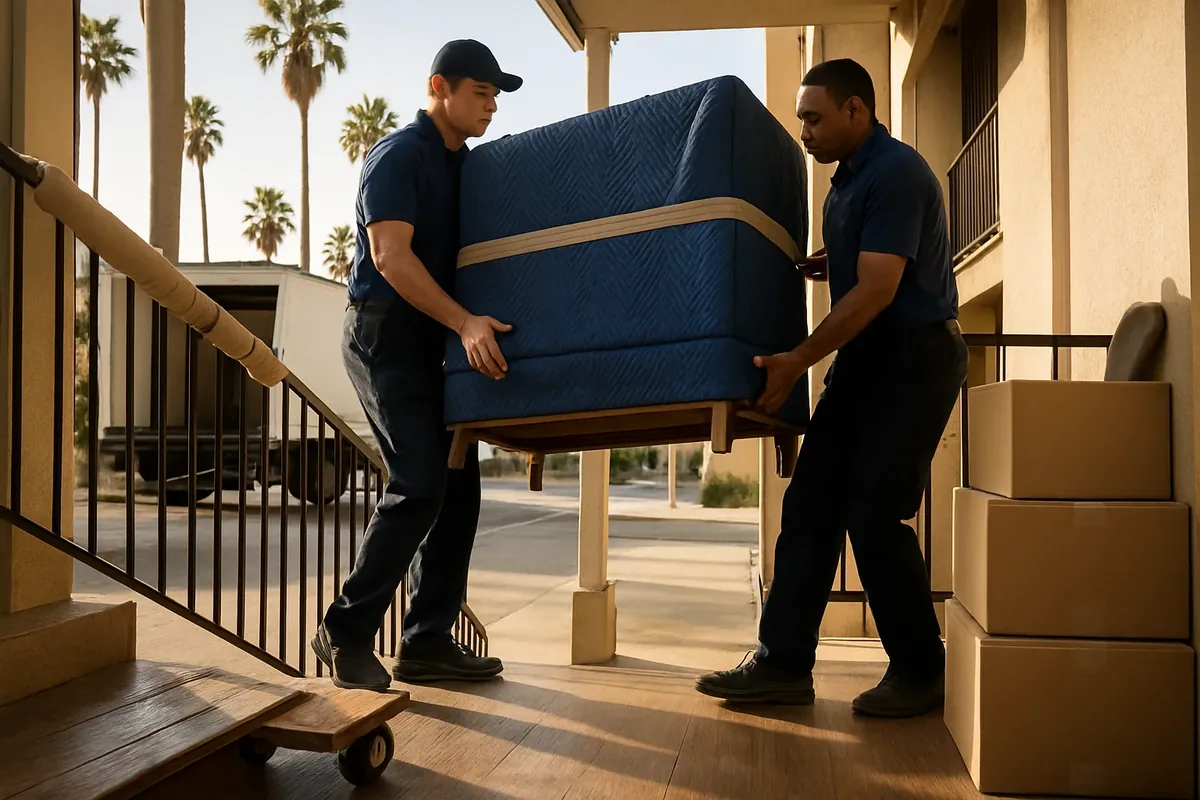
In California metro markets, the secret to keeping your Double Drive Time bill low is finishing your origin apartment load-out before the 2:30 PM commuter rush starts clogging the freeways. Every extra 45 minutes a crew spends wrapping dressers, bookcases, and media consoles inside your origin apartment pushes your truck departure closer to peak gridlock—where a 25-minute midday drive balloons into a 60-minute afternoon crawl (billed as 120 minutes under DDT).
| Product & Brand | Size & Pack Count | Material Grade / Rating | Apartment Moving Advantage |
|---|---|---|---|
| Sure-Max 6 Heavy-Duty Pro Moving Blankets | 80" x 72" (6 Blankets) | 85 lb/doz Heavy Quilted | Sized for a 1-bedroom apartment sofa, dresser, headboard, and dining table |
| Uboxes Economy Non-Woven Storage Pads | 80" x 72" (12 Blankets) | 35 lb/doz Breathable Textile | Lightweight dust and scratch barrier for staging items in portable containers or storage units |
| US Cargo Control Large Giant Rubber Moving Bands | 26"–42" Stretch (12-Pack Assorted) | Ribbed Natural Industrial Rubber | Secures moving blankets around dressers in 10 seconds without wrapping 50 feet of plastic tape |
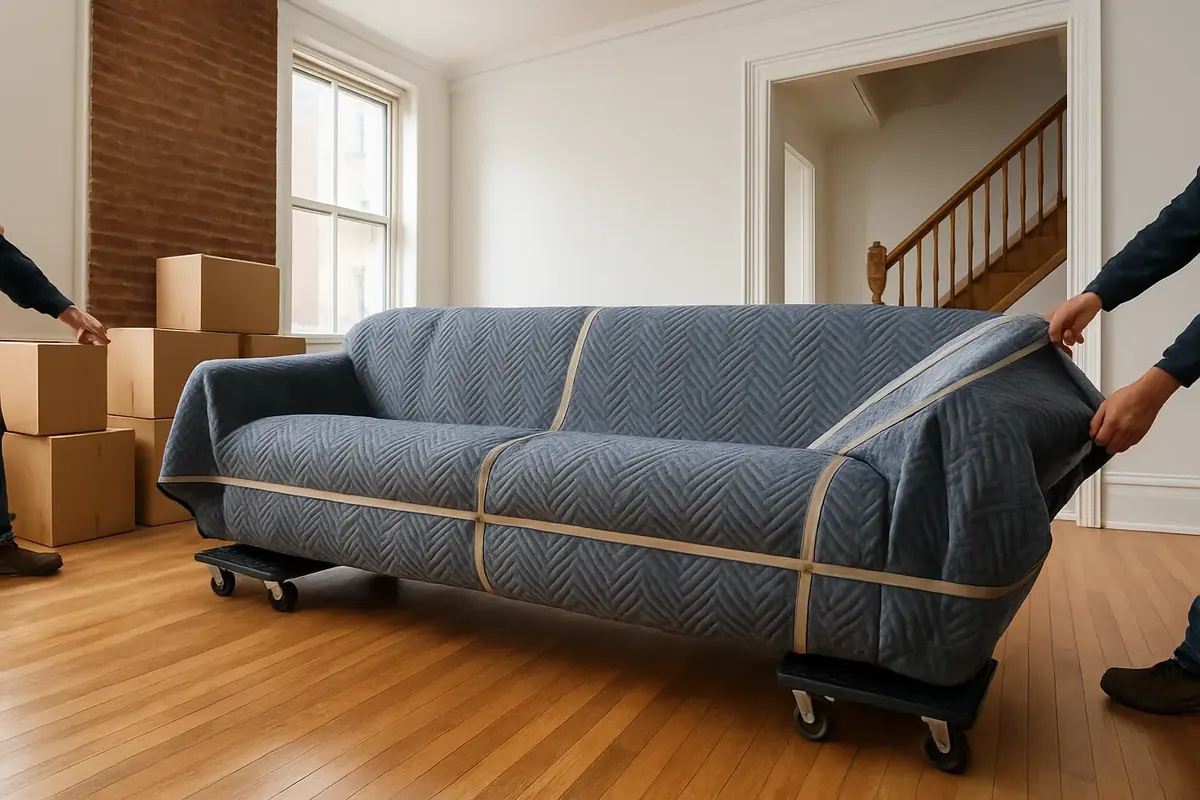
Using oversized ribbed natural rubber moving bands (26-inch, 30-inch, and 42-inch stretches) over 85-lb/dozen quilted furniture pads allows you or your crew to secure pads around a six-drawer dresser in under 15 seconds—and strip them off in 5 seconds at unloading—saving roughly 25 to 35 minutes of shrink-wrap and tape labor across a 1- or 2-bedroom apartment.
How to Protect Yourself Under California BHGS & MAX 4 Moving Rules
- Demand the Not-To-Exceed Price on your California Agreement for Moving Services: Under MAX 4 rules, every licensed California mover must provide a written 'Not-To-Exceed' ceiling price before work begins.
- Never pay BOTH a 1-hour travel fee and Double Drive Time: Charging a flat depot dispatch fee on top of DDT violates California BHGS tariff regulations; it must be one or the other (and legally DDT applies to hourly moves).
- Book the 8:00 AM first-dispatch morning window: An 8:00 AM crew arrival for a studio or 1-bedroom (3.0–5.0 loading hours) puts your truck on the highway between 11:00 AM and 1:00 PM during the midday traffic lull, cutting DDT minutes by 30%–45%.
- Verify the carrier's BHGS MTR license number: Check the California Bureau of Household Goods and Services license lookup to confirm active cargo and workers' compensation insurance before handing over any building COI.
- Pre-stage boxes near the elevator or ground lobby: Cutting stair or shared-elevator loading bottlenecks (which add 1.0–1.75 hours or $85–$190) ensures your truck departs before afternoon commuter congestion.
Planning a local or metro apartment move and want to compare full-service hourly crews against a DIY truck rental? Run your exact room count, stairs, and distance in our Apartment Moving Cost Calculator or our Movers vs. DIY Rental Truck Comparator.
Open Calculator →Frequently Asked Questions
Can a California moving company charge both a 1-hour travel fee and Double Drive Time?+
No. Under California Bureau of Household Goods and Services (BHGS) Maximum Rate Tariff 4 rules, Double Drive Time (DDT) is the sole authorized method for compensating local hourly movers for their transit to and from their warehouse. If an estimate includes both a flat 1-hour travel/dispatch fee and Double Drive Time between your origin and destination apartments, the carrier is double-dipping in violation of state tariff rules.
What happens under DDT if the moving truck gets stuck in a major freeway accident?+
Strictly speaking, DDT multiplies the actual elapsed driving time between your origin and destination by two, calculated in 15-minute increments. However, California law also requires movers to issue a binding 'Not-To-Exceed' maximum price on the Agreement for Moving Services before loading starts, and drivers are expected to follow a reasonable direct commercial truck route. If an unexpected freeway closure occurs, reputable carriers often cap the DDT charge at normal navigation transit time so the bill does not breach the Not-To-Exceed ceiling.
What if my two apartments are in the same building or right across the street in California?+
If you are transferring apartments within the exact same building complex (for example, moving from a 2nd-floor 1-bedroom to a 4th-floor 2-bedroom down the hall) where the truck never drives between two street addresses, your drive time is zero minutes—and two times zero is zero! To cover their depot dispatch on zero-drive in-building moves, California movers enforce a standard 2-hour or 3-hour total job minimum ($260–$525 for a 2-mover crew) or a disclosed minimum travel allowance under their tariff exception.
Does California Double Drive Time apply to long-distance moves over 100 miles?+
No. In California, local hourly moves (including Double Drive Time) generally apply only to relocations under 100 constructive miles. Once an intrastate California move exceeds 100 miles—such as a 160-mile regional relocation or a 380-mile move from Los Angeles to San Francisco—tariffs transition from hourly crew rates to distance-and-weight pricing ($0.22–$0.36 per pound plus $380–$690 transport fees for 50–250 mile regional moves), and interstate moves across state lines are governed by federal FMCSA weight or cubic-foot tariffs.
How can I legally avoid paying Double Drive Time on a 35-mile cross-metro California move?+
You have two proven options: First, request a flat-rate binding estimate based on a detailed virtual or in-person inventory, which locks in a fixed total price regardless of how long freeway traffic takes on moving day. Second, use a hybrid DIY strategy—rent a 12–15 ft box truck ($30–$40 daily base plus $1.09–$1.49/mile) and book separate 2-hour labor-only loading helpers ($170–$290) at your origin and another 2-hour unloading crew at your destination so you never pay hourly mover wages during the freeway drive.
Interactive US Moving Tools
Compare Full-Service Movers vs. DIY Rental Truck in 30 seconds
Related Guides
apartment moving cost guides
Apartment Moving Cost Guides: Complete US Hourly Rates, Flat-Rate Quotes & Benchmarks
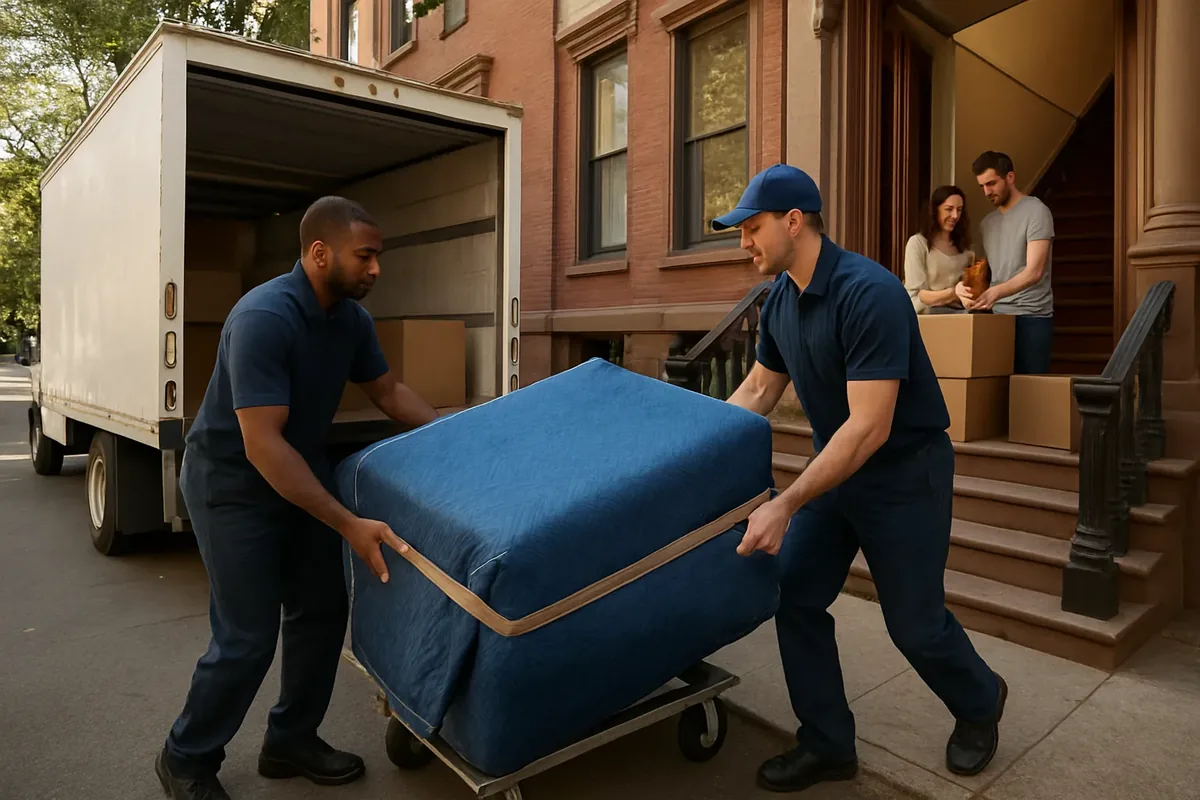
Local US apartment moves with licensed full-service crews average $640 to $1,530 for studios and 1-bedroom units and $1,270 to $3,572 for 2- and 3-bedroom apartments when self-packed, while DIY rental trucks run $155 to $507. This pillar guide decodes hourly crew math, travel fees, access surcharges, FMCSA estimate rules, and packing material ratios across every moving scenario.
apartment moving cost guides
Why Moving Companies Enforce 2-Hour or 3-Hour Minimums (And How to Beat Overpaying)
Almost every licensed local moving company enforces a 2-hour or 3-hour minimum labor charge—plus a 1-hour travel fee—meaning even a 90-minute studio move bills 3.0 to 4.0 hours ($375–$660+ before truck fees). Learn when minimums actually cost you extra and how to fill unused minutes or switch to a DIY hybrid move.
apartment moving cost guides
How Much to Tip Apartment Movers: Hourly & Per-Person Math (2026 Guide)
Standard US tipping etiquette for apartment movers is $5 to $10 per hour per individual crew member—working out to $20–$40 per mover for a half-day studio or 1-bedroom move and $50–$80+ per mover for a full-day 2- or 3-bedroom walk-up relocation. Use our per-person math tables to adjust gratuity for 3rd-floor stairs, long carries, and furniture protection.
apartment moving cost guides
Weekday vs. Weekend Moving Rates: Why Tuesday–Wednesday Saves 15%–25%
Booking your apartment move on a mid-month Tuesday or Wednesday unlocks 15% to 25% lower hourly crew rates ($115–$145/hr for 2 movers vs. $155–$195/hr on Friday–Saturday), shorter 2-hour minimums, and zero waiting for building freight elevators. See the day-by-day rate matrix across full-service movers and DIY rental trucks.